



Page 8
Page 8

Natural Disasters as Interactive Components of Global-Ecodynamics
This book opens a new approach to the study of global environmental changes having unfavourable character for mankind and other living systems. The main advantage of the book consists in the accumulation of knowledge from different sciences to parametrize the global ecodynamic process. Natural catastrophes are considered as an interactive element of global natural dynamics which are described by means of simulation models of global nature/society. The realization of this approach allows the integration within a complex structure of all international and national means of environmental monitoring and provides a tool for objective evaluation of the environmental quality. The main purpose of this book is to develop a universal information technology to estimate the state of environmental subsystems functioning under various climatic and anthropogenic conditions.

Natural Compounds as Drugs ; Vol. I
This book highlights new trends and aspects in natural products research. It discusses the biodiversity-driven approaches which are now of eminent importance in natural products research, addressing the question why natural products display such a complex chemical information, what makes them often unique and what their characteristics are. Practical questions such as supply of natural substances and production optimization strategies are also covered.

National Tax Policy in Europe : To Be or Not to Be?
The book is dedicated to the question of how much room for national tax policy Member States of the European Union will find necessary and possible to maintain in the future. It focuses on the possibilities Member States have and the constraints they face, such as the need to enhance competitiveness and attractiveness to inward foreign direct investment, to finance social programmes and the limitations imposed by European and International Law. The research question is looked at from economic as well as from legal points of view. This comprehensive approach and the answers given will be of interest to scholars and policy makers alike and may guide the path for future tax developments in Europe.

NASAs Scientist-Astronauts
Mounting pressure in the early 1960s from the National Academy of Sciences (NAS) to study ways of expanding the role of astronauts to conduct science on future space missions led to NASA’s conclusion that flying scientifically trained crewmembers would generate greater returns from each mission. NASA and industry studies continued investigating possibilities that could lead to the eventual creation of the first space stations using surplus Apollo hardware, through the Apollo Applications Programme (AAP).

Nanotribology and nanomechanics : An introduction ; 2nd ed.
This volume serves as a timely, practical introduction to the principles of nanotribology and nanomechanics and applications to magnetic storage systems, MEMS/NEMS and BioMEMS/bioNEMS. Assuming some familiarity with macrotribology/mechanics, the book comprises chapters by internationally recognized experts, who integrate knowledge of the field from the mechanics and materials-science perspectives. They cover key measurement techniques, their applications, and theoretical modelling of interfaces, each beginning their contributions with macro- and progressing to microconcepts

Nanotribology and nanomechanics : An introduction ; 1st ed.
This volume serves as a timely, practical introduction to the principles of nanotribology and nanomechanics and applications to magnetic storage systems and MEMS/NEMS. Assuming some familiarity with macrotribology/mechanics, the book comprises chapters by internationally recognized experts, who integrate knowledge of the field from the mechanics and materials-science perspectives. They cover key measurement techniques, their applications, and theoretical modelling of interfaces, each beginning their contributions with macro- and progressing to microconcepts.

Nanotechnology for Oral Drug Delivery : From Concept to Applications
Discusses the current challenges of oral drug delivery, broadly revising the different physicochemical barriers faced by nanotechnolgy-based oral drug delivery systems, and highlighting the challenges of improving intestinal permeability and drug absorption. Oral delivery is the most widely used form of drug administration due to ease of ingestion, cost effectiveness, and versatility, by allowing for the accommodation of different types of drugs, having the highest patient compliance.

Nanotechnology for Microfluidics
The book focuses on microfluidics with applications in nanotechnology. The first part summarizes the recent advances and achievements in the field of microfluidic technology, with emphasize on the the influence of nanotechnology. The second part introduces various applications of microfluidics in nanotechnology, such as drug delivery, tissue engineering and biomedical diagnosis.

Nanotechnology applied To pharmaceutical technology
Focuses on devising innovative nanopharmaceutical products and solutions to treat such diseases as cancer, infections, eye diseases, and in tackling multi-drug resistance threats. Nanotechnology Applied to Pharmaceutical Technology consists of four sections that include coverage of biosynthesis of nanoparticles, nano-material based formulations and toxicity, and safety issues.

Nanotechnology and drug delivery : Principles and applications
Presents an overview of the rapidly developing field of nanotechnology applications in drug delivery systems and covers a variety of technologies and materials that help in achieving vast variation in the particle size needed in technology and drug delivery-based research. It discusses nanotechnology’s use in healthcare for the development of target-specific drug therapy and smart field systems and in the pharmaceutical industry to improve the quality, efficacy, and shelf life of medicines. Bringing together principles, theory, practice, and applications of nanotechnology.

Nanotechnology : Science and Computation
This book offers a unique and authoritative perspective on current research in nanoscale science, engineering and computing. Leading researchers cover the topics of DNA self-assembly in two-dimensional arrays and three-dimensional structures, molecular motors, DNA word design, molecular electronics, gene assembly, surface layer protein assembly, and membrane computing.

Nanotechnologies, Hazards and Resource Efficiency : A Three-Tiered Approach to Assessing the Implications of Nanotechnology and Influencing its Development
Nanotechnology is frequently described as an enabling technology and 1 fundamental innovation, i.e. it is expected to lead to numerous innovative developments in the most diverse fields of technology and areas of app- cation in society and the marketplace. The technology, it is believed, has the potential for far-reaching changes that will eventually affect all areas of life. Such changes will doubtlessly have strong repercussions for society and the environment and bring with them not only the desired and intended effects such as innovations in the form of improvements to products, pr- esses and materials; economic growth; new jobs for skilled workers; relief for the environment; and further steps toward sustainable business, but also unexpected and undesirable side effects and consequences.

Nanostructures : Fabrication and Analysis
The main theme of this book is the exploration the underlying physical laws that permit the fabrication of nanometer-scale structures. As researchers attempt to fabricate nanometer-scale structures which do not exist per se, they must still employ the natural laws to fabricate them through processes such as self-assembly. So it turns out that our techniques for fabrication of nanometer-scale structures are not artificial but actually rely on the natural laws. We even find that nanometer-scale structures, e.g. fullerenes, are fabricated in nature beneath the surface of the Earth. This fact may be called the ubiquity of the nanometer-scale structures. The topics presented in the book include: scanning probe-related and near-field techniques, nanolithography, self assembling and design of novel nanostructures, as well as new nanodevices and their application.

Nanostructured Coatings
Controlling the performance of structures and components of all sizes and shapes through the use of engineered coatings has long been a key strategy in materials processing and technological design. The ever-increasing sophistication of en- neered coatings and the rapid trend toward producing increasingly smaller devices with greater demands on their fabrication, properties and performance have led to signicant progress in the science and technology of coatings, particularly in the last decade or two. Nanostructured coatings constitute a major area of sci- ti?c exploration and technological pursuit in this development.Nanostructured coatings demand study in a highly interdisciplinary research arena which encompasses: surface and interface science study of defects modern characterization methodologies cutting-edge experimental developments to deposit.

Nanoscale Phenomena : Basic Science to Device Applications
Nanotechnology is the result of the continuing technological trend toward device miniaturization and the characterization, manipulation, and fine control of structure and function at diminishing length scales. A large class of nanoscale materials can be stable even though they are far from the lowest-energy thermodynamic state, and many possess novel properties unattainable in bulk. These trends are supported by the increasing sophistication of characterization and fabrication tools such as the scanning tunneling microscope and the transmission electron microscope, which allow the resolution and manipulation of single atoms and molecules.

Nanophytomedicine : An emerging platform for drug delivery
Covers recent advances in experimental and theoretical studies on various properties of nanoparticles derived from plant sources. This book assesses the recent advancements and applications of plant-based nanoparticles and also highlights emerging concepts of biomimetics. Contains 24 chapters encompassing various therapeutic applications of phytochemicals derived from plants, ferns, seaweeds, and so on, mediated through nanotechnology and its allied approaches. A fervent attempt has been made to compile every significant advancement in the field of phytonanomedicine so as to accelerate its momentum in the pharmaceutical sector.

Nanopharmaceuticals in regenerative medicine
A collective and comprehensive volume of the latest innovations in nanoscience technology for practical use in clinical, biomedicine and diagnostic arena. The term nanotechnology pops up in every segment of modern-day life. The primary aim of this book is to deliver the precise information to students, educators, technologists and researchers. A conglomerate of scientists from various research fields contributed to the chapters, giving detailed descriptions on the most recent developments of nanotechnology in the area of disease management. This book will also be useful for industrial research and development partners, start-up entrepreneurs, government policy makers and other professionals who are interested in nanomedicines.

Nanopharmaceuticals ; Vol.1 : Expectations and realities of multifunctional drug delivery systems
Reviews advances in the drug delivery field via nanovehicles or nanocarriers that offer benefits like targeted therapy and serves as a single dose magic bullet for multiple drug delivery with improved drug efficiency at a lower dose, transportation of the drug across physiological barriers as well as reduced drug-related toxicity. The chapters are written by a diverse group of international researchers from industry and academia. The series Expectations and Realities of Multifunctional Drug Delivery Systems examines the fabrication, optimization, biological aspects, regulatory and clinical success of wide range of drug delivery carriers. This series reviews multifunctionality and applications of drug delivery systems, industrial trends, regulatory challenges and in vivo success stories. Throughout the volumes discussions on diverse aspects of drug delivery carriers, such as clinical, engineering, and regulatory, facilitate insight sharing across expertise area and form a link for collaborations between industry-academic scientists and clinical researchers. Expectations and Realities of Multifunctional Drug Delivery Systems connects formulation scientists, regulatory experts, engineers, clinical experts and regulatory stake holders. The wide scope of the book ensures it as a valuable reference resource for researchers in both academia and the pharmaceutical industry who want to learn more about drug delivery systems.

Nanopharmaceuticals : Vol.3 : Principles and applications
Focuses on the recent advances of nanopharmaceuticals in cancer, dental, dermal and drug delivery applications and presents their safety, toxicity and therapeutic efficacy. The book also includes the transport phenomenon of nanomaterials and important pathways for drug delivery applications. It goes on to explain the toxicity of nanoparticles to different physiological systems and methods used to assess this for different organ systems using examples of in vivo systems.
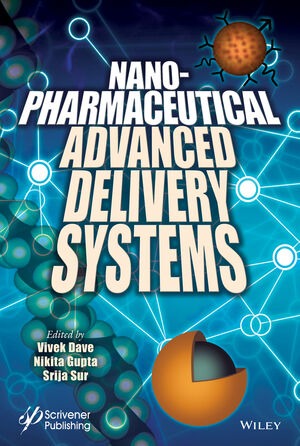
Nanopharmaceutical advanced delivery systems
Provides a single volume covering detailed descriptions about various delivery systems, their principles and how these are put in use for the treatment of multiple diseases. It is divided into four sections where the first section deals with the introduction and importance of novel drug delivery system. Deals with the most advanced drug delivery systems like microbubbles, dendrimers, lipid-based nanoparticles, nanofibers, microemulsions etc., describing the major principles and techniques of the preparations of the drug delivery systems. Elaborates on the treatments of diverse diseases like cancer, topical diseases, tuberculosis etc.
