



Page 7
Page 7

Class 1 Oxidoreductases XI : EC 1.14.11 - 1.14.14
This new, second edition reflects considerable progress in enzymology: many enzymes are newly classified or reclassified. Each entry is correlated with references and one or more source organisms. New datafields are created: application and engineering (for the properties of enzymes where the sequence has been changed). The total amount of material contained in the Handbook has more than doubled so that the complete second edition consists of 39 volumes as well as a Synonym Index. In addition, starting in 2009, all newly classified enzymes are treated in Supplement Volumes. Springer Handbook of Enzymes is an ideal source of information for researchers in biochemistry, biotechnology, organic and analytical chemistry, and food sciences, as well as for medicinal applications.

Class 1 Oxidoreductases X : EC 1.9 - 1.13
This new, second edition reflects considerable progress in enzymology: many enzymes are newly classified or reclassified. Each entry is correlated with references and one or more source organisms. New datafields are created: application and engineering (for the properties of enzymes where the sequence has been changed). The total amount of material contained in the Handbook has more than doubled so that the complete second edition consists of 39 volumes as well as a Synonym Index. In addition, starting in 2009, all newly classified enzymes are treated in Supplement Volumes. Springer Handbook of Enzymes is an ideal source of information for researchers in biochemistry, biotechnology, organic and analytical chemistry, and food sciences, as well as for medicinal applications.

Class 1 Oxidoreductases VIII : EC 1.5
Springer Handbook of Enzymes provides data on enzymes sufficiently well characterized. It offers concise and complete descriptions of some 5,000 enzymes and their application areas. Data sheets are arranged in their EC-Number sequence and the volumes themselves are arranged according to enzyme classes. This new, second edition reflects considerable progress in enzymology: many enzymes are newly classified or reclassified. Each entry is correlated with references and one or more source organisms. New datafields are created: application and engineering (for the properties of enzymes where the sequence has been changed). Springer Handbook of Enzymes is an ideal source of information for researchers in biochemistry, biotechnology, organic and analytical chemistry, and food sciences, as well as for medicinal applications.

Class 1 Oxidoreductases VII : EC 1.4
Springer Handbook of Enzymes provides data on enzymes sufficiently well characterized. It offers concise and complete descriptions of some 5,000 enzymes and their application areas. Data sheets are arranged in their EC-Number sequence and the volumes themselves are arranged according to enzyme classes. This new, second edition reflects considerable progress in enzymology: many enzymes are newly classified or reclassified. Each entry is correlated with references and one or more source organisms. New datafields are created: application and engineering (for the properties of enzymes where the sequence has been changed). Springer Handbook of Enzymes is an ideal source of information for researchers in biochemistry, biotechnology, organic and analytical chemistry, and food sciences, as well as for medicinal applications.

Class 1 Oxidoreductases IX : EC 1.6 - 1.8
Springer Handbook of Enzymes provides data on enzymes sufficiently well characterized. It offers concise and complete descriptions of some 5,000 enzymes and their application areas. Data sheets are arranged in their EC-Number sequence and the volumes themselves are arranged according to enzyme classes. This new, second edition reflects considerable progress in enzymology: many enzymes are newly classified or reclassified. Each entry is correlated with references and one or more source organisms. New datafields are created: application and engineering (for the properties of enzymes where the sequence has been changed). Springer Handbook of Enzymes is an ideal source of information for researchers in biochemistry, biotechnology, organic and analytical chemistry, and food sciences, as well as for medicinal applications.
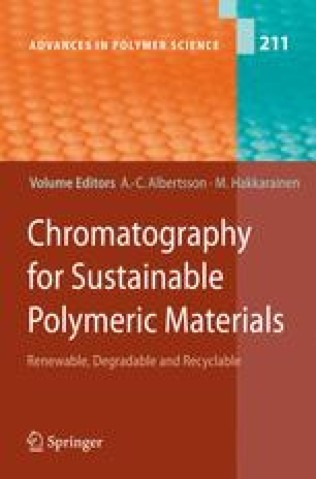
Chromatography for Sustainable Polymeric Materials : Renewable, Degradable and Recyclable
This volume is a valuable contribution to sustainability research. … This interesting, well-written book provides the reader with an excellent resource on how to effectively use simple chromatographic techniques to aid in determining processing conditions, additive formulations, quality control, service life, degradation pathways, and more.

Chiral Diazaligands for Asymmetric Synthesis
The use of phosphine derivatives has historically induced the tremendous development of catalysis (both non-asymmetric and asymmetric). Although the chemistry of amines is more documented, the use of nitrogen-containing ligands only appeared recently. Nevertheless, during the last ten years, the results describing chiral diamine preparations and their uses in asymmetric catalysis and synthesis are increasing faster than their phosphorus counterparts. The reader will find in this volume the most recent methods for the synthesis of chiral diamines as well as their applications in asymmetric catalysis of CC bond formation. Particular attention will be given to spartein and derivatives of such diamines. Recently, the particular properties and the chemistry of amines allowed to obtain catalysts easy to separate and recycle and new types of ligands such as diaminocarbenes, ureas and thioureas. Finally, the complexing properties of some diamines allowed the formation of complexes with chirality "at the metal " which is of major theoretical interest and presents numerous potential applications.
Chemoinformatics : Theory, Practice, & Products
Chemoinformatics: Theory, Practice & Products covers theory, commercially available packages and applications of Chemoinformatics. Chemoinformatics is broadly defined as the use of information technology to assist in the acquisition, analysis and management of data and information relating to chemical compounds and their properties.The book also provides a summary of currently available, state-of-the-art, commercial Chemoinformatics products, with a specific focus on databases, toolkits, and modelling technologies designed for drug discovery.

Chemistry of selected natural products and heterocyclic compounds
Covers the fundamental classification, nomenclature, occurrence, isolation, extraction, occurrence, detection, biosynthesis, medicinal/industrial significance, conversion and inter-conversions, etc.
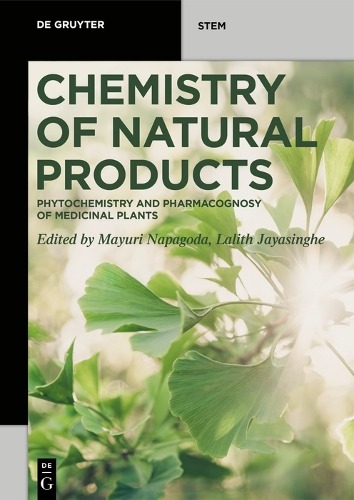
Chemistry of natural products : phytochemistry and pharmacognosy of medicinal plants
Plants produce secondary metabolites that humans harness for their own benefit. About half of drugs currently in clinical use are based on these chemicals found in nature. Chemistry of Natural Products covers secondary metabolites present in medicinal plants and their biosynthesis, biological activities, and isolation and separation techniques.
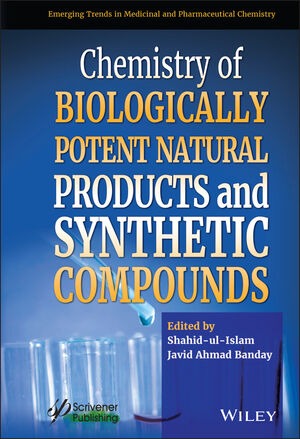
Chemistry of Biologically Potent Natural Products and Synthetic Compounds
Several novel natural product derivatives, heterocyclic and other synthetic compounds, have been reported to have shown interesting biological activities including anticancer, antimicrobial, anti-inflammatory, anti-glycemic, anti-allergy and antiviral etc. Provides up-to-date information on new developments and most recent medicinal applications of the natural products and derivatives, as well as the chemistry and synthesis of heterocyclic and other related compounds.

Chemistry for pharmacy students : General, organic and natural product chemistry ; 2nd ed.
Opens with an overview of the general aspects of chemistry and their importance to modern life, with emphasis on medicinal applications. The text then moves on to discuss the concepts of atomic structure and bonding and the fundamentals of stereochemistry and their significance to pharmacy in relation to drug action and toxicity. Various aspects of organic functional groups, organic reactions, heterocyclic chemistry, nucleic acids and their pharmaceutical importance are then covered in subsequent chapters, with the final chapter dealing with drug discovery and development, and natural product chemistry. Provides a student-friendly introduction to the main areas of chemistry required by pharmacy degree courses. Written at a level suitable for non-chemistry students in pharmacy, but also relevant to those in life sciences, food science, and the health sciences Includes learning objectives at the beginning of each chapter Focuses on the physical properties and actions of drug molecules

Chemical components in some winter vegetables and their effectiveness in treating diseases
Cruciferous (Brassicaceae) vegetables comprise many important species cultivated worldwide and utilized traditionally for culinary and medicinal purposes in different cultures. In the last couple of decades, growing scientific evidence has suggested that consumption of cruciferous vegetables has a preventive role against a variety of human diseases. This prompted the development of nutritional ingredients derived from these vegetables and their use as dietary supplements in different formulations that contain complete plant extracts or specific compounds...
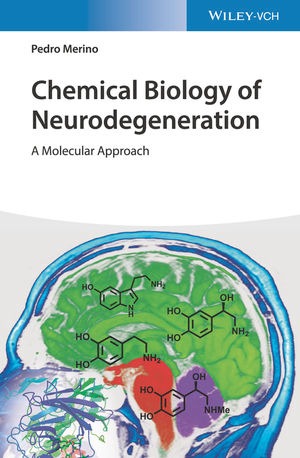
Chemical Biology of Neurodegeneration : A Molecular Approach
This book focuses on the main actors involved in neurodegenerative disorders at a molecular level, and places special emphasis on structural aspects and modes of action. Drawing on recent data on enzyme structure, mode of action, and inhibitor design, it describes?from a biochemical point of view?the six most important neurotransmitter systems and their constituent enzymes and receptors. Misfolding and aggregation of proteins within the brain is also covered.
Chemical Biology and Drug Discovery
Gives the reader, through the specific selection of chemical-biological techniques and concepts, the necessary tools to be able to develop new ways of thinking and thus new therapeutic options in the complex field of chemical biology and drug development. The stated aim of this book is to provide concrete solutions and inspiration to students, (post)graduate students, and experienced scientists at universities as well as in industry in their problems.
Characterization of Pharmaceutical Nano- and Microsystems
Offers readers a full understanding of the basic physicochemical characteristics, material properties and differences between micro- and nanosystems. It explains how and why greater experience and more reliable measurement techniques are required as particle size shrinks, and the measured phenomena grow weaker.
Cell Therapy, Stem Cells and Brain Repair
As our world continues to evolve, the field of regenerative medicine f- lows suit. Although many modern day therapies focus on synthetic and na- ral medicinal treatments for brain repair, many of these treatments and prescriptions lack adequate results or only have the ability to slow the p- gression of neurological disease or injury. Cell therapy, however, remains the most compelling treatment for neurodegenerative diseases, disorders, and injuries, including Parkinson’s disease, Huntington’s disease, traumatic brain injury, and stroke, which is expanded upon in more detail in Chapter 1 by Snyder and colleagues. Cell therapy is also unique in that it is the only therapeutic strategy that strives to replace lost, damaged, or dysfunctional cells with healthy ones.
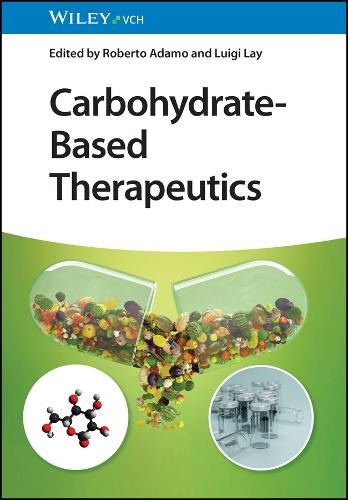
Carbohydrate-based therapeutics
Explores new frontiers in carbohydrate-based therapeutic applications, utilizing a unique approach by providing a detailed background of diseases coupled with subsequent carbohydrate-based therapies. The link between chemistry and design of novel carbohydrate-based medicines is highlighted and a broad overview of all the potential applications of carbohydrates is given. Emphasis is laid on concepts used for carbohydrate drug design, structure– activity relationship, and impact on health and diseases. The text also discusses newer topics like nanoparticles, material science, and tissue generation.
Cannabinoids as Therapeutics
this volume concentrates on the diseases, the physiological effects and therapeutic use of cannabinoids. The volume editor Prof. Mechoulam was the first who isolated the prime active constituent (THC, Tetrahydrocannabiol) of marijuana. He published extensively on the pharmacological activities of cannabinoids. The volume is of interest to researchers and clinicians from pharmacology, neuroscience, and medicinal research
Cancer
The last decade has seen a dramatic shift in anticancer drug research towards agents that aim to target selectively key regulatory and signaling processes known to drive tumorigenesis. A number of these newer agents have now been introduced into clinical practice. This volume reviews advances in cancer chemotherapy research over the last 10 years and will be of interest to scientists engaged in drug research in the pharmaceutical industry, biotechnology and startup companies, academia and government institutions. Chapters written by leading experts in their field reflect a range of current medicinal chemistry approaches to small molecule drugs, including anti-hormonal therapy, growth factor inhibition, survival signaling, cell cycle inhibition, anti-angiogenics and anti-nvasives. Each chapter aims to cover the drug target and biological rationale, chemotypes, clinical status and future prospects in this rapidly developing area of drug research.
