



Page 69
Page 69

High Order Difference Methods for Time Dependent PDE
Many books have been written on ?nite difference methods (FDM), but there are good reasons to write still another one. The main reason is that even if higher order methods have been known for a long time, the analysis of stability, accuracy and effectiveness is missing to a large extent. For example, the de?nition of the formal high order accuracy is based on the assumption that the true solution is smooth, or expressed differently, that the grid is ?ne enough such that all variations in the solution are well resolved. In many applications, this assumption is not ful?lled, and then it is interesting to know if a high order method is still effective. Another problem that needs thorough analysis is the construction of boundary conditions such that both accuracy and stability is upheld. And ?nally, there has been quite a strongdevelopmentduringthe last years, inparticularwhenit comesto verygeneral and stable difference operators for application on initial–boundary value problems.

High Noon in the Automotive Industry
The book provides valuable information in an understandable style and entertaining form, but also makes clear statements on the tough consequences of global competition for the automotive manufacturers and the supply industry. Recommended reading for everyone in risk and asset management in the financial industry.

High mountain conservation in a changing world
This book aims to provide case studies and a general view of the main processes involved in the ecosystem shifts occurring in the high mountains, and to analyse the implications for nature conservation. Although case studies from the Pyrenees are preponderant, conclusions are aimed at any mountain range surrounded by highly populated lowland areas. The chapters give emphasis to approaches from environmental geography, functional ecology, biogeography, and paleoenvironmental reconstructions. The introductory and closing chapters summarize the main challenges that nature conservation may face in mountain areas under the environmental shifting conditions.

High Frequency Financial Econometrics : Recent Developments
This exciting volume presents cutting-edge developments in high frequency financial econometrics, spanning a diverse range of topics: market microstructure, tick-by-tick data, bond and foreign exchange markets and large dimensional volatility modelling. The chapters on market microstructure deal with liquidity, asymmetries of information, and limit order aggressiveness in pure limit order book markets. The chapters on tick-by-tick data present statistical techniques for the analysis of the discrete nature of price movements, the intraday seasonal patterns of financial durations, and the joint probability law of prices, volume and durations. Bond markets are brought into focus through the analysis of macroeconomic announcements in the future bond market as a function of the business cycle.

High Energy Density Materials
The series Structure and Bonding publishes critical reviews on topics of research concerned with chemical structure and bonding. The scope of the series spans the entire Periodic Table. It focuses attention on new and developing areas of modern structural and theoretical chemistry such as nanostructures, molecular electronics, designed molecular solids, surfaces, metal clusters and supramolecular structures. Physical and spectroscopic techniques used to determine, examine and model structures fall within the purview of Structure and Bonding to the extent that the focus is on the scientific results obtained and not on specialist information concerning the techniques themselves.

High Confidence Software Reuse in Large Systems ; 10th International Conference on Software Reuse, ICSR 2008, Beijing, China, May 25-29, 2008 Proceedings
This book constitutes the refereed proceedings of the 10th International Conference on Software Reuse, ICSR 2008, held in Beijing, China, in May 2008.The 40 revised full papers presented together with 5 workshop summaries and 5 tutorials were carefully reviewed and selected from numerous submissions. The papers are organized in topical sections on architecture and reuse approaches, high confidence and reuse, component selection and reuse repository, product line, domain models and analysis, service oriented environment, components and services, reuse approaches and frameworks, as well as reuse approaches and methods.

High Availability and Disaster Recovery : Concepts, Design, Implementation
Companies and other organizations depend more than ever on the availability of their Information Technology, and most mission critical business processes are IT-based processes. Business continuity is the ability to do business under any circumstances and is an essential requirement modern companies are facing. High availability and disaster recovery are contributions of the IT to fulfill this requirement. And companies will be confronted with such demands to an even greater extent in the future, since their credit ratings will be lower without such precautions. Both, high availability and disaster recovery, are realized by redundant systems. Redundancy can and should be implemented on different abstraction levels: from the hardware, the operating system and middleware components up to the backup computing center in case of a disaster. This book presents requirements, concepts, and realizations of redundant systems on all abstraction levels, and all given examples refer to UNIX and Linux systems.

Hierarchical Bayesian Optimization Algorithm : Toward a New Generation of Evolutionary Algorithms
This book provides a framework for the design of competent optimization techniques by combining advanced evolutionary algorithms with state-of-the-art machine learning techniques. The book focuses on two algorithms that replace traditional variation operators of evolutionary algorithms by learning and sampling Bayesian networks: the Bayesian optimization algorithm (BOA) and the hierarchical BOA (hBOA). BOA and hBOA are theoretically and empirically shown to provide robust and scalable solution for broad classes of nearly decomposable and hierarchical problems. A theoretical model is developed that estimates the scalability and adequate parameter settings for BOA and hBOA. The performance of BOA and hBOA is analyzed on a number of artificial problems of bounded difficulty designed to test BOA and hBOA on the boundary of their design envelope.

Hexagonal image processing : A practical approach
Hexagonal Image Processing provides an introduction to the processing of hexagonally sampled images, includes a survey of the work done in the field, and presents a novel framework for hexagonal image processing (HIP) based on hierarchical aggregates. Digital image processing is currently dominated by the use of square sampling lattices, however, hexagonal sampling lattices can also be used to define digital images. The strengths offered by hexagonal lattices over square lattices are considerable: • higher packing density, • uniform connectivity of points (pixels) in the lattice, • better angular resolution by virtue of having more nearest neighbours, and • superlative representation of curves. The utility of the HIP framework is demonstrated by implementing several basic image processing techniques (for the spatial and frequency domain) and some applications. The HIP framework serves as a tool for comparing processing of images defined on a square vs hexagonal grid, to determine their relative merits and demerits. The theory and algorithms covered are supplemented by attention to practical details such as accommodating hardware that support only images sampled on a square lattice. Including a Foreword written by Professor Narendra Ahuja, an eminent researcher in the field of Image Processing and Computer Vision, the book’s fresh approach to the subject offers insight and workable know-how to both researchers and postgraduates.

Heterogeneous Objects Modelling and Applications : Collection of Papers on Foundations and Practice
Heterogeneous object modelling is a new and quickly developing research area. This book is one of the first attempts to systematically cover the most relevant themes and problems of this new and challenging subject area. It is a collection of invited papers and papers co-authored by the editors. Each chapter presents either new research results or a survey on the following topics:Formal models and abstractions of heterogeneous objects including geometric, topological, discrete and continuous models, operations forming special algebras and conversions between different model types.
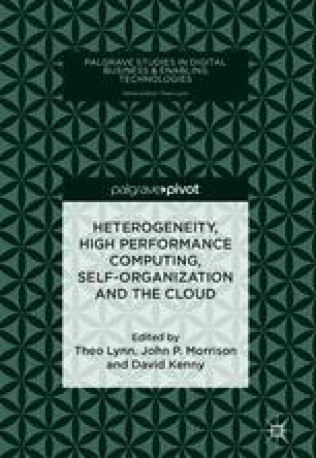
Heterogeneity, high performance computing, self-organization and the cloud
Addresses the most recent developments in cloud computing such as HPC in the Cloud, heterogeneous cloud, self-organising and self-management, and discusses the business implications of cloud computing adoption. Establishing the need for a new architecture for cloud computing, it discusses a novel cloud management and delivery architecture based on the principles of self-organisation and self-management. This focus shifts the deployment and optimisation effort from the consumer to the software stack running on the cloud infrastructure. It also outlines validation challenges and introduces a novel generalised extensible simulation framework to illustrate the effectiveness, performance and scalability of self-organising and self-managing delivery models on hyperscale cloud infrastructures. It concludes with a number of potential use cases for self-organising, self-managing clouds and the impact on those businesses.

Heterogeneity in statistical genetics : How to assess, address, and account for mixtures in association studies
Heterogeneity, or mixtures, are ubiquitous in genetics. Even for data as simple as mono-genic diseases, populations are a mixture of affected and unaffected individuals. Still, most statistical genetic association analyses, designed to map genes for diseases and other genetic traits, ignore this phenomenon.In this book, we document methods that incorporate heterogeneity into the design and analysis of genetic and genomic association data. Among the key qualities of our developed statistics is that they include mixture parameters as part of the statistic, a unique component for tests of association. A critical feature of this work is the inclusion of at least one heterogeneity parameter when performing statistical power and sample size calculations for tests of genetic association.

Heterocyclic Supramolecules I
Contributing to this book of six chapters were 14 scientists working in the field of supramolecular chemistry, with a special focus on molecular recognition, functional materials, and nanocarbon science. … Overall, this book is an informative summary on the progress that researchers have made over the past decade toward generating useful functional materials from heterocyclic supramolecules. This is an advanced text that should be most useful to those with an established background in supramolecular sciences and engineering.

Heterocyclic Antitumor Antibiotics
Heterocyclic Compounds Includes aspects such as synthesis, reaction mechanisms, structure complexity, properties, reactivity, stability, fundamental and theoretical studies, biology, biomedical studies, pharmacological aspects, applications in material sciences etc. Metabolism will be also included which will provide information useful in designing pharmacologically active agents. Pathways involving destruction of heterocyclic ring will also be dealt with so that synthesis of specifically functionalized non-heterocyclic molecules can be designed. Overall scope is to cover topics dealing with most of the areas of current trends in heterocyclic chemistry which will suit to a larger heterocyclic community.

Heterocycles from Transition Metal Catalysis : Formation and Functionalization
The book provides a representative selection of transition metal catalysed reactions, transformations that are relevant in heterocyclic chemistry. In this way, the authors provide a useful resource for members of the academic community looking for a textbook as well as industrial chemists in search of a reference book. This book is an invaluable resource for synthetic chemists, medicinal chemists, and those more generally interested in applied catalysis.
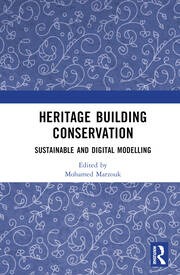
Heritage building conservation : Sustainable and digital modelling
Covers: The technology used to digitally document heritage buildings, including LIDAR, photogrammetry, Heritage Building Information Modelling (HBIM), and Virtual Reality (VR) technologies Introducing a Maintainability Index of Heritage Buildings (MIHB) to support the decision-making and prioritization process for the maintenance of heritage buildings The adaptive reuse of heritage buildings Modelling embodied and operational energy performance Using Chatbot and Blockchain technology to support the management and preservation of heritage buildings Ultimately, this book presents a useful tool for use in heritage management and highlights how the reusability of heritage buildings is critical to the creation and survival of sustainable communities.

Herbs for stress & anxiety : How to make and use herbal remedies to strengthen the nervous system
Treat stress, anxiety, depression, and more with simple herbal remedies that calm your mind, build a healthy nervous system, and promote lasting peace. In this informative guide, renowned herbalist Rosemary Gladstar profiles 21 herbs proven to be effective at soothing common ailments like insomnia, panic attacks, skin conditions, and migraines. With simple directions for making herbal mixtures that can be used in delicious teas, tinctures, and capsules, Gladstar shows you how to harness the power of nature to achieve a more relaxed and fulfilling life.

Herbals of Asia : Prevalent diseases and their treatments
Excellent source of information by identifying hundreds of medicinal herbs and unfolding their medicinal uses for treatment of prevalent diseases Presents recent developments in research on medicinal plants for different diseases, formulation of products, and market strategy Research scholars in relevant field, health practitioners, herbalists and pharmaceutical industries will benefit from the text’s rich list of references as well as plant field photographs Demonstrates the global relevance of sharing local knowledge, and highlights the need to make information on plants available on a worldwide basis

Herbal Products : Toxicology and Clinical Pharmacology
Herbal Products: Toxicology and Clinical Pharmacology, Second Edition builds upon the informative foundation laid by its predecessor. This fully revised and expanded second edition boasts over 200 new references that document efficacy studies and adverse effects and four new chapters devoted to dietary products.

Herbal pharmacopeia : Nanotechnology and advancing drug
Explores the intersection between traditional herbal medicine and cutting-edge nanotechnology. The chapters introduce modern techniques used in herbal extraction and analysis. The principles of drug discovery from plants are discussed, with a focus on the identification and development of bioactive compounds that have therapeutic potential. It discusses the pharmacological properties, biotechnological approaches in drug development, and challenges in the formulation and standardization of herbal medicines. Emerging trends and applications of nanotechnology in herbal pharmacotherapy, such as nanoparticle synthesis, enhanced bioavailability using nanocarriers, safety assessments, novel and targeted delivery systems, and regulatory considerations, are thoroughly discussed. Additionally, it includes a comparative analysis of traditional and nano-formulated approaches and their implementation in clinical settings. Towards the end, the book reviews the regulatory considerations for herbal products and future perspectives in herbal pharmacopeia. This book is intended for researchers, clinicians, and professionals in herbal medicine, pharmacology, and nanotechnology.
