



Page 68
Page 68

Hydrology and Water Resources of India
Divided into four sections the book provides a comprehensive overview of water resources of India. Beginning with a general description of the country, major hydrologic features, such as climate (precipitation, temperature, radiation, etc.), streamflow, groundwater, soil, etc. are discussed. A detailed treatment of all major river basins is provided, which includes description of catchments, tributaries, surface water and ground water, and important water resources projects. This is followed by a discussion on major uses of water in India, major projects, water related problems including environment and water quality, provisions of the constitution of India, interlinking of India rivers, and institutions dealing with water resources. Finally, the last chapter discusses some views on water management policy for India.

Hydrological modelling and the water cycle : Coupling the atmospheric and hydrological models
This collected work reports on the state of the art of hydrological model simulation, as well as the methods for satellite-based rainfall estimation. Mainly addressed to scientists and researchers, the contributions have the structure of a standard paper appearing in most cited hydrological, atmospheric and climate journals. Several already-known hydrological models and a few novel ones are presented, as well as the satellite-based precipitation techniques. As the field of hydrologic modeling is experiencing rapid development and transition to application of distributed models, many challenges including overcoming the requirements of compatible observations of inputs and outputs are addressed.

Hydrological and Biological Responses to Forest Practices : The Alsea Watershed Study
Through analyses of works generated by the study, Hydrological and Biological Responses to Forest Practices: The Alsea Watershed Study addresses the quantification of forest resource sustainability and bolsters the case for long-term monitoring at a time when managers and policy makers are searching for ways to restore the runs of salmon and steelhead to rivers and streams of the Pacific Northwest. Edited by John D. Stednick, a forest hydrologist responsible for the study’s reactivation, this book will be of interest to students in natural resources, land managers, policy makers, and researchers, particularly in water and fishery resources.

Hydrogeophysics
This ground-breaking work is the first to cover the fundamentals of hydrogeophysics from both the hydrogeological and geophysical perspectives. A series of hydrogeophysical case studies illustrate hydrogeophysical approaches for mapping hydrological units, estimation of hydrogeological parameters, and monitoring of hydrogeological processes.

Hydrogen materials science and chemistry of carbon nanomaterials ; Proceedings of the NATO Advanced Research Workshop on Hydrogen Materials Science an Chemistry of Carbon Nanomaterials, Sudak, Crimea, Ukraine, September 14-20, 2003
presentation and discussion of the most recent research on transition to hydrogen-based energy systems, technologies for hydrogen production, storage, utilization, materials, energy and environmental problems. The aim of the volume is to provide an overview of the latest scientific results on research and development in the different topics cited above.

Hydrogen bonded polymers
Control of polymeric structure is among the most important endeavours of modern macromolecular science. In particular, tailoring the positioning and strength of intermolecular forces within macromolecules by synthetic me- odsandthusgaining structuralcontrolover the'nalpolymeric materials has become feasible, resulting in the ?eld of supramolecular polymer science. - sides other intermolecular forces, hydrogen bonds are unique intermolecular forces enabling the tuning of material properties via self-assembly processes, The important contribution of hydrogen bondstotheareaofsupramole- lar polymer chemistry is de'nitely outstanding, most of all since the potency of hydrogen-bonding systems has been found to be unique in relation to other supramolecular interactions.

Hydrodynamics of Explosion : Experiments and Models
Hydronamics of Explosion presents the research results for the problems of underwater explosions and contains a detailed analysis of the structure and the parameters of the wave fields generated by explosions of cord and spiral charges, a description of the formation mechanisms for a wide range of cumulative flows at underwater explosions near the free surface, and the relevant mathematical models. Shock-wave transformation in bubbly liquids, shock-wave amplification due to collision and focusing, and the formation of bubble detonation waves in reactive bubbly liquids are studied in detail. Particular emphasis is placed on the investigation of wave processes in cavitating liquids, which incorporates the concepts of the strength of real liquids containing natural microinhomogeneities, the relaxation of tensile stress, and the cavitation fracture of a liquid as the inversion of its two-phase state under impulsive (explosive) loading. The problems are classed among essentially nonlinear processes that occur under shock loading of liquids and may be of interest to researchers in physical acoustics, mechanics of multiphase media, shock-wave processes in condensed media, explosive hydroacoustics, and cumulation.

Hydra = هايدرا
Forgery involves the use of advanced algorithms to replicate and distribute deceptive products across various categories, casting shadows of doubt on the authenticity of goods. Although counterfeit detection can be useful in identifying and mitigating fraudulent activities, the widespread presence of counterfeit goods poses significant dangers, undermining consumer confidence and brand reputation. To underscore the severity of this issue, consider instances such as fake luxury items flooding the market, counterfeit electronics compromising safety, or bogus pharmaceuticals endangering health. Addressing this issue is critical in maintaining the integrity of brands, safeguarding consumer well-being, and preserving trust in the marketplace. The ability to distinguish between authentic and counterfeit products is paramount in ensuring accurate decision-making and preventing the harmful consequences of fraudulent goods. This technological context underscores the urgency of developing and deploying cutting-edge solutions to combat the evolving landscape of product forgery. Hydra emerges as a robust solution, utilizing a comprehensive approach that includes extracting posts and images from search engine tools, and is integrated with AI models to detect forgery. The Hydra platform not only provides users with a powerful tool for detecting counterfeit products but also offers tangible benefits such as enhanced brand security, increased awareness about the prevalence of forgeries, and the opportunity to actively participate in a real-time community.

Hybrid Systems : Computation and Control ; 11th International Workshop, HSCC 2008, St. Louis, MO, USA, April 22-24, 2008. Proceedings
Contains the proceedings ofthe 11th Workshop on Hybrid Systems: Computation and Control (HSCC 2008) held in St. Louis, Missouriduring April 22–24,2008.The annual workshop on hybrid systems focuses on research inbedded ,reactive systems in volving theinterplay between symbolic/switchingand continuous dynamical behaviors. HSCC attracts academic as well as industrial researchers to exchange information on the latest developments of applications and theoretical advancements in the design, analysis, control, optimization, and implementation of hybrid systems, with particular attention to embedded and networked control systems. We would like to thank the Program Committee members and the reviewers for an excellent job of evaluating the submissions and participating in the online Program Committee discussions.

Hybrid Systems : Computation and Control ; Vol. # 3414 ; 8th International Workshop, HSCC 2005, Zurich, Switzerland, March 9-11, 2005, Proceedings
Contains the proceedings of the 8th Workshop on Hybrid S- tems: Computation and Control(HSCC2005)heldinZurich, Switzerlandduring March 9-11, 2005. The annual workshop on hybrid systems attracts researchers from academia and industry interested in modeling, analysis, and implemen- tion of dynamic and reactive systems involving both discrete and continuous - haviors. This year's HSCC was technically co-sponsored by the IEEE Control Systems Society. The program consisted of 3 invited talks and 40 regular papers selected from 91 regular submissions. The program covered topics such as tools for analysis and verification, control and optimization, modeling, engineering applications, and emerging directions in programming language support and implementation. We would like to thank the Program Committee members and reviewers for an excellent job of evaluating the submissions and participating in the online Program Committee discussions.

Hybrid metaheuristics ; Vol. 4030 ; 3rd International Workshop, HM 2006, Gran Canaria, Spain, October 13-14, 2006, Proceedings
The selection of papers for HM 2006 consolidated some of the mainstream issues that have emerged from the past editions. Firstly, there are prominent examples of e?ective hybrid techniques whose design and implementation were motivated by challenging real-world applications. We believe this is particularly important for two reasons: on the one hand, researchers are conscious that the primary goal of developing algorithms is to solve relevant real-life problems; on the other hand, the path towarde?cient solving methods for practical problems is a source of new outstanding ideas and theories. A second important issue is that the research community on metaheur- tics has become increasingly interested in and open to techniques and methods known from arti?cial intelligence (AI) and operations research (OR). So far, the most representative examples of such integration have been the use of AI/OR techniques as subordinates of metaheuristic methods. As a historical and - ymological note, this is in perfect accordance with the original meaning of a metaheuristic as a “general strategy controlling a subordinate heuristic. ” The awareness of the need for a sound experimental methodology is a third keypoint.

Hybrid metaheuristics ; 5th International Workshop, HM 2008, Málaga, Spain, October 8-9, 2008. Proceedings
This book constitutes the refereed proceedings of the 5th International Workshop on Hybrid Metaheuristics, HM 2008, held in Malaga, Spain, in October 2008.The 14 revised full papers presented were carefully reviewed and selected from 33 submissions. The papers discuss specific aspects of combinations of metaheuristics and other solving techniques for tackling particular relevant constrained optimization problems, such as fiber optic networks, time tabling and freight train scheduling problems.

Hybrid metaheuristics ; 4th International Workshop,HM 2007, Dortmund, Germany, October 8-9, 2007, Proceedings
This book constitutes the refereed proceedings of the 4th International Workshop on Hybrid Metaheuristics, HM 2007, held in Dortmund, Germany. The 14 revised full papers discuss specific aspects of hybridization of metaheuristics, hybrid metaheuristics design, development and testing.

Hybrid metaheuristics : An emerging approach to optimization
The book is intended both to provide an overview of hybrid metaheuristics to novices of the field, and to provide researchers from the field with a collection of some of the most interesting recent developments.

Hybrid Learning and Education ; 1st International Conference, ICHL 2008 Hong Kong, China, August 13-15, 2008 Proceedings
This book constitutes the refereed proceedings of the First International Conference on Hybrid Learning, ICHL 2008, held in Hong Kong, China, in August 2008.The 38 revised full papers presented together with 3 keynote lectures were carefully reviewed and selected from 142 submissions. The papers are organized in topical sections on hybrid education, model and pedagogies for hybrid learning, trends, pervasive learning, mobile and ubiquitous learning, hybrid learning experiences, hybrid learning systems, technologies, as well as contextual attitude and cultural effects.

Hybrid Intelligent Systems for Pattern Recognition Using Soft Computing : An Evolutionary Approach for Neural Networks and Fuzzy Systems
This monograph describes new methods for intelligent pattern recognition using soft computing techniques including neural networks, fuzzy logic, and genetic algorithms. Hybrid intelligent systems that combine several soft computing techniques are needed due to the complexity of pattern recognition problems.

Hybrid Evolutionary Algorithms
Hybridization of evolutionary algorithms is getting popular due to their capabilities in handling several real world problems involving complexity, noisy environment, imprecision, uncertainty and vagueness. This edited volume is targeted to present the latest state-of-the-art methodologies in ’Hybrid Evolutionary Algorithms’. This book deals with the theoretical and methodological aspects, as well as various applications to many real world problems from science, technology, business or commerce. This volume comprises of 14 chapters including an introductory chapter giving the fundamental definitions and some important research challenges. Chapters were selected on the basis of fundamental ideas/concepts rather than the thoroughness of techniques deployed.

Hybrid Estimation of Complex Systems
This monograph provides a tool-set for hybrid estimation that can successfully monitor the behavior of complex artifacts with a large number of possible operational and failure modes such as production plants, automotive or aeronautic systems, and autonomous robots.
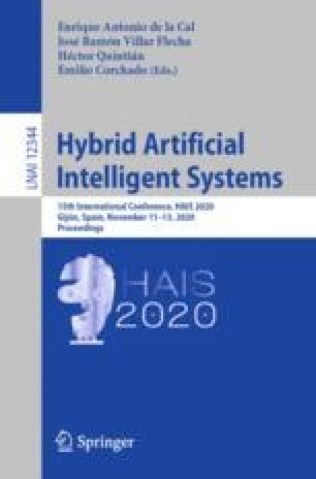
Hybrid Artificial Intelligent Systems ; 15th International Conference, HAIS 2020, Gijón, Spain, November 11-13, 2020, Proceedings
This book constitutes the refereed proceedings of the 15th International Conference on Hybrid Artificial Intelligent Systems, HAIS 2020, held in Gijón, Spain, in November 2020. The 65 regular papers presented in this book were carefully reviewed and selected from 106 submissions. The papers are grouped into these topics: advanced data processing and visualization techniques; bio-inspired models and optimization; learning algorithms; data mining, knowledge discovery and big data; and hybrid artificial intelligence applications.

Hyberbolic Conservation Laws in Continuum Physics
This masterly exposition of the mathematical theory of hyperbolic system for conservation laws brings out the intimate connection with continuum thermodynamics, by emphasising issues in which the analysis may reveal something about the physics and, in return, the underlying physical structure may direct and drive the analysis.Theis edition contains chapter recounting the exciting recent developments on the vanishing viscosity method. Numerous new sections have been incorporated in preexisting chapters, to introduce newly derived results or present older material
