



Page 67
Page 67

A Dressing Method in Mathematical Physics
The monograph is devoted to the systematic presentation of the so called "dressing method" for solving differential equations (both linear and nonlinear) of mathematical physics. The essence of the dressing method consists in a generation of new non-trivial solutions of a given equation from (maybe trivial) solution of the same or related equation.
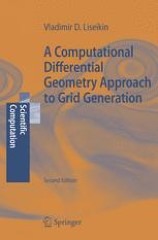
A Computational Differential Geometry Approach to Grid Generation
This monograph gives a detailed treatment of applications of geometric methods to advanced grid technology. It focuses on and describes a comprehensive approach based on the numerical solution of inverted Beltramian and diffusion equations with respect to monitor metrics for generating both structured and unstructured grids in domains and on surfaces.
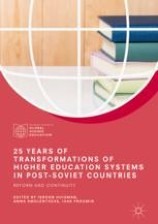
25 Years of Transformations of Higher Education Systems in Post-Soviet Countries : Reform and Continuity
A result of the first ever study of the transformations of the higher education institutional landscape in fifteen former USSR countries after the dissolution of the Soviet Union in 1991. It explores how the single Soviet model that developed across the vast and diverse territory of the Soviet Union over several decades has evolved into fifteen unique national systems, systems that have responded to national and global developments while still bearing some traces of the past. The book is distinctive as it presents a comprehensive analysis of the reforms and transformations in the region in the last 25 years; and it focuses on institutional landscape through the evolution of the institutional types established and developed in Pre-Soviet, Soviet and Post-Soviet time. It also embraces all fifteen countries of the former USSR, and provides a comparative analysis of transformations of institutional landscape across Post-Soviet systems.

150 Best New Eco Home Ideas
Features nearly 500 pages of full-color photographs and dozens of inventive and decorative profiles. Architects, designers, and homeowners today looking for comfortable, beautiful dwellings with a minimal carbon footprint will find a cornucopia of ideas in this handsome compendium. A fabulous review of the most forward-thinking eco-friendly house designs being created today, 150 Best New Eco Home Ideas showcases the work of internationally renowned architects and designers who have achieved practical, innovative, and stunning solutions around the globe. From solar paneling and wind energy systems to environmentally-friendly heating and cooling solutions and thermal glazing to trombe walls, 150 Best New Eco Home Ideas covers the latest trends and breakthroughs in eco homes. Inspiring and inventive, this lush sourcebook is essential for architects, designers, interior decorators, and all conscientious homeowners interested in creating warm and inviting homes with only a fraction of the environmental impact of those using conventional methods
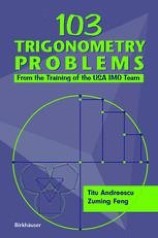
103 Trigonometry Problems : From the Training of the USA IMO Team
103 Trigonometry Problems contains highly-selected problems and solutions used in the training and testing of the USA International Mathematical Olympiad (IMO) team. Though many problems may initially appear impenetrable to the novice, most can be solved using only elementary high school mathematics techniques.
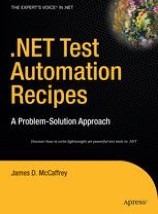
.NET Test Automation Recipes : A Problem-Solution Approach
If you develop, test, or manage .NET software, you will find .NET Test Automation Recipes: A Problem-Solution Approach very useful. The book presents practical techniques for writing lightweight software test automation in a .NET environment and covers API testing thoroughly. It also discusses lightweight, custom Windows application user interface automation and teaches you low-level web application user interface automation. Additional material covers SQL stored procedure testing techniques.
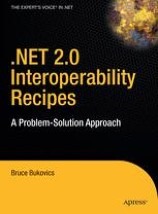
.NET 2.0 Interoperability Recipes : A Problem-Solution Approach
.NET represents a new and improved way of developing software for the Windows platform. Given the chance, you'd probably rewrite all of your existing code in the newer managed code environment that .NET provides. But it is difficult or impossible to throw out all existing legacy code and start over when a new technology arrives. Instead, you need to find a way to move forward with new .NET development while reusing existing pieces of tested, working code. You need a way to interoperate with the existing code until you have a chance to finally rewrite all of it in .NET.
