



Page 66
Page 66

Metal-Catalysed Reactions of Hydrocarbons
This unique book, drawing on the author’s lifetime experience, critically evaluates the extensive literature on the field of Metal-Catalysed Reactions of Hydrocarbons. Emphasis is placed on reaction mechanisms involving hydrogenation, hydrogenolysis, skeletal and positional isomerisation, and exchange reactions. The motivation for fundamental research in heterogeneous catalysis is to identify the physicochemical characteristics of active centres for the reaction being studied, to learn how these may be modified or manipulated to improve the desired behavior of the catalyst, and to recognize and control those aspects of the catalyst's structure that limit its overall performance. By restricting the subject of the book to hydrocarbons, Bond has progressively developed the subject matter to include areas of importance both to researchers and to those working in the industry.
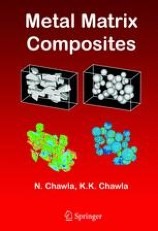
Metal Matrix Composites
Metal matrix composites (MMCs) have become real engineering materials. MMCs have gone from "niche" materials to several high performance applications in aerospace, electronic packaging, automotive, and recreational products. This text focuses on the synergistic relationships among processing, microstructure, and properties of metal matrix composites. An introductory chapter is followed by a chapter each on reinforcements and common matrix materials. A chapter on the very important topic of processing of MMC is then presented. This is followed by a chapter on interfaces in MMCs, their characterization and techniques to obtain interfacial properties. Next there are chapters on monotonic mechanical and physical properties; followed by cyclic fatigue, creep, and wear resistance. We conclude with a chapter on applications of MMCs. The book is well-suited for upper level undergraduate students, graduate students, and as general source of reference on the subject for the professionals in the field.

Metal Forming Practise : Processes - Machines - Tools
Economical and flexible, advanced metal-forming processes form the core of modern industrial production. This professional sourcebook presents the most important metal-working and shearing processes and the related machines and tooling - in a concise form that is supplemented by ample illustrations, tables and flow charts. Practical examples show how to calculate the forces and strain energy of the processes and the specific parameters of the machines, while exercises enable readers to check their comprehension.

Metal Fatigue : What It Is, Why It Matters
This book presents important concepts in metal fatigue in a straightforward manner, for the benefit of readers who must understand more advanced documents on a wide range of metal fatigue topics.

Metal Catalyzed Reductive C-C Bond Formation : A Departure from Preformed Organometallic Reagents
The prototypical catalytic reductive C–C bond formations, the Fischer-Tropsch reaction [1] and alkene hydroformylation [2], were discovered in 1922 and 1938, respectively [3,4]. These processes, which involve reductive coupling to carbon monoxide, have long been applied to the industrial manufacture of commodity chemicals [5]. Notably, alkene hydroformylation, also known as the oxo-synthesis, has emerged as the largest volume application of homogeneous metal catalysis, accounting for the production of over 7 million metrictons of aldehyde annually. Despite the impact of these prototypical reductive C–C bond formations, this field of research lay fallow for several decades.

Metal Catalyzed Cascade Reactions
Transition metal-catalyzed cascade reactions are an elegant approach to complex molecular scaffolds. Besides their esthetics and increase in structural complexity, they have also become mechanistic challenges for the combination of organometallic elementary steps. As a consequence, cascade reactions have revolutionized synthetic strategies and conceptual thinking. The authors highlight cyclization via carbopalladation and acylpalladation and Heck-pericyclic sequences. They discuss p-allyl palladium-based cascade reactions, Michael-type additions as an entry to transition-metal-promoted cyclizative transformations, and sequential or consecutive palladium-catalyzed processes, and show Pauson-Khand cascades, metal-catalyzed cyclizations of acyclic precursors, as well as cascade and sequential ruthenium-catalyzed transformations. Therefore, the reader finds overview of an exciting and highly dynamic field of a new and innovative methodological concept

Metal Catalysed Reactions in Ionic Liquids
Metal Catalysed Reactions in Ionic Liquids is the first non-edited book on the subject of metal catalysed reactions in ionic liquids and covers the literature from its origins until early 2005.The book begins with a general introduction to the field of biphasic/multiphasic catalysis and describes the synthesis, functionalisation and fundamental properties of ionic liquids relevant to catalysis.This book is an invaluable resource for all those working in catalysis, green chemistry, and advanced synthetic methods,

Metainformatics ; International Symposium, MIS 2004, Salzburg, Austria, September 15-18, 2004, Revised Selected Papers
Constitutes the refereed post-proceedings of the Metainformatics Symposium, MIS 2004, held in Salzburg, Austria. This book reviews 17 papers that are devoted to finding useful abstractions, analytical frameworks, and systems that improve the understanding of the underlying structure of disciplines and families of systems within computer science.

Metaheuristics for Scheduling in Industrial and Manufacturing Applications
This book deals with the application of various novel metaheuristics in scheduling. Addressing the various issues of scheduling in industrial and manufacturing applications is the novelty of this edited volume. Important features include the detailed overview of the various novel metaheuristic scheduling approaches, excellent coverage of timely, advanced scheduling topics, state-of-the-art theoretical research and application developments and chapters authored by pioneers in the field.

Metaheuristics for Scheduling in Distributed Computing Environments
This volume presents meta-heuristics approaches for Grid scheduling problems. Due to the complex nature of the problem, meta-heuristics are primary techniques for the design and implementation of efficient Grid schedulers. The volume brings new ideas, analysis, implementations and evaluation of meta-heuristic techniques for Grid scheduling, which make this volume novel in several aspects. The 13 chapters of this volume have identified several important formulations of the problem, which we believe will serve as a reference for the researchers in the Grid computing community.

Metaheuristics for Hard Optimization : Methods and Case Studies
Metaheuristics for Hard Optimization comprises of three parts. The first part is devoted to the detailed presentation of the four most widely known metaheuristics: the simulated annealing method, tabu search, the evolutionary algorithms, and ant colony algorithms. Each one of these metaheuristics is actually a family of methods, of which the essential elements are discussed. In the second part, the book presents some other less widespread metaheuristics, then, extensions of metaheuristics and some ways of research are described . The problem of the choice of a metaheuristic is posed and solution methods are discussed. The last part concentrates on three case studies from telecommunications, air traffic control, and vehicle routing.

Metaheuristics : Progress in Complex Systems Optimization
The aim of METAHEURISTICS: Progress in Complex Systems Optimization is to provide several different kinds of information: a delineation of general metaheuristics methods, a number of state-of-the-art articles from a variety of well-known classical application areas as well as an outlook to modern computational methods in promising new areas. Therefore, this book may equally serve as a textbook in graduate courses for students, as a reference book for people interested in engineering or social sciences, and as a collection of new and promising avenues for researchers working in this field.

Metaheuristics : Progress as Real Problem Solvers
Metaheuristics: Progress as Real Problem Solvers is a peer-reviewed volume of eighteen current, cutting-edge papers by leading researchers in the field. Included are an invited paper by F. Glover and G. Kochenberger, which discusses the concept of Metaheuristic agent processes, and a tutorial paper by M.G.C. Resende and C.C. Ribeiro discussing GRASP with path-relinking. Other papers discuss problem-solving approaches to timetabling, automated planograms, elevators, space allocation, shift design, cutting stock, flexible shop scheduling, colorectal cancer and cartography. A final group of methodology papers clarify various aspects of Metaheuristics from the computational view point

Metaheuristic Procedures for Training Neural Networks
Metaheuristic Procedures For Training Neural Networks provides successful implementations of metaheuristic methods for neural network training. Apart from Chapter 1, which reviews classical training methods, the chapters are divided into three main categories. The first one is devoted to local search based methods, including Simulated Annealing, Tabu Search, and Variable Neighborhood Search.

Metaheuristic Optimization via Memory and Evolution : Tabu Search and Scatter Search
Tabu Search (TS) and, more recently, Scatter Search (SS) have proved highly effective in solving a wide range of optimization problems, and have had a variety of applications in industry, science, and government. The goal of METAHEURISTIC OPTIMIZATION VIA MEMORY AND EVOLUTION: Tabu Search and Scatter Search is to report original research on algorithms and applications of tabu search, scatter search or both, as well as variations and extensions having "adaptive memory programming" as a primary focus. Individual chapters identify useful new implementations or new ways to integrate and apply the principles of TS and SS, or that prove new theoretical results, or describe the successful application of these methods to real world problems.The chapters of this book provide a series of landmarks along the way as we investigate and seek to better understand the elements of tabu search and scatter search that account for their successes in an astonishingly varied range of applications.

Metaheuristic Optimization Algorithms in Civil Engineering : New Applications
Discusses the application of metaheuristic algorithms in a number of important optimization problems in civil engineering. Advances in civil engineering technologies require greater accuracy, efficiency and speed in terms of the analysis and design of the corresponding systems. As such, it is not surprising that novel methods have been developed for the optimal design of real-world systems and models with complex configurations and large numbers of elements.

Metagraphs and Their Applications
The graph is a critical and useful concept in designing many information processing systems. Systems such as transaction processing systems, decision support systems, and workflow systems are all helped immensely by a graphical structure. Simple graphs and digraphs allow for the construction of a variety of system design tools that provide a convenient and appealing format for illustrating information infrastructures, while allowing any subsequent analyses to be performed by the user. However, the metagraph, a new graphical structure that is developed in this book, goes beyond the representational and provides Information Systems with a robust, analytical modeling graphic tool.

Metabolomics : The frontier of systems biology
Metabolism is the sum of the chemical reactions in cells that produce life-sustaining chemical energy and metabolites. In the post-genome era, metabolism has taken on new significance for biological scientists: metabolites are the chemical basis of phenotypes that are final expressions of genomic information. This book covers research on metabolomics, ranging from the development of specialized chemical analytical techniques to the construction of databases and methods for metabolic simulation. The authors have been directly involved in the development of all the subject areas, including capillary electrophoresis, liquid chromatography, mass spectrometry, metabolic databases, and metabolic simulation. Breakthrough achievements and the future of metabolome studies are described, making this book a valuable source for researchers in metabolomics in diverse fields, such as plant, animal, cellular, microbial, pharmaceutical, medical, and genetic sciences.

Metabolomics : A powerful tool in systems biology
This book brings together the latest results in the field of metabolomics. It comprehensively presents the current state of the metabolomics field by underscoring experimental methods, analysis techniques, standardization practices, and advances in specific model systems. As a result, it significantly broadens our perspective on the principles and strategies underpinning this emerging field.

Metabolome Analyses : Strategies for Systems Biology
Metabolome Analyses is intended as a follow-up to Metabolic Profiling: Its Role in Biomarker Discovery and Gene Function Analysis (Kluwer, 2003). That text offered guidelines to currently available technology, bioinformatics and databases. Evidence was presented showing metabolic profiling as a valuable addition to genomics and proteomics strategies devoted to drug discovery and development. This book focuses on how metabolic profiling is being more comprehensively integrated with the other "omics" technologies. It provides more practical applications of such "panomics" or "Systems Biology" approaches. The expanding use of mass spectrometry as a measurement technology in metabolic profiling is addressed through demonstrated applications. The integration of metabolic profiling and proteomics is probably most developed for plant-based studies, which was not addressed in Volume 1. Other areas related to metabolic profiling continue to show significant development. These include database strategies and an increased acceptance by the pharmaceutical industry of metabolic profiling. Also covered is the use of in silico metabolic networks. Again the focus is primarily on the pharmaceutical industry but the importance of metabolic profiling to studies on human nutrition (a burgeoning area) is discussed.
