



Page 60
Page 60

Microsimulation Population Projections with SAS : A Reference Guide
This book for a researcher needs to perform microsimulation for population projections, building its own model with a common statistical software such as SAS might a good option, because this software is widely used among scholars and is taught in most social sciences departments. We define what is microsimulation: a modelling based on individual-level data rather than aggregated level data, in which transitions between the states are determined stochastically with a random experiment. We finally provide some examples of microsimulation models used by social scientists.

Microservices : Science and Engineering
This book describes in contributions by scientists and practitioners the development of scientific concepts, technologies, engineering techniques and tools for a service-based society. The focus is on microservices, i.e cohesive, independent processes deployed in isolation and equipped with dedicated memory persistence tools, which interact via messages.
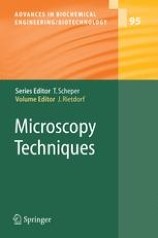
Microscopy Techniques
Light Microscopy has returned to fashion through the synergy of green fluorescent protein and a clutch of techniques involving some permutation of lasers, mathematics and acronyms, which offer the prospect of watching biological molecules at work inside living cells. This volume provides an introduction to these techniques … . this volume will be a longer-term reference for anyone who wants to understand how these methods actually work. In this respect it is excellent.

Microscopy of Semiconducting Materials 2007 ; Proceedings of the 15th Conference, 2-5 April 2007, Cambridge, UK
The conference focused upon the most recent advances in the study of the structural and electronic properties of semiconducting materials by the application of transmission and scanning electron microscopy, scanning probe microscopy and X-ray-based methods. Conference sessions concentrated on key topics including state-of-the-art studies in high resolution imaging and analytical electron microscopy, advanced scanning probe microscopy, scanning electron microscopy and focused ion beam applications, novel epitaxial layer phenomena, the properties of quantum nanostructures, III-nitride developments, GeSi/Si for advanced devices, metal-semiconductor contacts and silicides and the important effects of critical device processing treatments.

Microscopy of Semiconducting Materials ; Proceedings of the 14th Conference, April 11-14, 2005, Oxford, UK
This is a long-established international biennial conference series, organised in conjunction with the Royal Microscopical Society, Oxford, the Institute of Physics, London and the Materials Research Society, USA. The 14th conference in the series focused on the most recent advances in the study of the structural and electronic properties of semiconducting materials by the application of transmission and scanning electron microscopy. The latest developments in the use of other important microcharacterisation techniques were also covered and included the latest work using scanning probe microscopy and also X-ray topography and diffraction. Developments in materials science and technology covering the complete range of elemental and compound semiconductors are described in this volume.

Microscale Heat Transfer - Fundamentals and Applications ; Proceedings of the NATO Advanced Study Institute on Microscale Heat Transfer - Fundamentals and Applications in Biological and Microelectromechanical Systems, Cesme-Izmir, Turkey, 18-30 July, 2004
This volume contains an archival record of the NATO Advanced Institute on Microscale Heat Transfer – Fundamental and Applications in Biological and Microelectromechanical Systems held in Çesme – Izmir, Turkey, July 18–30, 2004.

Microscale Diagnostic Techniques
Microscale Diagnostic Techniques highlights the most innovative and powerful developments in microscale diagnostics. It provides a resource for scientists and researchers interested in learning about the techniques themselves, including their capabilities and limitations.

Microscale and Nanoscale Heat Transfer
Constitutes a particularly complete and original collection of ideas, models, numerical methods and experimental tools which will prove invaluable in the study of microscale and nanoscale heat transfer. It should be of interest to research scientists and thermal engineers who wish to carry out theoretical research or metrology in this field, but also to physicists concerned with the problems of heat transfer, or teachers requiring a solid foundation for an undergraduate university course in this area.

Micropropagation methods in temporary immersion systems
Presents vital techniques for the commercial micropropagation of plants. It explores numerous micropropagation protocols in different types of temporary immersion systems for plant species with agricultural, medicinal, ornamental, and forestry interest, detailing the type of bioreactor and the optimal parameters necessary to guarantee obtaining the largest number of commercial propagules. Written for the highly successful Methods in Molecular Biology series, chapters include introductions to their respective topics, lists of the necessary materials and reagents, step-by-step and readily reproducible laboratory protocols, and tips on troubleshooting and avoiding known pitfalls.

Microplastic in the Environment : Pattern and Process
This book examines global plastic pollution, an issue that has become a critical societal challenge with implications for environmental and public health. This volume provides a comprehensive, holistic analysis on the plastic cycle and its subsequent effects on biota, food security, and human exposure. Importantly, global environmental change and its associated, systems-level processes, including atmospheric deposition, ecosystem complexity, UV exposure, wind patterns, water stratification, ocean circulation, etc., are all important direct and indirect factors governing the fate, transport and biotic and abiotic processing of plastic particles across ecosystem types.

Micro-Place Homicide Patterns in Chicago : 1965 - 2017
This brief examines 36,263 homicides in Chicago over a 53-year study period, 1965 through 2017, at micro place grid cells of 150 by 150 meters. This study shows not only long-term historical patterns of homicides in Chicago, but also places that historical context of homicide in reference to the dramatic increases in homicides in 2016-2017. It uses several different inequality metrics, as well as kernel density maps to demonstrate that homicides were more clustered in the 1960’s compared to later periods. Using zero inflated group-based trajectory models, it demonstrates the long-term temporal stability of homicides at micro places. This brief will be of interest to researchers in policing, homicide, and research methods in criminology.

Microphone Array Signal Processing
Microphone arrays have attracted a lot of interest in the last two decades. The reason behind this is that they have the potential to solve many important problems in both human-machine and human-human interfaces for different kinds of communications. But before microphone arrays can be deployed broadly, there is a strong need for a deep understanding of the problems encountered in the real world and their clear formulation in order that useful algorithms can be developed to process the sensor signals.

Microorganisms in the deterioration and preservation of cultural heritage
This book offers a comprehensive overview of the role and potential of microorganisms in the degradation and preservation of cultural materials (e.g. stone, metals, graphic documents, textiles, paintings, glass, etc.).

Microorganisms in soils : Roles in genesis and functions
The following key topics are covered: Microorganisms in bioerosion, humification, mineralization and soil aggregation; Microbial energetics and microbes in biogeochemical processes such as carbon and nitrogen cycles and phosphorus bio-availability; Interactions in the mycorrhizosphere, e.g. between mycorrhizal fungi and bacteria; Impact of microbes on plant nutrient cycling and the possible effects of transgenic rhizospheres on soil fungi; Functions of microbes in specific soil compartments such as soil surface or toxic metal polluted soils; Regulation of microbial activities in functional domains that are influenced by biotic or abiotic factors; Use of marker genes and isotopes as examples for modern techniques in soil microbiology.

Microorganisms in Foods 6 : Microbial Ecology of Food Commodities
The second edition of Microorganisms in Foods 6: Microbial Ecology of Food Commodities is intended for those primarily in applied aspects of food microbiology. For 17 commodity areas it describes the initial microbial flora and the prevalence of pathogens, the microbiological consequences of processing, typical spoilage patterns, episodes implicating those commodities with foodborne illness, and measures to control pathogens and limit spoilage. The control measures are presented in a standardized format in line with international developments in risk management. A comprehensive index has also been added.

Microorganisms and Bioterrorism
The purpose of this book is to bring together, in a single volume, the most up-to-date information concerning microbes with potential as bioterrorist weapons. The primary audience includes microbiologists, including bacteriologists, virologists and mycologists, in academia, government laboratories and research institutes at the forefront of studies concerning microbes which have potential as bioterrorist weapons, public health physicians and researchers and scientists who must be trained to deal with bioterrorist attacks as well as laboratory investigators who must identify and characterize these microorganisms from the environment and from possibly infected patients.

Micronutrient Deficiencies in Global Crop Production
This book provides a valuable guide to the requirements of crops for plant micronutrients and the causes, occurrence and treatment of deficiencies. It is essential reading for many agronomy, plant nutrition and agricultural extension professionals.

Micrometeorology
This book focuses on atmospheric processes which directly effect human environments within the lowest 100-1000 meters of the atmosphere over regions of only a few kilometers in extent. The book is the English translation of the second edition of the German book "Applied Meteorology – Micrometeorological Methods".

Micrometeorites and the Mysteries of Our Origins
This book relates an attempt to decrypt the still-obscure first billion years of history of the young Earth, during a cataclysmic period during which our planet was heavily bombarded by bodies ranging in size from that of Mars to 0.1 mm sized tiny micrometeorites. It was thus found that micrometeorites played an essential role in the formation of the post-lunar atmosphere. They also provided a surprisingly large diversity of reactions in the organic prebiotic chemistry required for the birth of life on our blue planet. The author presents a wide-ranging review of the type of knowledge required to decrypt this history, which provides extensive background information from astronomy, planetary dynamics, planetology, astrobiology and earth sciences. This book will appeal to both the scientist and the general reader. It will be a source of material for lectures, and possibly new investigations, in these fields.

Micrometastasis
Distant metastases are the main cause of cancer-related death. The onset of the metastatic process can now be assessed in cancer patients by the use of immunocytochemical and molecular methods that allow the identification of disseminated carcinoma cells in regional lymph nodes, peripheral blood or distant organs. There is increasing evidence that the detection and characterization of tumor cells present in bone marrow or peripheral blood can provide clinically important information. In this book, leading experts in the area of micrometastasis research provide an overview that summarizes the current state of research on micrometastatic disease in patients with solid tumors. In each chapter, the technical aspect as well as clinical relevance of micrometastasis detection is discussed. The book addresses basic researchers as well as clinicians involved in the treatment of cancer patients.
