



Page 6
Page 6

Diabetes genetic finder & predictor = أداة البحث والتنبؤ الجيني لمرض السكري
The diabetes genetic finder & predictor app is a comprehensive, user-friendly solution that revolutionizes diabetes care. This powerful app integrates a wide array of features designed to empower diabetes patients and enhance their overall well-being. A standout feature of the app is its ability to predict the risk of hereditary diabetes diseases, offering users early detection and intervention opportunities. It also predicts general diabetes risk, diabetic foot complications, and retinopathy. Users can monitor their blood sugar levels, heart rate, and oxygenation either manually or through smart watch integration. Additionally, users can enter their diabetes type and HbA1c levels.The app's medication management feature simplifies the complex task of tracking and organizing medications, providing timely reminders to ensure adherence to treatment plans. Users can scan QR codes on products to check their sugar content and suitability, schedule their medications, generate reports for specific periods, and access a comprehensive list of frequently asked questions about diabetes..

Developing secure auto-scaling military postponement e-service in Syria
This study is about developing a secure, autoscaling military postponement e-service in Syria, that allows Syrian citizens to conveniently access services provided by the Syrian Recruitment Department conveniently through their smartphones. Currently, many Syrian citizens need to use the services offered by the Recruitment Department, resulting in overcrowding in a single location for similar purposes. This situation places a significant burden on both citizens and the government. The mobile application will facilitate various services such as enlistment and postponing military service by employing a well-designed software architecture that ensures scalability and efficient distribution of these services.

Developing Ambient Intelligence ; Proceedings of the International Conference on Ambient Intelligence Developments (AmI.d’07)
The research papers included in the AmI.d proceedings are devoted to both theoretical and applied research, cover the most leading-edge research and contain contributions that have been formally reviewed and chosen by a selected International Program Committee. The contributions cover a wide range of AmI topics.

Designing Sustainable Technologies, Products and Policies : From Science to Innovation
This open access book provides insight into the implementation of Life Cycle approaches along the entire business value chain, supporting environmental, social and economic sustainability related to the development of industrial technologies, products, services and policies; and the development and management of smart agricultural systems, smart mobility systems, urban infrastructures and energy for the built environment. The book is based on papers presented at the 8th International Life Cycle Management Conference that took place from September 3-6, 2017 in Luxembourg, and which was organized by the Luxembourg Institute of Science and Technology (LIST) and the University of Luxembourg in the framework of the LCM Conference Series.

Designing sustainable cities
Emphasizes new ways of designing for a sustainable city and urban environment. From several angles the future of our urbanism is illuminated. From a philosophical point of view, the city is seen as an organism, following complex ecosystemic principles, shining light on indigenous perspectives to become beneficial for sustainable design and core questions are asked whether current architectural practice is really sustainable. Simultaneously concrete practices are presented for cities in transformation, focusing on green infrastructure, smart city principles and health.

Designing sustainable and resilient cities : Small interventions for stronger urban food-water-energy management
Explores the link between the food-water-energy nexus and sustainability, and the extraordinary value that small tweaks to this nexus can achieve for more resilient cities and communities. Using data from Urban Living Labs in six participating cities (Eindhoven, Gdansk, Miami, Southend-on-Sea, Taipei and Uppsala) to co-define context-specific challenges, the results from each city are collated into an Integrated Decision Support System to guide and improve robust decision making on future urban development. The book presents contributions from CRUNCH, a transdisciplinary team of scholars and practitioners whose expertise spans urban climate modelling; food, water and energy management; the design of resilient public space; collecting better urban data; and the development of smart city technology. Whilst previous works on the food-water-energy nexus have focused on large, transnational cases, this book explores local ways to use the food-water-energy nexus to improve urban resilience.

Designing smart homes : The role of artificial intelligence
The area of smart homes is fast developing as an emergent area which attracts the synergy of several areas of science. This volume offers a collection of contributions addressing how artificial intelligence (AI), one of the core areas of computer science, can bring the growing area of smart homes to a higher level of functionality where homes can truly realize the long standing dream of proactively helping their inhabitants in an intelligent way.
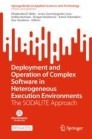
Deployment and operation of complex software in heterogeneous execution environments : The SODALITE approach
This book provides an overview of the work developed within the SODALITE project, which aims at facilitating the deployment and operation of distributed software on top of heterogeneous infrastructures, including cloud, HPC and edge resources. The experts participating in the project describe how SODALITE works and how it can be exploited by end users. While multiple languages and tools are available in the literature to support DevOps teams in the automation of deployment and operation steps, still these activities require specific know-how and skills that cannot be found in average teams. The SODALITE framework tackles this problem by offering modelling and smart editing features to allow those we call Application Ops Experts to work without knowing low level details about the adopted, potentially heterogeneous, infrastructures. The framework offers also mechanisms to verify the quality of the defined models, generate the corresponding executable infrastructural code, automatically wrap application components within proper execution containers, orchestrate all activities concerned with deployment and operation of all system components, and support on-the-fly self-adaptation and refactoring.

Deploying .NET Applications : Learning MSBuild and ClickOnce
Whether building a console application, a web service, or a smart client, you eventually need to distribute your finished work. Deploying .NET Applications is a complete guide to delivering applications built with .NET. Packed with hands-on guidance, practical examples, and war stories from the authors many experiences with deployment scenarios, this book provides everything you need to know. The book begins by introducing the deployment problem, then examines why deployment is an engineering problem for organizations. Subsequent chapters provide detail about deploying each type of application, then discuss automated deployments.
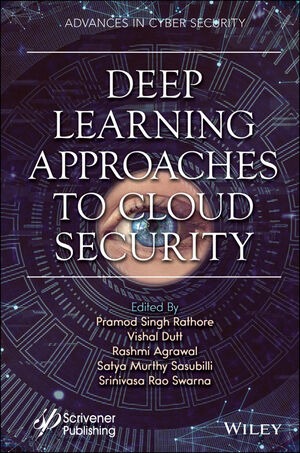
Deep learning approaches to cloud security
Covering one of the most important subjects to our society today, cloud security, this editorial team delves into solutions taken from evolving deep learning approaches, solutions allowing computers to learn from experience and understand the world in terms of a hierarchy of concepts, with each concept defined through its relation to simpler concepts.

Data science and data analytics : Opportunities and challenges
Gives the concept of data science, tools, and algorithms that exist for many useful applications / Provides many challenges and opportunities in data science and data analytics that help researchers to identify research gaps or problems / Identifies many areas and uses of data science in the smart era / Applies data science to agriculture, healthcare, graph mining, education, security, etc.

Data Driven Methods for Civil Structural Health Monitoring and Resilience : Latest Developments and Applications
Provides a comprehensive overview of data-driven methods for structural health monitoring (SHM) and resilience of civil engineering structures, mostly based on artificial intelligence or other advanced data science techniques. This allows existing structures to be turned into smart structures, thereby allowing them to provide intelligible information about their state of health and performance on a continuous, relatively real-time basis. Artificial-intelligence-based methodologies are becoming increasingly more attractive for civil engineering and SHM applications

Data Center Handbook : Plan, Design, Build, and Operations of a Smart Data Center ; 2nd ed.
Explains the fundamentals, advanced technologies, and best practices used in planning, designing, building and operating a mission-critical, energy-efficient, sustainable data center. This handbook, in its second edition, covers anatomy, ecosystem and taxonomy of data centers that enable the Internet of Things and artificial intelligent ecosystems and encompass the following: Data center overview and strategic planning Data center technologies Data center design and construction Data center operations technologies

Data augmented design : Embracing new data for sustainable urban planning and design
This book offers an essential introduction to a new urban planning and design methodology called Data Augmented Design (DAD) and its evolution and progresses, highlighting data driven methods, urban planning and design applications and related theories. The authors draw on many kinds of data, including big, open, and conventional data, and discuss cutting-edge technologies that illustrate DAD as a future-oriented design framework in terms of its focus on multi-data, multi-method, multi-stage and multi-scale sustainable urban planning. In four sections and ten chapters, the book presents case studies to address the core concepts of DAD, the first type of applications of DAD that emerged in redevelopment-oriented planning and design, the second type committed to the planning and design for urban expansion, and the future-oriented applications of DAD to advance sustainable technologies and the future structural form of the built environment. The book is geared towards a broad readership, ranging from researchers and students of urban planning, urban design, urban geography, urban economics, and urban sociology, to practitioners in the areas of urban planning and design.

Cybersecurity of Digital Service Chains : Challenges, Methodologies, and Tools
This book presents the main scientific results from the H2020 GUARD project. The GUARD project aims at filling the current technological gap between software management paradigms and cybersecurity models, the latter still lacking orchestration and agility to effectively address the dynamicity of the former. This book provides a comprehensive review of the main concepts, architectures, algorithms, and non-technical aspects developed during three years of investigation; the description of the Smart Mobility use case developed at the end of the project gives a practical example of how the GUARD platform and related technologies can be deployed in practical scenarios.

Cyber-physical systems of systems : Foundations : A conceptual model and some derivations : The AMADEOS legacy
Technical Systems-of-Systems (SoS) – in the form of networked, independent constituent computing systems temporarily collaborating to achieve a well-defined objective – form the backbone of most of today’s infrastructure. The energy grid, most transportation systems, the global banking industry, the water-supply system, the military equipment, many embedded systems, and a great number more, strongly depend on systems-of-systems. The correct operation and continuous availability of these underlying systems-of-systems are fundamental for the functioning of our modern society.

Cyber Security : Critical Infrastructure Protection
Focus on critical infrastructure protection. The chapters present detailed analysis of the issues and challenges in cyberspace and provide novel solutions in various aspects. The first part of the book focus on digital society, addressing critical infrastructure and different forms of the digitalization, strategic focus on cyber security, legal aspects on cyber security, citizen in digital society, and cyber security training. The second part focus on the critical infrastructure protection in different areas of the critical infrastructure. The chapters cover the cybersecurity situation awareness, aviation and air traffic control, cyber security in smart societies and cities, cyber security in smart buildings, maritime cyber security, cyber security in energy systems, and cyber security in healthcare. The third part presents the impact of new technologies upon cyber capability building as well as new challenges brought about by new technologies. These new technologies are among others are quantum technology, firmware and wireless technologies, malware analysis, virtualization.

Cryptography and coding ; 10th IMA International Conference, Cirencester, UK, December 19-21, 2005, Proceedings
Constitutes the refereed proceedings of the 10th IMA International Conference on Cryptography and Coding, held in Cirencester, UK, in December 2005. This book features papers that are organized in topical sections on coding theory, signatures and signcryption, symmetric cryptography, side channels, algebraic cryptanalysis, and more.

Cryptographic hardware and embedded systems - CHES 2007 ; 9th International Workshop, Vienna, Austria, September 10-13, 2007, Proceedings
The papers collected in this volume represent cutting-edge world wide research in the rapidly evolving fields of crypto-hardware, fault-based and side-channel cryptanalysis, and embedded cryptography, at the crossing of academic and - dustrial research. The wide diversity of subjects appearing in these proceedings covers virtually all related areas and shows our e?orts to extend the scope of CHES more than usual.

Crowd investment platform
Investment platforms are challenging the grip of massive business on the venture sector and are providing new means of power to the crowds. It is of no surprise that new and interesting equity sharing platforms are now disrupting the convention practices of the market. There are a number of concerns that the user faces, including legal, commercial and security concerns, as well as concerns about trusting these platforms in investment operations, especially in the financial transfer process between the user and companies. We built a site that reduces the presence of these concerns and protects the user from fraud, as we store money transfers and investment operations between users and companies or users and other users within a smart contract that brings them together and the amount that will be invested in the blockchain that encodes this contract and makes it public only to its owners.
