



Page 6
Page 6

Ethnobotany and ethnopharmacology of medicinal and aromatic plants : steps towards drug discovery
Medicinal and aromatic plants are beneficial to human health. Plant-derived molecules possess biological activities that can be used to prevent many infectious diseases and metabolic disorders. Ethnobotany and Ethnopharmacology of Medicinal and Aromatic Plants summarizes techniques and methods used to study the biological activities of plant-derived extracts and compounds to study ethnobotanical and ethnopharmacological features of medicinal and aromatic plants.

Essentials of pharmaceutical analysis
Provides detailed information on the background, basic principles, and components of techniques used for the analysis of pharmaceuticals and biopharmaceuticals. Focusing on those analytical techniques that are most frequently used for pharmaceuticals, it classifies them into three major sections and 19 chapters, each of which discusses a respective technique in detail. Chiefly intended for graduate students in the pharmaceutical sciences, the book will familiarize them with the components, working principles and practical applications of these indispensable analytical techniques.

Epigenome editing : Methods and protocols
This second volume details new and updated methods covering applications of epigenome editing. Chapters guide readers through general and topical reviews, DNA-binding devices, optimization of the effector domains, readout of epigenome marks, and approaches for delivery at the cellular and organismal level. Written in the highly successful Methods in Molecular Biology series format, chapters include introductions to their respective topics, lists of the necessary materials and reagents, step-by-step, readily reproducible laboratory protocols, and key tips on troubleshooting and avoiding known pitfalls.

Epigenetics and chromatin
This book provides a state-of-the-art account of a few selected hot spots by scientists at the edge in this extremely active field. It puts special emphasis on two main streams of research. One is the role of post-translational modifications of proteins, mostly histones, on chromatin structure and accessibility.

Engineering electromagnetics
Electromagnetics' is a classic text that has been updated for electromagnetics education today. It stresses fundamental concepts and problem solving, and discusses the material in an understandable and readable way

Encyclopedia of Geomagnetism and Paleomagnetism
Consisting of more than 300 articles written by ca 200 leading experts, this authoritative reference encompasses the entire fields of Geomagnetism and Paleomagnetism in a single volume. It describes in fine detail at an assessable level the state of the current knowledge and provides an up-to-date synthesis of the most basic concepts. As such, it will be an indispensable working tool not only for geophysicists and geophysics students but also for geologists, physicists, atmospheric and environmental scientists, and engineers.

Empire under the microscope : Parasitology and the British literary imagination, 1885–1935
This book considers science and empire, and the stories we tell ourselves about them. Emilie Taylor-Pirie examines a wealth of archival material including medical lectures, scientific publications, popular biography, and personal and professional correspondence, alongside novels, poems, newspaper articles, and political speeches, to excavate the shared vocabularies of literature and medicine. She demonstrates how forms such as poetry and biography; genres such as imperial romance and detective fiction; and modes such as adventure and the Gothic, together informed how tropical diseases, their parasites, and their vectors, were understood in relation to race, gender, and nation.
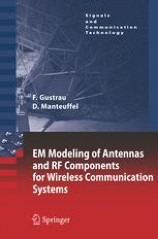
EM Modeling of Antennas and RF Components for Wireless Communication Systems
The book focuses on the practical aspects of computational electrodynamics. A short review of electromagnetic field theory and an illustrative introduction to basic concepts of numerical methods provide the mathematical and physical background. The main part the book guides the reader step-by-step through the modelling process: from the initial "what question shall the model answer?", through the setting up of a computer model by creating geometry, boundary conditions, sources, …, to post processing, validation, and optimization. A number of antenna and filter examples demonstrate the advantages and disadvantages of different numerical methods. So the book provides a realistic view on the capabilities and limits of state-of-the-art 3D-field simulators and on how to apply this knowledge efficiently to EM analysis and designing of RF applications in modern communication systems.

Elektromagnetische feldtheorie : für ingenieure und physiker = Electromagnetic field theory : For engineers and physicists
This well-established, didactically excellent textbook combines clarity with extraordinary accuracy in the formation of terms and in the derivations. The electromagnetic field theory and the mathematical methods required for it are taught. Maxwell's equations are presented and explained. This is followed by explanations about electrostatics, flow problems, magnetostatics, quasi-stationary fields and electromagnetic waves. It gives an outlook on fundamental questions, some of which are still open, from physics to quantum mechanics. A chapter on the special theory of relativity, with the help of which numerous problems of electromagnetic field theory can be solved more easily, rounds off the work.

Electronic engineering for neuromedicine
Advances in electronics have revolutionized diagnostic tools and created mobile medicine, touch-sensitive prosthetics, remote surgery, and artificial organs such as hearts, retinas, and bionic skins. This reference text shows the number of ways in which electronic engineering feeds into neuromedicine namely: the modelling and simulation of the brain, providing access to the brain, analysis of the signals and activities of the brain and influencing the function of the brain for therapeutic purposes. The areas of electronic engineering considered are electronic circuits, spectral analysis, filtering of signals, electromagnetic fields and wave propagation. The book is a valuable source to medical students and practitioners as well as electronic engineering and physics students and graduates.

Electromagnetics in Biology
In this book, the authors intended to focus their effort on describing (1) biological responses of human and animals, both in vivo and in vitro methodologies, to magnetic and/or electromagnetic field exposure, (2) characteristics of effective fields, (3) hypotheses to explain possible mechanisms of interaction between the fields and cells, and (4) induced current in ELF and induced heat in RF fields as key interaction mechanisms. The readers can have the present-day comprehensive knowledge about biological responses to electromagnetic field exposure.

Electromagnetic Theory for Microwaves and Optoelectronics
This book is a first year graduate text on electromagnetic fields and waves. At the same time it serves as a useful reference for researchers and engineers in the areas of microwaves and optoelectronics. Following the presentation of the physical and mathematical foundations of electromagnetic theory, the book discusses the field analysis of electromagnetic waves confined in material boundaries, or so-called guided waves, electromagnetic waves in the dispersive media and anisotropic media, Gaussian beams and scalar diffraction theory. The theories and methods presented in the book are foundations of wireless engineering, microwave and millimeter wave techniques, optoelectronics and optical fiber communication.

Electromagnetic Technologies in Food Science
Electromagnetic Technologies in Food Science examines various methods employed in food applications that are based on the entire electromagnetic (EM) spectrum. Focusing on recent advances and challenges in food science and technology, this is an up-to-date volume that features vital contributions coming from an international panel of experts who have shared both fundamental and advanced knowledge of information on the dosimetry methods, and on potential applications of gamma irradiation, electron beams, X-rays, radio and microwaves, ultraviolet, visible, pulsed light, and more.

Electromagnetic Radiation : Variational Methods, Waveguides and Accelerators
This is a graduate level textbook on the theory of electromagnetic radiation and its application to waveguides, transmission lines, accelerator physics and synchrotron radiation. It has grown out of lectures and manuscripts by Julian Schwinger prepared during the war at MIT's Radiation Laboratory, updated with material developed by Schwinger at UCLA in the 1970s and 1980s, and by Milton at the University of Oklahoma since 1994. The book includes a great number of straightforward and challenging exercises and problems. It is addressed to students in physics, electrical engineering, and applied mathematics seeking a thorough introduction to electromagnetism with emphasis on radiation theory and its applications.

Electromagnetic Field Theory for Engineers and Physicists
This established, didactically excellent textbook unifies intuitiveness with extraordinary precision of its terminology and the derivation of concepts. It was developed as manuscript to teach students in electrical engineering, and has served to do so for thousands of students over two decades.

Electromagnetic Field Matter Interactions in Thermoelasic Solids and Viscous Fluids
This book in two parts delivers a thorough derivation of nonrelativistic interaction models of electromagnetic field theories with thermoelastic solids and viscous fluids, the intention being to derive unique representations for the observable field quantities. Part I, a revised and updated version of LNP 88 "Field Matter Interactions in Thermoelastic Solids," investigates the foundations and the equivalence of various formulations of the interaction of the electromagnetic field with thermoelastic solids in the classical continuum physics limit, while Part II extensively surveys two major fields of applications, namely, magnetoelastic instabilities and vibrations, and electrorheological fluids.

Electromagnetic Compatibility of Integrated Circuits : Techniques for low emission and susceptibility
Electromagnetic Compatibility of Integrated Circuits: Techniques for Low Emission and Susceptibility focuses on the electromagnetic compatibility of integrated circuits. The basic concepts, theory, and an extensive historical review of integrated circuit emission and susceptibility are provided. Standardized measurement methods are detailed through various case studies. EMC models for the core, I/Os, supply network, and packaging are described with applications to conducted switching noise, signal integrity, near-field and radiated noise. Case studies from different companies and research laboratories are presented with in-depth descriptions of the ICs, test set-ups, and comparisons between measurements and simulations. Specific guidelines for achieving low emission and susceptibility derived from the experience of EMC experts are presented.

Electromagnetic Aquametry : Electromagnetic wave interaction with water and moist substances
This book covers all aspects of Electromagnetic Aquametry. It summarizes the wide area of metrology and its applications in electromagnetic sensing of moist materials. The physical properties of water in various degrees of binding interacting with electromagnetic fields is presented by model systems. The book describes measurement methods and sensors in the frequency domain, TDR-techniques for environmental problems, methods and sensors for quality assessment of biological substances, and nuclear magnetic resonance techniques

Electromagnetic and Optical Pulse Propagation 1 : Spectral Representations in Temporally Dispersive Media
Electromagnetic & Optical Pulse Propagation presents a systematic treatment of the radiation and propagation of transient electromagnetic and optical wave fields through causal, locally linear media which exhibit both temporal dispersion and absorption.

Effect of Clove essential oil and Rosemary aqueous extract for future promising triple acting gel
In this study, antimicrobial properties of rosemary essential oil (Rosmarinus officinalis-REO), rosemary aqueous extract, clove essential oil (Syzygium aromaticum-CEO) and their mixtures (REO/CEO) at 10% and 20% concentration for each one have been evaluated. The agar well diffusion method has been used for screening the antimicrobial activity against Staphylococcus aureus, Staphylococcus albus, Streptococcus, Enterococcus Salmonella, Escherichia coli, Acinetobacter, Pseudomonas aeruginosa, Candida albicans In Staph. Aureus, Salmonella, E.coli, Acinetobacter and p.aeruginosa...
