



Page 6
Page 6

Design and performance of tall buildings for wind
Design and Performance of Tall Buildings for Wind, MOP 143 provides a framework for the design of tall buildings for wind, based on the current state-of-practice in tall building structural design and wind tunnel testing

Design a govermental reinforced concrete building in damascus
This calculation sheet is done to study 5 story building by using reinforced concrete, this sheet analysis the building according to horizontal loads and vertical by slabs ripped and solid beams dropped or hidden shear walls and columns stairs and elevators core and as an foundation system this sheet will analysis 3type pad and strip and also a partial rafter. In this build it has a shelter in its basement and it should be surrounded by walls work as rati9ng wall.
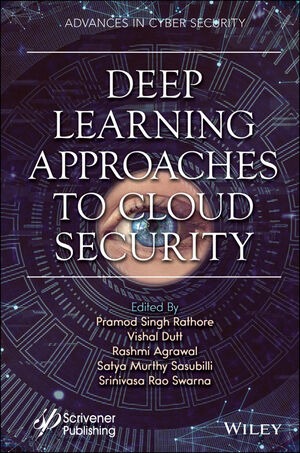
Deep learning approaches to cloud security
Covering one of the most important subjects to our society today, cloud security, this editorial team delves into solutions taken from evolving deep learning approaches, solutions allowing computers to learn from experience and understand the world in terms of a hierarchy of concepts, with each concept defined through its relation to simpler concepts.

Deep impact mission : Looking beneath the surface of a cometary nucleus
Deep Impact, or at least part of the flight system, is designed to crash into comet 9P/Tempel 1. This bold mission design enables cometary researchers to peer into the cometary nucleus, analyzing the material excavated with its imagers and spectrometers. The book describes the mission, its objectives, expected results, payload, and data products in articles written by those most closely involved. This mission has the potential of revolutionizing our understanding of the cometary nucleus.

Databases, Information Systems, and Peer-to-Peer Computing ; International Workshops, DBISP2P 2005/2006, Trondheim, Norway, August 28-29, 2006, Revised Selected Papers
The P2P paradigm lends itself to constructing large-scale, complex, adaptive, autonomous and heterogeneous database and information systems, endowed with clearly specified and difierential capabilities to negotiate, bargain, coordinate and self-organize the information exchanges in large-scale networks. This vision will have a radical impact on the structure of complex organizations (business, sci- tific or otherwise) and on the emergence and the formation of social communities, and on how the information is organized and processed. The P2P information paradigm naturally encompasses static and wireless connectivity and static and mobile architectures. Wireless connectivity combined with the increasingly small and powerful mobile devices and sensors poses new challenges as well as opp- tunities to the database community. Information becomes ubiquitous, highly distributed and accessible anywhere and at any time over highly dynamic, - stable networks with very severe constraints on the information management and processing capabilities.

Cryogenic Mixed Refrigerant Processes
Cryogenic refrigerators operating with refrigerant mixtures were developed under classified and proprietary programs for many years, and it was only after 1991 that the world realized the importance of the mixed refrigerant systems for cryogenic refrigeration. Mixed refrigerant cryogenic processes are also used in most large base load natural gas liquefaction plants. Hundreds of patents exist on different aspects of mixed refrigerant processes for liquefaction of natural gas, as well as the composition of mixtures for Joule-Thomson and other refrigerators. Still, the fundamental aspects of these processes continued to not receive the attention they deserve in open literature in the view of these commercial interests.

Creating Cool MINDSTORMS® NXT Robots
Build and program MINDSTORM NXT robots with Daniele Benedettelli, one of the world's most respected NXT robot builders. He shows you how to build and program them from scratch, starting with the simplest robots and progressing in difficulty to a total of seven award–winning robots! You can download all the code, along with low–resolution videos that show how your robot works when it's finished. You don't need to be a programmer to develop these cool robots, because all the code is provided, but advanced developers will enjoy seeing the secrets of Benedettelli's code and techniques revealed.

Cost Accounting for Shared IT Infrastructures
Distributed client/server architectures are the technological backbone of today’s data centres. A usage-based allocation of infrastructure costs to business processes or users is often not possible as the necessary resource consumption measurements incur too much overhead. Reinhard Brandl proposes a method to derive estimates for the expected resource consumption of customer-oriented services during standard load tests. This facilitates the determination of usage-based cost allocation keys significantly. He implements the concept in a software tool kit and evaluates it successfully in a set of experiments with multi-tier database applications. In particular, he uses the determined consumption estimates as input parameters for Queuing Network Models which lead to highly accurate performance predictions. Finally, he analyzes how the method can be integrated into existing IT processes at the BMW Group.

Coping with Overloaded Criminal Justice Systems : The Rise of Prosecutorial Power Across Europe
The comparative study documented here was supported by the Fritz-Thyssen Foundation and the European Commission. It examined prosecution services in different European countries intending to understand their national role and function within the respective criminal justice system and thereby to highlight common features and important differences between European systems. The prosecution service is regarded as a part of the criminal justice system; a coherent system under pressure to deal with high numbers of cases. Within this system the prosecution level is increasingly becoming the decisive stage reducing its workload by means of simplified methods and proceedings.

Cooperative Information Agents XI ; Matthias Klusch, Koen V. Hindriks, Mike P. Papazoglou, Leon Sterling
In today’s world of ubiquitously connected heterogeneous information systems and computing devices, the intelligent coordination and provision of relevant added-value information at any time, anywhere is of key importance to a va- ety of applications. This challenge is envisioned to be coped with by means of appropriate intelligent and cooperative information agents. An information agent is a computational software entity that has access to one or multiple heterogeneous and geographically dispersed data and infor- tion sources. It pro-actively searches for and maintains information on behalf of its human users, or other agents preferably just in time. In other words, it is managing and overcoming the di?culties associated with information overload in open, pervasive information and service landscapes. Each component of a modern cooperative information system is represented by an appropriate intelligent information agent capable of resolving system and semantic heterogeneities in a given context on demand. Cooperative infor- tion agents are supposed to accomplish both individual and shared joint goals depending on the actual user preferences in line with given or deduced limits of time, budget and resources available.

Control of cracking in reinforced concrete structures
Provides guidelines which can extend the existing standards and codes to cover these types of special works, especially those which are massive in nature, taking account of their specific behaviour in terms of cracking and shrinkage together with other important properties such as water/air leak tightness

Computational Techniques for Voltage Stability Assessment and Control
The key concepts of both saddle node and Hopf bifurcation are covered. These are illustrated with the differential-algebraic equation (DAE) model of the system. The model is complex enough to include Load Tap-Changing transformers as well as HVDC models. The dynamic model of the generating unit includes the exciter since it plays a crucial role in voltage stability. A promising decoupled dynamic simulation technique is introduced for time domain analysis. Computational Techniques for Voltage Stability Assessment and Control provides the computational tools and algorithms needed for development of on-line voltage security assessment

Computational Structural Concrete : Theory and Applications
Concrete is by far the most used building material due to its advantages: it is shapeable, cost-effective and available everywhere. Combined with reinforcement it provides an immense bandwidth of properties and may be customized for a huge range of purposes. Thus, concrete is the building material of the 20th century. To be the building material of the 21th century its sustainability has to move into focus. Reinforced concrete structures have to be designed expending less material whereby their load carrying potential has to be fully utilized.

Computational earthquake physics ; Part II
Exciting developments in earthquake science have benefited from new observations, improved computational technologies, and improved modeling capabilities. Designing realistic supercomputer simulation models for the complete earthquake generation process is a grand scientific challenge due to the complexity of phenomena and range of scales involved from microscopic to global. The present volume - Part II - incorporates computational environment and algorithms, data assimilation and understanding, model applications and iSERVO. Topics covered range from iSERVO and QuakeSim: implementing the international solid earth research virtual observatory by integrating computational grid and geographical information web services; LURR (Load-Unload Response Ratio) described in six papers involving this promising earthquake forecasting model; pattern informatics and phase dynamics and their applications, which was also a highlight in the Workshop; computational algorithms, including continuum damage models and visualization and analysis of geophysical datasets; evolution of mantle material; the state vector approach; and assimilation of data such as geodetic data, GPS data, and seismicity and laboratory experimental data.

Combinatorial and Algorithmic Aspects of Networking ; 4th Workshop, CAAN 2007, Halifax, Canada, August 14, 2007, Revised Papers
It contiants developments on all aspects of networking could be presented. It covered were diverse, with talks on strategies for searching in networks, for cleaning networks of unwanted - truders, on difierent routing strategies, and on scheduling, load balancing, probability, a concept central to network modeling and managing.

Mathematical Methods in Electro-Magneto-Elasticity
The mechanics of Coupled Fields is a discipline at the edge of modern research connecting Continuum Mechanics with Solid State Physics. It integrates the Mechanics of Continuous Media, Heat Conductivity and the theory of Electromagnetism that are usually studied seperately. For an accurate description of the influence of static and dynamic loadings, high temperatures and strong electromagneticfields in elastic media and constructive installations, a new aproach is required; an approach that has the potential to establish a synergism between the above-mentioned fields. Throughout the book a vast number of problems are considered: two-dimensional problems of electro-magneto-elasticity as well as static and dynamical problems for piecewise homogenous compound piezoelectric plates weakened by cracks and openings. The boundary conditions, the constuctive equations and the mathematical methods for their solution are thoroughly presented, so that the reader can get a clear quantative and qualitative understnding of the phenomena taking place.

Material Properties under Intensive Dynamic Loading
Understanding the physical and thermomechanical response of materials subjected to intensive dynamic loading is a challenge of great significance in engineering today. This volume assumes the task of gathering both experimental and diagnostic methods in one place, since not much information has been previously disseminated in the scientific literature. This book will thus be an invaluable companion for both the seasoned practioner as well as for the novice entering the field of experimental shock physics.

Management of Multimedia Networks and Services ; 8th International Conference on Management of Multimedia Networks and Services, MMNS 2005, Barcelona, Spain, October 24-26, 2005, Proceedings
We are delighted to present the proceedings of the 8th IFIP/IEEE International Conference on Management of Multimedia Networks and Services (MMNS 2005). The MMNS 2005 conference was held in Barcelona, Spain on October 24–26, 2005. As in previous years, the conference brought together an international audience of researchers and scientists from industry and academia who are researching and developing state-of-the-art management systems, while creating a public venue for results dissemination and intellectual collaboration. This year marked a challenging chapter in the advancement of management systems for the wider management research community, with the growing complexities of the “so-called” multimedia over Internet, the proliferation of alternative wireless networks (WLL, WiFi and WiMAX) and 3G mobile services, intelligent and high-speed networks scalable multimedia services and the convergence of computing and communications for data, voice and video delivery. Contributions from the research community met this challenge with 65 paper submissions; 33 high-quality papers were subsequently selected to form the MMNS 2005 technical program. The diverse topics in this year’s program included wireless networking technologies, wireless network applications, quality of services, multimedia, Web applications, overlay network management, and bandwidth management.
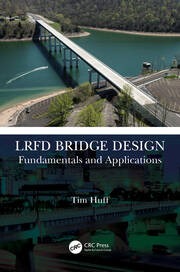
LRFD Bridge Design : Fundamentals and Applications
Examines and explains material from the 9th edition of the AASHTO LRFD Bridge Design Specifications, including deck and parapet design, load calculations, limit states and load combinations, concrete and steel I-girder design, bearing design, and more. With increased focus on earthquake resiliency, two separate chapters– one on conventional seismic design and the other on seismic isolation applied to bridges– will fully address this vital topic. The primary focus is on steel and concrete I-girder bridges, with regard to both superstructure and substructure design. / Includes several worked examples for a project bridge as well as actual bridges designed by the author / Examines seismic design concepts and design details for bridges / Presents the latest material based on the 9th edition of the LRFD Bridge Design Specifications / Covers fatigue, strength, service, and extreme event limit states / Includes numerous solved problems and exercises at the end of each chapter to illustrate the concepts presented

Load balancing using SDN
Software-Defined Network (SDN) is considered a breakthrough to the global network. It plays an important role in performance improvement and network optimization. SDN is a new mechanism for managing and designing networks rather than the current traditional network system which does not afford more services and higher data rates; therefore, we analyze the effect of applying load balancing techniques and its importance in different SDN environments. In this paper, we propose a dynamic server load balancing technique in SDN architecture. Hence, we implement a server Connection-based load balancing technique and evaluate its performance with a static Round-robin and Random-based in both mininet emulation environment and OpenFlow-enabled switch using Ryu OpenFlow controller.
