



Page 6
Page 6

Engineering Fluid Mechanics
Guides students from theory to application, emphasizing critical thinking, problem solving, estimation, and other vital engineering skills. Clear, accessible writing puts the focus on essential concepts, while abundant illustrations, charts, diagrams, and examples illustrate complex topics and highlight the physical reality of fluid dynamics applications.

Engineering Damage Mechanics : Ductile, Creep, Fatigue and Brittle Failures
Engineering Damage Mechanics is deliberately oriented toward applications of Continuum Damage Mechanics to failures of mechanical and civil engineering components in ductile, creep, fatigue and brittle conditions depending upon the thermomechanical loading and the materials: metals and alloys, polymers, elastomers, composites, concretes. Nevertheless, to help engineers, researchers, beginners or not, the first two chapters are devoted to the main concepts of damage mechanics and to the associated computational tools.

Engineering and health in compressed air work : Proceedings of the 2nd International conference on engineering and health in compressed air Work held at St Catherine's College, Oxford, from 25th to 27th September, 2002
Presents the proceedings of theSecond International Conference on Engineering and Health in Compressed Air Work, Heald at St Catherine's College, Oxford from 25th to 27th September 2002. The 35 papers in this volume cover a range of subjects, including experience with oxygen decompressionnin the UK and research related tothe introduction of oxygen decompression, which will be of interest to everyone involved with the engineering, medical or regulatory aspects of compressed air working and all those with an interest in hyperbaric exposure.

Energy methods in structural mechanics : A comprehencive introduction to matrix and finite element methods of analysis
Provides a basic and clear introduction to the principles underlying finite elements and the computer based methods of the analysis of structures commonly used in industry. There can be a danger that, without such an understanding, engineers will use these computer based analysis tools as black boxes and accept results without being aware of the real significance of the information obtained.

Endurance time excitation functions : Intensifying dynamic loads for seismic analysis and design
Seismic assessment and earthquake-resistant design are essential applications of earthquake engineering for achieving seismic safety for buildings, bridges, infrastructure, and many other components of the built environment. The Endurance Time Method (ETM) is used for seismic analysis of simple and complex structural systems and civil engineering infrastructure as well as producing optimal and cost-effective structural and detail designs. ETM is a relatively new approach to seismic assessment and design of structures. It has developed into a versatile tool in the field, and its practical applications are expected to increase greatly in the near future.

Elements of spatial structures : Analysis and design
Highlights all aspects of the analysis and design of elements related to spatial structures, which have been carefully selected from existing structures. Analysing the design of elements of any full scale structure that contains facilities that have already been constructed makes good economic sense and avoids duplication in respect of research and development, the decision-making process and accurate design criteria for new constructed facilities.

Electrochemical processes and corrosion in reinforced concrete
Some reinforced concrete structures prematurely corrode as they age, with significant financial implications, but it is not immediately clear why some are more durable than others. This book looks at the various mechanisms for corrosion and how what seemed to be a relatively simple matter has become more complex the further it is understood due to the properties of concrete, steel and the way reinforced concrete structures are constructed. The significance of electrochemical processes is identified with recent research using new technology discussed.

Elasto-plastic damage behaviour of concrete elements
Shows how the mechanical phenomena of familiar concrete structures can be expressed using mathematical models and provides a solid basic understanding of the nonlinear behaviour of concrete structures. It applies elasto-plastic theory to damage mechanics and the modelling of cracks in concrete. Sets out the reality of damage mechanics in concrete Connects standard theory with good design and construction practice

Ecological and Health Effects of Building Materials
Deals with the present adverse effects of using precarious building materials on the ecology and human health. Also, the detailed discussions on the novel and greener construction materials and their utilization as an alternative to the conventional harmful existing methods and materials are also presented in the subsequent chapters. This book helps to fill the research gaps in the existing prior-art knowledge in the field of sustainable construction and green building materials and methods giving due importance to ecology and health, specifically to the fields of sustainable structural engineering, sustainable geotechnical engineering, sustainable road engineering, etc.

Earthquake Source Asymmetry, Structural Media and Rotation Effects
This is the first book on rotational effects in earthquakes, a revolutionary concept in seismology. Existing models do no yet explain the significant rotational and twisting motions that occur during an earthquake and cause the failure of structures. This breakthrough monograph thoroughly investigates rotational waves, basing considerations on modern observations of strong rotational ground motions and detection of seismic rotational waves. To describe the propagation of such waves the authors consider structured elastic media that allow for rotational motions and rotational deformations of the ground, sometimes stronger than translational deformations. The rotation and twist effects are investigated and described and their consequences for designing tall buildings and other important structures are presented. The book will change the way the world views earthquakes and will interest scientists and researchers in the fields of Geophysics, Geology and Civil Engineering.

Earthquake disaster simulation of civil infrastructures : From tall buildings to urban areas
Covers a range of numerical modeling approaches, higher performance computation methods, and high fidelity visualization techniques for earthquake disaster simulation of tall buildings and urban areas. It also demonstrates successful engineering applications of the proposed methodologies to typical landmark projects (e.g., Shanghai Tower and CITIC Tower, two of the world's tallest buildings; Beijing CBD and San Francisco Bay Area).
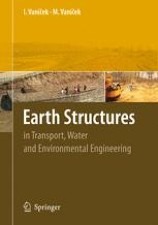
Earth Structures : In Transport, Water and Environmental Engineering
This book describes the principles of working with soil as a construction material, including two basic ways of treating it: geosynthetics and stabilization. The book discusses the design logic and ways to control Earth Structures, which differ significantly from other construction materials. Building with Earth involves greater uncertainty and risk, which means that there is a need for better design detailing and improvement in the quality of financial calculations. The general part of the book gives a detailed description of the principles of limit states according to Eurocode 7, after which geotechnical design is also described. Subsequent chapters concentrate on earth structures for transport, water, and environmental projects. The chapter on Earth Structures in transport engineering presents detailed coverage of limit states of stability and deformation. Earth Structures in water engineering prioritizes the limit state of internal erosion. Earth Structures in environmental engineering describes new designs, in which part of the structure is created from non-standard materials which are usually susceptible to internal collapse, double porosity, unsaturation, etc. It also focuses on protecting the surrounding environment from contamination.

Earth reinforcement and soil structures
Provides a comprehensive explanation and illustration of earth reinforcement and soil structures, from the viewpoint of practising engineers involved in design and construction. This edition has been updated to reflect the latest changes in theory, materials and practice.

Dynamics of Railway Bridges
Provides a comprehensive survey of the dynamic stresses in railway bridges under moving vehicles and summarizes important theoretical and experimental results which has been obtained from various research programs dealing with European railway bridges.

Dynamics of Freezing-Thawing Soil around Subway Shield Tunnels
Addresses development laws for axial strain and excess pore water pressure in silty clay around subway shield tunnels before and after freezing-thawing when subjected to subway loading, as well as the effect of freezing-thawing on the dynamic parameters of silty clay, including the dynamic modulus and damping ratio, introducing readers to the design and construction of bypasses in subway tunnels with the artificial freezing method. On this basis, it then studies the microstructures of silty clay before and after freezing-thawing cyclic loading by means of scanning electron microscope tests and mercury intrusion porosimetry tests. Lastly, the book presents a numerical simulation of the dynamics of silty clay around subway tunnels before and after thawing.

Dynamics : An introduction for civil and structural engineers
Provides civil and structural engineers with introductory information on all the main principles and important aspects of the subject.
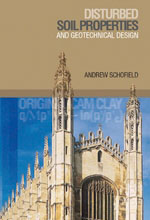
Disturbed soil properties and geotechnical design
Describes the developments leading to the Original Cam Clay model, focusing on fundamentals of the shearing of soil. The aim is to lay the groundwork of understanding that should form the basis of geotechnical design, guiding engineers towards the class of behaviour to be expected under different combinations of effective stress and water content.

Development of geopolymer from pond ash-thermal power plant waste : Novel constructional materials for civil engineers
Demonstrates how to utilize fly ash/pond ash (waste materials from thermal power plants) to produce a novel material called 'Geopolymer' (GP). Red mud, slags, etc., are mixed with fly ash to produce GP with enhanced strength. As shown in a few European countries, GP can replace cement, and some permanent structures constructed with GP are now appearing in a few advanced countries. GP, and geopolymer concrete, is considered suitable for the construction of roads, buildings, etc., and will eventually, fully or partially, replace cement.

Deterministic Numerical Modeling of Soil Structure Interaction
In order to describe soil–structure interaction in various situations (nonlinear, static, dynamic, hydro-mechanical couplings), this book gives an overview of the main modeling methods developed in geotechnical engineering. The chapters are centered around: the finite element method (FEM), the finite difference method (FDM), and the discrete element method (DEM). Deterministic Numerical Modeling of Soil–Structure Interaction allows the reader to explore the classical and well-known FEM and FDM, using interface and contact elements available for coupled hydro-mechanical problems.

Designers' guide to Eurocode 1 : Actions on buildings : EN1991-1-1 and -1-3 TO -1-7
Provides comprehensive guidance in the form of design aids, indications for the most convenient design procedures and worked examples. The books also include background information to aid the designer in understanding the reasoning behind and the objectives of the codes. All of the individual guides work in conjunction with the Designers' Guide to EN 1990 Eurocode: Basis of Structural Design.
