



Page 6
Page 6

Modern Aspects of Electrochemistry ; Vol. 42
MODERN ASPECTS OF ELECTROCHEMISTRY No. 42 Edited by Constantinos Vayenas University of Patras, Greece Topics in Number 42 include: The electrochemistry and electrocatalysis of Ruthenium in regards to the development of electrodes for Polymer Electrolyte Membrane (PEM) fuel cells Breakthroughs in Solid Oxide Fuel Cell (SOFC) anodes and cathodes leading to improved electrocatalysis Electrocatalysis of the electrochemical reduction of CO2 on numerous metals The interfacial phenomena of electrodeposition and codeposition, and the need for new theoretical analyses of the electrode-electrolyte interface Advantages of scanning tunneling microscopy (STM) in understanding the basics of catalysis, electrocatalysis and electrodeposition The role of electrochemistry in emerging technologies including electrodeposition and electroforming at the micro and nano levels, semiconductor and information storage, including magnetic storage devices.

Models in Cooperative Game Theory : Crisp, Fuzzy, and Multi-Choice Games
This book investigates the classical model of cooperative games with transfer able utility (TU-games) and models in which the players have the possibility to cooperate partially, namely fuzzy and multichoice games. In a crisp game the agents are either fully involved or not involved at all in cooperation with some other agents, while in a fuzzy game players are allowed to cooperate with infinitely many different participation levels, varying from non-cooperation to full cooperation. A multichoice game describes an intermediate case in which each player may have a fixed number of activity levels. Part I of the book is devoted to the most developed model in the theory of cooperative games, that of a classical TU-game with crisp coalitions, which we refer to as crisp game along the book. It presents basic notions, solutions concepts and classes of cooperative crisp games in such a way that allows the reader to use this part as a reference toolbox when studying the corresponding concepts from the theory of fuzzy games (Part II) and from the theory of multichoice games (Part III).

Models and methods for management science
Introduces systems science as an entry point to present a basic introduction to research models and methods in management science (operation research). This textbook selects the classic quantitative models and methods as well as rich cases and detailed examples, which are suitable for students with a certain management and economics knowledge for further study, and helps to develop the abilities of using the basic models in real life
Modellistica numerica per problemi differenziali = Numerical modeling for differential problems
This text introduces the basic concepts for the numerical modeling of partial differential problems. We consider the classic elliptic, parabolic and hyperbolic linear equations, but also other equations, such as those of diffusion and transport, of Navier-Stokes, and the conservation laws, and we provide numerous physical examples underlying these equations. Then we analyze numerical resolution methods based on finite elements, finite differences, finite volumes, spectral methods and domain decomposition methods. In particular, the algorithmic and computer implementation aspects are discussed and various easy-to-use programs are provided.

Modelling the dispersion of radionuclides in the marine environment : An introduction
This book is a practical guide to the subject of numerical modelling of radioactivity dispersion in the marine environment. Thus, the techniques and numerical procedures required are explained in detail, with the aim of enabling the reader to build a real mathematical model. The book covers basic concepts and techniques, such as solving the advection-diffusion equation in a simple 1D form, as well as the most recent developments (full 3D models for non-conservative radionuclides including chemical reactions and speciation). A chapter is dedicated to the basic hydrodynamic modelling that is always required to simulate the dispersion of tracers in the sea; Eulerian and Lagrangian modelling techniques are also described. A chapter describes sensitivity and uncertainty analysis, the final stage in modelling works. A review on some published radionuclide dispersion models is also included.

Modelling in Mathematical Programming : Methodology and Techniques
This book provides basic tools for learning how to model in mathematical programming, from models without much complexity to complex system models. It presents a unique methodology for the building of an integral mathematical model, as well as new techniques that help build under own criteria. It allows readers to structure models from the elements and variables to the constraints, a basic modelling guide for any system with a new scheme of variables, a classification of constraints and also a set of rules to model specifications stated as logical propositions, helping to better understand models already existing in the literature. It also presents the modelling of all possible objectives that may arise in optimization problems regarding the variables values. The book is structured to guide the reader in an orderly manner, learning of the components that the methodology establishes in an optimization problem. The system includes the elements, which are all the actors that participate in the system, decision activities that occur in the system, calculations based on the decision activities, specifications such as regulations, impositions or actions of defined value and objective criterion, which guides the resolution of the system.

Modelli Matematici in Biologia = Mathematical Models in Biology
This text is addressed first of all to the students of the Specialist Degrees in Biology of the Universities, but it will also be of interest to students of Natural Sciences and Medicine. The topics covered include the most classic mathematical models of biological phenomena (population dynamics, spread of infectious diseases, simple physiology models), but a relevant part of the text is dedicated to the mathematical approach to the theory of natural evolution. The only prerequisites required of the reader are those provided by the basic courses of Mathematics of the Bachelor's Degree in Biology, Natural Sciences or Medicine.

Modeling Theory in Science Education
The book focuses as much on course content as on instruction and learning methodology, and presents practical aspects that have repeatedly demonstrated their value in fostering meaningful and equitable learning of physics and other science courses at the secondary school and college levels.The author shows how a scientific theory that is the object of a given science course can be organized around a limited set of basic models. Special tools are introduced, including modeling schemata, for students to meaningfully construct models and required conceptions, and for teachers to efficiently plan instruction and assess and regulate student learning and teaching practice. A scientific model is conceived to represent a particular pattern in the structure or behavior of physical realities and to explore and reify the pattern in specific ways. The author further shows how to engage students in modeling activities through structured learning cycles.

Modeling Solid Oxide Fuel Cells : Methods, Procedures and Techniques
The volume is structured in two parts. Part one presents the basic theory, and the general equations describing SOFC operation phenomena. Part two deals with the application of the theory to practical examples, where different SOFC geometries, configurations (from single cells to hybrid systems), operating conditions (steady-state and dynamic), and different phenomena (e.g. performance, temperature and chemical species, and mechanical stress distribution) are analyzed in detail.

Modeling of Biological Materials
This interdisciplinary collection of surveys highlights the central role played by the mathematical modeling of mechanical properties having an effect on the biology, chemistry, and physics of living matter. One of the main goals of the book is to present—in a single, self-contained resource—topics that are widely scattered across the literature in a variety of journals having mutually nonintersecting communities of readers, such as applied mathematicians, engineers, biologists, and physicians. Readers coming from diverse backgrounds are provided with basic modeling ideas and tools to address important problems in the medical and health sciences. Presented are appropriate models as well as their implementation through numerical and computer simulations, which may lead to potential technological innovations useful in medicine.

Modeling and Control of Discrete-event Dynamic Systems : with Petri Nets and Other Tools
Discrete-event dynamic systems (DEDs) permeate our world, being of great importance in modern manufacturing processes, transportation and various forms of computer and communications networking. Modeling and Control of Discrete-event Dynamic Systems begins with the mathematical basics required for the study of DEDs and moves on to present various tools used in their modeling and control. Among the instruments explained are many forms of Petri net, Grafcet (the sequential function chart), state charts, formal languages and max-plus algebra; all essential for control students to become proficient with DEDs and to make use of them in practical applications.
Model-Driven Software Development
Abstraction is the most basic principle of software engineering. Abstractions are provided by models. Modeling and model transformation constitute the core of model-driven development. Models can be refined and finally be transformed into a technical implementation, i.e., a software system. The aim of this book is to give an overview of the state of the art in model-driven software development. Achievements are considered from a conceptual point of view in the first part, while the second part describes technical advances and infrastructures. Finally, the third part summarizes experiences gained in actual projects employing model-driven development. Beydeda, Book and Gruhn put together the results from leading researchers in this area, both from industry and academia. The result is a collection of papers which gives both researchers and graduate students a comprehensive overview of current research issues and industrial forefront practice, as promoted by OMG’s MDA initiative.
Model-Based Testing of Reactive Systems : Advanced Lectures
This book is based on a seminar held in Dagstuhl Castle, Germany, in January 2004. It presents 19 carefully reviewed and revised lectures given at the seminar in a well-balanced way ensuring competent complementary coverage of all relevant aspects. An appendix provides a glossary for model-based testing and basics on finite state machines and on labelled transition systems. The lectures are presented in topical sections on testing of finite state machines, testing of labelled transition systems, model-based test case generation, tools and case studies, standardized test notation and execution architectures, and beyond testing.

Model-based Fault Diagnosis Techniques : Design Schemes, Algorithms, and Tools
The objective of this book is to introduce basic model-based FDI schemes, advanced analysis and design algorithms and the needed mathematical and control theory tools at a level for graduate students and researchers as well as for engineers.

Model Order Reduction : Theory, Research Aspects and Applications
The goal of this book is three-fold: it describes the basics of model order reduction and related aspects. In numerical linear algebra, it covers both general and more specialized model order reduction techniques for linear and nonlinear systems, and it discusses the use of model order reduction techniques in a variety of practical applications. The book contains many recent advances in model order reduction, and presents several open problems for which techniques are still in development. It will serve as a source of inspiration for its readers, who will discover that model order reduction is a very exciting and lively field.

Model and Design of Improved Current Mode Logic Gates : Differential and Single-ended
This book presents MOSFET-based current mode logic (CML) topologies, which increase the speed, and lower the transistor count, supply voltage and power consumption. The improved topologies modify the conventional PDN, load, and the current source sections of the basic CML gates.

Mobile Virtual Work : A New Paradigm?
This is a book about mobile virtual work. It aims at clarifying the basic concepts and showing present practices and future challenges. With this book we realise our intention to present a ‘state of the art’ collection of knowledge on this subject. We very much hope that you will find the discussion about present day reality and future challenges of mobile virtual work as exciting as we do. It is possibly a new paradigm.
Mobile Edge Computing
It offers comprehensive, self-contained knowledge on Mobile Edge Computing (MEC), which is a very promising technology for achieving intelligence in the next-generation wireless communications and computing networks. The book starts with the basic concepts, key techniques and network architectures of MEC. Then, we present the wide applications of MEC, including edge caching, 6G networks, Internet of Vehicles, and UAVs. In the last part, we present new opportunities when MEC meets blockchain, Artificial Intelligence, and distributed machine learning (e.g., federated learning). We also identify the emerging applications of MEC in pandemic, industrial Internet of Things and disaster management.
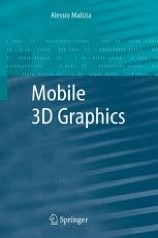
Mobile 3D Graphics
Historically, not enough was understood about how to deliver a high quality playing experience on handheld, small screen, small memory devices, plus there has been considerable confusion about the hardware’s abilities and restrictions. By addressing these issues this book provides: • A comprehensive explanation of 3D mobile graphics programming • Includes an extensive range of code samples in both C and Java • Combines 3D and 2D mobile graphics methods • Covers recent advances in mobile computer graphics techniques and applications. The book teaches fundamental 3D mobile graphics programming with standard APIs, and covers the basic and advanced application programme interfaces behind the major wireless and mobile devices supporting 3D graphics applications. Advanced undergraduates and postgraduates, as well as mobile application and games developers, will find this an excellent reference source.

Mix-Design and Application of Hydraulic Grouts for Masonry Strengthening
Provides guidance for the rational design and application of hydraulic grouts, based on a series of specific data (type of masonry, voids' width, targeted strength and durability level, available materials, etc.). To this end, the basic characteristics of a grout, i.e. its injectability (penetrability, fluidity and stability), its strength and durability, are taken into account by means of rational models and quantified expressions of all grout-design parameters. Thus, a holistic, rational mix design methodology for optimization of grout composition is given, permitting the preliminary design of grouts, without having to resort to multiple tests in advance.
