



Page 56
Page 56

Introduction to Genetic Algorithms
This book is designed to provide an in-depth knowledge on the basic operational features and characteristics of Genetic Algorithms. The various operators and techniques given in the book are pertinent to carry out Genetic Algorithm Research Projects. The book also explores the different types are Genetic Algorithms available with their importance. Implementation of Genetic Algorithm concept has been performed using the universal language C/C++ and the discussion also extends to Genetic Algorithm MATLAB Toolbox. Few Genetic Algorithm problems are programmed using MATLAB and the simulated results are given for the ready reference of the reader. The applications of Genetic Algorithms in Machine learning, Mechanical Engineering, Electrical Engineering, Civil Engineering, Data Mining, Image Processing, and VLSI are dealt to make the readers understand where the concept can be applied.
Introduction to Fuzzy Logic using MATLAB
Fuzzy Logic, at present is a hot topic, among academicians as well various programmers. This book is provided to give a broad, in-depth overview of the field of Fuzzy Logic. The basic principles of Fuzzy Logic are discussed in detail with various solved examples. The different approaches and solutions to the problems given in the book are well balanced and pertinent to the Fuzzy Logic research projects. The applications of Fuzzy Logic are also dealt to make the readers understand the concept of Fuzzy Logic. The solutions to the problems are programmed using MATLAB 6.0 and the simulated results are given. The MATLAB Fuzzy Logic toolbox is provided for easy reference.

Introduction to food chemistry
Bridges this gap in the relevant literature, as it employs the latest pedagogical theories in textbook writing to present the subject to students with broad range of cognitive skills. This book presents specific learning objectives for each chapter and is self-contained so students will not need to search for essential information outside the textbook. This new edition has been expanded to include chapters on sweeteners, glass transition, amino acids, proteins for major food commodities and food additives. All of the original chapters have been updated and expanded to include new research and technologies.

Introduction to Focused Ion Beams : Instrumentation, Theory, Techniques and Practice
Introduction to Focused Ion Beams is geared towards techniques and applications. The first portion of this book introduces the basics of FIB instrumentation, milling, and deposition capabilities. The chapter dedicated to ion-solid interactions is presented so that the FIB user can understand which parameters will influence FIB milling behavior. The remainder of the book focuses on how to prepare and analyze samples using FIB and related tools, and presents specific applications and techniques of the uses of FIB milling, deposition, and dual platform techniques. This is the only text that discusses and presents the theory directly related to applications and the only one that discusses the vast applications and techniques used in FIBs and Dual platform instruments.
Introduction to finite element analysis : A textbook for engineering students
Covers the basic concepts and applications of finite element analysis. It is specifically aimed at introducing this advanced topic to undergraduate-level engineering students and practicing engineers in a lucid manner. It also introduces a structural and heat transfer analysis software FEASTSMT which has wide applications in civil, mechanical, nuclear and automobile engineering domains.

Introduction to Epigenetics
This textbook leads the reader from basic concepts of chromatin structure and function and RNA mechanisms to the understanding of epigenetics, imprinting, regeneration and reprogramming. The textbook treats epigenetic phenomena in animals, as well as plants.

Introduction to Engineering Statistics and Six Sigma : Statistical Quality Control and Design of Experiments and Systems
Introduction to Engineering Statistics and Six Sigma contains precise descriptions of all of the many related methods and details case studies showing how they have been applied in engineering and business to achieve millions of dollars of savings. Specifically, the methods introduced include many kinds of design of experiments (DOE) and statistical process control (SPC) charting approaches, failure mode and effects analysis (FMEA), formal optimization, genetic algorithms, gauge reproducibility and repeatability (R&R), linear regression, neural nets, simulation, quality function deployment (QFD) and Taguchi methods. A major goal of the book is to help the reader to determine exactly which methods to apply in which situation and to predict how and when the methods might not be effective.

Introduction to Empirical Processes and Semiparametric Inference
This book provides a self-contained, linear, and unified introduction to empirical processes and semiparametric inference. These powerful research techniques are surprisingly useful for developing methods of statistical inference for complex models and in understanding the properties of such methods. The targeted audience includes statisticians, biostatisticians, and other researchers with a background in mathematical statistics who have an interest in learning about and doing research in empirical processes and semiparametric inference but who would like to have a friendly and gradual introduction to the area. The book can be used either as a research reference or as a textbook. The level of the book is suitable for a second year graduate course in statistics or biostatistics, provided the students have had a year of graduate level mathematical statistics and a semester of probability.
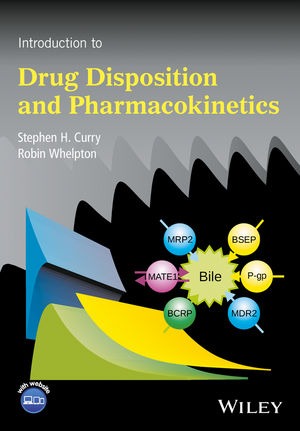
Introduction to Drug Disposition and Pharmacokinetics
The application of knowledge of drug disposition, and skills in pharmacokinetics, are crucial to the development of new drugs and to a better understanding of how to achieve maximum benefit from existing ones. The book takes the reader from basic concepts to a point where those who wish to will be able to perform pharmacokinetic calculations and be ready to read more advanced texts and research papers.

Introduction to Discrete Event Systems
Introduction to Discrete Event Systems is a comprehensive introduction to the field of discrete event systems, offering a breadth of coverage that makes the material accessible to readers of varied backgrounds. The book emphasizes a unified modeling framework that transcends specific application areas, linking the following topics in a coherent manner: language and automata theory, supervisory control, Petri net theory, Markov chains and queueing theory, discrete-event simulation, and concurrent estimation techniques

Introduction to design theory : philosophy, critique, history and practice
Introduces a comprehensive, systematic, and didactic outline of the discourse of design. Designed both as a course book and a source for research, this textbook methodically covers the central concepts of design theory, definitions of design, its historical milestones, and its relations to culture, industry, body, ecology, language, society, gender and ideology.

Introduction to data systems : Building from Python
Encompassing a broad range of forms and sources of data, this textbook introduces data systems through a progressive presentation. Introduction to Data Systems covers data acquisition starting with local files, then progresses to data acquired from relational databases, from REST APIs and through web scraping. It teaches data forms/formats from tidy data to relationally defined sets of tables to hierarchical structure like XML and JSON using data models to convey the structure, operations, and constraints of each data form.
Introduction to Data Mining and its Applications
This book explores the concepts of data mining and data warehousing, a promising and flourishing frontier in data base systems and new data base applications and is also designed to give a broad, yet in-depth overview of the field of data mining. Data mining is a multidisciplinary field, drawing work from areas including database technology, AI, machine learning, NN, statistics, pattern recognition, knowledge based systems, knowledge acquisition, information retrieval, high performance computing and data visualization.

Introduction to Cryptography : Principles and Applications
In the first part, this book covers the key concepts of cryptography on an undergraduate level, from encryption and digital signatures to cryptographic protocols. In the second part, more advanced topics are addressed, such as the bit security of one-way functions and computationally perfect pseudorandom bit generators.
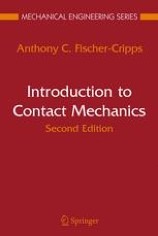
Introduction to Contact Mechanics
Introduction to Contact Mechanics, Second Edition is a gentle introduction to the mechanics of solid bodies in contact for graduate students, post doctoral individuals, and the beginning researcher. This second edition maintains the introductory character of the first with a focus on materials science as distinct from straight solid mechanics theory. Every chapter has been updated to make the book easier to read and more informative. A new chapter on depth sensing indentation has been added, and the contents of the other chapters have been completely overhauled with added figures, formulae and explanations.

Introduction to Computer Graphics : Using Java 2D and 3D
This book introduces the most important basic concepts of computer graphics, coupling the technical background and theory with practical examples and applications throughout. Its user-friendly approach enables the reader to gain understanding through the theory at work, via the many example programs provided. With only elementary knowledge of the programming language Java, the reader will be able to create their own images and animations immediately, using Java 2D and/or Java 3D.

Introduction to Computational Optimization Models for Production Planning in a Supply Chain
In this book we strive to provide models that capture many of the - tails faced by ?rms operating in a modern supply chain, but we stop short of proposing models for economic analysis of the entire multi-player chain. In other words, we produce models that are useful for planning within a supply chain rather than models for planning the supply chain. The usefulness of the models is enhanced greatly by the fact that they have been implemented - ing computer modeling languages. Implementations are shown in Chapter 7, which allows solutions to be found using a computer.

Introduction to Computational Biology : An Evolutionary Approach
Molecular biology has changed dramatically over the past two decades. Until the early 1990s genes were studied one at a time by small teams of researchers; today entire genomes are sequenced by internationally collaborating laboratories. In the bygone gene-centered era the accumulation of data was the rate-limiting step in research. Now that step is often data interpretation. This is increasingly dependent on computational methods and as a consequence, computational biology has emerged in the past decade as a new subdiscipline of biology. This introduction to computational biology is centered on the analysis of molecular sequence data. There are two closely connected aspects to biological sequences: (i) their relative position in the space of all other sequences, and (ii) their movement through this sequence space in evolutionary time. Accordingly, the first part of the book deals with classical methods of sequence analysis: pairwise alignment, exact string matching, multiple alignment, and hidden Markov models. In the second part evolutionary time takes center stage and phylogenetic reconstruction, the analysis of sequence variation, and the dynamics of genes in populations are explained in detail. In addition, the book contains a computer program with a graphical user interface that allows the reader to experiment with a number of key concepts developed by the authors.

Introduction to Complex Analysis in Several Variables
This book gives a comprehensive introduction to complex analysis in several variables. It clearly focusses on special topics in complex analysis rather than trying to encompass as much material as possible. Many cross-references to other parts of mathematics, such as functional analysis or algebras, are pointed out in order to broaden the view and the understanding of the chosen topics. A major focus is extension phenomena alien to the one-dimensional theory, which are expressed in the famous Hartog's Kugelsatz, the theorem of Cartan-Thullen, and Bochner's theorem.

Introduction to Classical Geometries
This book follows Felix Klein’s proposal of studying geometry by looking at the symmetries (or rigid motions) of the space in question. In this way the classical geometries are studied: Euclidean, affine, elliptic, projective and hyperbolic. For simplicity the focus is on the two-dimensional case, which is already rich enough, though some aspects of the 3- or n-dimensional geometries are included. Once plane geometry is well understood, it is much easier to go into higher dimensions.
