



Page 53
Page 53

Mechanisms of mineralization of vertebrate skeletal and dental tissues
Presents a multi-disciplinary approach to understanding mechanisms regulating the formation of mineral in vertebrate skeletal and dental tissues. The focus of the book is directed toward the mineralization process, an evolutionarily conserved system in which cells synthesize a complex and unique extracellular matrix into which mineral is deposited. Regulatory control is viewed though lenses that emphasize the genetic, physical-chemical, biochemical, structural, cellular and extracellular aspects of the mineralization process as they relate to crystal nucleation, growth and maturation. Throughout the book, defects in regulation at the genetic and transcriptional levels are linked to the numerous clinical problems associated with the mineralization of bone, cartilage, tendon, tooth, and soft tissues.

Mechanisms of Lymphocyte Activation and Immune Regulation XI ; B Cell Biology
These proceedings highlight recent developments in lymphocyte development, Ig gene rearrangements and somatic hypermutation, chromatin structure modification, B lymphocyte signaling and fate, receptor editing, and autoimmunity.

Mechanisms of Angiogenesis
Is it advisable to go back from bedside to the bench? During the last decade, few topics encountered such a broad interest in bio- gy and medicine as angiogenesis. The amazing ability of the body to restore blood flow by induction of blood vessel growth as part of an adaptive process has alarmed physicians dealing with diseases in which angiogenesis is either exaggerated (as in tumors) or too slow (as in ischemic diseases of heart and brain). Not surprisingly, pro- and antiangiogenic strategies have found their way into clinical trials. For instance, for the USA, the NIH website in early 2004 displayed 38 clinical studies involving either pro- or antiangiogenic th- apies. Given the expected overwhelming wealth of clinical data, the question may be asked whether further exploration of biological mechanisms is required or whether results from the bedside are instructive enough to proceed. This question depends also on the progress of pro- and antiangiogenic clinical trials. In the following, I give a short overview about some of the progress that has been made in this field. Since Judah Folkman proposed antiangiogenic tumor therapy thirty years ago, it has become increasingly evident that agents which interfere with blood vessel formation also block tumor progression. Accordingly, antiangiogenic therapy has gained much attention as a potential adjunct to conventional c- cer therapy.

Mechanics of Structural Elements : Theory and Applications
The book systematically presents variational principles and methods of analysis for applied elasticity and structural mechanics. The variational approach is used consistently for both, constructing numerical procedures and deriving basic governing equations of applied mechanics of solids; it is the derivation of equations where this approach is most powerful and best grounded by mathematics. The book is oriented towards experts in civil engineering, researchers, developers of software for mechanical strength, stability, and oscillation analysis; it can be used by practical engineers who employ software tools to do their job and who want to know more about the theoretical background of the strength analysis. The book will be useful to senior and postgraduate students of engineering, to professors of structural analysis at civil or mechanical engineering departments of technical universities.

Mechanics of Microelectronics
Written by the leading experts with both profound knowledge and rich practical experience in advanced mechanics and microelectronics industry, this book aims to provide the cutting edge knowledge and solutions for various mechanical related problems, in a systematic way. It contains essential and detailed information about the state-of-the-art theories, methodologies, the way of working and real case studies.

Mechanics of Materials
Provides a precise presentation of subjects illustrated with numerous engineering examples that students both understand and relate to theory and application. The tried and true methodology for presenting material gives students the best opportunity to succeed in this course. From the detailed examples, to the homework problems, instructors and students can be confident the material is clearly explained and accurately represented.
Mechanics of Materials
Provides a review of statics, covering the topics needed to begin the study of mechanics of materials including free-body diagrams, equilibrium, trusses, frames, centroids, and distributed loads. It presents the foundations and applications of mechanics of materials with emphasis on visual analysis, using sequences of figures to explain concepts and giving detailed explanations of the proper use of free-body diagrams. The Cauchy tetrahedron argument is included, which allows determination of the normal and shear stresses on an arbitrary plane for a general state of stress. An optional chapter discusses failure and modern fracture theory, including stress intensity factors and crack growth.

Mechanics of Elastic Structures with Inclined Members : Analysis of vibration, buckling and Bending of X-Braced Frames and Conical Shells
This monograph presents the mechanics of vibration, buckling and bending of elastic structures with inclined members such as x-braced high rise frames and conical shells. More than giving detailed derivations of basic equations.

Mechanics of Composite Materials with MATLAB
This textbook makes use of the popular computer program MATLAB as the major computer tool to study Mechanics of Composite Materials. It is written specifically for students in Engineering and Materials Science examining step-by-step solutions of composite material mechanics problems using MATLAB.

Mechanics of Civil Engineering Structures
Presents the material needed by practicing engineers engaged in the design of civil engineering structures, and students of civil engineering. The book covers the fundamental principles of mechanics needed to understand the responses of structures to different types of load and provides the analytical and empirical tools for design. The title presents the mechanics of relevant structural elements—including columns, beams, frames, plates and shells—and the use of mechanical models for assessing design code application. Eleven chapters cover topics including stresses and strains; elastic beams and columns; inelastic and composite beams and columns; temperature and other kinematic loads; energy principles; stability and second-order effects for beams and columns; basics of vibration; indeterminate elastic-plastic structures; plates and shells.

Mechanics of biomaterials : Fundamental principles for implant design
Teaching mechanical and structural biomaterials concepts for successful medical implant design, this self-contained text provides a complete grounding for students and newcomers to the field. Split into three sections: Materials, Mechanics and Case Studies, it begins with a review of sterilization, biocompatibility and foreign body response before presenting the fundamental structures of synthetic biomaterials and natural tissues. Mechanical behavior of materials is then discussed in depth, covering elastic deformation, viscoelasticity and time-dependent behavior, multiaxial loading and complex stress states, yielding and failure theories, and fracture mechanics. The final section on clinical aspects of medical devices provides crucial information on FDA regulatory issues.

Mechanics and Strength of Materials
This treatise contains topics on Solid Mechanics, the Theory of Slender Members and an Introduction to the Theory of Structures, usually taught in the disciplines of Strength of Materials of most Engineering courses, such as Civil, Mechanical and Aeronautical Engineering.
Mechanics and Physics of Fracture : Multiscale Modeling of the Failure Behavior of Solids
Provides a comprehensive understanding of the macroscopic failure behavior of solids from the description of the microscopic failure processes and their coupling with the microstructure. Several fundamental questions were addressed: the relation between the microstructural features of materials and their fracture properties and crack trajectories; the role of damage mechanisms and non-linear deformations near the crack tip on the failure behavior of solids; and finally the role of dynamic inertial effects during fast fracture was more briefly evoked.

Mechanics : From Newton's Laws to Deterministic Chaos
This updated and revised fourth edition covers all topics in mechanics from elementary Newtonian mechanics, canonical and rigid body mechanics to relativistic mechanics and nonlinear dynamics. In particular, symmetries and invariance principles, geometrical structures and continuum mechanics play an important role. This book will enable the reader to develop general principles from which equations of motions may be derived, to understand the importance of symmetries as a basis for quantum mechanics and to get practice in using theoretical tools and concepts that are essential for all branches of physics. The book contains numerous problems with complete solutions, and some practical examples.This will be appreciated in particular by students using the text to accompnay lectures on mechanics. The book ends with some historical remarks on important pioneers in mechanics.
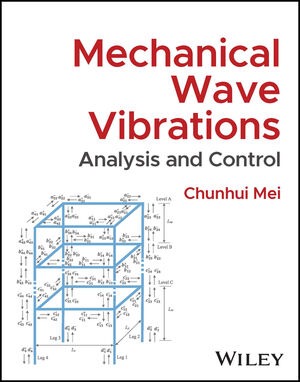
Mechanical Wave Vibrations: Analysis and Control
Delivers an expert discussion of the wave analysis approach (as opposed to the modal-based approach) to mechanical vibrations in structures. The book begins with deriving the equations of motion using the Newtonian approach based on various sign conventions before comprehensively covering the wave vibration analysis approach. It concludes by exploring passive and active feedback control of mechanical vibration waves in structures.

Mechanical Sytems, Classical Models ; Vol. I : Particle Mechanics
The guideline of the present book is precisely the mathematical model of mechanics. A special accent is put on the solving methodology as well as on the mathematical tools used; vectors, tensors and notions of field theory. Continuous and discontinuous phenomena, various mechanical magnitudes are presented in a unitary form by means of the theory of distributions.

Mechanical System Dynamics
This textbook gives a clear and thorough presentation of the fundamental principles of mechanical systems and their dynamics. It provides both the theory and applications of mechanical systems in an intermediate theoretical level, ranging from the basic concepts of mechanics, constraint and multibody systems over dynamics of hydraulic systems and power transmission systems to machine dynamics and robotics.

Mechanical Response of Composites
This book contains twelve selected papers presented at the ECCOMAS Thematic Conference — Mechanical Response of Composites, and the papers presented by the three plenary speakers. It describes recent advances in the field of analysis models for the mechanical response of advanced composite materials, ranging from the simulation of the manufacturing process to the inelastic response and collapse of the material. The analysis models are based on recent advances in computational mechanics such as multi-scale modeling, cohesive and partition of unity models.

Mechanical Modelling and Computational Issues in Civil Engineering
In this edited book various novel approaches to problems of modern civil engineering are demonstrated. Experts associated within the Lagrange Laboratory present recent research results in civil engineering dealing both with modelling and computational aspects.

Mechanical Behaviour of Engineering Materials : Metals, Ceramics, Polymers, and Composites
How do engineering materials deform when bearing mechanical loads? To answer this crucial question, the book bridges the gap between continuum mechanics and materials science. The different kinds of material deformation (elasticity, plasticity, fracture, creep, fatigue) are explained in detail. The book also discusses the physical processes occurring during the deformation of all classes of engineering materials (metals, ceramics, polymers, and composites) and shows how these materials can be strengthened to meet the design requirements. It provides the knowledge needed in selecting the appropriate engineering material for a certain design problem. The reader will thus learn how to critically employ design rules and thus to avoid failure of mechanical components.
