



Page 50
Page 50

Advanced Visual Quantum Mechanics
Investigate and to teach quantum mechanics with the aid of computer-generated animations. It is a self-contained textbook that combines selected topics from atomic physics (spherical symmetry, the hydrogen atom, and particles with spin) with an introduction to quantum information theory (qubits, EPR paradox, teleportation, quantum computers). It explores relativistic quantum mechanics and the strange behavior of Dirac equation solutions. A series of appendices covers important topics from perturbation and scattering theory. The book places an emphasis on ideas and concepts, with a fair to moderate amount of mathematical rigor. Though this book stands alone, it can also be paired with Thaller Visual Quantum Mechanics to form a comprehensive course in quantum mechanics. The software for the first book earned the European Academic Software Award 2000 for outstanding innovation in its field.
Advanced Time-Correlated Single Photon Counting Techniques
Time-correlated single photon counting (TCSPC) is a remarkable technique for recording low-level light signals with extremely high precision and picosecond-time resolution. TCSPC has developed from an intrinsically time-consuming and one-dimensional technique into a fast, multi-dimensional technique to record light signals. So this reference and text describes how advanced TCSPC techniques work and demonstrates their application to time-resolved laser scanning microscopy, single molecule spectroscopy, photon correlation experiments, and diffuse optical tomography of biological tissue. It gives practical hints about constructing suitable optical systems, choosing and using detectors, detector safety, preamplifiers, and using the control features and optimising the operating conditions of TCSPC devices. Advanced TCSPC Techniques is an indispensable tool for everyone in research and development who is confronted with the task of recording low-intensity light signals in the picosecond and nanosecond range.

Advanced Techniques in Biophysics
Technical advancements are basic elements in our life. In biophysical studies, new applications and improvements in well-established techniques are being implemented every day. This book deals with advancements produced not only from a technical point of view, but also from new approaches that are being taken in the study of biophysical samples, such as nanotechniques or single-cell measurements. This book constitutes a privileged observatory for reviewing novel applications of biophysical techniques that can help the reader enter an area where the technology is progressing quickly and where a comprehensive explanation is not always to be found.

Advanced Radiation Sources and Applications ; Proceedings of the NATO Advanced Research Workshop, held in Nor-Hamberd, Yerevan, Armenia, August 29 - September 2, 2004
A NATO Advanced Research Workshop on ”Advanced Radiation Sources and Applications” Hosted by the Yerevan Physics Institute, Yerevan, Armenia, 30 invited researchers from former Soviet Union and NATO countries gathered at Nor-Hamberd, Yerevan, on the slopes of Mount Aragats to discuss recent theoretical as well as expe- mental developments on means of producing photons from mostly low energy electrons.
Advanced Quantum Mechanics
Discusses nonrelativistic multi-particle systems, relativistic wave equations and relativistic quantum fields. Characteristic of the author´s work are the comprehensive mathematical discussions in which all intermediate steps are derived and where numerous examples of application and exercises help the reader gain a thorough working knowledge of the subject. The topics treated in the book lay the foundation for advanced studies in solid-state physics, nuclear and elementary particle physics. This text both extends and complements Schwabl´s introductory Quantum Mechanics, which covers nonrelativistic quantum mechanics and offers a short treatment of the quantization of the radiation field. The fourth edition has been thoroughly revised with new material having been added. Furthermore, the layout of the figures has been unified, which should facilitate comprehension.

Advanced Quantum Mechanics
Advanced Quantum Mechanics, the second volume on quantum mechanics by Franz Schwabl, discusses nonrelativistic multi-particle systems, relativistic wave equations and relativistic fields. Characteristic of Schwabl’s work, this volume features a compelling mathematical presentation in which all intermediate steps are derived and where numerous examples for application and exercises help the reader to gain a thorough working knowledge of the subject. The treatment of relativistic wave equations and their symmetries and the fundamentals of quantum field theory lay the foundations for advanced studies in solid-state physics, nuclear and elementary particle physics. This text extends and complements Schwabl’s introductory Quantum Mechanics, which covers nonrelativistic quantum mechanics and offers a short treatment of the quantization of the radiation field. New material has been added to this third edition of Advanced Quantum Mechanics on Bose gases, the Lorentz covariance of the Dirac equation, and the ‘hole theory’ in the chapter "Physical Interpretation of the Solutions to the Dirac Equation."

Advanced Physicochemical Treatment Processes
Leading pollution control educators and practicing professionals describe how various combinations of different physicochemical treatment processes can be arranged to solve air, noise, and thermal pollution problems. In Advanced Physicochemical Treatment Processes, the authors discuss strategies for abating pollution by converting it into a less noxious form, using the most feasible technologies. Each chapter discusses in detail a variety of process combinations, along with technical and economic evaluations, and presents explanations of the principles behind the designs, as well as numerous variant designs useful to practicing engineers. The emphasis throughout is on developing the necessary engineering solutions from fundamental principles of chemistry, physics, and mathematics.

Advanced Nanomaterials
Covers synthesis, characterization, and applications of diverse types of nanomaterials. Specifically, it describes carbon, graphene, and graphene oxide-based nanomaterials and their use for environmental remediation. Nanomaterials for concrete coating applications and advances in the processing of high-entropy alloys by means of mechanical alloying are also covered. Subsequently, the use of nanomaterials in endodontics and the use of nanotechnology strategies to enhance restorative resin-based dental nanomaterials are reported.
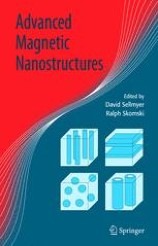
Advanced Magnetic Nanostructures
Advanced Magnetic Nanostructures is devoted to the fabrication, characterization, experimental investigation, theoretical understanding, and utilization of advanced magnetic nanostructures. Focus is on various types of 'bottom-up' and 'top-down' artificial nanostructures, as contrasted to naturally occurring magnetic nanostructures, such as iron-oxide inclusions in magnetic rocks, and to structures such as perfect thin films. Industrial and academic researchers in magnetism and related areas such as nanotechnology, materials science, and theoretical solid-state physics will find this book a valuable resource.
Advanced Experimental Methods For Noise Research in Nanoscale Electronic Devices
The approach described is to create methods for experimental observations of noise sources, their localization and their frequency spectrum, voltage-current and thermal dependences. Our current knowledge of measurement methods for mesoscopic devices is summarized to identify directions for future research, related to downscaling effects. The directions for future research into fluctuation phenomena in quantum dot and quantum wire devices are specified. Nanoscale electronic devices will be the basic components for electronics of the 21st century. From this point of view the signal-to-noise ratio is a very important parameter for the device application. Since the noise is also a quality and reliability indicator, experimental methods will have a wide application in the future.
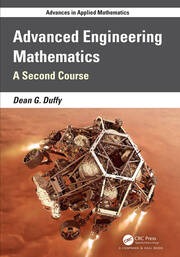
Advanced engineering mathematics : A second course with MatLab
Presents a wide variety of topics needed by today's engineers. The fifth edition of that book, available now, has been broken into two parts: topics currently needed in mathematics courses and a new stand-alone volume presenting topics not often included in these courses and consequently unknown to engineering students and many professionals.
Advanced computer simulation approaches for soft matter sciences II
This series presents critical reviews of the present and future trends in polymer and biopolymer science including chemistry, physical chemistry, physics and materials science. It is addressed to all scientists at universities and in industry who wish to keep abreast of advances in the topics covered.The second volume contains four contributions, and has a very strong topical focus on long range interactions.
Advanced computer simulation approaches for soft matter sciences I
Soft matter science is nowadays an acronym for an increasingly important class of materials, which ranges from polymers, liquid crystals, colloids up to complex macromolecular assemblies, covering sizes from the nanoscale up the microscale. Computer simulations have proven as an indispensable, if not the most powerful, tool to understand properties of these materials and link theoretical models to experiments. In this first volume of a small series recognized leaders of the field review advanced topics and provide critical insight into the state-of-the-art methods and scientific questions of this lively domain of soft condensed matter research.
Advanced Combustion and Aerothermal Technologies : Environmental Protection and Pollution Reductions
This book about Proceedings of the NATO Advanced Workshop “Advanced Combustion and Aerothermal Technologies: Environmental Protection and Pollution Reductions” was held in Kiev (Ukraine) from 15 to 19 May 2006 and was organized by the Institute of Engineering Thermophysics (Ukraine) and Cardiff University (UK). These subjects to cover the critical areas of combustion and aerothermal research and development where rapid progress is needed to improve performance in terms of efficiency, compactness, and emissions. This was a very timely and successful Workshop which brought together experts from the NATO and other countries to discuss increasing concerns about emissions.

Advanced Air and Noise Pollution Control ; Vol.2
Handbook of Environmental Engineering, Volume 2, leading pollution control educators and practicing professionals describe how various combinations of different cutting-edge process systems can be arranged to solve air, noise, and thermal pollution problems. Each chapter discusses in detail a variety of process combinations, along with technical and economic evaluations, and presents explanations of the principles behind the designs, as well as numerous variant designs useful to practicing engineers. The emphasis throughout is on developing the necessary engineering solutions from fundamental principles of chemistry, physics, and mathematics. The authors also include extensive references, cost data, design methods, guidance on the installation and operation of various air pollution control process equipment and systems, and Best Available Technologies (BAT) for air, thermal, and noise pollution control. A companion volume, Air Pollution Control Engineering: Handbook of Environmental Engineering, Volume 1 critically surveys the principles and practices involved in basic air pollution control processes.

Adaptive optics for industry and medicine ; Proceedings of the 4th International Workshop, Münster, Germany, Oct. 19-24, 2003
This book treats the development and application of adaptive optics for industry and medicine. The contributions describe recently developed components for adaptive-optics systems such as deformable mirrors, wavefront sensors, and mirror drivers as well as complete adaptive optical systems and their applications in industry and medicine. Applications range from laser-beam forming and adaptive aberration correction for high-power lasers to retinal imaging in ophthalmology. The contributions are based on presentations made at the 4th International Workshop on Adaptive Optics in Industry and Medicine which took place in Münster, Germany, in October 2003. This highly successful series of workshops on adaptive optics started in 1997 and continues with the 5th workshop in Beijing in 2005.
Adaptive Mesh Refinement - Theory and Applications; Proceedings of the Chicago Workshop on Adaptive Mesh Refinement Methods, Sept. 3-5, 2003
Advanced numerical simulations that use adaptive mesh refinement (AMR) methods have now become routine in engineering and science. Originally developed for computational fluid dynamics applications these methods have propagated to fields as diverse as astrophysics, climate modeling, combustion, biophysics and many others. The underlying physical models and equations used in these disciplines are rather different, yet algorithmic and implementation issues facing practitioners are often remarkably similar. Unfortunately, there has been little effort to review the advances and outstanding issues of adaptive mesh refinement methods across such a variety of fields. This book attempts to bridge this gap. The book presents a collection of papers by experts in the field of AMR who analyze past advances in the field and evaluate the current state of adaptive mesh refinement methods in scientific computing.
Active Lighting and Its Application for Computer Vision : 40 Years of History of Active Lighting Techniques
Computer vision entails both passive and active illumination techniques. Whereas passive techniques observe the scene statically and analyse it as is, by contrast active techniques give the scene some actions and try to facilitate the analysis. In particular, active illumination techniques project specific light, for which the characteristics are known beforehand, to a target scene to enable stable and accurate analysis of the scene.
Acoustics for Engineers : Troy Lectures
Provides the material for an introductory course in engineering acoustics for students with basic knowledge in mathematics. It is based on extensive teaching experience at the university level. Under the guidance of an academic teacher it is sufficient as the sole textbook for the subject.

Acoustics and Hearing
When one listens to music at home, one would like to have an acoustic impression close to that of being in the concert hall. Until recently this meant elaborate multi-channelled sound systems with 5 or more speakers. But head-related stereophony achieves the surround-sound effect in living rooms with only two loudspeakers. By virtue of their slight directivity as well as an electronic filter the limitations previously common to two-speaker systems can be overcome and this holds for any arbitrary two-channel recording. The book also investigates the question of how a wide and diffuse sound image can arise in concert halls and shows that the quality of concert halls decisively depends on diffuse sound images arising in the onset of reverberation. For this purpose a strong onset of reverberation is modified in an anechoic chamber by electroacoustic means.
