



Page 5
Page 5

Functional Neuroanatomy of Pain
Pain is an unpleasant but very important biological signal for danger. Nociception is necessary for survival and maintaining the integrity of the organism in a potentially hostile environment. Pain is both a sensory experience and a perceptual metaphor for damage and it is activated by noxious stimuli that act on a complex pain sensory apparatus. However, chronic pain having no more a protective role can become a ruining disease itself, termed "neuropathic pain".

Functional and logic programming ; 8th International Symposium, FLOPS 2006, Fuji-Susono, Japan, April 24-26, 2006, Proceedings
This book constitutes the refereed proceedings of the 8th International Symposium on Functional and Logic Programming, FLOPS 2006, held in Fuji-Susono, Japan, in April 2006. The 17 revised full papers presented together with 2 invited contributions were carefully reviewed and selected from 51 submissions. The papers are organized in topical sections on data types, FP extensions, type theory, LP extensions, analysis, contracts, as well as Web and GUI.

Fuel Cells II
The concept to utilize an ion-conducting polymer membrane as a solid po- mer electrolyte offers several advantages regarding the design and operation of an electrochemical cell, as outlined in Volume 215, Chapter 1 (L. Gubler, G.G. Scherer). Essentially, the solvent and/or transport medium, e.g., H O, 2 + for the mobile ionic species, e.g., H for a cation exchange membrane, is taken up by and con?ned into the nano-dimensional morphology of the i- containingdomainsofthepolymer.Asaconsequence, aphaseseparationinto a hydrophilic ion-containing solvent phase and a hydrophobic polymer ba- bone phase establishes. Because of the narrow solid electrolyte gap in these cells, low ohmic losses reducing the overall cell voltage can be achieved, even at highcurrent densities.

Fuel Cells I
The concept to utilize an ion-conducting polymer membrane as a solid po- mer electrolyte offers several advantages regarding the design and operation of an electrochemical cell, as outlined in Volume 215, Chapter 1 (L. Gubler, G.G. Scherer). Essentially, the solvent and/or transport medium, e.g., H O, 2 + for the mobile ionic species, e.g., H for a cation exchange membrane, is taken up by and con?ned into the nano-dimensional morphology of the i- containingdomainsofthepolymer.Asaconsequence, aphaseseparationinto a hydrophilic ion-containing solvent phase and a hydrophobic polymer ba- bone phase establishes. Because of the narrow solid electrolyte gap in these cells, low ohmic losses reducing the overall cell voltage can be achieved, even at highcurrent densities.

Fuel Cells : From Fundamentals to Applications
Fuel Cells: Fundamentals to Applications is a concise source of the basic electrochemical principles and engineering aspects involved in the development and commercialization of fuel cells. It describes the applications and techno-economic assessment of fuel cell technologies along with an in-depth discussion of conventional and novel approaches pursued for generating energy. This book is divided into four parts. Parts I and II explain basic and applied electrochemistry relevant to an understanding of fuel cells. Part III covers engineering and technology aspects and Part IV, applications and economics. The first part covers, in detail, the electrode kinetics and electrocatalysis of charge-transfer reactions, and leading electrochemical technologies with focus on relevance to fuel cells. The second part addresses the governing principles of fuel cells, electrocatalysis of fuel cell reactions and experimental techniques pertinent to fuel cell research and development. The third part is devoted to modeling of fuel cell systems and a thorough discussion of fuels, fuel processing and fuel storage, transmission, and distribution. The final part deals with the status of the fuel cell technologies, their applications and economics.

FSTTCS 2007 : Foundations of software technology and theoretical computer science; 27th International Conference, New Delhi, India, December 12-14, 2007, Proceedings
This book constitutes the refereed proceedings of the 27th International Conference on the Foundations of Software Technology and Theoretical Computer Science, FSTTCS 2007. The papers provide original research results in fundamental aspects of computer science as well as reports from the frontline of software technology and theoretical computer science.

Frontiers of real estate science in Japan
This book presents recent research and hot topics in the field of real estate science in Japan. It features carefully selected English translations of peer-reviewed papers and excellent articles published in the Japanese Journal of Real Estate Sciences, as well as papers presented at the Japan Association of Real Estate Sciences (JARES) annual conference.

Frontiers of Computational Science ; Proceedings of the International Symposium on Frontiers of Computational Science 2005
With the dramatic increase in speed and capacity of modern computers, computational approaches are becoming of crucial importance in various fields of science and engineering. Computational science is the interdisciplinary science, which promotes systematic development of methodologies and framework of computational approaches, basic studies of algorithms and soft-computation technologies and vast areas of applications. This volume is the proceedings of International Symposium on Frontiers of Computational Science 2005, containing papers from 7 plenary and keynote lecturers, 17 invited lecturers and 33 contributed papers. This book discusses the high-level use of computers in a wide variety of areas such as fluid mechanics, material and genome sciences.

From X-ray Binaries to Quasars : Black Holes on All Mass Scales
This volume brings together contributions from many of the world's leading authorities on black hole accretion. The papers within represent part of a new movement to make use of the relative advantages of studying stellar mass and supermassive black holes and to bring together the knowledge gained from the two approaches. The topics discussed here run the gamut of the state of the art in black hole observational and theoretical work-variability, spectroscopy, disk-jet connections, and multi-wavelength campaigns on black holes are all covered.

From Melancholia to Depression : Disordered Mood in Nineteenth-Century Psychiatry
This book maps a crucial but neglected chapter in the history of psychiatry: how was melancholia transformed in the nineteenth century from traditional melancholy madness into a modern biomedical mood disorder
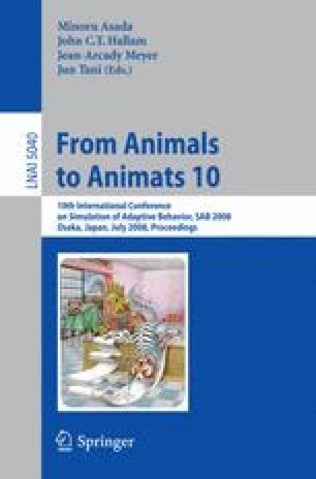
From Animals to Animats 10 ; 10th International Conference on Simulation of Adaptive Behavior, SAB 2008, Osaka, Japan, July 7-12, 2008. Proceedings
This book constitutes the refereed proceedings of the 10th International Conference on Simulation of Adaptive Behavior, SAB 2008, held in Osaka, Japan in July 2008.The 30 revised full papers and 21 revised poster papers presented were carefully reviewed and selected from 110 submissions. The papers are organized in topical sections on the animat approach to adaptive behaviour, evolution, navigation and internal world models, perception and control, learning and adaptation, cognition, emotion and behaviour, collective and social behaviours, adaptive behaviour in language and communication, and applied adaptive behaviour.

Foundations of security analysis and design III : FOSAD 2004/2005 tutorial lectures
The increasing relevance of security to real-life applications, such as electronic commerce and Internet banking, is attested by the fast-growing number of - search groups, events, conferences, and summer schools that address the study of foundations for the analysis and the design of security aspects. The “Int- national School on Foundations of Security Analysis and Design” (FOSAD, see http://www.sti.uniurb.it/events/fosad/)has been one of the foremost events - tablishedwiththegoalofdisseminatingknowledgeinthiscriticalarea,especially for young researchers approaching the ?eld and graduate students coming from less-favoured and non-leading countries. The FOSAD school is held annually at the Residential Centre of Bertinoro (http://www.ceub.it/), in the fascinating setting of a former convent and ep- copal fortress that has been transformed into a modern conference facility with computing services and Internet access. Since the ?rst school, in 2000, FOSAD hasattractedmorethan250participantsand50lecturersfromallovertheworld.

Formal Modeling and Analysis of Timed Systems ; Vol.4202 ; 4th International Conference, FORMATS 2006, Paris, France, September 25-27, 2006, Proceedings
The aim of FORMATS is to promote the study of fundamental and practical aspects of timed systems, and to bring together researchers from di?erent d- ciplines that share interests in modelling and analysis of timed systems. In this volume, there are articles on: – Foundations and Semantics: contributions to the theoretical foundations of timed systems and timed formal languages as well as comparison between di?erentmodelsusedbydi?erentcommunities(timedautomata,timedPetri nets, timed MSCs, hybrid automata, timed process algebra, timed temporal logics, timed abstract state machines, as well as probabilistic models). – Methods and Tools: techniques, algorithms, data structures, and software toolsforanalyzingtimedsystemsandresolvingtemporalconstraints(mod- checking, simulation, robustness analysis, scheduling, etc).

Formal Methods for Computational Systems Biology ; 8th International School on Formal Methods for the Design of Computer, Communication, and Software Systems, SFM 2008 Bertinoro, Italy, June 2-7, 2008 Advanced Lectures
This volume presents the set of papers accompanying the lectures of the eighth International School on Formal Methods for the Design of Computer, Com- nication, and Software Systems (SFM). This series of schools addresses the use of formal methods in computer science asaprominent approach to theri gorousdesign of computer, communication, and software systems. The main aim of the SFM series is to ofer a good spectrum of current research in foundations as well as applications of formal methods, which can be of help for graduate students and young researchers who intend to approach the feld.

Formal Approaches to Agent-Based Systems ; 3rd International Workshop, FAABS 2004, Greenbelt, MD, April 26-27, 2004, Revised Selected Papers
The 3rd Workshop on Formal Approaches to Agent-Based Systems (FAABS-III) was held at the Greenbelt Marriott Hotel (near NASA Goddard Space Flight Center) in April 2004 in conjunction with the IEEE Computer Society. The first FAABS workshop was help in April 2000 and the second in October 2002. Interest in agent-based systems continues to grow and this is seen in the wide range of conferences and journals that are addressing the research in this area as well as the prototype and developmental systems that are coming into use. Our third workshop, FAABS-III, was held in April, 2004. This volume contains the revised papers and posters presented at that workshop. The Organizing Committee was fortunate in having significant support in the planning and organization of these events, and were privileged to have wor- renowned keynote speakers Prof. J Moore (FAABS-I), Prof. Sir Roger Penrose (FAABS-II), and Prof. John McCarthy (FAABS-III), who spoke on the topic of se- aware computing systems, auguring perhaps a greater interest in autonomic computing as part of future FAABS events. We are grateful to all who attended the workshop, presented papers or posters, and participated in panel sessions and both formal and informal discussions to make the workshop a great success. Our thanks go to the NASA Goddard Space Flight Center, Codes 588 and 581 (Software Engineering Laboratory) for their financial support and to the IEEE Computer Society (Technical Committee on Complexity in Computing) for their sponsorship and organizational assistance.

Forest Radioecology in Fukushima : Radiocesium Dynamics, Impact, and Future
This book provides holistic information on the radioactive contamination of forests. Topics are highly interdisciplinary, ranging from the dynamics of radioactive cesium in forest ecosystems to the radiation protection or the socio-economic aspects of radiation effects. It is designed to help people understand the radioactive contamination in forests and provide hints of how to cope with it and restore their livelihoods. The book is characterized by its well-balanced structure that allows the reader to understand the whole picture without going into too much scientific content. After explaining the basics of radioactive materials and radiation, the book illustrates the radioactive contamination of forests, it also describes the impacts on the forestry and life of local people and the measures taken by. Few books address the concerns about how to deal with radioactive contamination of forests and the future perspectives. In this book, people can learn all about the Fukushima nuclear accident of forests, forest products, and people with abundant reference materials.

Foresight and Design: Composing Future Places
Every plan, pro-forma, design, building contract, and construction schedule is a proposal about future places. To help improve such proposals, Foresight and Design: Composing Future Places presents conceptual tools to inform design and outline the need for designers to rigorously think about potential futures. Our built compositions are constantly transforming due to continuing urbanization, demographic shifts, climate change, the evolution of virtual worlds, economic and health disparities, and other unforeseen trends. Five brief case studies interspersed between the chapters serve as examples of practitioners exercising foresight through these practices. Contributions include a description of a regional design process in Afghanistan by Anthony Fettes of Sasaki Architects, and an exploration into the Indigenous Futurism model-making competition by Anjelica Gallegos.

Forefoot Reconstruction
For a long time, forefoot surgery had many disadvantages including a painful postoperative period and recurrence of deformities. New techniques – notably Scarf, the first metatarsal osteotomy and the Weil osteotomy of the lesser metatarsal – provide a significant improvement in the treatment of static forefoot disorders. The great toe osteotomy has also been greatly improved. Since 1991, the author has introduced these techniques in many countries, while developing and studying the corresponding implants and the postoperative period. He has also developed surgical management techniques that bridge these different osteotomies. More than 1000 surgeons around the world are using these techniques, which are now widely taught. In this second edition of the book the general presentation is clearer and more pleasant and many pictures have been replaced. Several topics are emphasized, notably the great toe proximal phalanx osteotomy, the joint preservative surgery in severe forefoot disorders, including revision after failed bunionectomy and rheumatoid forefoot following the "ms” point for an accurate and effective metatarsal shortening. Lastly, new procedures are exposed, particularly in Claw toe and hammer with the PIP plantar release and the surgery of the middle phalanx and also the Weil osteotomy of the first metatarsal in hallux limitus.

Flowering Plants. Eudicots : Berberidopsidales, Buxales, Crossosomatales, Fabales p.p., Geraniales, Gunnerales, Myrtales p.p., Proteales, Saxifragales, Vitales, Zygophyllales, Clusiaceae Alliance, Passifloraceae Alliance, Dilleniaceae, Huaceae, Picramniaceae, Sabiaceae
In this volume, the ninth of the series, treatments are offered for 52 families containing 432 genera belonging to 13 eudicot orders, many of which have recently been newly designed; four families remain unassigned to order. Emphasis is on the early-diverging eudicots and basal core eudicots the phylogenetic relationships and diversification of which have recently been in focus and are critically discussed. Systematically relevant information includes descriptions of families and genera, keys to the genera, and references to recent revisions. Introductions to the families provide convenient, in-depth overviews of key aspects of systematics. The wealth and precision of information contained in this volume will make it an important source of reference for both the scholar and the practitioner in the fields of pure and applied plant sciences.

Flex solutions : Essential techniques for Flex 2 and 3 developers
Flex Solutions: Essential Techniques for Flex 2 and Flex 3 Developers faces problems and provides solutions that can be applied to any project, from the most simple to the most complex. Solutions are also provided for enhancing the security of Flex applications, and techniques are offered for optimizing the actual work environment by increasing the performance of Flex Builder, adding video content, and creating an AIR project to bring your web application onto the desktop.
