



Page 48
Page 48
Advances and Innovations in Systems, Computing Sciences and Software Engineering
Acollection of world class paper articles addressing the following topics: Image and Pattern Recognition: Compression, Image processing, Signal Processing Architectures, Signal Processing for Communication, Signal Processing Implementation, Speech Compression, and Video Coding Architectures. Languages and Systems: Algorithms, Databases, Embedded Systems and Applications, File Systems and I/O, Geographical Information Systems, Kernel and OS Structures, Knowledge Based Systems, Modeling and Simulation, Object Based Software Engineering, Programming Languages, and Programming Models and tools. Parallel Processing: Distributed Scheduling, Multiprocessing, Real-time Systems, Simulation Modeling and Development, and Web Applications. New trends in computing: Computers for People of Special Needs, Fuzzy Inference, Human Computer Interaction, Incremental Learning, Internet-based Computing Models, Machine Intelligence, Natural Language Processing, Neural Networks, and Online Decision Support System.
Advancement of Deep Learning and its Applications in Object Detection and Recognition
In just the past five years, deep learning has taken the world by surprise, driving rapid progress in fields as diverse as computer vision, natural language processing, automatic speech recognition, etc. This book presents an introduction to deep learning and various applications of deep learning such as recommendation systems, text recognition, diabetic retinopathy prediction of breast cancer, prediction of epilepsy, sentiment, fake news detection, software defect prediction and protein function prediction.

Advanced Visual Quantum Mechanics
Investigate and to teach quantum mechanics with the aid of computer-generated animations. It is a self-contained textbook that combines selected topics from atomic physics (spherical symmetry, the hydrogen atom, and particles with spin) with an introduction to quantum information theory (qubits, EPR paradox, teleportation, quantum computers). It explores relativistic quantum mechanics and the strange behavior of Dirac equation solutions. A series of appendices covers important topics from perturbation and scattering theory. The book places an emphasis on ideas and concepts, with a fair to moderate amount of mathematical rigor. Though this book stands alone, it can also be paired with Thaller Visual Quantum Mechanics to form a comprehensive course in quantum mechanics. The software for the first book earned the European Academic Software Award 2000 for outstanding innovation in its field.
Advanced Topics in Exception Handling Techniques
Modern software systems are becoming more complex in many ways and are having to cope with a growing number of abnormal situations which, in turn, are increasingly complex to handle.This book is composed of five parts; the first four deal with topics related to exception handling in the context of programming languages, concurrency and operating systems, pervasive computing systems, and requirements and specifications. The last part focuses on case studies, experimentation and qualitative comparisons. The 16 coherently written chapters by leading researchers competently address a wide range of issues in exception handling.
Advanced Software Engineering : Expanding the Frontiers of Software Technology ; IFIP 19th World Computer Congress, First International Workshop on Advanced Software Engineering, August 25, 2006, Santiago, Chile
The scope of the series includes: foundations of computer science; software theory and practice; education; computer applications in technology; communication systems; systems modeling and optimization; information systems; computers and society; computer systems technology; security and protection in information processing systems; artificial intelligence; and human-computer interaction. Proceedings and post-proceedings of referred international conferences in computer science and interdisciplinary fields are featured. These results often precede journal publication and represent the most current research. The principal aim of the IFIP series is to encourage education and the dissemination and exchange of information about all aspects of computing.

Advanced Planning in Fresh Food Industries: Integrating Shelf Life into Production Planning
Production planning in fresh food industries is a challenging task. Although modern Advanced Planning and Scheduling (APS) systems could provide significant support, APS implementation numbers in these industries remain low. Therefore, based on an in-depth analysis of three sample fresh food industries (dairy, fresh and processed meat), the author evaluates what APS systems should offer in order to effectively support production planning and how the leading systems currently handle the most distinguishing characteristic of fresh food industries, the short product shelf life. Starting from the identified weaknesses, customized software solutions for each of the sample industries are proposed that allow to optimize the production of fresh foods with respect to shelf life.

Advanced parallel processing technologies ; 7th International Symposium, APPT 2007 Guangzhou, China, November 22-23, 2007 Proceedings
APPT was upgraded to the International Symposium on Advanced Parallel Processing Technologies. However, it kept its traditional flavor by sharing of the underlying theories and applications, and the establishment of new and long-term collaborative channels. And it will continue to provide a forum for researchers, professionals, and industrial practitioners from around the world to report on new advances in high-performance architecture and software, as well as to identify issues and directions for research and development in the new era of evolving technologies.

Advanced parallel processing technologies ; 6th International Workshop, APPT 2005, Hong Kong, China, October 27-28, 2005, Proceedings
APPT 2005: the 6th International Workshop on Advanced Parallel Processing Technologies. APPT is a biennial workshop on parallel and distributed processing. Its scope covers all aspects of parallel and distributed computing technologies , including architectures, software systems and tools, algorithms, and applications. This year, APPT 2005 received over 220 submissions from researchers all over the world. . The papers in this volume represent the forefront of research on parallel processing and related ?elds by researchers from China, Germany, USA, Korea, India, and other countries. The papers - cepted cover a wide range of exciting topics, including architectures, software, networking, and applications.
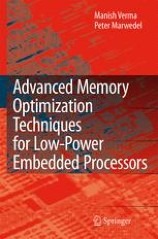
Advanced memory optimization techniques for low-power embedded processors
this book explores a collaborative approach by proposing novel memory hierarchies and software optimization techniques for the optimal utilization of these memory hierarchies. Linking memory architecture design with memory-architecture aware compilation results in fast, energy-efficient and timing predictable memory accesses.The evaluation of the optimization techniques using real-life benchmarks for a single processor system, a multiprocessor system-on-chip (SoC) and for a digital signal processor system, reports significant reductions in the energy consumption and performance improvement of these systems. The book presents a wide range of optimizations, progressively increasing in the complexity of analysis and of memory hierarchies. The final chapter covers optimization techniques for applications consisting of multiple processes found in most modern embedded devices.

Advanced Man-Machine Interaction : Fundamentals and Implementation
Man-machine interaction is the gateway providing access to functions and services, which, due to the ever increasing complexity of smart systems, threatens to become a bottleneck. This book therefore introduces not only advanced interfacing concepts, but also gives insight into the related theoretical background.This refers mainly to the realization of video-based multimodal interaction via gesture, mimics, and speech, but also to interacting with virtual object in virtual environments, cooperating with local or remote robots, and user assistance. this book puts special emphasis on implementation aspects. To this end it is accompanied by software development environments for image processing, classification, and virtual environment implementation. In addition a test data base is included for gestures, head pose, facial expressions, full-body person recognition, and people tracking.
Advanced Information Systems Engineering ; 20th International Conference, CAiSE 2008 Montpellier, France, June 16-20, 2008 Proceedings
This book constitutes the refereed proceedings of the 20th International Conference on Advanced Information Systems Engineering, CAiSE 2008, held in Montpellier, France, in June 2008.
Advanced Information Systems Engineering ; 19th International Conference, CAiSE 2007, Trondheim, Norway, June 11-15, 2007, Proceedings
CAiSE 2007 was the 19th in the series of International Conferences on Advanced Information Systems Engineering. This year’s conference was located in Trondheim and hosted by the Norwegian University of Science and Technology, with the aim of bringing together practitioners and researchers in the field of information systems engineering. The CAiSE series thereby returned to the city where the third CAiSE conference was held in 1991.The special theme of CAiSE 2007 was “Ubiquitous Information Systems Engineering,” reflecting that modern information systems often span activities performed in several organizations and at different geographical locations.
Advanced functional programming ; 5th International School, AFP 2004, Tartu, Estonia, August 14-21, 2004, Revised Lectures
Contains the revised lecture notes corresponding to nine of thelecture courses presented at the 5th International School on Advanced Functional Programming, AFP 2004, held in Tartu, Estonia, August 14–21, 2004. The goal of the AFP schools is to inform the wide international communitiesof computer science students and software production professionals about thenew and important developments in the area of functional programming. The schools put a special emphasis on practical applications of advanced techniques.
AdvancED Flex Application Development : Building Rich Media X
Many Flex books cover the basics—this book does something different, and goes far further. The authors, leading Flash platform developers at Almer/Blank, working with Adobe User Group communities, are the creators of the Rich Media Exchange (RMX), a social media network for Adobe developers. In covering just how the RMX was built, this book contains all the knowledge you need to build similar large-scale rich Internet applications with Adobe Flex. From the inception of the idea through to deployment, the authors show the techniques needed to plan and build advanced applications. You'll learn how to use forms, styles, validators, video, sound analysis, and framework caching, ensuring you make the most of the features introduced in Flex 3.
AdvancED Flex 3
Divided into three parts. The first part discusses the architectural and design aspects of Flex 3 application development. It explains the internals of a Flex 3 application and advocates a few best practices to fine-tune your application to ensure maximum performance. It includes tutorials on creating custom components, data binding, and creating AIR-powered desktop applications. The second part concentrates on effectively integrating Flex 3 with server- and client-side technologies. Techniques for integration with Java and PHP are covered in detail, and content covering interaction with client-side technologies is also included. After reading the chapter on JavaScript integration, you will be ready to create applications that can use Ajax and Flex 3 together. The third and final part of the book is a unique and eclectic mix of some advanced topics like mash-ups, collaborative applications, 3D rendering, highly interactive visualization, and audio and video streaming.

Advanced Data Mining and Applications ; 4th International Conference, ADMA 2008, Chengdu, China, October 8-10, 2008. Proceedings
This book constitutes the refereed proceedings of the 4th International Conference on Advanced Data Mining and Applications, ADMA 2008, held in Chengdu, China, in October 2008.
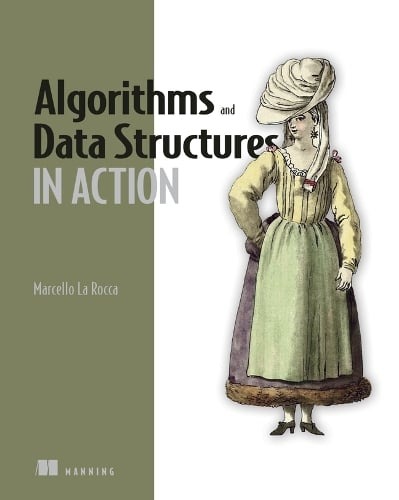
Advanced Algorithms and Data Structures
introduces a collection of algorithms for complex programming challenges in data analysis, machine learning, and graph computing. You’ll discover cutting-edge approaches to a variety of tricky scenarios. You’ll even learn to design your own data structures for projects that require a custom solution. What's inside Build on basic data structures you already know Profile your algorithms to speed up application Store and query strings efficiently Distribute clustering algorithms with MapReduce Solve logistics problems using graphs and optimization algorithms

Adobe Photoshop Lightroom Classic For Dummies
Learn to make your digital photos *pop* with easy-to-follow help using AI-powered software from Adobe. With no prior photography or editing experience necessary, Adobe Photoshop Lightroom Classic For Dummies delivers a must-have walkthrough for taking your photos to the next level using Adobe’s powerful consumer software. You’ll learn the fundamentals of opening your pictures, managing your photo library, and fixing common problems—like redeye and poor lighting—before jumping into more advanced topics, like creating slideshows and troubleshooting problems.
Ad-hoc, Mobile and Wireless Networks ; 7th International Conference, ADHOC-NOW 2008 Sophia-Antipolis, France, September 10-12, 2008 Proceedings
This book constitutes the refereed proceedings of the 7th International Conference on Ad-Hoc, Mobile, and Wireless Networks, ADHOC-NOW 2008, held in Sophia-Antipolis, France, September 2008.

Ad-Hoc Networking ; IFIP 19th World Computer Congress, TC-6, IFIP Interactive Conference on Ad-Hoc Networking, August 20-25, 2006, Santiago, Chile
The IFIP series publishes state-of-the-art results in the sciences and technologies of information and communication. The scope of the series includes: foundations of computer science; software theory and practice; education; computer applications in technology; communication systems; systems modeling and optimization; information systems; computers and society; computer systems technology; security and protection in information processing systems; artificial intelligence; and human-computer interaction. Proceedings and post-proceedings of referred international conferences in computer science and interdisciplinary fields are featured. These results often precede journal publication and represent the most current research. The principal aim of the IFIP series is to encourage education and the dissemination and exchange of information about all aspects of computing.
