



Page 48
Page 48

Mechanizing Mathematical Reasoning : Essays in Honor of Jörg H. Siekmann on the Occasion of His 60th Birthday
By presenting state-of-the-art results in logical reasoning and formal methods in the context of artificial intelligence and AI applications, this book commemorates the 60th birthday of Jörg H. Siekmann. The 30 revised reviewed papers are written by former and current students and colleagues of Jörg Siekmann; also included is an appraisal of the scientific career of Jörg Siekmann entitled "A Portrait of a Scientist: Logics, AI, and Politics." The papers are organized in four parts on logic and deduction, applications of logic, formal methods and security, and agents and planning.

Mechanisms of the Glaucomas : Disease Processes and Therapeutic Modalities
In this book leaders in the various fields of glaucoma review our current understanding of glaucoma from epidemiology and genetics through molecular, cellular and tissue responses to the mechanisms of the glaucomas and the mechanisms by which we manage them.

Mechanisms of Sepsis-Induced Organ Dysfunction and Recovery
There have been tremendous advances in understanding the cellular mechanisms involved in sepsis and contributing to the development of multiple organ dysfunction and mortality in this setting. The chapters in this book provide up-to-date insights into important pathways that are initiated by sepsis.

Mechanisms of mineralization of vertebrate skeletal and dental tissues
Presents a multi-disciplinary approach to understanding mechanisms regulating the formation of mineral in vertebrate skeletal and dental tissues. The focus of the book is directed toward the mineralization process, an evolutionarily conserved system in which cells synthesize a complex and unique extracellular matrix into which mineral is deposited. Regulatory control is viewed though lenses that emphasize the genetic, physical-chemical, biochemical, structural, cellular and extracellular aspects of the mineralization process as they relate to crystal nucleation, growth and maturation. Throughout the book, defects in regulation at the genetic and transcriptional levels are linked to the numerous clinical problems associated with the mineralization of bone, cartilage, tendon, tooth, and soft tissues.

Mechanisms of Insulin Action
More than 18 million people in the United States have diabetes mellitus, and about 90% of these have the type 2 form of the disease. In addition, between 17 and 40 million people have insulin resistance, impaired glucose tolerance, or the cluster of abnormalities referred to variably as the metabolic syndrome, the dysmetabolic syndrome, syndrome X, or the insulin resistance syndrome. In all of these disorders, a central component of the pathophysiology is insulin resistance, i.e., reduced responsiveness to insulin in tissues such as muscle, fat and liver. Insulin resistance is also closely linked to other common health problems, including obesity, polycystic ovarian disease, hyperlipidemia, hypertension, and atherosclerosis. In this book, we will attempt to dissect the complexity of the molecular mechanisms of insulin action with a special emphasis on those features of the system that are subject to alteration in type 2 diabetes and other insulin resistant states. We explore insulin action at the most basic levels, through complex systems. The book will be appealing to basic and clinical scientists.

Mechanics of the 21st Century ; Proceedings of the 21st International Congress of Theoretical and Applied Mechanics, Warsaw, Poland, 15-21 August 2004
Contains the proceedings of the 21st International Congress of Theoretical and Applied Mechanics, ICTAM04, held in Warsaw, in August 2004. This book discusses the field of mechanics, and is aimed at engineers and scientists. The texts of 27 invited lectures are included along with a CD-ROM with 1225 extended summaries of presented papers.

Mechanics of Structural Elements : Theory and Applications
The book systematically presents variational principles and methods of analysis for applied elasticity and structural mechanics. The variational approach is used consistently for both, constructing numerical procedures and deriving basic governing equations of applied mechanics of solids; it is the derivation of equations where this approach is most powerful and best grounded by mathematics. The book is oriented towards experts in civil engineering, researchers, developers of software for mechanical strength, stability, and oscillation analysis; it can be used by practical engineers who employ software tools to do their job and who want to know more about the theoretical background of the strength analysis. The book will be useful to senior and postgraduate students of engineering, to professors of structural analysis at civil or mechanical engineering departments of technical universities.

Mechanics of Microelectronics
Written by the leading experts with both profound knowledge and rich practical experience in advanced mechanics and microelectronics industry, this book aims to provide the cutting edge knowledge and solutions for various mechanical related problems, in a systematic way. It contains essential and detailed information about the state-of-the-art theories, methodologies, the way of working and real case studies.

Mechanics of Microelectromechanical Systems
This book offers a comprehensive coverage to the mechanics of microelectromechanical systems (MEMS), which are analyzed from a mechanical engineer’s viewpointelectric energy.

Mechanics of Materials
Provides a precise presentation of subjects illustrated with numerous engineering examples that students both understand and relate to theory and application. The tried and true methodology for presenting material gives students the best opportunity to succeed in this course. From the detailed examples, to the homework problems, instructors and students can be confident the material is clearly explained and accurately represented.
Mechanics of Materials
Provides a review of statics, covering the topics needed to begin the study of mechanics of materials including free-body diagrams, equilibrium, trusses, frames, centroids, and distributed loads. It presents the foundations and applications of mechanics of materials with emphasis on visual analysis, using sequences of figures to explain concepts and giving detailed explanations of the proper use of free-body diagrams. The Cauchy tetrahedron argument is included, which allows determination of the normal and shear stresses on an arbitrary plane for a general state of stress. An optional chapter discusses failure and modern fracture theory, including stress intensity factors and crack growth.

Mechanics of Material Forces
The book covers both theoretical and numerical developments. Conceptually speaking, common continuum mechanics in the sense of Newton—which gives rise to the notion of spatial (mechanical) forces—considers the response to variations of spatial placements of "physical particles” with respect to the ambient space, whereas continuum mechanics in the sense of Eshelby—which gives rise to the notion of material (configurational) forces—is concerned with the response to variations of material placements of "physical particles” with respect to the ambient material. Well-known examples of material forces are driving forces on defects like the Peach-Koehler forece, the J-Integral in fracture mechanics, and energy release. The consideration of material forces goes back to the works of Eshelby, who investigated forces on defects; therefore this area of continuum mechanics is sometimes denoted Eshelbian mechanics.

Mechanics of Composite Materials with MATLAB
This textbook makes use of the popular computer program MATLAB as the major computer tool to study Mechanics of Composite Materials. It is written specifically for students in Engineering and Materials Science examining step-by-step solutions of composite material mechanics problems using MATLAB.

Mechanics of Civil Engineering Structures
Presents the material needed by practicing engineers engaged in the design of civil engineering structures, and students of civil engineering. The book covers the fundamental principles of mechanics needed to understand the responses of structures to different types of load and provides the analytical and empirical tools for design. The title presents the mechanics of relevant structural elements—including columns, beams, frames, plates and shells—and the use of mechanical models for assessing design code application. Eleven chapters cover topics including stresses and strains; elastic beams and columns; inelastic and composite beams and columns; temperature and other kinematic loads; energy principles; stability and second-order effects for beams and columns; basics of vibration; indeterminate elastic-plastic structures; plates and shells.

Mechanics of Biological Tissue
The mechanics of biological tissues is a multidisciplinary and rapidly expanding area of research. This book highlights some important research directions that combine mechanical sciences with exciting new developments in biology. This collection of papers should be of interest to theoretical, computational and experimental researchers and doctoral students in the area of biomechanics and in related areas of engineering, biology and medicine.

Mechanics : From Newton's Laws to Deterministic Chaos
This updated and revised fourth edition covers all topics in mechanics from elementary Newtonian mechanics, canonical and rigid body mechanics to relativistic mechanics and nonlinear dynamics. In particular, symmetries and invariance principles, geometrical structures and continuum mechanics play an important role. This book will enable the reader to develop general principles from which equations of motions may be derived, to understand the importance of symmetries as a basis for quantum mechanics and to get practice in using theoretical tools and concepts that are essential for all branches of physics. The book contains numerous problems with complete solutions, and some practical examples.This will be appreciated in particular by students using the text to accompnay lectures on mechanics. The book ends with some historical remarks on important pioneers in mechanics.
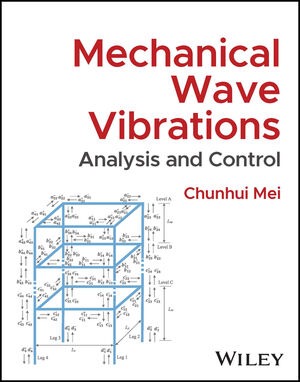
Mechanical Wave Vibrations: Analysis and Control
Delivers an expert discussion of the wave analysis approach (as opposed to the modal-based approach) to mechanical vibrations in structures. The book begins with deriving the equations of motion using the Newtonian approach based on various sign conventions before comprehensively covering the wave vibration analysis approach. It concludes by exploring passive and active feedback control of mechanical vibration waves in structures.

Mechanical Ventilation
This book represents a state-of-the-art review by the leading experts in this field and covers a number of important topics including epidemiology, underlying physiological concepts, and approaches to monitoring. The pros and cons of various modes of ventilation are reviewed, as are novel forms of ventilation that may play a role in the future management of patients with respiratory failure. The importance of patient-ventilator synchrony and ventilator-induced lung injury are reviewed, with a focus on recent clinical trials and the challenges of implementing the results into clinical practice.

Mechanical Sytems, Classical Models ; Vol. I : Particle Mechanics
The guideline of the present book is precisely the mathematical model of mechanics. A special accent is put on the solving methodology as well as on the mathematical tools used; vectors, tensors and notions of field theory. Continuous and discontinuous phenomena, various mechanical magnitudes are presented in a unitary form by means of the theory of distributions.

Mechanical System Dynamics
This textbook gives a clear and thorough presentation of the fundamental principles of mechanical systems and their dynamics. It provides both the theory and applications of mechanical systems in an intermediate theoretical level, ranging from the basic concepts of mechanics, constraint and multibody systems over dynamics of hydraulic systems and power transmission systems to machine dynamics and robotics.
