



Page 47
Page 47

Corporate Sustainability Management in the Energy Sector : An Empirical Contigency Approach
Corporate social responsibility, sustainability, and citizenship are terms that often evoke considerable scepticism and cynicism, particularly in civil society. Much needed sector-specific and comparative research, which could facilitate a more fact-oriented debate, is still missing from the literature. The present study aims to fill this gap by presenting data collected from two groups of managers, namely sustainability experts and non-sustainability experts, from two different industry sectors (integrated oil and gas vs. electric utilities) and several geographical regions. Oliver Salzmann provides a comprehensive view on corporate sustainability management in companies such as Shell and RWE and investigates the key social and environmental issues driving the energy sector. The author analyses the influence which stakeholder pressure exercises on energy companies and their efforts to become more responsive. Moreover, he develops a model for strategic, thus profit-oriented, corporate sustainability management.

Corporate Sustainability as a Challenge for Comprehensive Management
Sustainability has become a topic of global relevance: Corporations and other economically acting organizations increasingly need to realize economic, environmental and social objectives in order to survive. Supplementary to "classical" environmental management, realizing corporate sustainability requires comprehensive approaches which allow the integration of social and economic aspects. Such concepts can be found e.g. in international excellence models mainly based on a TQM thinking but also in the field of human factors in organizational design and management. Understood as systems approaches, they include the interests of all relevant stakeholders with a mid- or long-term time perspective and are thus highly linked with the principles of sustainable development. In this book internationally leading scientists discuss the issue of sustainability from their perspective, resulting in an innovative view on different management approaches under the umbrella of corporate sustainability.

Corporate Social Responsibility (CSR), Sustainability and Environmental Social Governance (ESG) : Approaches to Ethical Management
Provides a comprehensive overview of corporate social responsibility (CSR) and its practical applications. In addition to the structured procedure with definitions and CSR approaches, functions within the value chain are described in comprehensive manner with reference to business practice. Business trends in special sectors such as innovation management and hospitality management are also covered. Numerous practical examples and country-specific recommendations for decisions in practical situations are also offered.

Corporate Innovation Strategies : Corporate Social Responsibility and Shared Value Creation
Corporate social responsibility (CSR) is simply the maximization of a company's value over time, undertaken because, in the long run, social and environmental problems ultimately become financial problems. The justification for CSR is therefore associated with representing the nature and role of the company, as well as its purpose. Companies therefore regard CSR as a strategic investment that is part of a proactive, resilient, inclusive approach, based on the creation of shared value. This approach is capable of reducing negative societal impacts of their activities, or inducing positive impacts if they sustain a hybrid culture, all the while improving their competitive advantage. This book presents a theoretical development that analyzes the challenges of CSR strategies based on the creation of shared value.

Corporate governance : Evolving practices and emerging challenges ; Vol 21 : Business, management and economics
Provides a thorough analysis of the evolving dynamics of corporate gover- nance. the discussions encompass a broad range of issues, reflecting both the endur- ing foundations and the innovative approaches reshaping contemporary governance across various global contexts. the work begins by exploring the critical interplay between corporate social responsibility and corporate performance, examining trends across several economic sectors and geographic regions. this sets the stage for deeper inquiries into how different regulatory and cultural landscapes influence governance practices. particular emphasis is placed on the integration of environmental, social, and governance (ESG) factors, which are becoming increasingly significant in shap- ing corporate policies worldwide. the book also investigates how these practices are implemented in different industries and the emerging challenges that corporations face in adhering to these new standards.

Corporate Entrepreneurship and Venturing
The common theme in Corporate Entrepreneurship and Venturing is how and why corporate entrepreneurship and corporate venturing can contribute to innovation and strategic renewal in large established companies. In particular it explores ways to balance exploitation and exploration in established companies. The issue is how the locus of entrepreneurship affects the way corporate entrepreneurship addresses the exploitation/exploration challenge. One stream of research focuses on the entrepreneurial culture in large companies and how they can create an environment in which intrapreneurs (entrepreneurs within large companies) can blossom. In this view entrepreneurial initiatives can emerge throughout the organization and this type of entrepreneurship has been labelled as ‘dispersed corporate entrepreneurship’. Two related chapters fit into that stream of research. The other three chapters address the challenge of corporate venture capital programs. These programs have funds to invest in start-ups (external ventures) and the corporate parent want to benefit from the technology, new products or new competences developed in these start-ups. In this case they have separated the locus of entrepreneurship from the main line of business operations, which has been labelled ‘focused corporate entrepreneurship’. In this ‘focused corporate entrepreneurship’ stream the issue is not so much the motivational factors and supportive culture to entrepreneurial initiatives, but the creation and development of linkage mechanisms between the start-ups and the parent company in order to create new combinations based on competences from both the start-up and the parent company. Although the challenges in these two streams of literature are different, they both address the strategic issue of balancing exploitation and exploration.
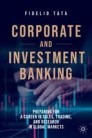
Corporate and Investment Banking : Preparing for a Career in Sales, Trading, and Research in Global Markets
Provides unique information to prepare graduates and newly hired corporate and investment banking professionals for a career in the global markets environment of large universal and international investment banks. It shows the interrelationship between the three specific business functions of sales, trading, and research, as well as the interaction with corporate and institutional clients. The book fills a gap in the available literature by linking financial market theory to the practical aspects of day-to-day operations on a trading floor and offers a taxonomy of the current banking business, providing an in-depth analysis of the main market participants in the global markets ecosystem. Engaging the reader with case studies, anecdotes, and industry color, the book addresses the risks and opportunities of the global markets business in today’s global financial markets both from a theoretical and from a practitioner’s perspective and focuses on the most important fixed-income financial instruments from a pricing, risk-management, and client-marketing perspective.

Coral Reefs of the USA
This book will therefore be of broad general interest. For the first time, complete scholarly reviews are given for the geology, geomorphology and the biology of reefs encompassing a vast area stretching from the Mariana Islands in the west, Samoa in the south, Hawaii in the north and the Virgin Islands in the east.

Coping with Water Deficiency : From Research to Policymaking
In line with the Water Framework Directive, this book stresses the need for an Integrated Water Resources Management (IWRM) approach to balance the competing demands on water-domestic, agricultural, industrial, tourism and environmental/ecological- and promote economically efficient, socially equitable and environmentally sustainable water use in selected regions from Southern Europe, the Mediterranean and the developing world. Results from the research projects covered by this book, demonstrate that effective water management tools and decisions-making practices, are needed in order to complement integrated interventions for increasing the availability of supply and/or managing the growing demand for scarce water supplies. Further, the book attempts to bridge the gap between ideas and actions endorsed at the research-oriented environmental debate, and their translation into policy making structures and programs in developed and developing countries.

Coping with Chronic Illness and Disability : Theoretical, Empirical, and Clinical Aspects
Individuals’ responses to their chronic illness or disability (CID) vary widely. Some are positive and productive, some negative and self-defeating, and some have elements of both. Coping with Chronic Illness and Disability synthesizes the growing literature on these coping styles and strategies by analyzing how individuals with CID face challenges, find and use their strengths, and alter their environment to fit their life-changing realities. The book’s first section provides readers with the major theories and conceptual perspectives on coping, with special emphasis on social aspects and models of coping with different types of CID. In Part Two, an array of specific medical conditions is covered. Each chapter supplies a clinical description, current empirical findings on coping, effective medical, physical, and psychological interventions, employment issues, and social concerns.

Coordination, organizations, institutions, and norms in agent systems II ; AAMAS 2006 and ECAI 2006 International Workshops, COIN 2006 Hakodate, Japan, May 9, 2006 Riva del Garda, Italy, August 28, 2006, Revised Selected Papers
In recent years, social and organizational aspects of agency have become major research topics in MAS. Recent applications of MAS on Web services, grid c- puting and ubiquitous computing highlight the need for using these aspects in order to ensure social order within such environments. Openness, heterogeneity, and scalability of MAS, in turn, pose new demands on traditional MAS int- action models and bring forward the need to look into the environment where agents interact and at di?erent ways of constraining or regulating interactions.it provide theoretically demanding and interdisciplinary research questions at d- ferent levels of abstraction.

Coordination of Large-Scale Multiagent Systems
Challenges arise when the size of a group of cooperating agents is scaled to hundreds or thousands of members. In domains such as space exploration, military and disaster response, groups of this size (or larger) are required to achieve extremely complex, distributed goals. To effectively and efficiently achieve their goals, members of a group need to cohesively follow a joint course of action while remaining flexible to unforeseen developments in the environment. Coordination of Large-Scale Multiagent Systems provides extensive coverage of the latest research and novel solutions being developed in the field.

Cooperative systems : Control and optimization
This book provides an insight in the basic understanding of cooperative systems as well as in theory, modeling, and applications of cooperative control, optimization and related problems.

Cooperative design, visualization, and engineering ; Vol. 3675 : 2nd international conference, CDVE 2005, Palma de Mallorca, Spain, September 18-21, 2005, Proceedings
This book constitutes the refereed proceedings of the Second International Conference on Cooperative Design, Visualization, and Engineering, CDVE 2005, held in Palma de Mallorca, Spain, in September 2005. The 28 revised full papers presented were carefully reviewed and selected from over 100 submissions. The papers cover all current issues in cooperative design, visualization, engineering, and other cooperative applications. Topics addressed are such as constraint maintenance, decision support, and security enforcement for CDVE. Case studies and application specific developments are among the cooperative visualization papers. Along the line of cooperative engineering, knowledge management, reconfigurability, and concurrency control are major issues addressed.

Convective and Advective Heat Transfer in Geological Systems
This monograph aims to provide state-of-the-art theoretical results in a systematic treatment of convective and advective heat transfer during fluid flow in geological systems at the crustal scale. Although some numerical results are provided to complement theoretical ones, the main focus of this monograph is on theoretical aspects of the topic. The theoretical treatment contained in this monograph is also applicable to a wide range of problems of other length-scales such as engineering length-scales.

Control Systems Design : A New Framework
This book will be of great interest to academics and institutional researchers in control system design and to those studying for higher degrees in this area

Control and Scheduling Codesign : Flexible Resource Management in Real-Time Control Systems
Recent evolutionary advances in information and communication technologies give rise to a new environment for Real Time Control Systems. This book is a monograph that covers our recent and original results in this direction.

Contributions from Science Education Research
In August 2005, over 500 international researchers from the field of science education met at the 5th European Science Education Research Association conference in Barcelona, Spain. Two of the main topics at this conference were: the decrease in the number of students interested in school science and concern about the worldwide outcomes of studies on students’ scientific literacy. At the conference, over 400 papers were presented, covering a wide range of topics relevant to science education research, such as evidence-based practice, teachers’ professional development, the role of ICT and multimedia, formal and informal learning environments, and argumentation and modelling in science education. This volume includes edited versions of 37 outstanding papers presented during the conference, including the lectures of the keynote speakers. They have been selected for their quality, variety and interest, and present a good overview of the field of science education research.

Continental Scientific Drilling : A Decade of Progress, and Challenges for the Future
Scientific drilling is an indispensable tool of modern Earth science - search, as it provides the only means of obtaining direct information on processes operating at depth. Drilling allows for the determination of - situ properties of solid materials and fluids and permits testing of hypot- ses and models derived from surface observations. In addition, drill holes may be used as a natural laboratory for experiments and as observatories for long-term monitoring of on-going active processes. Earth drilling, therefore, plays a critical role in scientific research directed towards - proved understanding of the workings of our planet and has a key role in solving urgent socio-economic problems. As a rule, drilling projects are an integral component of major geosci- tific research programs, comprising comprehensive pre-site investigations, accompanying laboratory studies, the drilling phase itself, and consecutive measurements and tests in the drill hole. Such drilling programs are costly and thus only realizable to a limited extent. International cost sharing, the optimal utilization of all available resources, the incorporation of inter- tional leading experts, and the application of the existing know-how, as well as the selection of an optimal drilling location (“World Geological Site”), are thus essential elements of an international scientific drilling p- gram.

Continental Evolution : The Geology of Morocco : Structure, Stratigraphy, and Tectonics of the Africa-Atlantic-Mediterranean Triple Junction
Morocco is one of the most fascinating lands in the world from the point of view of its geological structure and evolution. Our knowledge on the geology of the country has been greatly improved during the last decades, based on numerous seismic profiles and boreholes, seismological analysis of focal mechanisms, seismic tomography, gravimetric/geodetic modelling and, on the other hand, based on a big National Program of Geological Mapping including modern geochemical analyses (trace elements) and reliable isotopic datings (39Ar-40Ar, U-Pb zircon, Sm-Nd, etc). Moreover, a number of academic studies have been performed in relation with the increasing number of Moroccan universities.
