



Page 45
Page 45
Business modeling and software design ; 10th International Symposium, BMSD 2020, Berlin, Germany, July 6-8, 2020, Proceedings
This book constitutes the refereed proceedings of the 10th International Symposium on Business Modeling and Software Design, BMSD 2020, which took place in Berlin, Germany, in July 2020. BMSD is a leading international forum that brings together researchers and practitioners interested in business modeling and its relation to software design. Particular areas of interest are: Business Processes and Enterprise Engineering; Business Models and Requirements; Business Models and Services; Business Models and Software; Information Systems Architectures and Paradigms; Data Aspects in Business Modeling and Software Development; Blockchain-Based Business Models and Information Systems; IoT and Implications for Enterprise Information Systems.

Business incubator center
يهدف مشروع مركز حاضنات الأعمال إلى دعم رواد الأعمال والمشاريع الناشئة من خلال توفير بيئة محفزة وخدمات متكاملة تساعدهم على تطوير أفكارهم وتحويلها إلى شركات ناجحة. يقدم المركز خدمات مثل التدريب، والإرشاد، وتوفير المساحات المكتبية، وربط الحاضنين بالخبراء والمستثمرين. كما يساهم في تعزيز اﻻبتكار وتحفيز التنمية الاقتصادية المحلية من خلال دعم المشاريع الصغيرة والمتوسطة. يركز المشروع على بناء شبكة تعاون بين الحاضنين لتبادل الخبرات والموارد، مما يزيد فرص نجاحهم واستمراريتهم في السوق.
Business Ethics : The Ethical Revolution of Minority Shareholders
The empirical part of the book presents four cases of US, French and Israeli companies, most of them in high-tech, in which the minority shareholders lose almost all of their investments. The cases are based on current events and try to find the common aspects and basic rules that govern the wrongdoing to minority shareholders.The book concludes that once the minority shareholders, who are ultimately all of us, are assisted by the new vehicles of Ethics, and are properly organized, motivated and conscious of their strengths, they will be able to win their fight and safeguard their interests.
Business Education and Emerging Market Economies : Perspectives and Best Practices
Business Education in Emerging Market Economies discusses the impact of business education on emerging markets and explores curricular innovation, pedagogical approaches, and strategic alliances in the context of industrializing economies. Emerging markets consist of eighty percent of the world's population and some 75% of its trade growth in the foreseeable future according to the U.S. Department of Commerce. The potential economic growth of emerging markets has prompted a need to understand the dynamics of these markets, their business institutions, and their educational systems. The pressures of globalization and the recent economic reforms that swept across emerging, developing, and transitioning, economies have had a positive impact on the demand for business education and business knowledge from the developed and industrialized countries. As a result, many methods were developed to transfer know-how from the developed markets including learning through imitation, using western style pedagogical approaches, attending universities in industrialized countries, learning through experience and practice, and using information technology. The conclusion we reach is that business and management education in emerging markets is fast changing the way in which these markets operate and are perceived – business educators are catalysts for greater economic integration.

Burket's oral medicine, 13th ed.
"Detailed discussions on: orofacial pain, temporomandibular disorders, headache and salivary gland disease / oral and oropharyngeal cancers, including the management of oral complications of cancer therapy / genetics, laboratory medicine and transplantation medicine pediatric and geriatric oral medicine / psychiatry and psychology / clinical research / and interpreting the biomedical literature"
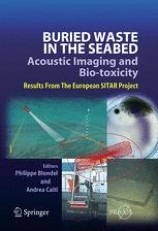
Buried Waste in the Seabed – Acoustic Imaging and Bio-Toxicity : Results from the European SITAR Project
Buried waste on the seabed is a major source of pollution. But, very often, waste sites are not known until a serious problem occurs, or are not adequately mapped. Recent examples around Europe include WWI and WWII ammunition dump sites (e.g. Beufort Dyke in the UK), dumped nuclear submarines in the Arctic Seas, clandestine or hidden toxic-waste in the Baltic Sea and the North Sea.. Even if properly documented, waste sites evolve with time (dumped material can move with currents and tides, especially on a scale of decades; toxic-material barrels can corrode and leak). This book shows the results of a concerted EU-funded effort to tackle this problem and find innovative ways to identify and map toxic waste sites ona the seabed, whether they have been covered with sediments or not. These results are applicable to any region on the seabed in the entire world.

Built on value : The Huawei philosophy of finance management
This book presents the concept of value as the central component to success and longevity of the global ICT industry player, Huawei. It provides examples of how Huawei focuses on customers to pursue sustainable and profitable growth rather than focusing on capital market valuation, which is a familiar scenario among Western companies. It is the business departments that are the creators of value for Huawei, whereas the finance department is tasked to provide support and services to those business departments and oversee their operations during the value creation process. The book illustrates how Huawei Finance sets rules, allocates resources, and builds centers of expertise all over the world to address future uncertainties. Huawei Finance adopts three types of centralized vertical management from the top down: treasury, accounting, and auditing. It does not transfer such central authority down to lower levels, but rather delegates all other authority to business organizations across all levels. This management model represents the focus of this book.
Buildings : Theory and Applications
This book treats Jacques Tits's beautiful theory of buildings, making that theory accessible to readers with minimal background. It includes all the material of the earlier book Buildings by the second-named author, published by Springer-Verlag in 1989, which gave an introduction to buildings from the classical (simplicial) point of view. This new book also includes two other approaches to buildings, which nicely complement the simplicial approach: On the one hand, buildings may be viewed as abstract sets of chambers with a Weyl-group-valued distance function; this point of view has become increasingly important in the theory and applications of buildings. On the other hand, buildings may be viewed as metric spaces. Beginners can still use parts of the new book as a friendly introduction to buildings, but the book also contains valuable material for the active researcher.
Building XNA 2.0 Games : A Practical Guide for Independent Game Development
Building XNA 2.0 Games: A Practical Guide for Independent Game Development is written by James Silva, who recently won the prestigious Microsoft Dream Build Play game competition with his award–winning game, The Dishwasher: Dead Samurai. Building XNA 2.0 Games: A Practical Guide for Independent Game Development is an in–depth and exclusive look into the entire XNA game development process and includes the creation of a software game masterpiece. James Silva guides you through the process he took to build his award–winning title, from concept to reality. He reveals tips and techniques for creating a polished, high–quality game with very few resources, while bridging the gap between coding and art.
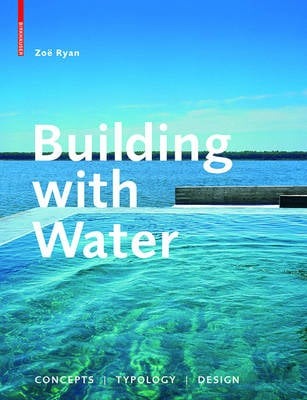
Building with water : Concepts typology design
It presents buildings that explicitly refer to water in their design and form. It establishes a typology of building by the water: residential structures, recreation facilities, industry and infrastructure, buildings for culture and art. The various design parameters are explored in four essays. Subsequently, twenty-two international projects are presented, organized according to their locations by a river, a lake or the sea. The authors’ concern is not to show luxurious buildings in privileged locations but rather presenting projects that seriously grapple with the main criterion of the location—namely, water—in an ecologically sustainable way and respond to it with their design.
Building with earth : Design and technology of a sustainable architecture
For a number of years, the healthy and environment-friendly building material earth, in common use for thousands of years, has been enjoying increasing popularity, including in industrialized nations. In hot dry and temperate climate zones, earth offers numerous advantages over other materials. Its particular texture and composition also holds great aesthetic appeal.
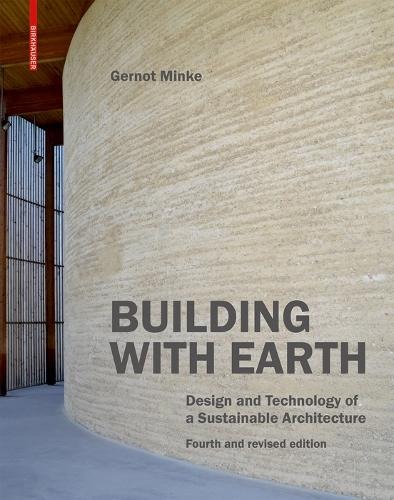
Building with earth : Design and technology of a sustainable architecture
Offers a practical systematic overview of the many uses of earth and techniques for processing it. Its properties and physical characteristics are described in informed and knowledgeable detail. The presentation reflects the rich and varied experiences gained over thirty years of building earth structures all over the world. Numerous photographs of construction sites and drawings show the concrete execution of earth architecture. Documentation of 30 international earth buildings. The characteristics of the building material earth and its applications in modern architecture
Building Theories : Architecture as the Art of Building
Discusses the content of treatises, essays, articles, and letters by those who have been, throughout history, committed to the art of building. In this, Building Theories argues for the return of a practice of architectural theory that is set amongst building, buildings, and builders. This journey of close reading reinterprets the words of Vitruvius, Alberti, de L’Orme, Le Camus de Mézières, Boullée, Laugier, Rondelet, Semper, Viollet-le-Duc, Hübsch, Bötticher, Berlage, Muthesius, Wagner, Behrendt, Gropius, and Arup. With chapters dedicated to texts from antiquity, the Renaissance, and the nineteenth century, and with a critical eye on architectural theory popularized in the Anglo-Saxon world post-1968, readers are introduced to a wider, more inclusive definition of architectural ideas.
Building the Inclusive City : Governance, Access, and the Urban Transformation of Dubai
This book is an anthropological urban study of the Emirate of Dubai, its institutions, and their evolution. It provides a contemporary history of disability in city planning from a non-Western perspective and explores the cultural context for its positioning. Three insights inform the author’s approach. First, disability research, much like other urban or social issues, must be situated in a particular place
Building the Foundation : Whole Numbers in the Primary Grades : The 23rd ICMI Study
This twenty-third ICMI Study addresses for the first time mathematics teaching and learning in the primary school (and pre-school) setting, while also taking international perspectives, socio-cultural diversity and institutional constraints into account. One of the main challenges of designing the first ICMI primary school study of this kind is the complex nature of mathematics at the early level. Accordingly, a focus area that is central to the discussion was chosen, together with a number of related questions. The broad area of Whole Number Arithmetic (WNA), including operations and relations and arithmetic word problems, forms the core content of all primary mathematics curricula. this study presents a meta-level analysis and synthesis of what is currently known about WNA, providing a useful base from which to gauge gaps and shortcomings, as well as an opportunity to learn from the practices of different countries and contexts.
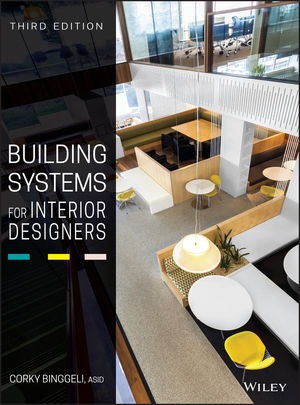
Building Systems for Interior Designers ; 3rd ed.
The ultimate interior designer's guide to building systems and safety Building Systems for Interior Designers, Third Edition is the single-source technical reference that every designer needs, and an ideal solution for NCIDQ exam preparation. Addresses the special concerns of the interior designer within the context of the entire design team. New coverage includes the latest information on sustainable design and energy conservation, expanded coverage of security and building control systems, and a new and expanded art program with over 250 new illustrations. Covering systems from HVAC to water to waste to lighting, this book explains technical building systems and engineering issues in a clear and accessible way to help interior designers communicate more effectively with architects, engineers, and contractors.
Building supply chain excellence in emerging economies
How can we manage supply chains well in emerging economies, coordinate information flows with multiple partners, tackle challenges such as unexpected disruptions, diversify the risks and increase flexibilities, are the topics and issues of the book.
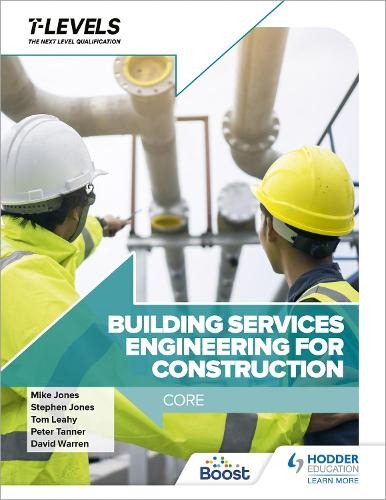
Building services engineering for construction T level: core
Provides complete coverage of the Building Services Engineering for Construction qualification's core units and will equip you with the skills you need to shape your career. - Break down complex topics with summary tables and hundreds of images and artworks - Apply your knowledge in real-world case studies and discover some of the dilemmas you can.
Building intuition : Insights from basic operations management models and principles
"‘This user-friendly book will help the reader to develop insights with respect to a number of models that are important in the study and practice of operations management’. … all the chapters are extremely well written and a pleasure to read. … This would be a good book to use as a text in any operations management course, and in particular for operations management courses which are part of a ‘liberal studies’ program. It would also be good book for managers … ." (R Bharath, Journal of the Operational Research society, Vol. 60 (7), 2009)
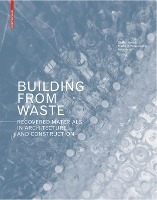
Building from waste : Recovered materials in architecture and construction
"Reduce, Reuse, Recycle, and Recover" is the sustainable guideline that has replaced the "Take, Make, Waste" attitude of the industrial age. Based on their background at the ETH Zurich and the Future Cities Laboratory in Singapore, the authors provide both a conceptual and practical look into materials and products which use waste as a renewable resource. It looks into innovative concepts of how materials usually regarded as waste can be processed into new construction elements. The products are organized along the manufacturing processes: densified, reconfigured, transformed, designed and cultivated materials.
