



Page 45
Page 45

Investigating Spoken English : A Practical Guide to Phonetics and Phonology Using Praat
Combining coverage of the key concepts and tools within phonetics and phonology with a systematic introduction to Praat, this textbook provides a lively and engaging 'way in' to the discipline. The author first covers the fundamentals of the articulatory and acoustic aspects of speech and introduces Praat as the main tool for examining and visualising speech. Next, the unit of analysis is gradually expanded (from syllables to words to turns and dialogues) and excerpts of real dialogues exemplify the core concepts for discovering how speech works.

Inverse Problems for Partial Differential Equations
The topic of the inverse problems is of substantial and rapidly growing interest for many scientists and engineers. The second edition covers most important recent developments in the field of inverse problems, describing theoretical and computational methods, and emphasizing new ideas and techniques. It also reflects new changes since the first edition, including some corrections. This edition is considerably expanded, with some concepts such as pseudo-convexity, and proofs simplified. New material is added to reflect recent progress in theory of inverse problems.This book is intended for mathematicians working with partial differential equations and their applications, and physicists, geophysicists and engineers involved with experiments in nondestructive evaluation, seismic exploration, remote sensing and tomography.

Inverse Problems and Imaging : Lectures given at the C.I.M.E. Summer School held in Martina Franca, Italy September 15–21, 2002
Nowadays we are facing numerous and important imaging problems: nondestructive testing of materials, monitoring of industrial processes, enhancement of oil production by efficient reservoir characterization, emerging developments in noninvasive imaging techniques for medical purposes - computerized tomography (CT), magnetic resonance imaging (MRI), positron emission tomography (PET), X-ray and ultrasound tomography, etc. In the CIME Summer School on Imaging (Martina Franca, Italy 2002), leading experts in mathematical techniques and applications presented broad and useful introductions for non-experts and practitioners alike to many aspects of this exciting field. The volume contains part of the above lectures completed and updated by additional contributions on other related topics: a general presentation and introduction (Moscoso), X-ray tomography (Natterer), Electromagnetic imaging (Dorn, Bertete-Aguirre, Papanicolaou), coherent imaging in telecommunications in a multiple input-multiple output setup (Dorn), polarization based optical imaging (Moscoso), topological derivatives used in shape reconstruction related to inverse scattering problems (Carpio, Rapún), Point interactions (Dell’Antonio, Figari, Teta).

Inventive Architect : شركة هندسية
اهداف اختيار المشروع : فتح المجال امام المتدربين بشكل اكبر ليتمكنوا من العمل بشكل صحيح وقوي و اعطاء فرص للمهندسين في بلدهم من اجل العمل بطريقه افضل ومساعدتهم لبناء افكارهم و تحقيقها ولنصنع بصمة معمارية لبلدنا و نساعد في تحقيقه و تشجيعهم في اعاده اعمار البلاد و اعطائها ما تستحق من معلوماتهم.

Introduzione alla teoria della misura e all’analisi funzionale = Introduction to measurement theory and functional analysis
Presents a treatment of the theory of measure from an abstract point of view, with particular emphasis on some aspects of interest in probability. The typical arguments of the theory of integration are developed in a rather in-depth way, trying where possible to deduce classical results from the modern setting of the theory as well. The text has a modular structure, with interconnections between the parts: some chapters deal with theoretical aspects, others are dedicated to more applied topics. Alongside the numerous examples, a wide range of exercises is proposed.
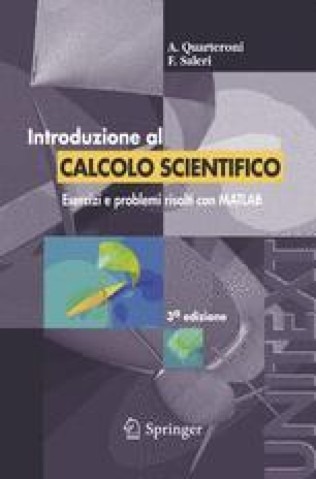
Introduzione al Calcolo Scientifico : Esercizi e problemi risolti con MATLAB = Introduction to scientific computing : Exercises and problem solved with MATLAB
Introduces the fundamental concepts for the numerical modeling of partial differential problems. We consider the classic linear elliptic, parabolic and hyperbolic equations, but also other equations, such as those of diffusion and transport, of Navier-Stokes, and the conservation laws. Numerous physical examples underlying these equations are provided, their main mathematical properties are studied, then numerical resolution methods based on finite elements, finite differences, finite volumes and spectral methods are proposed and analyzed. In particular, the algorithmic and computer implementation aspects are discussed and some easy-to-use programs in C ++ language are provided. The text does not presuppose an advanced mathematical knowledge of partial differential equations: the strictly indispensable concepts in this regard are reported in the Appendix. THE VOLUME is therefore suitable for students of scientific degree courses (Engineering, Mathematics, Physics, Chemistry, Information Sciences) and recommended for researchers from the academic and extra-academic world who want to approach this interesting branch of applied mathematics.

Introduction to wine laboratory practices and procedures
winemaking was a romanticized notion of putting grape juice into a barrel and allowing time to perform its magic as you sat on the veranda watching the sunset on a Tuscan landscape. For some small wineries, this notion might still ring true, but for the majority of wineries commercially producing quality wines, the reality of winemaking is far more complex. The persistent evolution of the wine industry demands continual advan- ments in technology and education to sustain and promote quality winem- ing. The sciences of viticulture, enology, and wine chemistry are becoming more intricate and sophisticated each year. Wine laboratories have become an integral part of the winemaking process, necessitating a knowledgeable staff possessing a multitude of skills. Science incorporates the tools that new-age winemakers are utilizing to produce some of the best wines ever made in this multibillion dollar trade. A novice to enology and wine chemistry can find these subjects daunting and intimidating. Whether you are a home winemaker, a new winemaker, an enology student, or a beginning-to-intermediate laboratory technician, p- ting all the pieces together can take time.

Introduction to Video Search Engines
Their book has a practical emphasis with the goal of bringing readers up to date on the state of the art in multimedia search technologies and systems. It explains the overall process of video content acquisition, indexing and retrieval with browsing, it provides overviews of constituent technologies such as information retrieval, Internet video systems, video and multimedia processing to extract index data, and it gives examples of research prototypes and existing commercial systems and describes their features.

Introduction to toxicology
Charts the evolution of the field of toxicology, from the use of natural toxins by ancient tribes through the developments established by Paracelsus, and progresses through to the current topics in the public interest. For centuries, the study of toxicology has fascinated students. The book begins with basic toxicological principles, including an historical summary, dose-response relationships (NEW chapter), exposure-response relationships (NEW chapter), disposition, and metabolism of xenobiotic toxic substances. Other important new chapters include target organ toxicity, toxicity of carcinogenic agents and new and updated concepts in toxicity testing, and antidotes and treatment of poisonings. In all, nine new or expanded chapters from the third edition are advanced. Current concerns about the effects of therapeutic drugs, carcinogens, industrial toxins, pesticides, and herbicides on human health, animal welfare, and the stability and maintenance of the ecosystem continue to highlight toxicology as an important and growing scientific discipline.

Introduction to the Tools of Scientific Computing
The book provides an introduction to common programming tools and methods in numerical mathematics and scientific computing. Unlike widely used standard approaches, it does not focus on any particular language but aims to explain the key underlying concepts. In general, new concepts are first introduced in the particularly user-friendly Python language and then transferred and expanded in various scientific programming environments from C / C ++, Julia and MATLAB to Maple. This includes different approaches to distributed computing.

Introduction to the Classical Theory of Particles and Fields
This volume is intended as a systematic introduction to gauge field theory for advanced undergraduate and graduate students in high energy physics.

Introduction to Systems Biology
Informative and cutting-edge, this volume presents a clear and intuitive illustration of the biological systemic approaches and introduces ideal computational methods for research. Introduction to Systems Biology is an indispensable resource, providing a first glimpse into the state-of-the-art in systems biology.

Introduction to Sustainability : Road to a Better Future
This book provides the tools to navigate this Road to a Better Future by explaining concepts, giving ideas, proposing methods, and suggesting actions. To illustrate the utilization of techniques there are many examples, applied to a variety of activities, and to wrap up concepts, the last chapter is dedicated to the analysis of a community in search of a sustainable environment. A thematic index has been designed to help a person quickly find information on relevant topics.

Introduction to Structural Analysis
Covers the principles of structural analysis without any requirement of prior knowledge of structures or equations. Beginning with basic principles of equilibrium of forces and moments, all other subsequent theories of structural analysis have been discussed logically. Divided into two major parts, this book discusses the basics of mechanics and principles of degrees of freedom upon which the entire paradigm rests, followed by analysis of determinate and indeterminate structures. The energy method of structural analysis is also included.

Introduction to Stochastic Integration
The theory of stochastic integration, also called the Ito calculus, has a large spectrum of applications in virtually every scientific area involving random functions, but it can be a very difficult subject for people without much mathematical background. The Ito calculus was originally motivated by the construction of Markov diffusion processes from infinitesimal generators. Previously, the construction of such processes required several steps, whereas Ito constructed these diffusion processes directly in a single step as the solutions of stochastic integral equations associated with the infinitesimal generators. Moreover, the properties of these diffusion processes can be derived from the stochastic integral equations and the Ito formula. This introductory textbook on stochastic integration provides a concise introduction to the Ito calculus

Introduction to Stochastic Calculus for Finance : A New Didactic Approach
The justifcation is mainly pedagogical. These lecture notes start with an elementary approach to stochastic calculus due to Föllmer, who showed that one can develop Ito's calculus "pathwise" as an exercise in real analysis. The text opens to students interested in finance a quick (but by no means "dirty") road to the tools required for advanced finance in continuous time, including option pricing by martingale methods, term structure models in a HJM-framework and the Libor market model.

Introduction to space syntax in urban studies
This textbook is a comprehensive introduction to space syntax method and theory for graduate students and researchers. It provides a step-by-step approach for its application in urban planning and design. This textbook aims to increase the accessibility of the space syntax method for the first time to all graduate students and researchers who are dealing with the built environment, such as those in the field of architecture, urban design and planning, urban sociology, urban geography, archaeology, road engineering, and environmental psychology. Taking a didactical approach, the authors have structured each chapter to explain key concepts and show practical examples followed by underlying theory and provided exercises to facilitate learning in each chapter

Introduction to Soliton Theory : Applications to Mechanics
This monograph provides the application of soliton theory to solve certain problems selected from the fields of mechanics. The present monograph is not a simple translation of its predecessor appeared in Publishing House of the Romanian Academy in 2002. Improvements outline the way in which the soliton theory is applied to solve some engineering problems. The book addresses concrete resolution methods of certain problems such as the motion of thin elastic rod, vibrations of initial deformed thin elastic rod, the coupled pendulum oscillations, dynamics of left ventricle, transient flow of blood in arteries, the subharmonic waves generation in a piezoelectric plate with Cantor-like structure, and some problems related to Tzitzeica surfaces. This comprehensive study enables the readers to make connections between the soliton physical phenomenon and some partical, engineering problems.

Introduction to software design with Java
Provides an in-depth introduction to software design, with a focus on object-oriented design, and using the Java programming language. Its goal is to help readers learn software design by discovering the experience of the design process. To this end, the text follows a continuous narrative that introduces each element of design know-how in context, and explores alternative solutions in that context. This narrative is complemented by hundreds of code fragments and design diagrams.

Introduction to Singularities and Deformations
This book presents the basic singularity theory of analytic spaces, including local deformation theory, and the theory of plane curve singularities. Plane curve singularities are a classical object of study, rich of ideas and applications, which still is in the center of current research and as such provides an ideal introduction to the general theory. Deformation theory is an important technique in many branches of contemporary algebraic geometry and complex analysis. This introductory text provides the general framework of the theory while still remaining concrete.
