



Page 44
Page 44
Lattice Boltzmann Modeling : An Introduction for Geoscientists and Engineers
Lattice Boltzmann models have a remarkable ability to simulate single- and multi-phase fluids and transport processes within them. A rich variety of behaviors, including higher Reynolds numbers flows, phase separation, evaporation, condensation, cavitation, buoyancy, and interactions with surfaces can readily be simulated. This book provides a basic introduction that emphasizes intuition and simplistic conceptualization of processes. It avoids the more difficult mathematics that underlies LB models. The model is viewed from a particle perspective where collisions, streaming, and particle-particle/particle-surface interactions constitute the entire conceptual framework. Beginners and those with more interest in model application than detailed mathematical foundations will find this a powerful "quick start" guide. Example simulations, exercises, and computer codes are included. Working code is provided on the Internet
Large Eddy Simulation for Incompressible Flows : An Introduction
First concise textbook on Large-Eddy Simulation, a very important method in scientific computing and engineeringFrom the foreword to the third edition written by Charles Meneveau: ".

Large Coulomb Systems: Lecture Notes on Mathematical Aspects of QED
A mathematically consistent formulation of relativistic quantum electrodynamics (QED) has still to be found. Nevertheless, there are several simplified effective models that successfully describe many body quantum systems and the interaction of radiation with matter. Large Coulomb Systems explores a selection of mathematical topics inspired by QED. It comprises selected, expanded and edited lectures given by international experts at a topical summer school and is intended as a high-level introduction for graduate students, postdocs and nonspecialists from related fields.

Languages and Compilers for Parallel Computing ; Vol. 2481 : 15th Workshop, LCPC 2002, College Park, MD, USA, July 25-27, 2002, Revised Papers
LCPC 2002 brought together over 60 researchers from academia and research institutions from many countries. The program of 26 papers was selected from 32 submissions. Each paper was reviewed by at least three Program Committee members and sometimes by additional reviewers. Prior to the workshop, revised versions of accepted papers were informally published on the workshop’s website and in a paper proceedings that was distributed at the meeting. This year, the workshopwas organizedinto sessions of papers on related topics, and each session consisted of two to three 30-minute presentations.Based on feedback from the workshop,the papers were revised and submitted for inclusion in the formal proceedings published in this volume. Two papers were presented at the workshop but later withdrawn from the ?nal proceedings by their authors. We were very lucky to have Bill Carlson from the Department of Defense give the LCPC 2002 keynote speech on “UPC: A C Language for Shared M- ory Parallel Programming.” Bill gave an excellent overview of the features and programming model of the UPC parallel programming language.

Languages and Compilers for Parallel Computing ; 21th International Workshop, LCPC 2008, Edmonton, Canada, July 31 - August 2, 2008, Revised Selected Papers
This book constitutes the thoroughly refereed post-conference proceedings of the 21th International Workshop on Languages and Compilers for Parallel Computing, LCPC 2008, held in Edmonton, Canada, in July/August 2008.The 18 revised full papers and 6 revised short papers presented were carefully reviewed and selected from 35 submissions. The papers address all aspects of languages, compiler techniques, run-time environments, and compiler-related performance evaluation for parallel and high-performance computing and comprise

Languages and Compilers for Parallel Computing ; 19th International Workshop, LCPC 2006, New Orleans, LA, USA, November 2-4, 2006, Revised Papers
The 19th Workshop on Languages and Compilers for Parallel Computing was heldinNovember2006inNewOrleans,LouisianaUSA.Morethan40researchers from around the world gathered together to present their latest results and to exchange ideas on topics ranging from parallel programming models, code generation,compilationtechniques,paralleldatastructureandparallelexecution models,toregisterallocationandmemorymanagementinparallelenvironments.

Land-Change Science in the Tropics : Changing Agricultural Landscapes
Land use and land-cover change research over the past decade has focused mainly on contemporary primary land-cover conversions in the tropics and sub-tropics, with considerable resources dedicated to the explanation and prediction of tropical deforestation and often ignoring the dynamism in the world’s agro-pastoral landscapes. This collection integrates cutting-edge research in the social, biogeophysical, and geographical information sciences to understand the human and environmental dynamics that change the type, magnitude and location of land uses and land covers in the changing countryside.This book describes the monitoring of land-cover changes, explains the processes through which land is altered, and describes the development of spatially-explicit models to predict land change. This book illustrates how practitioners have integrated knowledge from the three scientific realms - social, biophysical, and GIScience - that underpin land-change science.

Lamto : Structure, Functioning, and Dynamics of a Savanna Ecosystem
Known as "a dream place for scientists," the Lamto savannas, located on the edge of the Cote d'Ivoire rain forests, are one of the only savannas in the world where ongoing ecological research has endured for more than forty years. Drawing from and synthesizing this abundance of research, the book examines the structure, functioning, and dynamics of the Lamto humid savanna. Beginning with the history of the Lamto ecology station and an overview of the major environmental conditions of the site, this exacting work specifically examines the integrative view of energy and nutrient fluxes relative to the dynamics of the savanna's vegetation.
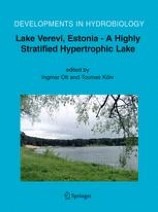
Lake Verevi, Estonia : A highly stratified hypertrophic lake
The present book summarises investigations on Lake Verevi (surface 12.6 ha, mean depth 3.6 m). The seventeen articles in this issue deal with a wide range of questions, starting with a holistic overview of the ecological status, over assessments of long-term changes in biotic and abiotic conditions and finishing with proposed restoration plans. Abiotic chapters provide calculations on water and mass balance, distribution and fractions of phosphorus in the sediment, optical properties and penetration of radiation in the water column, sedimentation rate during the formation of stratification, and nitrogen circulation characteristics.

Lake Taihu, China : Dynamics and Environmental Change
There are many shallow lakes in the world. Many of them play an important socio-economic role as contributors to the drinking water supply, in flood attenuation, fisheries and recreation activities. Because of the current anthropogenic changes in the environment, such lakes rapidly respond to eutrophication and swamping. It is often hard to address these issues because many changes in the ecosystems of shallow lakes are associated with little studied physical processes. This interaction between the aquatic biota and the physical and chemical environment increases the complexity of shallow lake ecosystems. Lake Taihu, located in the delta of Yangtze River, is a typical large, shallow eutrophic lake with area of 2338 km2 and maximum depth of less than 3m . This book provides basic data on various aspects of this lake and summarizes research work on the interaction between its ecology and physical limnology. It will be a reference for teachers and students of freshwater ecology and biology, the aquatic environment in general, and, most strikingly, for all those interested in physical limnology.
Lagrangian Transport in Geophysical Jets and Waves : The Dynamical Systems Approach
This book provides an accessible introduction to a new set of methods for the analysis of Lagrangian motion in geophysical flows. These methods were originally developed in the abstract mathematical setting of dynamical systems theory, through a geometric approach to differential equations. Despite the recent developments in this field and the existence of a substantial body of work on geophysical fluid problems in the dynamical systems and geophysical literature, this is the first introductory text that presents these methods in the context of geophysical fluid flow. The book is organized into seven chapters; the first introduces the geophysical context and the mathematical models of geophysical fluid flow that are explored in subsequent chapters. The second and third cover the simplest case of steady flow, develop basic mathematical concepts and definitions, and touch on some important topics from the classical theory of Hamiltonian systems. The fundamental elements and methods of Lagrangian transport analysis in time-dependent flows that are the main subject of the book are described in the fourth, fifth, and sixth chapters. The seventh chapter gives a brief survey of some of the rapidly evolving research in geophysical fluid dynamics that makes use of this new approach. Related supplementary material, including a glossary and an introduction to numerical methods, is given in the appendices.
L’esprit de l’aiguille : L’apport du Yi Jing à la pratique de l’acupuncture = The Spirit of the Needle: The contribution of the Yi Jing to the practice of acupuncture
Acupuncture deciphers and heals human beings in all their mutations. The symbolism of Yi Jing joins the humanism of this Traditional Medicine for a dynamic reading of the changes and transformations at work in human beings. The double reflection generates a global vision of the human being and the approach to patients is changed. After an approach to the state of mind, encountered in these two fields, the author sets out to find the oldest roots of the notions of Yin and Yang. This allows him to identify the main strengths of the constitution of a human being and to deepen its symbolic construction. Three fields of application of this approach are then studied. The Extraordinary Meridians are viewed from a descriptive and behavioral perspective, which makes them extremely lively and familiar. Luo points, human being's relationship points with Reality, are also considered on a practical level using a symbolic reading of the links of Heaven, Earth and Man. Many examples shed light on these aspects. The last application is a detailed and comprehensive presentation of the fundamental and symbolic functions of the twelve main meridians through the hexagrams which correspond to their ancient Shu points. This original book is intended for any practitioner of traditional Chinese medicine curious to broaden their field of investigation. Dr M. Vinogradoff has been practicing acupuncture for 25 years. He is a member of the French Acupuncture Association, the French Acupuncture College and the Ricci Institute. After having published the complete translation of Yi Jing, in 2006 he published a novel, the action of which is set in Ancient China.
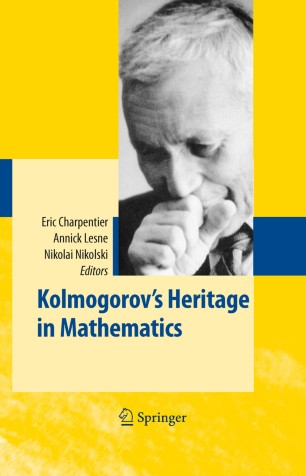
Kolmogorovs Heritage in Mathematics
A.N. Kolmogorov (b. Tambov 1903, d. Moscow 1987) was one of the most brilliant mathematicians that the world has ever known. Incredibly deep and creative, he was able to approach each subject with a completely new point of view: in a few magnificent pages, which are models of shrewdness and imagination, and which astounded his contemporaries, he changed drastically the landscape of the subject.Most mathematicians prove what they can, Kolmogorov was of those who prove what they want. For this book several world experts were asked to present one part of the mathematical heritage left to us by Kolmogorov.
Knowledge Management and Management Learning : Extending the Horizons of Knowledge-Based Management
The book begins with an extended introduction and theoretical framework. Contributing authors have written chapters that add to both the framework and the practical consequences of knowledge management. These chapters suggest many lessons learned that will find considerable use in practice. Some of these chapters include an investigation of the "do’s and don’ts" virtual learning based on real-life cases, the use of design teams for group learning, the role of language and the creation of common ground between company and client, culture as a dynamic and non-linear constructed concept, innovation and knowledge management and more. The book offers an exceptional range of contributions within a developing paradigm. Within this context, the book illustrates why and how of knowledge management is important for companies.
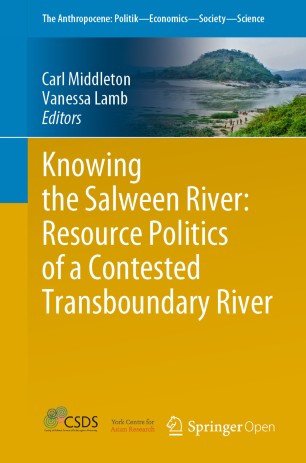
Knowing the Salween River : Resource Politics of a Contested Transboundary River
Focuses on the Salween River, shared by China, Myanmar, and Thailand, that is increasingly at the heart of pressing regional development debates. The basin supports the livelihoods of over 10 million people, and within it there is great socio-economic, cultural and political diversity. The basin is witnessing intensifying dynamics of resource extraction, alongside large dam construction, conservation and development intervention, that is unfolding within a complex terrain of local, national and transnational governance. With a focus on the contested politics of water and associated resources in the Salween basin, this book offers a collection of empirical case studies that highlights local knowledge and perspectives. Given the paucity of grounded social science studies in this contested basin, this book provides conceptual insights at the intersection of resource governance, development, and politics of knowledge relevant to researchers, policy-makers and practitioners at a time when rapid change is underway.

Kinematics and Dynamics of Multibody Systems with Imperfect Joints : Models and Case Studies
The primary goal of this book is to present suitable methodologies for dynamic analysis of multibody mechanical systems with imperfect or real joints, that is, considering clearances, including their tribological characteristics and surface compliance properties. Two and three-dimensional methodologies for imperfect kinematic joints with and without lubrication are presented.

Killer Cell Dynamics : Mathematical and Computational Approaches to Immunology
Reviews how mathematics can be used in combination with biological data in order to improve understanding of how the immune system works. This is illustrated largely in the context of viral infections. Mathematical models allow scientists to capture complex biological interactions in a clear mathematical language and to follow them to their precise logical conclusions. This can give rise to counter-intuitive insights which would not be attained by experiments alone, and can be used for the design of further experiments in order to address the mathematical results.

Job Scheduling Strategies for Parallel Processing ; Vol. 3834 : 11th International Workshop, JSSPP 2005, Cambridge, MA, USA, June 19, 2005, Revised Selected Papers
Constitutes the refereed postproceedings of the 11th International Workshop on Job Scheduling Strategies for Parallel Processing, 2005, held in conjunction with the 19th ACM International Conference on Supercomputing. This book covers a range of parallel architectures, from distributed grids, through clusters, to massively-parallel supercomputers.

Job Scheduling Strategies for Parallel Processing ; 13th International Workshop, JSSPP 2007, Seattle, WA, USA, June 17, 2007. Revised Papers
Constitutes the thoroughly refereed post-workshop proceedings of the 13th International Workshop on Job Scheduling Strategies for Parallel Processing, JSSPP 2007, held in Seattle, WA, USA, in June 2007, in conjunction with the 21st ACM International Conference on Supercomputing, ICS 2007.The 10 revised full research papers presented went through the process of strict reviewing and subsequent improvement. The papers cover all current issues of job scheduling strategies for parallel processing from the supercomputer-centric viewpoint but also address many nontraditional high-performance computing and parallel environments that cannot or need not access a traditional supercomputer.
Jets From Young Stars III : Numerical MHD and Instabilities
This volume contains the lecture notes of the Third JETSET School on Jets from Young Stars focussing on Numerical MHD and Instabilities. The introductory lectures presented here cover the basic concepts of the numerical methods for the integration of hydrodynamic and magnetohydrodynamic equations and of the applications of these methods to the treatment of the instabilities relevant for the physics of stellar jets. The first part of the book contains an introduction to the finite difference and finite volume methods for computing the solutions of hyperbolic partial differential equations and a discussion of approximate Riemann solvers for both hydrodynamic and magnetohydrodynamic problems. The second part is devoted to the discussion of some of the main instability processes that may take place in stellar jets, namely: the Kelvin-Helmholtz, the radiative shock, the pressure driven and the thermal instabilities.
