



Page 40
Page 40

Ecological Risk Assessment for Chlorpyrifos in Terrestrial and Aquatic Systems in the United States
Reviews of Environmental Contamination and Toxicology attempts to provide concise, critical reviews of timely advances, philosophy and significant areas of accomplished or needed endeavor in the total field of xenobiotics, in any segment of the environment, as well as toxicological implications.

Ecological Responses to the 1980 Eruption of Mount St. Helens
The eruption of Mount St. Helens on May 18, 1980, had a momentous impact on the fungal, plant, animal, and human life from the mountain to the far reaches of the explosion's ash cloud and mudflows. Although this intense natural event caused loss of substantial life and property, it also created a unique opportunity to examine a huge disturbance of natural systems and their subsequent responses. Based on one of the most studied areas of volcanic activity, this book synthesizes the ecological research that has been conducted for twenty-five years since the eruption.

Ecological Informatics : Scope, Techniques and Applications
Ecological Informatics promotes interdisciplinary research between ecology and computer science on elucidation of principles of information processing in ecosystems, ecological sustainability by informed decision making, and bio-inspired computation. The 2nd edition of the book consolidates the scope, concepts, and techniques of this newly emerging discipline by a new preface and additional chapters on cellular automata, qualitative reasoning, hybrid evolutionary algorithms and artificial neural networks. It illustrates numerous applications of Ecological Informatics for aquatic and terrestrial ecosystems, image recognition at micro- and macro-scale as well as computer hardware design.

Ecological and Health Effects of Building Materials
Deals with the present adverse effects of using precarious building materials on the ecology and human health. Also, the detailed discussions on the novel and greener construction materials and their utilization as an alternative to the conventional harmful existing methods and materials are also presented in the subsequent chapters. This book helps to fill the research gaps in the existing prior-art knowledge in the field of sustainable construction and green building materials and methods giving due importance to ecology and health, specifically to the fields of sustainable structural engineering, sustainable geotechnical engineering, sustainable road engineering, etc.

Ecological and Genetic Implications of Aquaculture Activities
Aquaculture is a rapidly growing industry and aquaculture practices can directly interact with and depend upon the surrounding environment. Therefore, the effects of all types of aquaculture on living natural resources and ecosystems are of significant and increasing national and international interest. In Ecological and Genetic Implications of Aquaculture Activities, numerous nationally and internationally prominent aquaculture researchers contribute 27 chapters that comprise overviews of aquaculture effects on the environment, discussions of genetic considerations, thorough documentation of aquaculture effects and their solutions specific to countries, and approaches toward environmentally sustainable aquaculture. Together, these chapters comprise a comprehensive synthesis of many ecological and genetic problems implicated in the practice of aquaculture and of many proven, attempted, or postulated solutions to those problems. Many chapters can serve as benchmark documentations of specific aquaculture effects on biodiversity at different levels.

Eco-design of buildings and infrastructure : developments in the period 2016–2020
Reviews the second five-year sequence of the Chair, first presenting methodological advances in eco-design: life cycle assessment and quantification of uncertainties; local environmental impacts of transport and biodiversity. The interdisciplinary partnership, also associating the human sciences, shows its interest in taking into account the human factor in the modelling of urban systems. This modelling is based on several numerical simulation tools, presented in the third part.

Eco-and ground bio-engineering : The use of vegetation to improve slope stability ; Proceedings of the 1st International Conference on Eco-Engineering 13-17 September 2004
In an era where climate change, natural catastrophes and land degradation are major issues, the conservation of soil and vegetation in mountainous or sloping regions has become an international priority. How to avoid substrate mass movement through landslides and erosion using sustainable and ecologically sound techniques is rapidly becoming a scientific domain where knowledge from many different fields is required. These proceedings bring together papers from geotechnical and civil engineers, biologists, ecologists and foresters, who discuss current problems in slope stability research, and how to address those problems using ground bio- and eco-engineering techniques.

Echinodermata
Members of the phylum Echinodermata are among the most familiar marine invertebrates. Forms such as the sea star have become virtually a symbol of sea life. Used in ancient oriental medicine as a source of bioactive compounds, sea cucumbers, sea stars and sea urchins are now used for the extraction and purification of cytotoxic, haemolytic, antiviral, antifungal, antifouling, antimicrobial and even anti-tumoural activities.

Eating, Drinking: Surviving : The International Year of Global Understanding - IYGU
This publication addresses the global challenges of food and water security in a rapidly changing and complex world. The essays highlight the links between bio-physical and socio-cultural processes, making connections between local and global scales, and focusing on the everyday practices of eating and drinking, essential for human survival. Written by international experts, each contribution is research-based but accessible to the general public.

Earthquakes, Tsunamis and Nuclear Risks : Prediction and Assessment Beyond the Fukushima Accident
This book covers seismic probabilistic risk assessment (S-PRA) and related studies which have become more important to increase the safety of nuclear facilities against earthquakes and tsunamis in the face of the many uncertainties after the Fukushima accident. The topics are (1) Active faults and active tectonics important for seismic hazard assessment of nuclear facilities,(2) Seismic source modeling and simulation and modeling techniques indispensable for strong ground motion prediction, and (3) PRA with external hazard and risk communication.
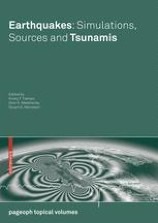
Earthquakes : Simulations, Sources and Tsunamis
This book includes a variety of studies that focus on the modeling of tsunamis and earthquakes, both large-scale simulation and visualization programs, as well as detailed models of small-scale features. Particular attention is paid to computational techniques, languages, and hardware that can be used to facilitate data analysis, visualization, and modeling. Also included are studies of several earthquake forecasting techniques and associated comparisons of their results with historic earthquake data. Finally, the volume ends with theoretical analyses of statistical properties of seismicity by internationally recognized experts in the field. This volume will be of particular interest to researchers interested in the multiscale simulation and visualization of large earthquakes and tsunamis.

Earthquake Source Asymmetry, Structural Media and Rotation Effects
This is the first book on rotational effects in earthquakes, a revolutionary concept in seismology. Existing models do no yet explain the significant rotational and twisting motions that occur during an earthquake and cause the failure of structures. This breakthrough monograph thoroughly investigates rotational waves, basing considerations on modern observations of strong rotational ground motions and detection of seismic rotational waves. To describe the propagation of such waves the authors consider structured elastic media that allow for rotational motions and rotational deformations of the ground, sometimes stronger than translational deformations. The rotation and twist effects are investigated and described and their consequences for designing tall buildings and other important structures are presented. The book will change the way the world views earthquakes and will interest scientists and researchers in the fields of Geophysics, Geology and Civil Engineering.

Earthquake Monitoring and Seismic Hazard Mitigation in Balkan Countries
this book including deployment of modern seismograph stations and arrays and these developments are detailed in the book. Station and network operations require near real time record analysis and topics dealt with here are 2-D signal detector, epicenter location and earthquake monitoring. Balkan is seismically the most active part of Europe due to multiple plate interactions in the Aegean Sea. The tectonic evolution and on-going geodynamic deformations are described in 2 articles. Earthquake hazard analysis and topographic site effects are discussed and likewise large earthquake hazards in the Aegean and the Marmara seas relate to practical applications of such procedures. Foremost; the book gives a good account of past, present and likely future seismological developments in Balkan countries and various kinds of network operations on local to global scales.

Earthquake Geotechnical Engineering ; 4th International Conference on Earthquake Geotechnical Engineering-Invited Lectures
This book contains the full papers on which the invited lectures of the 4th International Conference on Geotechnical Earthquake Engineering (4ICEGE) were based. It provides a comprehensive overview of the progress achieved to date in soil dynamics and geotechnical earthquake engineering, as well as in engineering seismology and seismic risk assessment and management. In situ and laboratory testing, theoretical issues and numerical modeling of soil dynamics, seismic hazard with emphasis on the long-period ground motion displacements, site effects and microzonation, liquefaction assessment and mitigation, soil-structure interaction, performance based design of geotechnical structures, earthquake resistant design and performance of shallow and deep foundations, retaining structures, embankments and dams, underground structures and lifelines, are all among the different topics covered in this book. Interdisciplinary subjects such as vulnerability assessment of, transportation networks and lifelines as well as of geotechnical structures are also discussed. Finally, the book provides a thorough presentation of the existing worldwide important large-scale testing facilities and geotechnical strong ground motion arrays.

Earthquake Early Warning System
The book provides information on the major EEW systems in operation and on the state of the art of the different blocks forming an EW system: the rapid detection and estimation of the earthquake’s focal parameters, the signal transmission, the engineering interface and the information reliability/false alarm problem.

Earth System Science in the Anthropocene : Emerging Issues and Problems
Earth System Science in the Anthropocene aims to provide an in-depth perspective and update on special topics in Global Environmental Change in relation to Human Security. It gives an overview on the new Joint Projects of the four International Global Change Programmmes and on research efforts in Germany. It is also an up-to-date report on emerging necessities in Global Environmental Change research as well as suggestions for its future development.
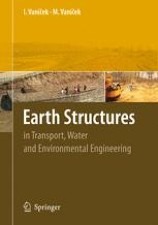
Earth Structures : In Transport, Water and Environmental Engineering
This book describes the principles of working with soil as a construction material, including two basic ways of treating it: geosynthetics and stabilization. The book discusses the design logic and ways to control Earth Structures, which differ significantly from other construction materials. Building with Earth involves greater uncertainty and risk, which means that there is a need for better design detailing and improvement in the quality of financial calculations. The general part of the book gives a detailed description of the principles of limit states according to Eurocode 7, after which geotechnical design is also described. Subsequent chapters concentrate on earth structures for transport, water, and environmental projects. The chapter on Earth Structures in transport engineering presents detailed coverage of limit states of stability and deformation. Earth Structures in water engineering prioritizes the limit state of internal erosion. Earth Structures in environmental engineering describes new designs, in which part of the structure is created from non-standard materials which are usually susceptible to internal collapse, double porosity, unsaturation, etc. It also focuses on protecting the surrounding environment from contamination.

Earth Sciences and Mathematics ; Vol.1
This volume contains papers addressing different topics as deformation modelling applied to natural hazards, inverse gravimetric problem to determine 3D density structure, advanced differential SAR interferometry, climate change, geomagnetic field, Earthquake statistics, meteorological studies using satellite images, climate energy balance models, study of soils properties, and multifractal data sets.

Earth science satellite remote sensing ; Vol.2 : Data, computational processing, and tools
Earth science satellite remote sensing has been rapidly expanding during the last decade. Volume 2 of this two volume monograph provides information on the Earth science remote sensing data information and data format such as HDF-EOS, and tools. It evaluates the current data processing approaches and introduces data searching and ordering from different public domains. Further it explores the remote sensing and GIS migration products and WebGIS applications. The core of this book arose from the workshop for Earth Science Satellite Remote Sensing held at George Mason University (GMU) in October 2002. Both volumes are designed to give scientists and graduate students with limited remote sensing background a thorough introduction to current and future NASA, NOAA and other Earth science remote sensing.

Earth science satellite remote sensing ; Vol.1 : Science and instruments
Satellite remote sensing for Earth science data has been rapidly expanding during the last decade. Volume 1 of this two volume monograph covers missions/sensors, such as Sea-viewing Wide Field-of-view Sensor (SeaWiFS), Tropical Rainfall Measuring Mission (TRMM), Total Ozone Mapping Spectrometer (TOMS), Atmospheric Infrared Sounder (AIRS), and Advanced Microwave Sounding Unit (AMSU). It also discusses the NPOESS and NPP missions. Emphasis was placed on the recently launched Moderate Resolution Imaging Spectroradiometer (MODIS) on board of both Terra and Aqua. Some key MODIS science team members were invited to contribute several chapters. The core of this monograph arose from the workshop for Earth Science Satellite Remote Sensing held at George Mason University (GMU) in October 2002. Both volumes are designed to give scientists and graduate students with limited remote sensing background a thorough introduction to current and future NASA, NOAA and other Earth science remote sensing missions.
