



Page 4
Page 4

Drug safety evaluation
Presents an all-inclusive practical guide for those who are responsible for developing new drugs and ensuring the safety of an ever-expanding spectrum of therapeutics. This book helps readers understand how the safety of these products are evaluated for use. Extensively revised to reflect up-to-date information, this edition includes changes to the scope of products (vaccines, small synthetic, large protein moieties, cells and tissues), harmonized global and national regulatory requirements, the therapeutic development process, and available technologies to identify and evaluate the relevance of potential patient risks

Disseminative Capabilities : A Case Study of Collaborative Product Development in the Automotive Industry
Nowadays, cooperating in Product Development seems to be a dominant strategy to lower costs and risks, to fully utilize capacities, and to gain access to lacking knowledge assets. Oppat analyzes cooperations in Product Development with a special focus on the automotive industry. He seeks answers to the question of how knowledge transfer between involved partners takes place. Although knowledge transfer and its success levers (e.g. absorptive capacity) are well-researched phenomena, equivalent investigations of the sender and her capabilities (DiC - Disseminative Capabilities) impacting inter-organizational transfer success are lacking. The in-depth case studies conducted concentrate on joint car development projects between Magna Steyr, an Austrian-based company, and German-based BMW, Mercedes Benz, and Audi. The research results clearly indicate that DiC have an impact on the knowledge transfer process and can explain why the analyzed projects differ in terms of transfer success. Based on the research findings, this work provides managerial implications for all eight dimensions of DiC and, by deploying insights from the empirical investigations, outlines ways to develop them successfully.

Decision Making with the Analytic Network Process: Economic, Political, Social and Technological Applications with Benefits, Opportunities, Costs and Risks
A selection of applications of ANP to economic, social and political decisions, and also to technological design. The chapters comprise contributions of scholars, consultants and people concerned about the outcome of certain important decisions who applied the Analytic Network Process to determine the best outcome for each decision from among several potential outcomes.

Crop Biosecurity : Assuring our Global Food Supply
Prevention and preparedness are the two basic approaches to maximize food security against any sort of tampering, whether natural, inadvertent or intentional. The NATO funded project “Tools for crop biosecurity” was designed to strengthen the cooperation among U.S., Europe and Israel in the field of crop biosecurity and to generate awareness on how the psychological, economic and cultural consequences of crop bioterrorism, especially attacks on soft targets such as crop seeds, could have a disproportionate adverse effect on Mediterranean agriculture and, more generally, on society.This book illustrates the achievements of the project originated from the workshops organized during the project itself taking in consideration main microbiological threads posed to crops, the tools to recognize and to control them, the needs for international cooperation and research funds to create networks which can face emerging risks for agriculture.

Critical Phenomena in Natural Sciences : Chaos, Fractals, Selforganization and Disorder : Concepts and Tools
Concepts, methods and techniques of statistical physics in the study of correlated, as well as uncorrelated, phenomena are being applied ever increasingly in the natural sciences, biology and economics in an attempt to understand and model the large variability and risks of phenomena. This is the first textbook written by a well-known expert that provides a modern up-to-date introduction for workers outside statistical physics. The emphasis of the book is on a clear understanding of concepts and methods, while it also provides the tools that can be of immediate use in applications. Although this book evolved out of a course for graduate students, it will be of great interest to researchers and engineers, as well as to post-docs in geophysics and meteorology.

Critical Infrastructures at Risk : Securing the European Electric Power System
This book explores the potential risks and vulnerabilities of the European electricity infrastructure, other infrastructures and our society as whole increasingly depend on. The work was initiated by the need to verify the potential effects of the ongoing market and technical transformation of the infrastructure, which is fundamentally changing its operation and performance. The final aim is to set the basis for an appropriate industrial and political European-wide response to the risk challenges.

Creating Resilient Futures : Integrating Disaster Risk Reduction, Sustainable Development Goals and Climate Change Adaptation Agendas
This excellent text recognises that efforts towards improving development outcomes must work in concert with strategies which promote planetary health and support the transition to a sustainable and climate-resilient future.

COVID-19 in dentistry and dental education
Dentistry has already been shown to be a hazardous occupation due to the numerous infectious and health risks associated with it. Over the past year and a half, this risk has only grown because of the highly transmissible nature of the Coronavirus. Dentistry, being a profession where the operator and the assistants are in close contact with the patients, has seen numerous changes. Not only this, but even dental education has been impacted as most of the teaching over the pandemic period has been conducted online. Furthermore, dental education has been highly impacted as a major part of it involves hands-on training. Due to this, there are several social, financial, and health-related repercussions that must be analyzed and understood. This Special Issue invited manuscripts, both research and review, that analyze the SARS-CoV-2 situation with regard to dentistry and dental education.

COVID-19 and new aspects of treatment that might lower the risks and mortality rate
Coronaviruses are enveloped non-segmented positive-sense RNA viruses belonging to the family Coronaviridae. The human coronavirus infections are mild; the epidemics of the two βcoronaviruses, severe acute respiratory syndrome coronavirus (SARS-CoV) and Middle East respiratory syndrome coronavirus (MERS-CoV) have caused more than ten thousand cumulative cases in the past two decades. There is a new public health crisis threatening the world with the emergence and spread of 2019 novel coronavirus (2019nCoV). The virus originated in bats and was transmitted to humans through yet unknown intermediary animals in Wuhan, Hubei province in China during the month of December 2019. After the pandemic have started the scientists and researchers started immediately to find ways and technics to diagnose the virus in a different analytical and chemical methods to investigate and find out more about the new species

Cosmetic procedures between illusion and reality
Explores the concept of cosmetic procedures from a number of angles and attempt to deconstruct the relationship between truth and fiction in this area. On the one hand, cosmetic procedures are seen as a means of selfimprovement and self-confidence. On the other hand, there are many concerns about the potential health risks and long-term psychological effects that individuals may experience as a result of pursuing an idealised form of beauty.

Cosmeceuticals as Game Changers in the Cosmetic Industry
Objectives of this work is to compare conventional cosmetics to biotechnology derived cosmeceuticals in terms of skin anti-aging, skin color modulation and hair growth, and to find out which is of greater overall performance. Research revealed superiority of cosmeceuticals to classical cosmetics as it was found that many classical cosmetic agents used for aesthetical purposes posed a certain level of either ineffectiveness, for the reason that the effect did not treat the cause of the problem and was merely temporary and external, or harmfulness because of proposed potential health risks and adverse effects. Whereas cosmeceuticals presented promising novel mechanisms and compounds for a deeper, more thorough remedy.

Corporate Sustainability in Practice : A guide for Strategy Development and Implementation
Building better organisations, with a clear sense of purpose, is a common challenge faced by many entrepreneurs and executives in industry. A fully integrated corporate sustainability strategy can help organisations to better manage risks, to win business opportunities and to ultimately strengthen reputation. Building on the experience of renowned strategists, sustainability, finance and academic experts, this book offers practical tools and approaches that can be used to develop and implement fully integrated corporate sustainability strategies.
Corporate and Investment Banking : Preparing for a Career in Sales, Trading, and Research in Global Markets
Provides unique information to prepare graduates and newly hired corporate and investment banking professionals for a career in the global markets environment of large universal and international investment banks. It shows the interrelationship between the three specific business functions of sales, trading, and research, as well as the interaction with corporate and institutional clients. The book fills a gap in the available literature by linking financial market theory to the practical aspects of day-to-day operations on a trading floor and offers a taxonomy of the current banking business, providing an in-depth analysis of the main market participants in the global markets ecosystem. Engaging the reader with case studies, anecdotes, and industry color, the book addresses the risks and opportunities of the global markets business in today’s global financial markets both from a theoretical and from a practitioner’s perspective and focuses on the most important fixed-income financial instruments from a pricing, risk-management, and client-marketing perspective.

Consumer perception of product risks and benefits
Reflects the current thinking and research on how consumers’ perception of product risks and benefits affects their behavior. It provides the scientific, regulatory and industrial research community with a conceptual and methodological reference point for studies on consumer behavior and marketing. The contributions address various aspects of consumer psychology and behavior, risk perception and communication, marketing research strategies, as well as consumer product regulation. The book is divided into 4 parts: Product risks; Perception of product risks and benefits; Consumer behavior; Regulation and responsibility.

Computer security principles and practice
Provides an up-to-date survey of developments in computer security. Central problems that confront security designers and security administrators include defining the threats to computer and network systems, evaluating the relative risks of these threats, and developing cost-effective and user friendly countermeasures

Cloud Computing Enabled Big-Data Analytics in Wireless Ad-hoc Networks
Discusses intelligent computing through the Internet of Things (IoT) and Big-Data in vehicular environments in a single volume. It covers important topics, such as topology-based routing protocols, heterogeneous wireless networks, security risks, software-defined vehicular ad-hoc networks, vehicular delay tolerant networks, and energy harvesting for WSNs using rectenna.
Market-Consistent Actuarial Valuation
It is a challenging task to read the balance sheet of an insurance company. This derives from the fact that different positions are often measured by different yardsticks. Assets, for example, are mostly valued at market prices whereas liabilities are often measured by established actuarial methods. Market-Consistent Actuarial Valuation presents powerful methods to measure liabilities and assets in the same way. The mathematical framework that leads to market-consistent values for insurance liabilities is explained in detail by the authors. Topics covered are Stochastic discounting, Valuation portfolio in life and non-life insurance, Asset and liability management, Financial risks, Insurance technical risks, and Solvency.
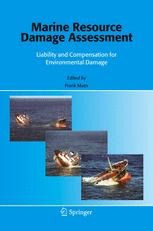
Marine resource damage assessment : Liability and compensation for environmental damage
MARE-DASM research focused on: (i) the estimation and distribution of marine contaminants in order to assess their long term effects (ecotoxicology); (ii) the integration of these result into a Biological Effects SubModel and a mathematical model assessing the risks associated with accidental spillage of oil at sea and the damage this can cause (modelling); (iii) the assessment of the willingness to pay for ecological damage, based on the Contingent Valuation Method (economics); (iv) the development and evaluation of measures to be taken in order to guarantee a sustainable use of the Belgian part of the North Sea, taking into account the economic and social interests and values (social economics); (v) the potential to develop technical and legal procedures that allow ecological damage to the marine environment to be evaluated and compensated, taking into account constraints in national and international liability legislation (legal).
Manual Endourology : Training for Residents
Endourology Step by Step. This manual is intended to help residents in urology learn the basic techniques of endourology. All authors are experts in this field and experienced teachers. Each chapter includes: indications, limits, risks and contraindications, a step-by-step procedure. The book is completed by extensive illustrations. Learning the basics of this fascinating technique was never so easy!
Managing Weather and Climate Risks in Agriculture
In many parts of the world, weather and climate are one of the biggest production risks and uncertainty factors impacting on agricultural systems performance and management. Both structural and non-structural measures can be used to reduce the impacts of the variability (including extremes) of climate resources on crop production. While the structural measures include strategies such as irrigation, water harvesting, windbreaks etc., the non-structural measures include use of seasonal to interannual climate forecasts, improved application of medium-range weather forecasts and crop insurance. This book based on an International Workshop held in New Delhi, India should be of interest to all organizations and agencies interested in improved risk management in agriculture.
