


Refine Results
Sort By
From
To

In the last few decades more and more yeast habitats that were not investigated earlier, spanning cold climates to tropical regions and dry deserts to rainforests, have been explored. As a result, a large body of ecological data has been accumulated and the number of known yeast species has increased rapidly. This book provides an overview of the biodiversity of yeasts in different habitats. The recent advances achieved by the application of molecular biological methods in the field of yeast taxonomy and ecology are also incorporated in the book. Wherever possible, the interaction between yeasts and the surrounding environment is discussed.
Hen eggs have exceptional potential as an inexhaustible source for a variety of products with unique properties. These products are valuable to human health and nutrition and can be used as raw materials for diverse purposes in the cosmetics and pharmaceutical industries. Bioactive Egg Compounds presents the latest results and concepts in the biotechnological use of egg compounds. Following an introduction to the different compounds of egg white, yolk and shell, the nutritive value of egg compounds is discussed. Procedures for processing egg compounds to improve their nutritive value are described, including the concept of so-called enriched eggs. Also described is the isolation and application of egg compounds with special properties, such as antibiotic action.

Including questions based on the latest National Institute for Health & Care Excellence (NICE), Joint British Diabetes Societies (JBDS) & Endocrine Society clinical practice guidelines. Includes 20 more questions on diabetes to reflect the increased weighing given to this subject in the SCE exam. New tables and algorithms have been added to provide specialty trainees useful information relevant to clinical practice
This book imparts fundamental knowledge on the structure, organization, and evolution of bacterial genomes. The value and power of comparative genomics and proteomics, bioinformatics, microarrays, and knockout animal models in analyzing genomes, bacteria-host interactions and disease are demonstrated. Also discussed are the genomes of virulent and nonvirulent strains and species, origin and evolution of pathogens, different models of bacteria-host interactions, and diseases mechanisms.
The auricle is a privileged place to observe and treat patients reflexively. It is endowed with both a particularly rich innervation, and brief connections with the higher nervous centers. It constitutes both a reading pavilion, to observe information coming from the organs and nerve endings of the skin, and a control pavilion to help correct abnormal information. It is a lookout post, placed bypassing the brainstem, on the path connecting the organs and the brain. It thus allows a fair control and an effective intervention. In this medical treatise on Auriculotherapy, historical and scientific data, medical explanations and bibliographical references are presented.

The volume includes a total of 62 invited papers, organized into 12 broad thematic areas: cochlear signal processing; brainstem signal processing; pitch; frequency modulation; streaming; amplitude modulation; responses to complex sounds; speech; comodulation masking release; binaural hearing; temporal coding; and plasticity
Ascochyta blights consistently affect large areas of grain legume production (pea, lentil, chickpea and faba bean) in all countries where they are cultivated. These diseases are capable of causing large yield losses under conducive environmental conditions. This book considers the state of the art by taking a comparative approach of Ascochyta blight diseases of cool season food and feed legumes. Topics considered are pathogen diversity, legume genetics and breeding, and integrated disease management.
Despite their enormous bulk and complexity of architecture, plants make up only around a quarter of a million of the 8 million or so species on Earth. The major components of biodiversity, instead, are the smaller, largely unseen, silent majority of invertebrates – most of which are arthropods. Vertebrates, a mere blip on the biotic horizon, are elevated in importance in the bigger scheme of things only by the human psyche. This collection of more than 30 peer-reviewed papers focuses on the diversity and conservation of arthropods, whose species inhabit virtually every recess and plane – and feature somewhere in virtually every food web – on the planet. Highlighting issues ranging from large-scale disturbance to local management, and from spatial heterogeneity to temporal patterns, these papers reflect some of the most exciting new research taking place today – and in some of the most biodiverse corners of the planet.

Sand dune dynamics plays a key role in many arid deserts. This volume provides a synthesis of a specific sand dune ecosystem, the Nizzana site in the Negev Desert. Describing its climate and geophysical/geochemical properties of soils, geological history, flora and fauna, and past/present land-use patterns, it elucidates ecological and geomorphological processes and their interrelations, based on long-term monitoring, in situ experiments and satellite imagery. Particular attention is drawn to the impact of the topsoil biological crust in controlling water availability at local/regional scales. The interdisciplinary approach adopted in this case study offers a good example of a highly complex and dynamic system, which could easily be applied to other sandy ecosystems.
This book provides a scientific forecast of the development in aquaculture with a focus on the environmental, technological, social and economic constraints that need to be resolved to ensure sustainable development of the industry and allow the industry to be able to feed healthy seafood products to the future generations. The chapters included discuss the most critical bottlenecks of the development encompassing subjects of understanding the environmental impacts, the current state-of-art in monitoring programs and in coastal zone management, the important interactions between wild and cultured organisms including release of non-native species into the wild, the current trends within the development of aquafeeds along with human health aspects as well as the political, socio-economic and economic trends within the industry including a chapter on approaches taken by Non Governmental Organisations (NGOs) to aquaculture. Finally the last chapter provides different future scenarios of the industry based on the identified bottlenecks.

Functional food sources are growing in popularity because they are exceptionally nutritious and provide amazing medical advantages. They can help ensure against infection, prevent supplement deficiency, and advance appropriate health development and improvement. With illustrative case studies, this new volume explores the many roles of functional foods in the prevention and management of various diseases, including diabetes, autism spectrum disorder, weight loss and obesity, microbial infections, ulcers and other gastrointestinal diseases, mental disorders and brain health, cardiac health and cardiovascular diseases, osteoporosis and bone health, and more.
The first evidence that electrical changes can cause muscles to contract was p- vided by Galvani (1791). Thus, elect- cal activity graduated from a simple mechanism that is used to elicit muscle c- traction, to a system that could induce permanent changes in muscles and modify most of its characteristic properties.
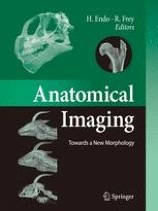
This book presents selected works of contemporary evolutionary morphologists and includes such topics as broad scale reconstructions of the brain and ear of dinosaurs, inference of locomotor habits from cancellous bone architecture in fossil primates, and a comparison of the independently evolved manipulating apparatuses in the lesser and giant pandas. Insight is provided into the application of modern noninvasive technologies, including digital imaging techniques and virtual 3D reconstruction, to the investigation of complex anatomical features and coherences. In combination with traditional methods, this allows for the formulation of improved hypotheses on coordinated function and evolution. The creation of virtual translucent specimens makes it possible to realize the age-old dream of the classical anatomists: looking through the skin into the inner organization of an organism. On full display here is the dramatic and promising impact that modern imaging techniques have on scientific progress in evolutionary morphology.

Analgesics are among the oldest drugs described, albeit not necessarily for medicinaluse. Forexample,theSumeriansisolatedopioids(probablyfortheir euphoric effects) in the third millennium b. c. and the use of willow bark (salicin) for fever was ?rst reported in the eighteenth century. Both types of drugs are still in use, but today they are supplemented by a wide array of substances ranging from antidepressants to ion channel blockers. Not all of theseareprescribedbyphysicians. Manycompoundsaresoldoverthecounter and thus available to the public for self-medication. As a result, analgesics are also the most misused class of drugs and are the culprit for a multitude of healthproblemsdueto untoward sideeffects. Thisvolumeattemptstosummarizethecurrentstateofknowledgeonme- anisms underlying the various effects of these drugs, their side effect pro?les, and their indications and contraindications in clinical use.
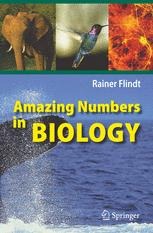
With hundreds of tables and over 10,000 entries anyone who works or studies in the life sciences or those with a curious mind will find exact answers to many questions requiring comparative data. This book is a clearly laid out presentation of the plain facts of life from all areas of biology. None of those figures or superlatives that might seem exotic to the layman is left out. Biology comes alive by this comprehensive references work.
This book reflects the rich personal experience of a German allergist with international training and reputation, who is active in immunology and allergy research and practice for almost 30 years. In this book, not only IgE-mediated allergic reactions are covered but all other kinds of allergies such as atopic eczema, contact dermatitis, drug eruptions, anaphylaxis and food allergies are equally represented as well as psychosomatic aspects and problems of environmental intolerances.

The pioneering work of Dr. Koki Horikoshi on the discovery, research and applications of alkaliphilic bacteria are described here in their entirety. The isolation, distribution and taxonomy of alkaliphilic microorganisms as well as their cell structure and physiology are discussed for a basic understanding of these entities. The molecular biology and genome sequencing of some alkaliphilic bacterial strains are also presented. Part II of the volume focuses on enzymes of alkaliphiles and their applications. These include alkaline proteases, starch-degrading enzymes and numerous others. Some of these enzymes are currently in wide commercial use as laundry detergent additives and in wastewater treatment. Alkaliphiles are a relatively recent field of research that will no doubt provide avenues to a wide range of further discoveries and applications for a new generation of workers in bioscience and technology.
Soft drinks with pHs lower than 4. 0 are subjected to minimum pasteuri- tion at 65 °C for 10 min as required by the Japanese Food Sanitation Law. Not only pathogenic bacteria but most spore-forming bacteria are unable to grow at this low pH condition, and thus reports of microbial spoilage in pasteurized acidic soft drinks are rare. Since 1982, when the spoilage of aseptically packed apple juice was - tributed to a new type of acidophilic spore-forming bacteria in Germany, a succession of similar complaints regarding other fruit juice concentrates and their products has been received. In the beginning, the bacteria were classified in the genus Bacillus, but later, in 1992, the new genus Ali- clobacillus was proposed owing to their characteristic cellular membranes containing omega-alicyclic fatty acids. A group of Alicyclobacillus strains, responsible for the tainting of fruit juices, was then described as A. a- doterrestris in 1999. They are acidophilic and grow preferably at around pH 4. 0. They are thermophilic and grow better at temperatures above 40 °C. This indicates that we might have been missing them by our or- nary methods of bacterial detection at pH 7. 0 and 35 °C.

Discusses the integration of artificial intelligence to revolutionize disease detection approaches, with case studies of AI in disease detection as well as insight into the opportunities and challenges of AI in healthcare as a whole. The book explores a wide range of individual AI components such as computer vision, natural language processing, and machine learning as well as the development and implementation of AI systems for efficient practices in data collection, model training, and clinical validation.
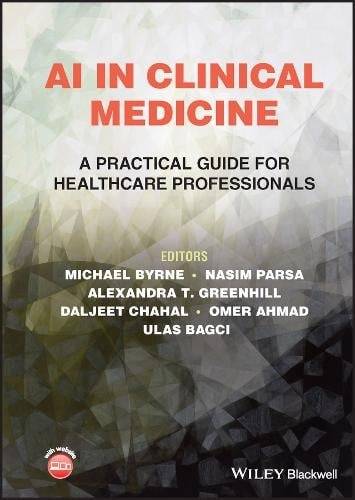
A Practical Guide for Healthcare Professionals is the definitive reference book for the emerging and exciting use of AI throughout clinical medicine. AI in Clinical Medicine: A Practical Guide for Healthcare Professionals is divided into four sections. Section 1 provides readers with the basic vocabulary that they require, a framework for AI, and highlights the importance of robust AI training for physicians. Section 2 reviews foundational ideas and concepts, including the history of AI. Section 3 explores how AI is applied to specific disciplines. Section 4 describes emerging trends, and applications of AI in medicine in the future.

Daraa Highway - Ghabagheb - Syria
+963-15 2050 - 15 860 380 /1/2/3 - 11 662 3900