


Refine Results
Sort By
From
To

Concise and up-to-date coverage of the most important drugs Integration of experimental and clinical pharmacology with focus on diseases Discusses the most important drugs (400) in the context of relevant diseases. Summary tables and schemes, MCQ exam questions, case studies and a list of drugs aid memorization of the material before an exam. All chapters are written in the same concise style and use a modern and precise pharmacological nomenclature. After reading of the book, the student will be able to critically assess the proper use of the most important drugs and advise patients properly. The didactic concept of the book has been developed on the author’s own pharmacology courses for which he has received numerous teaching awards. The book takes advantage of the learning spiral, in which material is presented repeatedly from various angles.
Microbes produce an extraordinary array of defense systems. These include bacteriocins, a class of antimicrobial molecules with narrow killing spectra, produced by bacteria. The book describes the diversity and ecological role of bacteriocins of Gram-positive and Gram-negative bacteria, presenting a new classification scheme for the former and a state-of-the-art look at the role of bacteriocins in bacterial communication. It discusses the molecular evolution of colicins and colicin-like bacteriocins, and provides a contemporary overview of archaeocins, bacteriocin-like antimicrobials produced by archaebacteria. Furthermore, various modeling (in silico) studies elucidate the role of bacteriocins in microbial community dynamics and fitness, delving into rock-paper-scissors competition and the counter-intuitive survival of the weakest. The book makes compelling reading for a multi-faceted scientific audience, including those working in the fields of biodiversity and biotechnology, notably in the human and animal health domain.
This volume tends to focus on the biology of biofilms that affect human disease. It opens with chapters that provide the reader with current perspectives on biofilm development, physiology, environmental and regulatory effects, the role of quorum sensing, and resistance/phenotypic persistence to antimicrobial agents during biofilm growth. The next chapters are devoted to common problematic biofilms, those that colonize venous and urinary catheters. The final series of chapters examines biofilm formation by four species that are important pathogens and well studied models, one of which, Yersinia pestis, cleverly adopts a biofilm state of growth within its insect vector to promote disease transmission to mammalian hosts.
Auditory Perception of Sound Sources covers higher-level auditory processes that are perceptual processes. The chapters describe how humans and other animals perceive the sounds that they receive from the many sound sources existing in the world. This book will provide an overview of areas of current research involved with understanding how sound-source determination processes operate. This book will focus on psychophysics and perception as well as being relevant to basic auditory research.
Cell biologists have recently become aware that the asymmetry of cell division is an important regulatory phenomenon in the fate of a cell. During development, cell diversity originates through asymmetry; in the adult organism asymmetric divisions regulate the stem cell reservoir and are a source of the drift that contributes to the aging of organisms with renewable cell compartments. Because of the concept of semi-conservative DNA synthesis, it was thought that the distribution of DNA between daughter cells was symmetric. The analysis of the phenomenon in cells during mitosis, however, revealed the asymmetry in the distribution of the genetic material that creates the drift contributing to aging of mammals. On the other hand, cancer cells can originate from a deregulation of asymmetry during mitosis in particular during stem cell expansion. The book describes the phenomenon in different organisms from plants to animals and addresses its implications for the development of the organism, cell differentiation, human aging and the biology of cancers.
This book offers an overview of the beautiful, powerful, and dynamic array of opportunities to promote health through the arts from theoretical, methodological, pedagogical, and critical perspectives. This is the first-known text to connect the disparate inter-disciplinary literatures into a coherent volume for health promotion practitioners, researchers, and teachers. It provides a one-stop depository for using the arts as tools for health promotion in many settings and as bridges across communities, cultures, and sectors.
This volume of the Keio University International Symposia for Life Sciences and Medicine contains the proceedings of the 13th symposium held under the sponsorship of the Keio University Medical Science Fund. The fund was est- lished by the generous donation of the late Dr. Mitsunada Sakaguchi. The Keio University International Symposia for Life Sciences and Medicine constitute one of the core activities sponsored by the fund,of which the objective is to contribute to the international community by developing human resources, promoting scienti?c knowledge, and encouraging mutual exchange. Each year, the Committee of the International Symposia for Life Sciences and Medicine selects the most signi?cant symposium topics from applications received from the Keio medical community. The publication of the proce- ings is intended to publicize and distribute the information arising from the lively discussions of the most exciting and current issues presented during the symposium.
Despite their enormous bulk and complexity of architecture, plants make up only around a quarter of a million of the 8 million or so species on Earth. The major components of biodiversity, instead, are the smaller, largely unseen, silent majority of invertebrates – most of which are arthropods. Vertebrates, a mere blip on the biotic horizon, are elevated in importance in the bigger scheme of things only by the human psyche. This collection of more than 30 peer-reviewed papers focuses on the diversity and conservation of arthropods, whose species inhabit virtually every recess and plane – and feature somewhere in virtually every food web – on the planet. Highlighting issues ranging from large-scale disturbance to local management, and from spatial heterogeneity to temporal patterns, these papers reflect some of the most exciting new research taking place today – and in some of the most biodiverse corners of the planet.
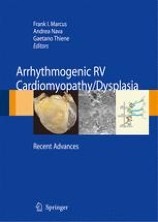
This book covers all aspects (biological, pathological, genetic, clinical and therapeutical) of arrhythmogenic right ventricular cardiomyopathy/dysplasia, a recent cardiomyopathy which represents a very high risk of sudden death in the young and in athletes. The monograph presents the results of 5-year research program on ARVC/D supported by grants of both the European Commission and the NIH, which enabled the discovery of seven disease-causing genes, thus opening new avenues for the early identification of affected patients and for sudden death prevention.
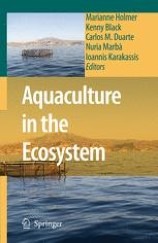
This book provides a scientific forecast of the development in aquaculture with a focus on the environmental, technological, social and economic constraints that need to be resolved to ensure sustainable development of the industry and allow the industry to be able to feed healthy seafood products to the future generations. The chapters included discuss the most critical bottlenecks of the development encompassing subjects of understanding the environmental impacts, the current state-of-art in monitoring programs and in coastal zone management, the important interactions between wild and cultured organisms including release of non-native species into the wild, the current trends within the development of aquafeeds along with human health aspects as well as the political, socio-economic and economic trends within the industry including a chapter on approaches taken by Non Governmental Organisations (NGOs) to aquaculture. Finally the last chapter provides different future scenarios of the industry based on the identified bottlenecks.
Volume 1 is divided into two sections: "Malignant Transformation and Metastasis" and "Molecular Basis of Disease Therapy." Volume 2 follows a similar structure and is divided into sections entitled "Kinases and Phosphate" and "Molecular Basis of Cell Death." All of the contributors are at the forefront of scientific discovery, and the reviews they present systemically examine the most exciting and innovative aspects of their particular areas of expertise. Researchers will find these volumes of major benefit as they search for novel and more effective treatments for human diseases.
Volume 1 is divided into two sections: “Malignant Transformation and Metastasis” and “Molecular Basis of Disease Therapy.” Volume 2 follows a similar structure and is divided into sections entitled “Kinases and Phosphate” and “Molecular Basis of Cell Death.” All of the contributors are at the forefront of scientific discovery, and the reviews they present systemically examine the most exciting and innovative aspects of their particular areas of expertise. Researchers will find these volumes of major benefit as they search for novel and more effective treatments for human diseases.
Microbes are in our midst soon after birth. Thankfully, the number of harmless (and often beneficial) microbes far outnumber those that would do us harm. Our ability to ward-off pathogens in our environment, including those that can colonize our exterior and/or interior surfaces, depends on the integrative action of the innate and adaptive immunity systems. This volume of CTMI, entitled Antimicrobial Peptides and Human Disease, is dedicated to the role of antimicrobial peptides (AMPs) in the innate host defense system of homo sapiens.
Antiangiogenesis remains a dynamic and evolving field in oncology. New therapeutic targets continue to emerge followed by the rapid development of new therapeutic agents to be investigated in clinical trials. Optimizing the therapeutic potential of antiangiogenic agents in combination with the other therapies in the armamentarium to fight cancer will be an on-going challenge. Antiangiogenic Agents in Cancer Therapy, Second Edition provides a current, up-dated perspective on the state of the art of angiogenesis and therapy with a compendium of scientific findings and approaches to the study of angiogenesis in cancer. Leaders in the field present chapters on such topics as the environmental influences and the genetic and physiologic abnormalities that mediate angiogenesis and its role in the progression of malignant disease, working models of tumor angiogenesis, and the role of angiogenesis inhibition in the therapy of malignant disease in humans. Comprehensive and cutting-edge, Antiangiogenic Agents in Cancer Therapy, Second Edition is an ideal, valuable guide to the most recent advances in the field, and a collection that will be useful for many years to come.
This volume provides an overview of climate change data, its effects on the structure and functioning of Antarctic ecosystems, and the occurrence and cycling of persistent contaminants. It discusses the unique physico-chemical characteristics of the Antarctic environment, ecophysiological adaptations of terrestrial and marine organisms, the transfer of contaminants in pelagic and neritic food chains and the possible consequences for animals at higher trophic levels.
This book breaks new ground by situating animals and their diseases at the very heart of modern medicine. In demonstrating their historical significance as subjects and shapers of medicine, it offers important insights into past animal lives, and reveals that what we think of as ‘human’ medicine was in fact deeply zoological.Each chapter analyses an important episode in which animals changed and were changed by medicine. Ranging across the animal inhabitants of Britain’s zoos, sick sheep on Scottish farms, unproductive livestock in developing countries, and the tapeworms of California and Beirut, they illuminate the multi-species dimensions of modern medicine and its rich historical connections with biology, zoology, agriculture and veterinary medicine. The modern movement for One Health – whose history is also analyzed – is therefore revealed as just the latest attempt to improve health by working across species and disciplines.
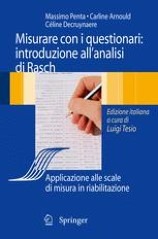
Evaluation questionnaires are the most used tools nowadays in the field of medicine and the human sciences to evaluate variables such as disability, altruism or pain. However, clinicians are often unfamiliar with these tools. What do they really measure? How are the results to be interpreted? This book tries to answer these questions.
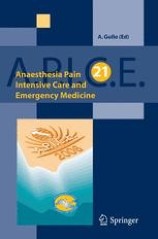
Developing sectors in the Intensive Care field – and in Critical Care Medicine in general – require specific levels of competence having a same common denominator: an in-depth knowledge of human pathophysiology. Although this volume presents plenty of topics in constant evolution, as witnessed by the collection of chapters compiled by several researchers, this edition includes, in particular, fields in which decision-making at the patient’s bedside prevails over theoretical argumentation. In other words, the first and foremost message this edition wants to provide is for the reader to focus his/her attention on evidence-based medicine.
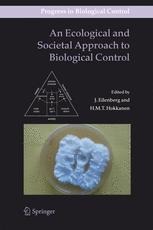
Biological control is among the most promising methods for control of pests (including vectors), diseases and weeds. In this book ecological and societal aspects are for the first time treated together. In an ecological approach the aim is to evaluate the significance of certain biological properties like biodiversity and natural habitats. Also, it is important to see biological control from an organic (or ecological) farming point of view. In a societal approach terms like ‘consumer’s attitude’, ‘risk perception’, ‘learning and education’ and ‘value triangle’ are recognised as significant for biological production and human welfare.
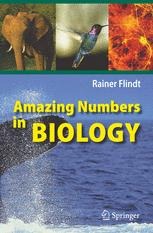
With hundreds of tables and over 10,000 entries anyone who works or studies in the life sciences or those with a curious mind will find exact answers to many questions requiring comparative data. This book is a clearly laid out presentation of the plain facts of life from all areas of biology. None of those figures or superlatives that might seem exotic to the layman is left out. Biology comes alive by this comprehensive references work.

Daraa Highway - Ghabagheb - Syria
+963-15 2050 - 15 860 380 /1/2/3 - 11 662 3900