



Page 4
Page 4

Forced migration and mental health : Rethinking the care of refugees and displaced persons
In the last half century, the steadily increasing incidence of armed conflict (both within and between nations) has created mounting numbers of asylum seekers, refugees, and displaced persons. The provision of appropriate mental health services for these individuals has become a major focus of concern, but considerable controversy remains as to what kind of care is necessary. The initial assumptions and models that informed the field have recently come under attack, and alternative approaches have arisen. Forced Migration and Mental Health: Rethinking the Care of Refugees and Displaced Persons provides an up-to-date view of the controversies and future directions for the mental health care of those displaced by war or other extreme conditions.

Farming for Health : Green-Care Farming Across Europe and the United States of America
Farming for Health describes the utilization of agricultural farms, farm animals, plants and landscapes as a base for promoting human mental and physical health and social well-being. This book gives an overview of the development of ‘Farming for Health’ initiatives across Europe. This development is a logical result of the changing paradigms in the health-care sector and the demand for new social and financial impulses in agriculture and rural areas.

Family-Oriented Primary Care
I was a Medical Student in 1966 when the Millis Report on the training of the generalist physician was published,de?ning the concept of primary care. According to the Report, the primary provider has four major responsib- ities or roles. The ?rst role is that of initial contact care of the undiffer- tiated patient. The second is to provide comprehensive care based on the belief that the primary provider should be able to manage the overwhe- ing majority of problems with which patients present. Equally important is the third role—continuity and coordination of care within the health care system. Finally,the primary provider is responsible for demonstrating le- ership in the community. This Report’s description of a primary provider seems as relevant today as it was when it was written. In 1994,the Institute of Medicine’s assessment of primary care added the responsibility of family and community integration of care to the Millis Report description. Without question there are many challenges to a contemporary imp- mentation of this comprehensive description of primary care, beginning with the level of individual patients who so often suffer from complex pr- lems, such as mental disorders and obesity. Treating these conditions in a brief primary care visit is dif?cult. At the level of the larger system, re- bursement is often inadequate and can represent policies that are uns- portive of primary care, such as those that compromise payment for preventive services that help patients to quit smoking or lose weight.

Exploring Resilience : A Scientific Journey from Practice to Theory
Resilience has become an important topic on the safety research agenda and in organizational practice. Most empirical work on resilience has been descriptive, identifying characteristics of work and organizing activity which allow organizations to cope with unexpected situations. Fewer studies have developed testable models and theories that can be used to support interventions aiming to increase resilience and improve safety. In addition, the absent integration of different system levels from individuals, teams, organizations, regulatory bodies, and policy level in theory and practice imply that mechanisms through which resilience is linked across complex systems are not yet well understood. Scientific efforts have been made to develop constructs and models that present relationships; however, these cannot be characterized as sufficient for theory building. There is a need for taking a broader look at resilience practices as a foundation for developing a theoretical framework that can help improve safety in complex systems.

Evidence-based practice in medicine and health care : A discussion of the ethical issues
Evidence-based Medicine (EBM) is feared to become a kind of cook-book medicine that has nothing to do with the traditional skills and ethics. This volume shows the contribution EBM makes and might make to medical practice and health policy. It describes as many viewpoints as possible with a focus on the ethical issues that are at stake in this process. It shows how EBM has developed from an internal medical issue to an instrument for health policy. It is the outcome of the European Project "Ethical Issues of Evidence Based Practice in Medicine and Health Care" and gives insight into the ethical background of the debate on the role of EBM in various areas of medicine, including clinical practice, medical education, medical research, health policy and medical sociology.

Evidence-Based Medical Ethics : Cases for Practice-Based Learning
In Evidence-Based Medical Ethics: Cases for Practice-Based Learning, the authors address what has been missing in existing text books and ethics courses to date – clear-cut ethical and legal guidelines that provide a method for the reader to learn how to systematically manage dilemmas seen in the everyday practice of medicine.
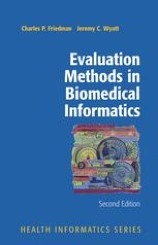
Evaluation Methods in Biomedical Informatics
This book is a general reference designed for individuals from a broad range of professional backgrounds at various stages of learning about medical information systemsIt attempts to explain why medical information resources should be studied, and why this is a challenging process. It explores the options for conducting such studies, and specifically deciding what topic to study. It also explains how to design, carry out, and interpret a study using a particular set of techniques, how to conduct studies in the context of health care organizations, and how to communicate study designs and study results to the proper audience.
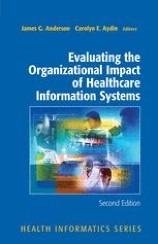
Evaluating the organizational impact of health care information systems
Evaluating the Organizational Impact of Health Care Information Systems, Second Edition, is heavily updated and revised from its First Edition, which is entitled Evaluating Health Care Information Systems: Methods and Applications. The much-needed Second Edition is a guide for evaluating the organizational impacts of computer systems in health care institutions. It provides a practical guide for determining the appropriate questions to ask based on underlying models of change and the most effective methods available. An introduction to various methods is provided, as well as appendices containing survey instruments usable in research and evaluation, computer programs for data analyses, and other evaluation resources. The book provides a critical overview of current research and evaluation to date with numerous bibliographic references from health care and other fields. The methods and instruments described are applicable to a wide variety of other organizations that utilize information technology and they emphasize the importance of clearly specifying the purpose of the evaluation, recognizing assumptions about organizational change and using a multi-method approach to system evaluation. The material presented is drawn from a variety of social and health science disciplines in order to integrate the study of information system with social science theory and methods. Chapter highlights include Cognitive Approaches to Evaluation, Computer Simulation as an Evaluation Tool, and Research and Evaluation: Future Directions.

Euthanasia : Searching for the full story : Experiences and insights of Belgian doctors and nurses
This book has been written by ten Belgian health care professionals, nurses, university professors and doctors specializing in palliative care and ethicists who, together, raise questions concerning the practice of euthanasia.

Essentials of oral histology and embryology : A clinical approach ; 5th ed.
Uses a patient-centered approach in coveringto help dental professionals build a strong foundation in oral biology and basic science for dental professionals. It provides a clear understanding explanations of the anatomy of oral and facial tissues — and of normal and abnormal orofacial development — so that you can provide effective oral health care for all patients with abnormalities. In addition to the stages of tooth development, it covers eruption and shedding of teeth, plus the parts of teeth – including enamel, dentin, dental pulp, and cementum. Written by Daniel J. Chiego Jr., a noted dental educator and researcher, this book helps you succeed in the classroom and in clinical practice.

Ergonomics and Health Aspects of Work with Computers ; International Conference, EHAWC 2007, Held as Part of HCI International 2007, Beijing, China, July 22-27, Proceedings
This book address the latest research and development efforts and highlight the human aspects of design and use of computing systems. It cover the entire field of Human-Computer Interaction, addressing major - vances in knowledge and effective use of computers in a variety of application areas. This volume contains thematic area of Ergonomics and Health Aspects of Work with Computers, addressing the following major topics:Health and Well Being in the Working Environment, Ergonomics and Design

Encyclopedia of Molecular Pharmacology
Covers all aspects of pharmacology, from the chemistry of drugs and the biochemistry of drug targets to the clinical application of drugs, with emphasis on molecular mechanisms. It also includes techniques for describing the effects of drugs and characterizing drug targets. With over 2,000 entries and 350 detailed essays by leading experts, this book is also an up-to-date and important reference for scientists in fields outside pharmacology, students, health care workers, teachers, physicians, and laypersons.

Emergency Radiology : Imaging and Intervention
There is an increasing trend towards the use of tries, hospital emergency departments have become a MDCT to evaluate traumatic injuries and non-traumatic major part of the healthcare safety net. In the last decade emergencies. The use of workstations for reporting and for economically-driven structural changes in health care further image reconstruction becomes standard practice. delivery have caused a dramatic increase in emergency On the occasion of the European Congress of Radiology department visits. In response to capacity and staffing (ECR) 2003 and 2004 a Categorical Course on “Emergency pressures, hospitals are developing and implementing a Radiology”has been organized to assess current devel- variety of strategies designed to improve patient flow and ments and concepts in this rapidly growing field. reduce overcrowding in the emergency department. Numerous radiologists,all outstanding and international- Several factors are considered critical for success, such as ly renowned experts in their field,have made superb c- having the right multidisciplinary teams in place and opti- tributions in an ECR syllabus.

eHealth Solutions for Healthcare Disparities
eHealth Solutions for Health Care Disparities brings these currents together, challenging readers to use, promote, and develop new technology-based methods for closing these gaps. The book examines cyber-strategies with the greatest potential toward effective, equitable care, improved service delivery and better health outcomes for all.

e-Health Care in Dentistry and Oral Medicine: A Clinician’s Guide
Presents the state of the art in e-health care within dentistry and oral medicine (“e-oral health”) with the aim of acquainting dentists and other oral health care professionals with its uses and advantages, especially with regard to diagnosis. It will assist all who wish to learn about teledentistry protocols and the e-oral health branch or to implement e-oral health solutions and procedures in clinical practice. The book opens by discussing general aspects of e-oral health, including tools, networks, and the very important ethical considerations. The use and specific benefits of e-oral health technologies in the diagnosis of different conditions, orthodontic assessment, implantology evaluation, and caries prevention are then fully explained. Finally, examples are provided of the ways in which teledentistry functions in different countries on different continents. e-Oral health is a burgeoning field that encompasses teledentistry as well as other uses of information and communication technologies for oral health care purposes.

Efficiency, Justice and Care : Philosophical Reflections on Scarcity in Health Care
This book attempts to answer the question how health care can be incorporated into a comprehensive theory of justice, while realising an acceptable balance between efficiency, justice and care. Essentially, the central question addressed by this book is the following: how best to square the proverbial welfare circle.

Drug interactions in infectious diseases : Mechanisms and models of drug interactions
Provides a comprehensive review of basic clinical pharmacology with a focus on metabolism and transporter-mediated drug interactions. The chapters address materials that cannot be retrieved easily in the medical literature, including materials focused on the complex interrelationship of acute infection, inflammation, and the risk of drug interactions in the Drug-Cytokine chapter. The Food-Drug and Herb-Drug interactions chapters remain definitive resources. A new chapter on in vitro modeling of drug interactions is included along with updates on design and data analysis of clinical drug interaction studies. Authoritative discussion of models for regulatory decision-making on drug-drug interactions provides the necessary framework to aid antimicrobial drug development. This concise review of the mechanisms and models of drug interactions provides important insights to health care practitioners as well as scientists in drug development

Drug interactions in infectious diseases : Antimicrobial drug interactions
Delivers a quick clinical resource that distills relevant drug interactions by antimicrobial drug class. The book provides informative tables on specific drug-drug interactions that include the degree and severity of the expected interaction. A mechanistic basis for drug-drug interactions is also provided to link observed interactions to pharmacologic characteristics of key drug classes. This complete resource is organized by major antibacterial, antimycobacterial, antiviral, antifungal, antimalarial, and antiprotozoal class. In line with current innovations in antimicrobial drug development, a distinct chapter on the pharmacologic management of drug interactions in hepatitis B virus (HBV) and hepatitis C virus (HCV)-related infections is included. Two new chapters are dedicated to the management of human immunodeficiency virus (HIV) drug-drug interactions given the breadth of antiretroviral class-specific effects. This comprehensive review of known drug interactions and strategies to manage them is an invaluable resource to all health care practitioners.

Drug and Biological Development : From Molecule to Product and Beyond
Drug and Biological Development: From Molecule to Product and Beyond offers a complete discussion of product development in the pharmaceutical and biotechnology industries from discovery to product launch, continuing through life cycle management. The book is organized for optimal usefulness in the education and training of health care professionals. The text's narrative descriptions are enhanced by real-life examples, illustrations, controversies in industry, and references. Dr. Ronald Evens and his contributors are industry and research experts in a variety of disciplines.

DiPiro’s pharmacotherapy : A pathophysiologic approach
It is this in-depth knowledge of pharmacotherapy, combined with the clinical experience gained through postgraduate training in direct patient care practice, that allows the pharmacist to be the "medication therapy expert" on the healthcare team and to proactively address medication-related problems.It is provides knowledge necessary to prevent, identify, and manage disease and medication-related problems
