



Page 4
Page 4

Modeling and using context ; 6th International and interdisciplinary Conference, CONTEXT 2007, Roskilde, Denmark, August 20-24, 2007, Proceedings
This volume contains the papers presented at CONTEXT 2007, the Sixth International and Interdisciplinary Conference on Modeling and Using Context. We believe that the papers of this volume represent a snapshot of current work and contribute to both theoretical and applied aspects of research.
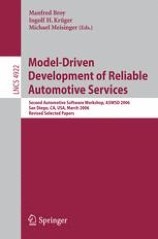
Model-Driven Development of Reliable Automotive Services ; 2nd Automotive Software Workshop, ASWSD 2006, San Diego, CA, USA, March 15-17, 2006, Revised Selected Papers
This book constitutes the thoroughly refereed post-workshop proceedings of the Second Automotive Software Workshop, ASWSD 2006, held in San Diego, CA, USA in March 2006.The 11 revised full papers presented were carefully reviewed and selected from 18 lectures held at the workshop, that brought together experts from industry and academia, working on highly complex, distributed, reactive software systems related to the automotive domain. The papers are organized in topical sections on modeling techniques and infrastructures, model transformations, quality assurance, real-time control, as well as services and components.

Model-Driven Architecture - Foundations and Applications ; 2nd European Conference, ECMDA-FA 2006, Bilbao, Spain, July 10-13, 2006, Proceedings
The goal of the European Conference on Model-Driven Architecture — Foundations and Applications (ECMDA-FA) is to bring together industry and academia to tackle the problems in model-driven development. This volume includes 18 foundation papers and 12 application papers, which is a fine balance between both worlds. ECMDA-FA 2006 also hosted six workshops on both theoretical and practical aspects of MDA. Furthermore, the keynote speakers, David Frankel and Bran Selic, from some of the world’s largest IT companies proved that industry is very much involved in MDA. This second ECMDA-FA conference is the result of the work of the authors who submitted a total of 78 papers, the Program Committee members who took the effort to review the papers, the people organizing the workshops, and of course the Steering Committee. All in all, several hundreds of people have worked hard to make this conference a success.

Model-Based Testing of Reactive Systems : Advanced Lectures
This book is based on a seminar held in Dagstuhl Castle, Germany, in January 2004. It presents 19 carefully reviewed and revised lectures given at the seminar in a well-balanced way ensuring competent complementary coverage of all relevant aspects. An appendix provides a glossary for model-based testing and basics on finite state machines and on labelled transition systems. The lectures are presented in topical sections on testing of finite state machines, testing of labelled transition systems, model-based test case generation, tools and case studies, standardized test notation and execution architectures, and beyond testing.

Model driven architecture- foundations and applications ; 3rd European Conference, ECMDA-FA 2007, Haifa, Israel, June 11-15, 2007, Proceedings
This book constitutes the refereed proceedings of the Third European Conference on Model Driven Architecture: Foundations and Applications, ECMDA-FA 2007, held in Haifa, Israel in June 2007. The papers address all current issues of model-driven architecture, including foundational topics and application-oriented issues.
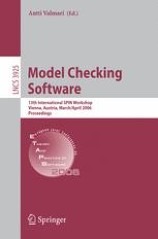
Model Checking Software ; Vol. 3925 ; 13th International SPIN Workshop, Vienna, Austria, March 30 - April 1, 2006, Proceedings
he name “SPIN” refers both to a workshopon model checking and to a famous model checking tool. The SPIN workshop is an annual forum for practitioners and researchersinterested in state space-based techniques for the validation and analysis of software and hardware systems, including communication protocols. It focuses on techniques based on explicit representations of state spaces, as implemented in the SPIN model checker or other tools, and techniques based on a combination of explicit representations with other representations. The SPIN model checker has proven to be particularly suited for the analysis of concurrent asynchronous systems. The workshop aims to encourage interaction and exchange of ideas with all related areas in software engineering.

Mobile Wireless Middleware, Operating Systems and Applications ; 9th EAI International Conference, MOBILWARE 2020, Hohhot, China, July 11, 2020, Proceedings
This book constitutes the refereed conference proceedings of the 9th International Conference on Mobile Wireless Middleware, Operating Systems and Applications, MOBILWARE 2020, held in Hohhot, China, in July 2020. Due to COVID-19 pandemic the conference was held virtually. The 21 revised full papers were reviewed and selected from 69 submissions and are organized in tracks on MobilWare; Big data, data mining and artificial intelligence workshop; Blockchain and internet of things workshop.

Mobile response ; 1st International Workshop on mobile information technology, for emergency response, mobile response 2007, Sankt Augustin, Germany, February 22-23, 2007. Revised Selected Papers
This book constitutes the thoroughly refereed post-proceedings of the First International Workshop on Mobile Information Technology for Emergency Response, MobileResponse 2007 held in Sankt Augustin, Germany in February 2007.

Mobile Phone Programming and its Application to Wireless Networking
This book provides a solid overview of mobile phone programming targeting both academia and industry. Mobile Phone Programming covers all commercial realizations of Symbian, Windows Mobile and Linux platforms. Each programming language (JAVA, Python, C/C++) and a set of development environments are introduced “step by step” making developers familiar with current limitations, pitfalls, and challenges. Each chapter contains examples and source code to rapidly make developers familiar with the most important concepts. Examples cover peer to peer networks, cooperative networking, cross layer protocol design, key challenges such as power consumption, and sensor networks for which a full hardware and software implementation is provided. Whether you are an experienced developer or an advanced student Mobile Phone Programming will be your key reference for successfully entering the world of software development for mobile devices.

Mobile Information Systems : Infrastructure and Design for Adaptivity and Flexibility
The book is divided into three parts: core technologies for mobile information systems (e.g., adaptive middleware and flexible e-services), enabling technologies (like data management on small devices or adaptive low-power hardware architectures or wireless networks), and methodological aspects of mobile information systems design (such as service profiling or user interface and e-service design for context-aware applications). It provides researchers in academia and industry with a comprehensive vision on innovative aspects which can be used as a basis for the development of new frameworks and applications.

Mobile computing, applications, and services ; 11th EAI International Conference, MobiCASE 2020, Shanghai, China, September 12, 2020, Proceedings
This book constitutes the thoroughly refereed post-conference proceedings of the 11th International Conference on Mobile Computing, Applications, and Services, MobiCASE 2020, held in Shanghai, China, in September 2020. The conference was held virtually due to the COVID-19 pandemic. The 15 full papers were carefully reviewed and selected from 49 submissions. The papers are organized in topical sections on mobile application and framework; mobile application with data analysis; and AI application.

Mobile and Wireless Network Security and Privacy
Mobile and Wireless Network Security and Privacy analyzes important security and privacy problems in the realms of wireless networks and mobile computing. The material includes a report to the National Science Foundation of the United States which will be used by program managers for the foundation in setting priorities for research directions in this area. In the following chapters field experts expand upon the report and provide further information about important research directions in the fields of wireless networks and mobile computing. The chapters are written by the leading international researchers and professionals in thes fields. Each chapter represents state-of-the-art research and includes several influential contributions. A multitude of valuable discussions on relevant concepts, such as the various approaches that define emerging security and privacy in mobile and wireless environment, are featured.
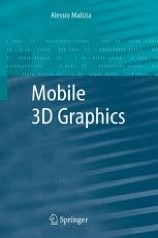
Mobile 3D Graphics
Historically, not enough was understood about how to deliver a high quality playing experience on handheld, small screen, small memory devices, plus there has been considerable confusion about the hardware’s abilities and restrictions. By addressing these issues this book provides: • A comprehensive explanation of 3D mobile graphics programming • Includes an extensive range of code samples in both C and Java • Combines 3D and 2D mobile graphics methods • Covers recent advances in mobile computer graphics techniques and applications. The book teaches fundamental 3D mobile graphics programming with standard APIs, and covers the basic and advanced application programme interfaces behind the major wireless and mobile devices supporting 3D graphics applications. Advanced undergraduates and postgraduates, as well as mobile application and games developers, will find this an excellent reference source.

Mixed Hodge Structures
The text of this book has its origins more than twenty- ve years ago. In the seminar of the Dutch Singularity Theory project in 1982 and 1983, the second-named author gave a series of lectures on Mixed Hodge Structures and Singularities, accompanied by a set of hand-written notes. The publication of these notes was prevented by a revolution in the subject due to Morihiko Saito: the introduction of the theory of Mixed Hodge Modules around 1985. Understanding this theory was at the same time of great importance and very hard, due to the fact that it uni es many di erent theories which are quite complicated themselves: algebraic D-modules and perverse sheaves. The present book intends to provide a comprehensive text about Mixed Hodge Theory with a view towards Mixed Hodge Modules.

Migration and Social Protection in Europe and Beyond ; Vol.2 : Comparing Consular Services and Diaspora Policies
This second book in a series of three volumes examines the repertoire of policies and programmes led by EU Member States to engage with their nationals residing abroad.
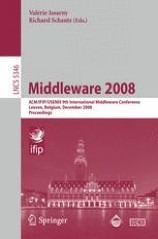
Middleware 2008 ; ACM/IFIP/USENIX 9th International Middleware Conference Leuven, Belgium, December 1-5, 2008 Proceedings
This book constitutes the refereed proceedings of the ACM/IFIP/USENIX 9th International Middleware Conference 2008, held in Leuven, Belgium, in December 2008.The 21 revised full papers presented were carefully reviewed and selected from 117 submissions for inclusion in the book. The papers are organized in topical sections on platforms extended to new capabilities, advanced software engineering focusing on specific system properties, system management techniques, as well as components and system algorithms and properties.

Microsurgery in Periodontal and Implant Dentistry : Concepts and Applications
Compiles all relevant information regarding fundamental concepts and advanced techniques related to the applications of minimally invasive procedures in periodontal and implant therapy facilitated with the operating microscope. Microsurgical therapy, wound healing principles as well as biomechanical and design aspects of micro-instruments and suturing armamentarium are discussed. The book offers information that is usually scattered in the dental and medical literature and not only hard to compile but also to frame in the appropriate clinical categories. Its unique emphasis on ergonomics (patient, operator and assistant positioning) and collaboration techniques like four to six hand assisting make this work unique. Each topic is discussed by world renowned experts in the field. The book is a valuable resource for the dental society including general dentists, periodontists, oral surgeons and implantologists.
Microprocessor 5 : Software and hardware aspects of development, debugging and testing - the microcomputer
Focuses more particularly on the first two generations of microprocessors, those that handle 4- and 8- bit integers. Microprocessor 5 – the fifth and final volume of this series of books – first presents the hardware and software aspects of the development chain of a microprocessor-based digital system. Finally, to round up the series and offer a historical perspective, the architectures of the first microcomputers are detailed. A comprehensive approach is used, with examples drawn from current and past technologies that illustrate theoretical concepts, making them accessible.
Microprocessor 3 : Core concepts - hardware aspects
Calculation is the main function of a computer. The central unit is responsible for executing the programs. The microprocessor is its integrated form. This component, since the announcement of its marketing in 1971, has not stopped breaking records in terms of computing power, price reduction and integration of functions (calculation of basic functions, storage with integrated controllers). It is present today in most electronic devices. Knowing its internal mechanisms and programming is essential for the electronics engineer and computer scientist to understand and master the operation of a computer and advanced concepts of programming.

Microprocessor 2 : Communication in a digital system
Focuses more particularly on the first generations of microprocessors, that is to say those that handle integers in 4 and 8-bit formats. The first chapter presents the calculation function and reminds the memory function. The following is devoted to notions of calculation model and architecture. The concept of bus is then presented. Chapters 4 and 5 can then address the internal organization and operation of the microprocessor first in hardware and then software. The mechanism of the function call, conventional and interrupted, is more particularly detailed in a separate chapter. The book ends with a presentation of architectures of the first microcomputers for a historical perspective. The knowledge is presented in the most exhaustive way possible with examples drawn from current and old technologies that illustrate and make accessible the theoretical concepts. Each chapter ends if necessary with corrected exercises and a bibliography. The list of acronyms used and an index are at the end of the book.
