



Page 4
Page 4

Data mining : Concepts, models, methods, and algorithms ; 3rd ed.
Presents the latest techniques for analyzing and extracting information from large amounts of data in high-dimensional data spaces. Explores big data and cloud computing Examines deep learning Includes information on convolutional neural networks (CNN) Offers reinforcement learning Contains semi-supervised learning and S3VM Reviews model evaluation for unbalanced data

Cyber-physical systems : Foundations and techniques
Covers the various aspects associated with Cyber-Physical Systems (CPS) such as algorithms, application areas, and the improvement of existing technology such as machine learning, big data and robotics. The scope of CPS is tremendous. In CPS, one sees the applications of various emerging technologies such as artificial intelligence (AI), Internet of Things (IoT), machine learning (ML), deep learning (DL), big data (BD), robotics, quantum technology, etc. In almost all sectors, whether it is education, health, human resource development, skill improvement, startup strategy, etc., one sees an enhancement in the quality of output because of the emergence of CPS into the field.

Cybercrime in social media : Theory and solutions
Presents the important components for grasping the potential of social computing with an emphasis on concerns, challenges, and benefits of the social platform in depth. It discusses detection of social-cyber issues, including hate speech, cyberbullying, etc. using deep learning, natural language processing, etc.

Cosmetic and reconstructive facial plastic surgery : A review of medical and biomedical engineering and science concepts
Provides an extensive overview of the most recent technological advancements in facial plastic and reconstructive surgeries and head and neck surgery through a thorough review of the literature in biomedical engineering, technology, and medicine. Coverage includes the most recent engineering and computing techniques, such as robotics, biomechanics, artificial intelligence (AI), deep learning (DL), machine learning (ML), and optimization, as well as the medical and surgical aspects of medical and scientific methods, surgical and non-surgical procedure types, complications, patient care, and psychological factors.

Computer vision : Algorithms and applications
Explores the variety of techniques used to analyze and interpret images. It also describes challenging real-world applications where vision is being successfully used, both in specialized applications such as image search and autonomous navigation, as well as for fun, consumer-level tasks that students can apply to their own personal photos and videos. Suitable for an upper-level undergraduate or graduate-level course in computer science or engineering, this textbook focuses on basic techniques that work under real-world conditions and encourages students to push their creative boundaries. Its design and exposition also make it eminently suitable as a unique reference to the fundamental techniques and current research literature in computer vision.

Computational intelligence, cyber security and computational models. models and techniques for intelligent systems and automation ; 4th International Conference, ICC3 2019, Coimbatore, India, December 19–21, 2019, Revised Selected Papers
This book constitutes the proceedings of the 4th International Conference on Computational Intelligence, Cyber Security, and Computational Models, ICC3 2019, which was held in Coimbatore, India, in December 2019. The 9 papers presented in this volume were carefully reviewed and selected from 38 submissions. They were organized in topical sections named: computational intelligence; cyber security; and computational models.

Computational Collective Intelligence ; 12th International Conference, ICCCI 2020, Da Nang, Vietnam, November 30 – December 3, 2020, Proceedings
This volume constitutes the refereed proceedings of the 12th International Conference on Computational Collective Intelligence, ICCCI 2020, held in Da Nang, Vietnam, in November 2020.* The 70 full papers presented were carefully reviewed and selected from 314 submissions. The papers are grouped in topical sections on: knowledge engineering and semantic web; social networks and recommender systems; collective decision-making; applications of collective intelligence; data mining methods and applications; machine learning methods; deep learning and applications for industry 4.0; computer vision techniques; biosensors and biometric techniques; innovations in intelligent systems; natural language processing; low resource languages processing; computational collective intelligence and natural language processing; computational intelligence for multimedia understanding; and intelligent processing of multimedia in web systems.

Cognitive Computing in Human Cognition : Perspectives and Applications
This edited book designs the Cognitive Computing in Human Cognition to analyze to improve the efficiency of decision making by cognitive intelligence. The book is also intended to attract the audience who work in brain computing, deep learning, transportation, and solar cell energy. Due to this in the recent era, smart methods with human touch called as human cognition is adopted by many researchers in the field of information technology with the Cognitive Computing.
Machine Learning for Computer Scientists and Data Analysts: From an Applied Perspective
Describes traditional as well as advanced machine learning algorithms / Enables students to learn which algorithm is most appropriate for the data being handled / Includes numerous, practical case-studies; implementation codes in Python available for readers
Machine learning for brain disorders
Organized into five parts. Part One presents the fundamentals of ML. Part Two looks at the main types of data used to characterize brain disorders, including clinical assessments, neuroimaging, electro- and magnetoencephalography, genetics and omics data, electronic health records, mobile devices, connected objects and sensors. Part Three covers the core methodologies of ML in brain disorders and the latest techniques used to study them. Part Four is dedicated to validation and datasets, and Part Five discusses applications of ML to various neurological and psychiatric disorders.
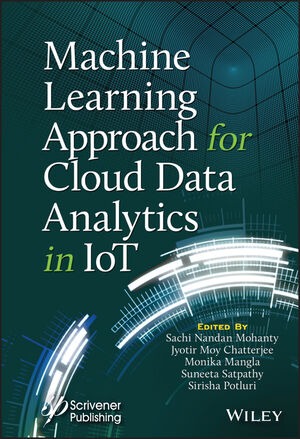
Machine learning approach for cloud data analytics in IoT
Covers the multidimensional perspective of machine learning through the perspective of cloud computing and Internet of Things ranging from fundamentals to advanced applications. Elucidates some of the best practices and their respective outcomes in cloud and fog computing environments. It focuses on all the various research issues related to big data storage and analysis, large-scale data processing, knowledge discovery and knowledge management, computational intelligence, data security and privacy, data representation and visualization, and data analytics. The featured technologies presented in the book optimizes various industry processes using business intelligence in engineering and technology. Light is also shed on cloud-based embedded software development practices to integrate complex machines so as to increase productivity and reduce operational costs. The various practices of data science and analytics which are used in all sectors to understand big data and analyze massive data patterns are also detailed in the book.
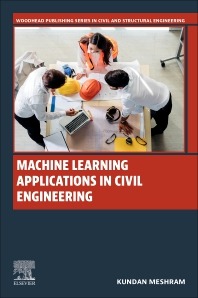
Machine Learning Applications in Civil Engineering
Discusses machine learning and deep learning models for different civil engineering applications. These models work for stochastic methods wherein internal processing is done using randomized prototypes. The book explains various machine learning model designs that will assist researchers to design multi domain systems with maximum efficiency. It introduces Machine Learning and its applications to different Civil Engineering tasks, including Basic Machine Learning Models for data pre-processing, models for data representation, classification models for Civil Engineering Applications, Bioinspired Computing models for Civil Engineering, and their case studies.
Machine learning and its application to reacting flows: ml and combustion
These two fields, ML and turbulent combustion, have large body of work and knowledge on their own, and this book brings them together and explain the complexities and challenges involved in applying ML techniques to simulate and study reacting flows. This is important as to the world’s total primary energy supply (TPES), since more than 90% of this supply is through combustion technologies and the non-negligible effects of combustion on environment. Although alternative technologies based on renewable energies are coming up, their shares for the TPES is are less than 5% currently and one needs a complete paradigm shift to replace combustion sources. The book covers the current state of the art in these two topics and outlines the challenges involved, merits and drawbacks of using ML for turbulent combustion simulations including avenues which can be explored to overcome the challenges.
Machine learning and deep learning in medical data analytics and healthcare applications
Introduces and explores a variety of schemes designed to empower, enhance, and represent multi-institutional and multi-disciplinary machine learning (ML) and deep learning (DL) research in healthcare paradigms. Serving as a unique compendium of existing and emerging ML/DL paradigms for the healthcare sector, this book demonstrates the depth, breadth, complexity, and diversity of this multi-disciplinary area. It provides a comprehensive overview of ML/DL algorithms and explores the related use cases in enterprises such as computer-aided medical diagnostics, drug discovery and development, medical imaging, automation, robotic surgery, electronic smart records creation, outbreak prediction, medical image analysis, and radiation treatments.
Machine Learning and Big Data Analytics Paradigms : Analysis, Applications and Challenges
Intended to present the state of the art in research on machine learning and big data analytics. The accepted chapters covered many themes including artificial intelligence and data mining applications, machine learning and applications, deep learning technology for big data analytics, and modeling, simulation, and security with big data. It is a valuable resource for researchers in the area of big data analytics and its applications.
Machine Learning : The Basics
Approaches ML as the computational implementation of the scientific principle. This principle consists of continuously adapting a model of a given data-generating phenomenon by minimizing some form of loss incurred by its predictions. Trains readers to break down various ML applications and methods in terms of data, model, and loss, thus helping them to choose from the vast range of ready-made ML methods.
Machine Intelligence and Big Data Analytics for Cybersecurity Applications
Presents the latest advances in machine intelligence and big data analytics to improve early warning of cyber-attacks, for cybersecurity intrusion detection and monitoring, and malware analysis. Cyber-attacks have posed real and wide-ranging threats for the information society. Detecting cyber-attacks becomes a challenge, not only because of the sophistication of attacks but also because of the large scale and complex nature of today’s IT infrastructures. It discusses novel trends and achievements in machine intelligence and their role in the development of secure systems and identifies open and future research issues related to the application of machine intelligence in the cybersecurity field.

Knowledge science, engineering and management; 13th International Conference, KSEM 2020, Hangzhou, China, August 28–30, 2020, Proceedings, Part I
Constitutes the refereed proceedings of the 13th International Conference on Knowledge Science, Engineering and Management, KSEM 2020, held in Hangzhou, China, in August 2020.* The 58 revised full papers and 27 short papers were carefully reviewed and selected from 291 submissions. The papers of the first volume are organized in the following topical sections: knowledge graph; knowledge representation; knowledge management for education; knowledge-based systems; and data processing and mining. The papers of the second volume are organized in the following topical sections: machine learning; recommendation algorithms and systems; social knowledge analysis and management; text mining and document analysis; and deep learning.

Knowledge science, engineering and management ; 13th International Conference, KSEM 2020, Hangzhou, China, August 28–30, 2020, Proceedings, Part II
Constitutes the refereed proceedings of the 13th International Conference on Knowledge Science, Engineering and Management, KSEM 2020, held in Hangzhou, China, in August 2020.* The 58 revised full papers and 27 short papers were carefully reviewed and selected from 291 submissions. The papers of the first volume are organized in the following topical sections: knowledge graph; knowledge representation; knowledge management for education; knowledge-based systems; and data processing and mining. The papers of the second volume are organized in the following topical sections: machine learning; recommendation algorithms and systems; social knowledge analysis and management; text mining and document analysis; and deep learning.
Computational analysis and deep learning for medical care : Principles, methods, and applications
Focuses on the sophisticated methods for improving dye extraction and dyeing properties which will minimize the use of bioresource products. This book also brings out the innovative ways of wet chemical processing to alleviate the environmental impacts arising from this sector.
