



Page 4
Page 4

On Law and Reason
This is an outline of a coherence theory of law. Its basic ideas are: reasonable support and weighing of reasons. All the rest is commentary.’ These words at the beginning of the preface of this book perfectly indicate what On Law and Reason is about. It is a theory about the nature of the law which emphasises the role of reason in the law and which refuses to limit the role of reason to the application of deductive logic. This book was ground breaking for several reasons. It provided a rationalistic theory of the law in the language of analytic philosophy and based on a thorough understanding of the results, including technical ones, of analytic philosophy.

On Communication : An interdisciplinary and mathematical approach
This book offers a radical new approach for the understanding of communication. By using the theoretical framework of complex systems theory communication is defined as the interplay of social and cognitive dynamics: communicators are modelled as complex cognitive systems who interact according to social rules and generate communicative systems. Messages generate meaning, which is understood as an attractor in the cognitive system of the receiver. Information is measured via the difference between a factual message and the message expected by the receiver.

On color
Investigates color from numerous perspectives: literary, historical, cultural, anthropological, philosophical, art historical, political, and scientific. In ten lively and wide-ranging chapters, each devoted to a different color, they examine the various ways colors have shaped and continue to shape our social and moral imaginations. Each individual color becomes the focal point for a consideration of one of the extraordinary ways in which color appears and matters in our lives. Beautifully produced in full color, this book is a remarkably smart, entertaining, and fascinating guide to this elusive topic.

On Bypass : Advanced Perfusion Techniques
With the introduction of cardiac surgery more than five decades ago and the use of the heart-lung machine for open heart surgical procedures granting the surgeon unlimited time in which to operate inside the heart, a complex task has been given to the Perfusionist. With a pairing of a perfusionist and a surgeon for each chapter, On Bypass: Advanced Perfusion Techniques is an essential collection of techniques and protocols to aid in the difficult and immediate decision making in the operating room. Among the topics covered in this comprehensive text are pediatric perfusion techniques for complex congenital, separation from cardiopumonary bypass, blood flow during cardiopumonary bypass, and minimally invasive perfusion techniques. Also covered is ultrafiltration in cardiac surgery, echocardiography and cardiopulmonary bypass, and advances in long-term pulmonary support.

omputer science : Theory and applications ; 3rd International computer science symposium in Russia, CSR 2008 Moscow, Russia, June 7-12, 2008 Proceedings
This book constitutes the refereed proceedings of the Third International Computer Science Symposium in Russia, CSR 2008, held in Moscow, Russia, June 7-12, 2008.

omputational science and its applications - ICCSA 2005 ; Vol. 3480 ; International Conference, Singapore, May 9-12, 2005, Proceedings, Part I
The four volume set assembled following The 2005 International Conference on Computational Science and its Applications, ICCSA 2005, held in Suntec International Convention and Exhibition Centre, Singapore, from 9 May 2005 till 12 May 2005, represents the ?ne collection of 540 refereed papers selected from nearly 2,700 submissions. Computational Science has ?rmly established itself as a vital part of many scienti?c investigations, a?ecting researchers and practitioners in areas ranging from applications such as aerospace and automotive, to emerging technologies such as bioinformatics and nanotechnologies, to core disciplines such as ma- ematics, physics, and chemistry. Due to the shear size of many challenges in computational science, the use of supercomputing, parallel processing, and - phisticated algorithms is inevitable and becomes a part of fundamental t- oretical research as well as endeavors in emerging ?elds.
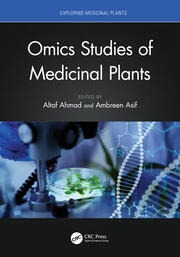
Omics sudies of medicinal plants
Herbal drugs play a pivotal role in modern medicine and pharmaceutical care; however, only limited biotechnology applications have been seen in medicinal plants. Revolutions in high-throughput approaches emphasize omics approaches, such as genomics, transcriptomics, proteomics, and metabolomics. A volume in the Exploring Medicinal Plants series, this book provides a comprehensive and in-depth analysis of breakthroughs in high-throughput approaches for the research of medicinal plants.
Omega-3 fatty acids : Keys to nutritional health
Argues for the importance of essential nutrients in our diet. Over the last two decades there has been an explosion of research on the relationship of Omega-3 fatty acids and the importance of antioxidants to human health. Expert authors discuss the importance of a diet rich in Omega-3 Fatty acids for successful human growth and development and for the prevention of disease. Chapters highlight their contribution to the prevention and amelioration of a wide range of conditions such as heart disease, diabetes, arthritis, cancer, obesity, mental health and bone health.

Omega 3 and Omega 6 and its relationship to obesity
This research summarizes information about omega-3 and omega-6. In recent times, there has been growing recognition of the key role of foods and beverages in disease prevention and treatment. Thus, the production and consumption of functional foods has gained much importance as they provide a health benefit beyond the basic nutritional functions. At present, PUFA (poly unsaturated fatty acids) as Omega-3 [(n-3)] fatty acids and Omega -6 [(n-6)] fatty acid have been linked to healthy aging throughout life. Recently, omega-3 fatty acids EPA (eicosapentaenoic acid ) and DHA (docosahexaenoic acid ) have been associated with cardiovascular function, and Alzheimer’s disease.

OMDoc : An Open Markup Format for Mathematical Documents [version 1.2]
Computers arechanging the way wethink. Of course,nearly all desk-workers have access to computers and use them to email their colleagues, search the Web for information and prepare documents. But I’m not referring to that. I mean that people have begun to think about what they do in compu- tional terms and to exploit the power of computers to do things that would previously have been unimaginable. This observation is especially true of mathematicians.

Olympus Sport Center : OSC
مركز للممارسة الرياضات و الأنشطة المختلفة. و النهوض بالقطاع الرياضي. فقد لوحظ افتقار المنطقة الي المراكز الرياضية التي تتوفر فيها المعايير القياسية. و مواكبة النهضة العالمية في مجال الرياضية

olution Sets for Net Zero Energy Buildings : Feedback from 30 Buildings Worldwide
Presents a unique study of 30 NZEBs that have been constructed and have had their performance measured for at least 12 months. The study is based upon an international collaborative research initiated by the International Energy Agency. It is the first book to evaluate building strategies in houses, educational buildings and offices that have been demonstrated to work in practice. It examines how the design challenges of climate and building type have been addressed, and to what extent the various design approaches have been successful. This book presents convincing evidence that a careful re-thinking of conventional design norms can achieve a far greater performance benefit than is normally feasible. It identifies 'solution sets' that work at the whole building level and at the individual building design challenge level for each climate and building type. In doing so, the book provides guidance as to how to improve the design by learning from these cases. Unusually for a book of this type it has examples of buildings in what are conventionally labeled 'hot' and 'cold' climates.

Oligomers- Polymer Composites -Molecular Imprinting
The series Advances in Polymer Science presents critical reviews of the present and future trends in polymer and biopolymer science including chemistry, physical chemistry, physics and material science.It is adressed to all scientists at universities and in industry who wish to keep abreast of advances in the topics covered.As a rule, contributions are specially commissioned. The editors and publishers will, however, always be pleased to receive suggestions and supplementary information.

Olfactory knows the truth
Olfaction, the sense of smell detects and discriminate odors as well as social cues which influence our innate responses. The olfactory system in human beings is found to be weak as compared to other animals; however, it seems to be very precise. It can detect and discriminate millions of chemical moieties (odorants) even in minuscule quantities. The sense of smell is greatly underappreciated, despite the fact that it monitors the intake of airborne agents into the human respiratory system and determine to a large degree the flavor and palatability of foods and beverage. In addition to enhancing quality of life, this primary sensory system warns of spoiled foods, leaking natural gas, polluted air and smoke, and mediates basic elements of communication (e.g., mother-infant interaction). It is now apparent that smell dysfunction is among the first clinical signs of such neurodegenerative diseases as Alzheimer’s disease and sporadic Parkinson’s disease.

Old Buildings New Designs
Increasingly, architects are hired to design new work for existing structures. Whether for reasons of preservation, sustainability, or cost-effectiveness, the movement to reuse buildings presents a variety of design challenges and opportunities. Old Buildings, New Designs is an Architecture Brief devoted to working within a given architectural fabric from the technical issues that arise from aging construction to the controversy generated by the various project stakeholders to the unique aesthetic possibilities created through the juxtaposition of old and new.
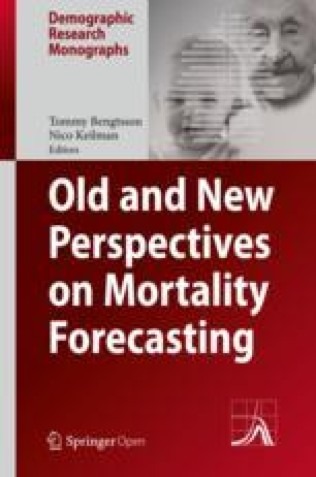
Old and New Perspectives on Mortality Forecasting
This book describes methods of mortality forecasting and discusses possible improvements. It contains a selection of previously unpublished and published papers, which together provide a state-of-the-art overview of statistical approaches as well as behavioural and biological perspectives. The different parts of the book provide discussions of current practice, probabilistic forecasting, the linearity in the increase of life expectancy, causes of death, and the role of cohort factors.
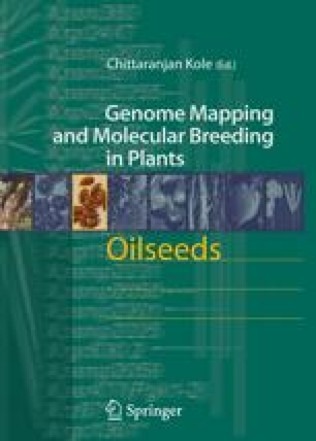
Oilseeds
Genome Mapping and Molecular Breeding in Plants presents the current status of the elucidation and improvement of plant genomes of economic interest. The focus is on genetic and physical mapping, positioning, cloning, monitoring of desirable genes by molecular breeding and the most recent advances in genomics. The series comprises seven volumes: Cereals and Millets; Oilseeds; Pulses, Sugar and Tuber Crops; Fruits and Nuts; Vegetables; Technical Crops; and Forest Trees.

Oil-in-Water Nanosized Emulsions for Drug Delivery and Targeting
ompiles the step-by-step investigations made concerning the potential of nanosized emulsions on both drug delivery and drug targeting areas by different group of scientists in various laboratories across the world Inverts the common nano-emulsions coverage trend of focusing on focused on the particulate system itself, instead exploring the way to turn nanosized emulsions as biomedical tool, as well as, treating the in vitro and in vivo aspects after administration Provides an overview of the current state-of-the art regarding the development of tocol emulsions, emulsion adjuvants in immunization research, oxygen-carrying emulsions (called as fluorocarbon emulsion) and emulsions for delivering drugs to nasal and topical (ocular and transdermal) routes

Oil Spill Response : A Global Perspective
This book provides a timely international perspective on applied research and development, technology transfer, and “lessons learned” from field trials and actual case studies associated with recent spill events. This book provides a synopsis as to the methods currently employed to deals with spills and an insight on future technologies under development.

Oil and Security : A World Beyond Petroleum
This book examines the economic impact of changes in the global demand and supply for fossil fuels both on the major producers in Middle Eastern countries around the Persian Gulf, other producers, as well as the world at large. The economic, social and political life of most countries is not only intimately linked to and influenced by the energy market but also affected by historical developments. Among other issues, it shows how the economic, social and political development of societies in Arabia, the peoples of the Arab Peninsula are influenced by their historic and cultural environment, and what the future may bring to this region when their principal economic assets, petroleum and gas, start to lose markets as alternative sources of fossil fuel, alternative, and renewable energy supply the bulk of global energy needs. It also describes how changing fossil fuel costs, access, security of supply, and environmental impacts may affect future economic, social, and political developments as well as technological advances and changes in priorities.
