



Page 39
Page 39
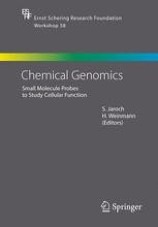
Chemical Genomics ; Vol.58 : Small Molecule Probes to Study Cellular Function
Chemical genomics is a highly interdisciplinary and very exciting field of research both in academics and in the life sciences industry.Various aspects of the interface between chemistry and biology are covered in this volume, such as chemogenomics efforts in the pharmaceutical industry, diversity-oriented synthesis, chemogenomic approaches to the study of cell function, screening technologies, and natural products as tools in chemical biology.
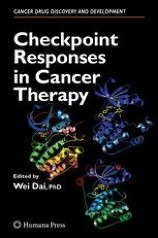
Checkpoint Responses in Cancer Therapy
This book’s distinguished panel of authors takes a close look at topics ranging from the major molecular players affecting DNA synthesis and the response to DNA damage to advances made in the identification of chemical compounds capable of inhibiting individual mitotic kinases. Illuminating and authoritative, Checkpoint Responses in Cancer Therapy offers a critical summary of findings for researchers in the pharmaceutical and biotechnology industries and a valuable resource for academic scientists in cancer research and the study of cell-cycle regulation, signal transduction and apoptosis.

Charting Spiritual Care : The emerging role of Chaplaincy Records in Global Health Care
This book is the first academic book on the controversial issue of including spiritual care in integrated electronic medical records (EMR). Based on an international study group comprising researchers from Europe (The Netherlands, Belgium and Switzerland), the United States, Canada, and Australia, this edited collection provides an overview of different charting practices and experiences in various countries and healthcare contexts.
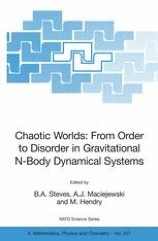
Chaotic Worlds : from Order to Disorder in Gravitational N-Body Dynamical Systems
Based on the recent NATO Advanced Study Institute "Chaotic Worlds: From Order to Disorder in Gravitational N-Body Dynamical Systems", this state of the art textbook, written by internationally renowned experts, provides an invaluable reference volume for all students and researchers in gravitational n-body systems. The contributions are especially designed to give a systematic development from the fundamental mathematics which underpin modern studies of ordered and chaotic behaviour in n-body dynamics to their application to real motion in planetary systems. This volume presents an up-to-date synoptic view of the subject.

Chaotic Dynamics and Transport in Classical and Quantum Systems ; Proceedings of the NATO Advanced Study Institute on International Summer School on Chaotic Dynamics and Transport in Classical and Quantum Systems, Cargèse, Corsica, 18 - 30 August 2003.
This book contains at Proceedings of the NATO Advanced Study Institute on International Summer School on Chaotic Dynamics and Transport in Classical and Quantum Systems Cargèse, Corsica 18–30 August 2003
Changing Forests : Collective Action, Common Property, and Coffee in Honduras
It merges political ecology, collective-action theories, and institutional analysis to study how the people and forests have changed through socioeconomic and political transitions. It studies the complex, often contradictory relationships between the people and their natural resources to understand why forest cover endures."Changing Forests" therefore encompasses three broad phases: (1) the premodern period, which considers historic perturbations in western Honduras from the period of colonialism into the middle of the twentieth century; (2) the period of state-led logging and intervention in La Campa, which caused major degradation in forest cover; and (3) the recent period in which export coffee production transformed property rights, and people’s perceptions of the forest gained new conservationist and economic dimensions. Each phase entails perspectives and experiences that influenced human use of forests, and shaped subsequent transformations.

Chamomile & insulin nasal spray in the treatment of Alzheimer's disease
Chamomile is one of the most widely used herbs in Western countries, in the present study, we assessed the effect of chamomile combined with insulin on the learning and memory impairments (Alzheimer's disease) induced by scopolamine. The cognition-enhancing effect of chamomile & insulin was investigated using the Y-maze test. Drug-induced amnesia was induced by treating animals with scopolamine. Mix solution administration intranasally reversed scopolamine induced cognitive impairments in mice by the Y-maze test. Moreover, results suggest that the combination of both chamomile and insulin may be a useful cognitive impairment treatment, and its beneficial effects are mediated, in part, via inhibitory effects in vivo on the release of several pro-inflammatory mediators and as a co-absorbent.

Cell-secreted vesicles : Methods and protocols
Pesents hands-on technological protocols used to target an array of cell-secreted extracellular vesicles (EVs) in a variety of biological systems. Beginning with methods for EV purification and analysis, the book continues with sections on the study of EV functions as well as specific systems and models allowing for the study of EVs of different origin. Written for the highly successful Methods in Molecular Biology series, chapters include introductions to their respective topics, lists of the necessary materials and reagents, step-by-step and readily reproducible laboratory protocols, and tips on troubleshooting and avoiding known pitfalls.
Cells and Robots : Modeling and Control of Large-Size Agent Populations
Cells and Robots is an outcome of the multidisciplinary research extending over Biology, Robotics and Hybrid Systems Theory. It is inspired by modeling reactive behavior of the immune system cell population, where each cell is considered as an independent agent. In our modeling approach, there is no difference if the cells are naturally or artificially created agents, such as robots. This appears even more evident when we introduce a case study concerning a large-size robotic population scenario. Under this scenario, we also formulate the optimal control of maximizing the probability of robotic presence in a given region and discuss the application of the Minimum Principle for partial differential equations to this problem. Simultaneous consideration of cell and robotic populations is of mutual benefit for Biology and Robotics, as well as for the general understanding of multi-agent system dynamics.The text of this monograph is based on the PhD thesis of the first author. The work was a runner-up for the fifth edition of the Georges Giralt Award for the best European PhD thesis in Robotics, annually awarded by the European Robotics Research Network (EURON).

Cell cycle control : Methods and protocols
Collects techniques to study the highly regulated cell cycle process. Beginning with chapters investigating these processes and assessing how cells respond when these complicated pathways are simplified by using synthetic biology and in vitro reconstitutions, the book continues by exploring how cells sense and respond to environmental conditions, different model systems and cellular types used to visualize cellular architecture during cell division, as well as innovative single cell microscopy techniques to highlight the heterogeneity of the cell population with respect to cell cycle progression. Written for the highly successful Methods in Molecular Biology series, chapters include introductions to their respective topics, lists of the necessary materials and reagents, step-by-step and readily reproducible laboratory protocols, and tips on troubleshooting and avoiding known pitfalls.

Categories and Sheaves
This book covers categories, homological algebra and sheaves in a systematic and exhaustive manner starting from scratch, and continues with full proofs to an exposition of the most recent results in the literature, and sometimes beyond.The authors present the general theory of categories and functors, emphasising inductive and projective limits, tensor categories, representable functors, ind-objects and localization. Then they study homological algebra including additive, abelian, triangulated categories and also unbounded derived categories using transfinite induction and accessible objects. Finally, sheaf theory as well as twisted sheaves and stacks appear in the framework of Grothendieck topologies.

Cases & materials on international law
A topical and engaging companion for study; placing international law directly in the context of contemporary debate. The book offers broad coverage of international law, and is an appropriate match for a range of courses and teaching styles.

Case Studies in Environmental Archaeology
Environmental archaeology encompasses the application of biological and geological techniques to the study of human/environmental interactions. Each chapter is an original or revised work by internationally-recognized geoarchaeologists, human biologists, paleoethnobotanists, and zooarchaeologists. Each study demonstrates how and why the information obtained using environmental techniques is important to anthropologists instead of describing, critiquing, or advocating a method. These ethnographic, geological, and biological case studies successfully demonstrate the application of environmental science toward the resolution of questions related to human behavior in the past.

Case Studies in Building Rehabilitation
Presents recent research and practical insights relating to building pathology. As such it contributes toward the systematization and dissemination of knowledge regarding structural and hygrothermal pathologies, durability and diagnostic techniques, while at the same time, demonstrating the latest advances in this domain. It includes new developments in the field of building pathology and rehabilitation, bridging the gap between current approaches to the surveying of buildings and the detailed study of defect diagnosis, prognosis and remediation. It also features a number of case studies and a detailed list of references and suggestions for further reading. Providing an overview of the current state of the art in the field, the book will appeal to scientists, students, practitioners and lecturers. Furthermore, the topics covered are relevant to a variety of scientific and engineering disciplines, including civil, materials and mechanical engineering.
Careers of University Graduates : Views and Experiences in Comparative Perspectives
In this volume, scholars from twelve countries show how transition to employment, job assignments, employment assessments of the quality of employment and work vary by the graduates’ socio-biographic and educational background. It also focuses on experiences during the course of study and competences acquired, international experience, regional background and regions of employment. It demonstrates more substantial differences of the relationships between study and subsequent employment between various countries than previous debates and analyses have suggested.

Career options in the pharmaceutical and biomedical industry : An insider’s guide
Divided into five parts: Part 1 provides an academic perspective that focuses on the specific preparation required in the final years of study to embark on a successful career in the pharmaceutical and biomedical industries. In Part 2, industry experts discuss employment possibilities all along the drug or product life cycle,from discovery research and development to commercialisation. Part 3 follows, highlighting opportunities in support functions such as regulatory affairs or quality assurance. Part 4 focuses on additional opportunities in the wider biomedical sector, while Part 5 contains practical tips and training opportunities for entering the pharmaceutical and biomedical industries. In the epilogue, the authors reflect on this fascinating field and its career prospects.
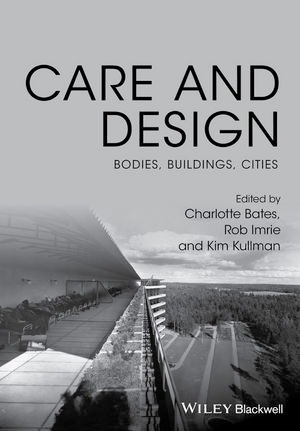
Care and Design: Bodies, Buildings, Cities
Connects the study of design with care, and explores how concepts of care may have relevance for the ways in which urban environments are designed. It explores how practices and spaces of care are sustained specifically in urban settings, thereby throwing light on an important arena of care that current work has rarely discussed in detail.

Carbohydrate-protein interactions : Methods and protocols
Provides new and updated tools for studying protein-carbohydrate interactions ranging from traditional biochemical methods to state-of-the-art techniques. This book focuses on four different research themes detailing methods for screening and quantifying CAZyme activity, investigating the interactions between proteins, carbohydrate ligands, methods for the visualization of carbohydrates, protein-carbohydrate complexes, structural and “omic” approaches for studying systems of CAZymes.

Capital Punishment and the Criminal Corpse in Scotland, 1740–1834
This book provides the most in-depth study of capital punishment in Scotland between the mid-eighteenth and early nineteenth century to date. Based upon an extensive gathering and analysis of previously untapped resources, it takes the reader on a journey from the courtrooms of Scotland to the theatre of the gallows. It introduces them to several of the malefactors who faced the hangman’s noose and explores the traditional hallmarks of the spectacle of the scaffold. It demonstrates that the period between 1740 and 1834 was one of discussion, debate and fundamental change in the use of the death sentence and how it was staged in practice. In addition, the study provides an innovative investigation of the post-mortem punishment of the criminal corpse. It offers the reader an insight into the scene at the foot of the gibbets from which criminal bodies were displayed, and around the dissection tables of Scotland’s main universities where criminal bodies were used as cadavers for anatomical demonstration. In doing so it reveals an intermediate stage in the long-term disappearance of public bodily punishment.

Capillary Forces in Microassembly : Modeling, Simulation, Experiments, and Case Study
Capillary Forces in Microassembly discusses the use of capillary forces as a gripping principle in microscale assembly. Clearly written and well-organized, this text brings together physical concepts at the microscale with practical applications in micromanipulation. Throughout this work, the reader will find a review of the existing gripping principles, elements to model capillary forces as well as descriptions of the simulation and experimental test bench developed to study the design parameters. Using well-known concepts from surface science (such as surface tension, capillary effects, wettability, and contact angles) as inputs to mechanical models, the amount of effort required to handle micro-components is predicted. These developments are then applied in a case study concerning the pick and place of balls in a watch ball bearing.
