



Page 39
Page 39

Education and skills for inclusive growth, green jobs and the greening of economies in Asia : Case study summaries of India, Indonesia, Sri Lanka and Viet Nam
Presents an overview of the main research findings and case studies concerning education and skills for inclusive growth, green jobs and the greening of economies. Focusing on India, Indonesia, Sri Lanka and Viet Nam, it discusses government and business sector responses to these issues and how Technical and Vocational Education and Training (TVET) systems and institutions are addressing both the renewal of curricula in the context of green growth dynamics, and patterns of training and skills development to meet demands. In addition, the book examines cross-country issues, concerns and prospects regarding education and skills for inclusive growth and green jobs for the four countries. The book also provides summaries of the case studies undertaken for India, Indonesia, Sri Lanka and Viet Nam.

Education and Climate Change : The Role of Universities
This book draws on a multidimensional model of educational change, the book reviews the field of climate change education and identifies some of the areas in which past efforts have fallen short in supporting effective pedagogical change at scale.

Ecotoxicology, Ecological Risk Assessment and Multiple Stressors
The science of ecotoxicology and the practice of ecological risk assessment are evolving rapidly. Ecotoxicology as a subject area came into prominence in the 1960s after the publication of Rachel Carson's book on the impact of pesticides on the environment. The rise of public and scientific concern for the effects of chemical pollutants on the environment in the 1960s and 1970s led to the development of the discipline of ecotoxicology, a science that takes into account the effects of chemicals in the context of ecology. Until the early 1980s, in spite of public concern and interest among scientists, the assessment of ecological risks associated with natural or synthetic pollutants was not considered a priority issue by most government. However, as the years passed, a better understanding of the importance of ecotoxicology emerged and with it, in some countries, the progressive formalization of an ecological risk assessment process.

Ecosystem Services for Well-Being in Deltas : Integrated Assessment for Policy Analysis
Answers key questions about environment, people and their shared future in deltas. It develops a systematic and holistic approach for policy-orientated analysis for the future of these regions. It does so by focusing on ecosystem services in the world’s largest, most populous and most iconic delta region, that of the Ganges-Brahmaputra delta in Bangladesh. The book covers the conceptual basis, research approaches and challenges, while also providing a methodology for integration across multiple disciplines, offering a potential prototype for assessments of deltas worldwide.

Ecosystem Organization of a Complex Landscape : Long-Term Research in the Bornhöved Lake District, Germany
Presents the major findings of a 12-year ecological study of the Bornhöved Lake District, situated some 30 km south of Kiel. Historically speaking, the present research scheme, like comparable long-term ecosystem studies at Göttingen, Bayreuth, München, and Berchtesgaden, has been conceived as the core of a comprehensive ecological surveillance system for Germany (Ellenberg et al. 1978). Comprising three interrelated components, namely an ecological monitoring network, comparative ecosystem research, and an environmental specimen bank, this system is intended to promote both ecological science and planning and policy. In this connection the geo- and bioscientifically based ecosystem research aims at understanding the structure and functions of systems, the natural equilibrium and stress tolerance of singular components and the entire system against changes and disturbances from within and from outside, and the relationships between diversity, productivity, and stability. Thus, ecosystem research forms the indispensable basis for the rational analysis of the comprehensive data sets made available by ecological monitoring networks and for the adequate selection of plant, animal, and soil specimens for environmental specimen banking purposes.

Ecosystem Function in Heterogeneous Landscapes
The book elucidates the challenges faced by ecosystem scientists working in spatially heterogeneous systems, relevant conceptual approaches used in other disciplines and in different ecosystem types, and the importance of spatial heterogeneity in conservation resource management. The distinguished authors discuss how how much heterogeneity needs to be taken into account for specific types of scientific and management issues. Their chapters cover the spectrum from proposing novel conceptual approaches to detailing the practical implications of heterogeneous landscapes for fire management, water management and conservation planning.

Ecophysiology of High Salinity Tolerant Plants
Halophytes get increasing attention today because of the steady increase of the salinity in irrigation systems in the arid and semi-arid regions where the increasing population reaches the limits of freshwater availability.

E-Content: Technologies and Perspectives for the European Market
Technologies develop rapidly and reach hurricane levels of velocity but quality E-Content and innovative applications lag behind. This book addresses the question how content industries change within a digital environment and what role information and communication technologies play in transforming the competitive landscape. The authors argue that post-industrial societies tend to pay substantial amounts for equipment and gadgets but invest far too little in the quality of the content. As a result, much effort is and has to be spent on the enhancement of E-Content.

Economics of the Environment : Theory and Policy
The labor of nature is paid, not because she does much, but because she does little. In proportion as she becomes niggardly in her gifts, she exacts a greater price for her work. Where she is munificently bene- cent, she always works gratis.“ David Ricardo* This book interprets nature and the environment as a scarce resource. Whereas in the past people lived in a paradise of environmental superabundance, at p- sent environmental goods and services are no longer in ample supply. The en- ronment fulfills many functions for the economy: it serves as a public-c- sumption good, as a provider of natural resources, and as receptacle of waste. These different functions compete with each other. Releasing more pollutants into the environment reduces environmental quality, and a better environm- tal quality implies that the environment’s use as a receptacle of waste has to be restrained. Consequently, environmental disruption and environmental use are by nature allocation problems. This is the basic message of this book.

Economics of the Environment : Theory and Policy
Interprets nature and the environment as a scarce resource. It offers a theoretical study of the allocation problem and describes different policy approaches to the environmental problem. The entire spectrum of the allocation issue is studied: the use of the environment in a static context, international and trade aspects of environmental allocation, regional dimensions, global environmental media, environmental use over time and under uncertainty. The book incorporates a variety of economic approaches, including neoclassical analysis, the public-goods approach, benefit-cost analysis, property-rights ideas, economic policy and public-finance reasoning, international trade theory, regional science, optimization theory, and risk analysis. The different aspectsof environmental allocation are studied in the context of a single model that is used through the book.

Economics of Land Degradation and Improvement : A Global Assessment for Sustainable Development
This volume deals with land degradation, which is occurring in almost all terrestrial biomes and agro-ecologies, in both low and high income countries and is stretching to about 30% of the total global land area. About three billion people reside in these degraded lands. However, the impact of land degradation is especially severe on livelihoods of the poor who heavily depend on natural resources. The annual global cost of land degradation due to land use and cover change (LUCC) and lower cropland and rangeland productivity is estimated to be about 300 billion USD. Sub-Saharan Africa (SSA) accounts for the largest share (22%) of the total global cost of land degradation.

Economics and Management of Climate Change : Risks, Mitigation and Adaptation
Climate change is one of the biggest challenges for mankind. Although there is increasing evidence that climate change is already occurring, there is neither sufficient knowledge as to what extent climate change poses risks to societies and companies, nor about adequate strategies to cope with these risks. Bringing together an international group of scholars from environmental economics, political science and business, this book describes, analyses and evaluates climate change risks and responses of societies and companies. The book contributes to the question of how climate change can be mitigated by discussing efficient and effective design of mitigation measures, in particular emissions trading and clean development mechanism (CDM). Placing special emphasis on the impact of climate change risks on business, the book investigates in which way selected sectors of the economy are affected and what measures they can undertake to adapt to climate change risks.

Economic Geology of Natural Gas Hydrate
This is the first book that attempts to broadly integrate the most recent knowledge in the fields of hydrate nucleation and growth in permafrost regions and marine sediments. Gas hydrate reactant supply, growth models, and implications for pore fill by natural gas hydrate are discussed for both seawater precursors in marine sediments and for permafrost hydrate. These models for forming hydrate concentrations that will constitute targets for exploration are discussed, along with exploration methods. Thermodynamic models for the controlled conversion of hydrate to natural gas, which can be recovered using conventional industry practices, suggest that a number of different types of hydrate occurrence are likely to be practical sources of hydrate natural gas. Current progress in the various aspects of commercial development of hydrate gas deposits are discussed, along with the principal extractive issues that have yet to be resolved.

Economic evaluations in exploration
This textbook, now in its second English edition, is originally a translation of the G- man textbook “Rechnen für Lagerstättenkundler und Rohstoffwirtschaftler, Teil 1”, also translated into the Chinese and Russian languages. Compared to the previous English and German editions the chapters have been updated with new examples and in many cases amended. The textbook is intended for the economic geologist who deals with the evaluation of deposits at an early stage of development. Once an exploration project has reached the feasibility stage, the exact calculations that are necessary for a comprehensive te- nical and economic assessment will be performed by a team of geologists, mining engineers, metallurgists, and economists. In the early stages of exploration, however, any evaluator of deposits must be able to cover the whole spectrum himself. Since only order of magnitude parameters are available at this early stage, the c- culations can only yield order of magnitude results.

Economic evaluation of sustainable development
This book presents methods to evaluate sustainable development using economic tools. The focus on sustainable development takes the reader beyond economic growth to encompass inclusion, environmental stewardship and good governance. Sustainable Development Goals (SDGs) provide a framework for outcomes. In illustrating the SDGs, the book employs three evaluation approaches: impact evaluation, cost-benefit analysis and objectives-based evaluation.

Ecology, Planning, and Management of Urban Forests : International Perspective
Ecology, Planning, and Management of Urban Forests contains studies and perspectives on urban forests from a broad array of basic and applied scientific disciplines including ecosystem ecology, biogeochemistry, landscape ecology, plant community ecology, geography, and social science. The book contains contributions from experts in Asia, Europe, and North America, allowing the reader to evaluate methods and management that are appropriate for particular geographic, environmental, and socio-political contexts. Urban forests are also approached on regional and landscape scales to encompass more natural environments in and around cities, rather than within arbitrary municipal boundaries. The studies provided are intended to motivate scientists, planners, and managers to work together and to adopt a broader landscape ecology approach to urban forestry, and in so doing, better address the pressing needs for improving the quality of life in urban environments.
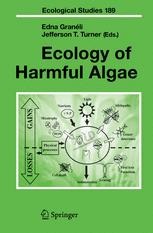
Ecology of Harmful Algae
Harmful algal blooms are one of the consequences of the human impact on aquatic ecosystems, particularly the process of eutrophication. They can cause a variety of deleterious effects, including the poisoning of fish and shellfish, habitat disruptions for many organisms, water discolouration, beach fouling, and even toxic effects for humans. This volume is a comprehensive synthesis of the latest research achievements concerning harmful algae (HA) ecology. International experts provide an in-depth analysis of HA topics including: global distribution, ecology of major HA groups, ecology and physiology of HA, HA and the food web, studying and mitigating HA, the human impact on HA and HA impact on human activity. This volume is an invaluable source of information for researchers in HA ecology as well as for advanced students, lecturers, and environmental managers.
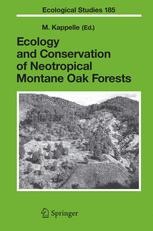
Ecology and Conservation of Neotropical Montane Oak Forests
Covers the range of natural and managed oak forests in the highlands of tropical America. Providing an understanding of ecological patterns and processes that determine the structure and functioning of these forests, this volume aims to serve as a basis for sustainable forest management and biodiversity conservation.

Ecologies design : Transforming architecture, landscape, and urbanism
Ecologies Design challenges professionals and academics to expand the concept of applying and understanding ecologies, both biological and social, in multi-disciplinary spatial design contexts. This book will be of great interest to academics and professionals within ecology and design.

Ecological risks associated with the destruction of chemical weapons ; Proceedings of the NATO ARW on ecological risks associated with the destruction of chemical weapons, Lüneburg, Germany, from 22-26 October 2003
Chemical Weapons Convention after the First Review Conference -- Implementation of Russia’s Obligation to Destroy chemical Weapons in the Udmurt Republic -- The CWC after the Review Conference . Prof. Dr. Vladimir Mikhailovitsh Kolodkin , Prof. Dr.-Ing. Wolfgang Ruck 1 Institute of Natural and Technogenic Disasters, Udmurt State University, Izhevsk (Russia), 2 Institute of Ecology and Environmental Chemistry, University Lüneburg (Germany) During the Cold War a whole arsenal of deadly chemical weapons was allowed to build up on both sides of the ideological divide. Happily, today the problems are reversed. Expertise is now required in the field of safe and environment-friendly disposal of chemical weapons and cleaning up of contaminated sites all around the world, but not least in the ex-Soviet-led countries. In all, there were 57 participants, of which 11 dispatched from the TACIS project “The development of the chemical weapons” facility at the detached plant No 4 of OAO Khimprom, Novocheboksarsk.
