



Page 38
Page 38
Brain Repair
Brain Repair, addresses all relevant issues underlying the mechanisms of brain damage, brain plasticity and post-traumatic reorganisation after CNS lesions. This book is divided the three major sections that follow; cellular and molecular basis of brain repair, plasticity and reorganisation of neural networks, and experimental therapy strategies. Brain Repair is written by high profile, international experts who describe in detail the newest results from basic research and highlight new model systems, techniques and therapy approaches. Based on a careful analysis of the cellular and molecular reaction patterns of the CNS to lesions, the contributions cover possibilities for endogenous reorganisation and repair as well as exciting new therapies emerging from basic research, some of which have already been introduced into the clinics.
Brain development in Drosophila melanogaster
The central nervous system (CNS) represents the organ with the highest structural and functional complexity. Accordingly, uncovering the mechanisms leading to cell diversity, patterning and connectivity in the CNS is one of the major challenges in developmental biology. The developing CNS of the fruitfly Drosophila melanogaster is an ideal model system to study these processes. Several principle questions regarding neurogenesis (like stem cell formation, cell fate specification, axonal pathfinding) have been addressed in Drosophila by focusing on the relatively simply structured truncal parts of the nervous system. This book provides an overview of some major facets of recent research on Drosophila brain development.

Brain Death : A Reappraisal
This text is intended to provide an overview of brain death. The topics explored in this book are the concept and historical approach of human death, clinical examinations of brain-dead patients, ancillary tests in coma and brain death, bioethical discussions of brain death and its relationship with some consciousness disturbances, and the legal considerations of human death.

Brain Control of Wakefulness and Sleep
The book is rich in references and leaves no aspect of the problem untouched. The morphological, pharmacological, physiological and mathematical modeling aspects of different components of the subject are treated to exhaustion...the book is richly illustrated and down-right comprehensive. It will delight those interested in the field, will inform those who need a context for their research efforts and is a must for graduate and medical libraries.

Brain and Human Body Modeling 2020 : Computational Human Models Presented at EMBC 2019 and the BRAIN Initiative® 2019 Meeting
This book describes modern applications of computational human modeling in an effort to advance neurology, cancer treatment, and radio-frequency studies including regulatory, safety, and wireless communication fields.
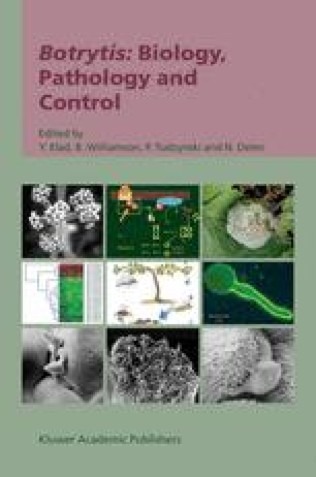
Botrytis : Biology, Pathology and Control
The book is the result of intensive work of 43 authors, all of them leading scientists in the Botrytis sciences. New technologies have arisen that when applied to long-standing problems or to test new hypotheses have been most rewarding and many of these are covered in this book.
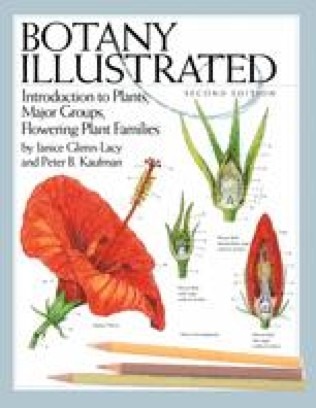
Botany Illustrated : Introduction to Plants, Major Groups, Flowering Plant Families
This easy-to-use book helps you acquire a wealth of fascinating information about plants. There are 130 pages with text, each facing 130 pages of beautiful illustrations. Each page is a separate subject. Included is a coloring guide for the realistic illustrations. The illustration pages are composed of scientifically accurate line drawings with the true sizes of the plants indicated. Using colored pencils and the authors’ instructions, you can color the various plant structures to stand out in vivid clarity. Your knowledge of plants increases rapidly as you color the illustrations.
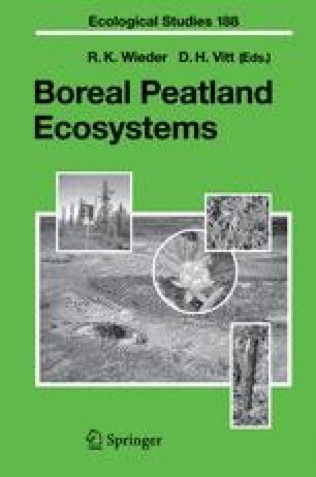
Boreal Peatland Ecosystems
This volume adopts an ecosystems approach to understanding the world's boreal peatlands. It focuses on biogeochemical patterns and processes, production, decomposition, and peat accumulation, and provides additional information on animal and fungal diversity. A recurring theme is the legacy of boreal peatlands as impressive accumulators of carbon as peat over millennia. This carbon legacy is under threat from a wide diversity of disturbances, including wildfire, ongoing climate change, the changing chemistry of atmospheric deposition, and continuing resource exploitation. The volume is of inte.

Boreal Forest and Climate Change
There are several crucial feedbacks from forests to the climate system. The mechanisms for those feedbacks are elaborated in the book: they involve changes in the carbon cycle, albedo, N2O emissions and the production of aerosols. Much of this work is new and the feedback relationships have not yet been incorporated into models of the climate system. The book will be an important introduction for students and climate modellers alike, providing conceptual tools and ideas that are broadly applicable to terrestrial systems.

Bone Marrow Derived Progenitors
The ability of stem cells to acquire different desired phenotypes has opened the door for a new discipline: regenerative medicine. Much of the interest for this purpose is generated by embryonic stem cells, but their use is still controversial for moral reasons as well as scientifically. Less controversial and readily available are the adult bone marrow-derived progenitors including hematopoietic stem cells, endothelial progenitors and mesenchymal stem cells. The ambitious goal of this volume is to provide a comprehensive overview of the currently available information related to the therapeutic utility of adult bone marrow-derived cells. Each chapter has been written by an accomplished expert in the field, making this a hugely valuable resource for anyone looking for an up-to-the-minute assessment of current practice in adult bone marrow-derived cell therapy.
Biotechnology and sustainable agriculture 2006 and beyond ; Proceedings of the 11th IAPTC&B Congress, August 13-18, 2006 Beijing, China
Biotechnology and Sustainable Agriculture 2006 and Beyond is a collection of papers presented at the XIth international congress of the International Association of Plant Tissue Culture & Biotechnology (IAPTC&B). It continues the long tradition of the IAPTC&B to publish the proceedings of its quadrennial congresses. It provides an up-to-date report of the most significant advances in plant tissue culture and biotechnology as presented by leading international scientists.
Biotechnologies for plant mutation breeding : Protocols
This book offers 19 detailed protocols on the use of induced mutations in crop breeding and functional genomics studies, which cover topics including chemical and physical mutagenesis, phenotypic screening methods, traditional TILLING and TILLING by sequencing, doubled haploidy, targeted genome editing, and low-cost methods for the molecular characterization of mutant plants that are suitable for laboratories in developing countries. The collection of protocols equips users with the techniques they need in order to start a program on mutation breeding or functional genomics using both forward and reverse-genetic approaches. Methods are provided for seed and vegetatively propagated crops (e.g. banana, barley, cassava, jatropha, rice) and can be adapted for use in other species.
Biotechnological applications of photosynthetic proteins : Biochips, biosensors and biodevices
Biotechnological Applications of Photosynthetic Proteins: Biochips, Biosensors and Biodevices provides an overview of the recent photosystem II research and the systems available for the bioassay of pollutants using biosensors that are based on the photochemical activity. The data presented in this book serves as a basis for the development of a commercial biosensor for use in rapid pre-screening analyses of photosystem II pollutants, minimising costly and time-consuming laboratory analyses.
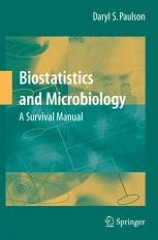
Biostatistics and microbiology : A survival manual
This book presents a step-by-step manner that eliminates the greatest obstacle to the learner, which is applying the many processes that comprise a statistical method. The author counters the fear of statistical methods by describing early in the book a step-by-step procedure to perform a statistical method - a process that we will term "the six-step procedure." All of the testing will be performed adhering to six well-defined steps, which will greatly simplify the statistical process. Each step in the sequence must be completed before moving on to the next step.
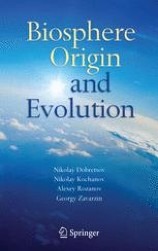
Biosphere Origin and Evolution
The book covers notions by scientists of various branches on the evolutionary relationship between the biosphere and geosphere, evolution features at various levels of living matter organization, and problems of prebiotic evolution and life origin. The data were collected in the course of the RAS program "Biosphere origin and evolution" (subprogram II) in 2003–2006. The objectives of this subprogram were (1) generalization of data related to problems of biosphere origin and evolution accumulated by geneticists, molecular biologists, zoologists, botanists, paleontologists, microbiologists, geologists, chemists, and archaeologists; (2) search for new interdisciplinary approaches to biosphere origin and evolution; (3) development of a "lingua franca" understandable by experts in various fields, which would allow apprehension of results concerning the topic obtained in allied sciences
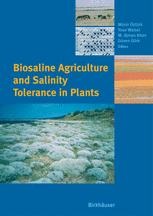
Biosaline Agriculture and Salinity Tolerance in Plants
This volume focuses on reclamation, management, and utilization of salt-affected soils, their sustainable use, and evaluation of plants inhabiting naturally occurring saline habitats. It is of interest to scientists and students as well as to agricultural institutions and farmers and will undoubtedly raise the scientific community's awareness of, and interest in salinity issues.
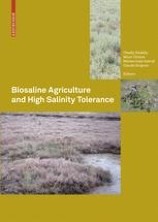
Biosaline Agriculture and High Salinity Tolerance
this book reviews the current state of knowledge in biosaline agriculture and high salinity tolerance in plants. It mainly focuses on the biotic approach to economically utilize the stress-prone areas by growing resistant plants.This volume comprises three sections: physiology and biochemistry, ecology, and molecular biology. Thus, a systematic approach has been adopted to uncover plant responses to various ecological factors at physiological and molecular levels.

Bioreactors for Tissue Engineering : Principles, Design and Operation
This volume addresses the issue of mechanical conditioning of the tissue, and describes the use of techniques such as MRI for monitoring tissue growth. It also deals with the application of bioreactor technology to tissue engineering products.
Bioprocessing Technology for Production of Biopharmaceuticals and Bioproducts
Written for industrial and academic researchers and development scientists in the life sciences industry, Bioprocessing Technology for Production of Biopharmaceuticals and Bioproducts is a guide to the tools, approaches, and useful developments in bioprocessing. This important guide: •Summarizes state-of-the-art bioprocessing methods and reviews applications in life science industries •Includes illustrative case studies that review six milestone bio-products •Discuses a wide selection of host strain types and disruptive bioprocess technologies
Biophysical Techniques in Photosynthesis ; Vol. II
Since the first volume on Biophysical Techniques in Photosynthesis Research, published in 1996, new experimental techniques and methods have been devised at a rapid pace. The present book is a sequel which complements the first volume (Volume 3 in the Series) by providing a comprehensive overview of the most important new techniques developed over the past ten years, especially those that are relevant for research on the mechanism and fundamental aspects of photosynthesis. The contributions are written by leading scientists in their field. The book has 5 sections: Imaging; Structure; Optical and laser spectroscopy; Magnetic resonance; Theory. Each chapter describes the basic concepts of the technique, practical applications and scientific results. Possibilities and limitations from a technical as well as a scientific point of view are addressed, allowing the reader not only to recognize the potential of a particular method for his/her own quest, but also to assess the resources that are required for implementation. The book is intended for use by graduate students and researchers in photosynthesis as well as in (bio)physics, (bio)chemistry and biology in general.
