


Refine Results
Sort By
From
To


With some justification, many amateur astronomers believe astrophysics is a very difficult subject, requiring at least degree-level mathematics to understand it properly. This isn’t necessarily the case. Mike Inglis' quantitative approach to the subject explains all aspects of astrophysics in simple terms and cuts through the incomprehensible mathematics with which this fascinating subject is all too often associated. Astrophysics is Easy! begins by looking at the H-R diagram and other basic tools of astrophysics, then ranges across the universe, from a first look at the interstellar medium and nebulae, through the birth, evolution and death of stars, to the physics of galaxies and clusters of galaxies.
For a quantitative understanding of the physics of the universe - from the solar system through the milky way to clusters of galaxies all the way to cosmology - these edited lecture notes are perhaps among the most concise and also among the most critical ones: Astrophysics has not yet stood the redundancy test of laboratory physics, hence should be wary of early interpretations. Special chapters are devoted to magnetic and radiation processes, supernovae, disks, black-hole candidacy, bipolar flows, cosmic rays, gamma-ray bursts, image distortions, and special sources. At the same time, planet earth is viewed as the arena for life, with plants and animals having evolved to homo sapiens during cosmic time. -- This text is unique in covering the basic qualitative and quantitative tools, formulae as well as numbers, needed for the precise interpretation of frontline phenomena in astrophysical research. The author compares mainstream interpretations with new and even controversial ones he wishes to emphasize.

This classic text, aimed at senior undergraduates and beginning graduate students in physics and astronomy, presents a wide range of astrophysical concepts in sufficient depth to give the reader a quantitative understanding of the subject. Emphasizing physical concepts, the book outlines cosmic events but does not portray them in detail: it provides a series of astrophysical sketches. For this fourth edition, nearly every part of the text has been reconsidered and rewritten, new sections have been added to cover recent developments, and others have been extensively revised and brought up to date. The book begins with an outline of the scope of modern astrophysics and enumerates some of the outstanding problems faced in the field today. The basic physics needed to tackle these questions are developed in the next few chapters using specific astronomical processes as examples. The second half of the book enlarges on these topics and shows how we can obtain quantitative insight into the structure and evolution of stars, the dynamics of cosmic gases, the large-scale behavior of the Universe, and the origins of life.
Provides an overview of current research on a variety of topics related to both large-scale and classroom assessment. First, the purposes, traditions and principles of assessment are considered, with particular attention to those common to all levels of assessment and those more connected with either classroom or large-scale assessment. Assessment design based on sound assessment principles is discussed, differentiating between large-scale and classroom assessment, but also examining how the design principles overlap. The focus then shifts to classroom assessment and provides specific examples of assessment strategies, before examining the impact of large-scale assessment on curriculum, policy, instruction, and classroom assessment.
This book collects the evaluation and accreditation experiences gathered by higher education institutions in Finland, France, Germany, Italy, the Netherlands, Portugal, the United Kingdom and Sweden.
The chapters of the book attempt to answer a number of essential questions in relation to global warming and climate change. He begins by showing how the earth’s climate has varied in the past, discussing ice ages, the Holocene period since the end of the last ice age, particularly during the past 1000 years. He investigates the reliability of "proxies" for historical temperatures and assesses the hockey stick version of global temperatures for the past millennium. To do this effectively he looks carefully at how well near surface temperatures of land and ocean on earth have been monitored during the past 100 years or more, and looks at the utility and significance of a single global average temperature
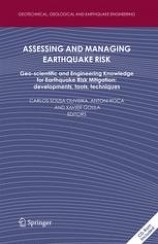
This book points out the need of a multidisciplinary approach in the field of risk assessment and management. It provides an overview of the problems, approaches and common practices directly related to earthquake risk mitigation and, in particular, to the preparation of earthquake emergency plans. Written by a team of specialists from different disciplines, the authors worked together extensively in order to create unity and continuity in the text as a whole. Each topic is illustrated with examples of actual applications taken from the bibliography – including websites with available relevant information. Case studies and information on some relevant international projects are given.
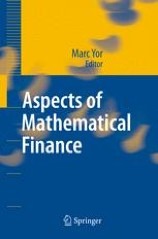
Considering the stupendous gain in importance, in the banking and insurance industries since the early 1990’s, of mathematical methodology, especially probabilistic methodology, it was a very natural idea for the French "Académie des Sciences" to propose a series of public lectures, accessible to an educated audience, to promote a wider understanding for some of the fundamental ideas, techniques and new tools of the financial industries. These lectures were given at the "Académie des Sciences" in Paris by internationally renowned experts in mathematical finance, and later written up for this volume which develops, in simple yet rigorous terms, some challenging topics such as risk measures, the notion of arbitrage, dynamic models involving fundamental stochastic processes like Brownian motion and Lévy processes.
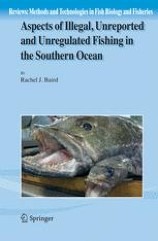
Overfishing threatens the viability of high seas living resources. Furthermore, controls to prevent overfishing are inadequate. Illegal, Unreported and Unregulated (IUU) fishing is a product of overfishing and affects all marine fisheries. Southern Ocean fisheries have been particularly targeted by IUU fishing. The efforts of the Convention for the Conservation of Antarctic Marine Living Resources Commission and the Australian government to adopt complementary measures to deter IUU fishing in the Southern Ocean form the basis of this study, although the examination is conducted following a comprehensive review of the legal and other factors contributing to the development of IUU fishing as well as the applicable international law.

The Asia-Pacific region is home to the world’s largest region of coral reefs and mangroves. It accommodates two-thirds of the world’s human population and its economic activities have the highest growth rate in the world. Ongoing degradation of the environment, resulting from coastal development, deforestation, desertification and over-harvesting, are becoming a matter of great concern, as floods and droughts occur as a result of this degradation. Threats of global environmental change, such as climate change and sea-level rise, will exacerbate such problems. Therefore, appropriate policies and measures are needed for coastal management, to address both the local and global trends. This book gives an overview of the state-of-the-art understanding on the drivers, state, and responses to coastal environmental changes in the Asia-Pacific region. It provides excellent perspectives on current and anticipated environmental changes in the region’s coastal areas, to researchers, students, policy makers, coastal managers and other stakeholders.

This book delves into the widely held belief that the 21st century will be the "Asian Century" by examining the Asia's rapid economic development in the post-war era and the challenges it faces in forging ahead of world leaders in the West. The impact of the current turbulent global political climate on Asia is critically analyzed, employing a holistic and multidisciplinary approach, combining economic, social, political and geopolitical perspectives. Written in an accessible style, the book offers students, business, government, and civil society players powerful insights on Asia.

Formerly nomadic livestock-keeping pastoralists have settled in many regions of the world in the past century. Some groups, including those in the former Soviet Union, Iran, and Israel, have settled in response to state-enforced measures; others including Saami in Norway or Bedouins in Saudi Arabia, in response to changing economic opportunities. East Africa, home to many cattle- and camel-keeping pastoral societies, has been among the most recent to change. The shift to sedentism by East African pastoralists increased d- matically in the late 20th century as a result of sharp economic, political, demographic, and environmental changes.

Arnold's Problems contains mathematical problems.The invariable peculiarity of these problems was that Arnold did not consider mathematics a game with deductive reasoning and symbols, but a part of natural science (especially of physics), i.e. an experimental science. Many of these problems are still at the frontier of research today and are still open, and even those that are mainly solved keep stimulating new research, appearing every year in journals all over the world.The second part of the book is a collection of commentaries, mostly by Arnold's former students, on the current progress in the problems' solutions (featuring a bibliography inspired by them).

The book discovers an unappreciated unity to Arnheim’s thinking. Not content to simply summarize Arnheim’s theory, however, Arnheim, Art, and Gestalt goes on to enrich (and occasionally question) Arnheim’s findings with the contemporary results of gestalt-theoretical research from around the world, but especially in Italy and Germany. The result is a workable overview of the psychology of art with bridges built to contemporary research, making Arnheim’s approach living and sustainable.
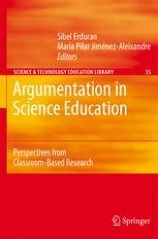
This book brings together the work of leading experts in argumentation in science education. It presents research combining theoretical and empirical perspectives relevant for secondary science classrooms. Since the 1990s, argumentation studies have increased at a rapid pace, from stray papers to a wealth of research exploring ever more sophisticated issues. This volume constitutes a unique collection and covers fundamental issues in argumentation such as cognitive, methodological and epistemological aspects; classroom-based research in teaching and learning of argumentation in science classrooms; and argumentation in context such as in socio-scientific and moral contexts. The book’s underlying premise is that argumentation is a significant aspect of scientific inquiry and plays an important role in teaching and learning of science.
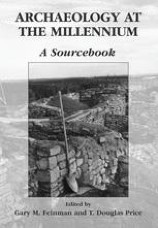
The sourcebook is divided into four substantive sections, each of which is introduced by a summary statement outlining the chapters in the section. Part I deals with the history of archaeology and the advance of archaeological theory. Part II ranges over the first four million years of our evolution as a cultural species and covers the first hominids to complex hunter-gatherers. Part III concerns the origins of agriculture and features discussions of such issues as craft production, the division of labor, warfare, and the rise of social inquality. Part IV analyzes the rise of states and empired in both the Old and New World; the archaeology of the classical Mediterranean states is also included in this section. A final chapter portends the future of archaeology.

This volume aims to provide a theoretical basis for understanding the specific effects of totalitarian dictatorship upon the practice of archaeology, both during and after the dictator's reign.
The morphology of Arabic poses special challenges to computational natural language processing systems. The exceptional degree of ambiguity in the writing system, the rich morphology, and the highly complex word formation process of roots and patterns all contribute to making computational approaches to Arabic very challenging. Indeed many computational linguists across the world have taken up this challenge over time, and many of the researchers with a track record in this research area have contributed to this book.
This volume presents the proceedings of the 9th Online World Conference on Soft Computing in Industrial Applications (WSC9), September 20th - October 08th, 2004, held on the World Wide Web. It contains plenary lectures, original papers and tutorials presented during the conference. The book brings together outstanding research and developments in the field of soft computing (evolutionary computation, fuzzy logic, neural networks, and their fusion) and its applications in science and technology.
The success of the Springer Series Applied Scanning Probe Methods I–VII and the rapidly expanding activities in scanning probe development and applications worldwide made it a natural step to collect further speci c results in the elds of development of scanning probe microscopy techniques (Vol. VIII), characterization (Vol. IX), and biomimetics and industrial applications (Vol. X). These three volumes complement the previous set of volumes under the subject topics and give insight into the recent work of leading specialists in their respective elds. Following the tradition of the series, the chapters are arranged around techniques, characterization and biomimetics and industrial applications. Volume VIII focuses on novel scanning probe techniques and the understanding of tip/sample interactions. Topics include near eld imaging, advanced AFM, specialized scanning probe methods in life sciences including new self sensing cantilever systems, combinations of AFM sensors and scanning electron and ion microscopes, calibration methods, frequency modulation AFM for application in liquids, Kelvin probe force microscopy, scanning capacitance microscopy, and the measurement of electrical transport properties at the nanometer scale.

Daraa Highway - Ghabagheb - Syria
+963-15 2050 - 15 860 380 /1/2/3 - 11 662 3900