



Page 37
Page 37

Investing in Private Equity Partnerships : The Role of Monitoring and Reporting
Private equity has become an important asset class for institutional investors. As the asset class grows and investors get more experienced, the debate concerning transparency and governance of private equity funds has intensified. Fund investors demand more disclosure from private equity fund managers. Are these calls justified? What information do fund investors need? How can private equity fund investors manage their exposure to the asset class effectively? Kay Müller presents an in-depth analysis into the monitoring activities of institutional investors and explores their information requirements by interviewing leading European private equity fund investors. He contrasts these results with the actual reporting by fund managers and reveals essential information gaps based on a disclosure study of private equity fund reports. Since effective and open communication supports long-lasting and trusted partnerships, these findings provide important guidance on how to improve the relationships between investors and fund managers in the private equity industry.

Investing in Movies : Strategies for Investors and Producers
Offers a broad range of guidelines on how to source interesting projects and advice on what kinds of projects to avoid, as well as numerous ways to maximize risk-adjusted returns. While focusing primarily on investments in independent films, Cohen also provides valuable insights into the studio and independent slate deals that have been marketed to the institutional investment community.

Investigative Electrocardiography in Epidemiological Studies and Clinical Trials
It reviews the prevalence and incidence and emphasizes the prognostic implications of common ECG abnormalities in contrasting populations. It provides a comprehensive, penetrating and critical analysis of topics such as QT prolongation in clinical drug trials, left ventricular hypertrophy, myocardial ischemia/infarction and epidemiological consideration of relative risks associated with ECG abnormalities. As such it is an essential tool in epidemiological or clinical research using ECGs and in investigations of possible adverse responses of new pharmacological agents.

Investigations Into the Phenomenology and the Ontology of the Work of Art : What are Artworks and How Do We Experience Them?
This book investigates the nature of aesthetic experience and aesthetic objects. Written by leading philosophers, psychologists, literary scholars and semioticians, the book addresses two intertwined issues. The first is related to the phenomenology of aesthetic experience: The understanding of how human beings respond to artworks, how we process linguistic or visual information, and what properties in artworks trigger aesthetic experiences. The examination of the properties of aesthetic experience reveals essential aspects of our perceptual, cognitive, and semiotic capacities. The second issue studied in this volume is related to the ontology of the work of art: Written or visual artworks are a specific type of objects, containing particular kinds of representation which elicit a particular kind of experience.

Investigating Spoken English : A Practical Guide to Phonetics and Phonology Using Praat
Combining coverage of the key concepts and tools within phonetics and phonology with a systematic introduction to Praat, this textbook provides a lively and engaging 'way in' to the discipline. The author first covers the fundamentals of the articulatory and acoustic aspects of speech and introduces Praat as the main tool for examining and visualising speech. Next, the unit of analysis is gradually expanded (from syllables to words to turns and dialogues) and excerpts of real dialogues exemplify the core concepts for discovering how speech works.

Inverse Problems in Electric Circuits and Electromagnetics
This text treats important new methods in inverse problems in electromagnetics. The inverse problems such as synthesis, diagnostics, fault detection, and identification are becoming one of the most important subjects in the field because of the significant practical applications to electric circuits and electromagnetics. This book introduces the recent achievements in mathematics and computing, while focusing on an approach to inverse problems that provides numerical solutions. The text systematically supplies descriptions of the most important practical inverse problems and the methods to solve them, thereby providing the reader with the best application for these intuitive processes. Also included are descriptions of the properties of inverse problems and known methods of their solution as well as the practical implementation of these methods in electric circuits theory and electromagnetic field theory.

Inverse Problems for Partial Differential Equations
The topic of the inverse problems is of substantial and rapidly growing interest for many scientists and engineers. The second edition covers most important recent developments in the field of inverse problems, describing theoretical and computational methods, and emphasizing new ideas and techniques. It also reflects new changes since the first edition, including some corrections. This edition is considerably expanded, with some concepts such as pseudo-convexity, and proofs simplified. New material is added to reflect recent progress in theory of inverse problems.This book is intended for mathematicians working with partial differential equations and their applications, and physicists, geophysicists and engineers involved with experiments in nondestructive evaluation, seismic exploration, remote sensing and tomography.

Inverse Problems and Imaging : Lectures given at the C.I.M.E. Summer School held in Martina Franca, Italy September 15–21, 2002
Nowadays we are facing numerous and important imaging problems: nondestructive testing of materials, monitoring of industrial processes, enhancement of oil production by efficient reservoir characterization, emerging developments in noninvasive imaging techniques for medical purposes - computerized tomography (CT), magnetic resonance imaging (MRI), positron emission tomography (PET), X-ray and ultrasound tomography, etc. In the CIME Summer School on Imaging (Martina Franca, Italy 2002), leading experts in mathematical techniques and applications presented broad and useful introductions for non-experts and practitioners alike to many aspects of this exciting field. The volume contains part of the above lectures completed and updated by additional contributions on other related topics: a general presentation and introduction (Moscoso), X-ray tomography (Natterer), Electromagnetic imaging (Dorn, Bertete-Aguirre, Papanicolaou), coherent imaging in telecommunications in a multiple input-multiple output setup (Dorn), polarization based optical imaging (Moscoso), topological derivatives used in shape reconstruction related to inverse scattering problems (Carpio, Rapún), Point interactions (Dell’Antonio, Figari, Teta).

Invariant Manifolds for Physical and Chemical Kinetics
By bringing together various ideas and methods for extracting the slow manifolds the authors show that it is possible to establish a more macroscopic description in nonequilibrium systems. The book treats slowness as stability. A unifying geometrical viewpoint of the thermodynamics of slow and fast motion enables the development of reduction techniques, both analytical and numerical. Examples considered in the book range from the Boltzmann kinetic equation and hydrodynamics to the Fokker-Planck equations of polymer dynamics and models of chemical kinetics describing oxidation reactions. Special chapters are devoted to model reduction in classical statistical dynamics, natural selection, and exact solutions for slow hydrodynamic manifolds. The book will be a major reference source for both theoretical and applied model reduction. Intended primarily as a postgraduate-level text in nonequilibrium kinetics and model reduction, it will also be valuable to PhD students and researchers in applied mathematics, physics and various fields of engineering.

Intumescent Coating and Fire Protection of Steel Structures
Introduced are the features and applications of intumescent coatings for protecting steel structures against fire. The constant effective thermal conductivity is defined and employed to simplify the quantification for the thermo-resistance of intumescent coatings. An experimental investigation into the hydrothermal aging effects on insulative properties of intumescent coatings is presented, as well as the influence of topcoat on insulation and aging of intumescent coatings. Also described is a practical method for calculating the temperature of the protected steel structures with intumescent coatings in order to evaluate the fire safety of a structure.

Intrusion Detection Systems
Sٍheds new light on defense alert systems against computer and network intrusions. It also covers integrating intrusion alerts within security policy framework for intrusion response, related case studies and much more. This volume is presented in an easy-to-follow style while including a rigorous treatment of the issues, solutions, and technologies tied to the field.

Intrusion Detection and Correlation : Challenges and Solutions
Challenges and Solutions presents intrusion detection systems (IDSs) and addresses the problem of managing and correlating the alerts produced. This volume discusses the role of intrusion detection in the realm of network security with comparisons to traditional methods such as firewalls and cryptography. Challenges and Solutions analyzes the challenges in interpreting and combining (i.e., correlating) alerts produced by these systems. In addition, existing academic and commercial systems are classified; their advantage and shortcomings are presented, especially in the case of deployment in large, real-world sites. Challenges and Solutions is designed for a professional audience composed of researchers and practitioners in industry. This book is also suitable for graduate-level students in computer science.

Introduzione alla Teoria della elasticità : Meccanica dei solidi continui in regime lineare elastico = Introduction to the theory of elasticity : Mechanics of continuous solids in linear elastic regime
Introduces the student to the theory of elasticity through the choice of a selected number of topics of paradigmatic conceptual importance and through the performance of numerous exercises and in-depth problems. The topics range from the formal properties of stress and strain tensors, to the theory of linear elastic continuum, to the thermodynamics of deformations, to the propagation of elastic waves, to the theory of brittle fracture in a linear elastic regime.

Introduzione al Calcolo Scientifico : Esercizi e problemi risolti con MATLAB = Introduction to scientific computing : Exercises and problem solved with MATLAB
Introduces the fundamental concepts for the numerical modeling of partial differential problems. We consider the classic linear elliptic, parabolic and hyperbolic equations, but also other equations, such as those of diffusion and transport, of Navier-Stokes, and the conservation laws. Numerous physical examples underlying these equations are provided, their main mathematical properties are studied, then numerical resolution methods based on finite elements, finite differences, finite volumes and spectral methods are proposed and analyzed. In particular, the algorithmic and computer implementation aspects are discussed and some easy-to-use programs in C ++ language are provided. The text does not presuppose an advanced mathematical knowledge of partial differential equations: the strictly indispensable concepts in this regard are reported in the Appendix. THE VOLUME is therefore suitable for students of scientific degree courses (Engineering, Mathematics, Physics, Chemistry, Information Sciences) and recommended for researchers from the academic and extra-academic world who want to approach this interesting branch of applied mathematics.

Introduction to wine laboratory practices and procedures
winemaking was a romanticized notion of putting grape juice into a barrel and allowing time to perform its magic as you sat on the veranda watching the sunset on a Tuscan landscape. For some small wineries, this notion might still ring true, but for the majority of wineries commercially producing quality wines, the reality of winemaking is far more complex. The persistent evolution of the wine industry demands continual advan- ments in technology and education to sustain and promote quality winem- ing. The sciences of viticulture, enology, and wine chemistry are becoming more intricate and sophisticated each year. Wine laboratories have become an integral part of the winemaking process, necessitating a knowledgeable staff possessing a multitude of skills. Science incorporates the tools that new-age winemakers are utilizing to produce some of the best wines ever made in this multibillion dollar trade. A novice to enology and wine chemistry can find these subjects daunting and intimidating. Whether you are a home winemaker, a new winemaker, an enology student, or a beginning-to-intermediate laboratory technician, p- ting all the pieces together can take time.

Introduction to the Theory of Cooperative Games
This book systematically presents the main solutions of cooperative games: the core, bargaining set, kernel, nucleolus, and the Shapley value of TU games, and the core, the Shapley value, and the ordinal bargaining set of NTU games. To each solution the authors devote a separate chapter wherein they study its properties in full detail. Moreover, important variants are defined or even intensively analyzed. The authors also investigate in separate chapters continuity, dynamics, and geometric properties of solutions of TU games. The study culminates in uniform and coherent axiomatizations of all the foregoing solutions (excluding the bargaining set). Such axiomatizations have not appeared in any book. Moreover, the book contains a detailed analysis of the main results on cooperative games without side payments. Such analysis is very limited or non-existent in other books on game theory.

Introduction to Structural Analysis
Covers the principles of structural analysis without any requirement of prior knowledge of structures or equations. Beginning with basic principles of equilibrium of forces and moments, all other subsequent theories of structural analysis have been discussed logically. Divided into two major parts, this book discusses the basics of mechanics and principles of degrees of freedom upon which the entire paradigm rests, followed by analysis of determinate and indeterminate structures. The energy method of structural analysis is also included.

Introduction to Stochastic Integration
The theory of stochastic integration, also called the Ito calculus, has a large spectrum of applications in virtually every scientific area involving random functions, but it can be a very difficult subject for people without much mathematical background. The Ito calculus was originally motivated by the construction of Markov diffusion processes from infinitesimal generators. Previously, the construction of such processes required several steps, whereas Ito constructed these diffusion processes directly in a single step as the solutions of stochastic integral equations associated with the infinitesimal generators. Moreover, the properties of these diffusion processes can be derived from the stochastic integral equations and the Ito formula. This introductory textbook on stochastic integration provides a concise introduction to the Ito calculus
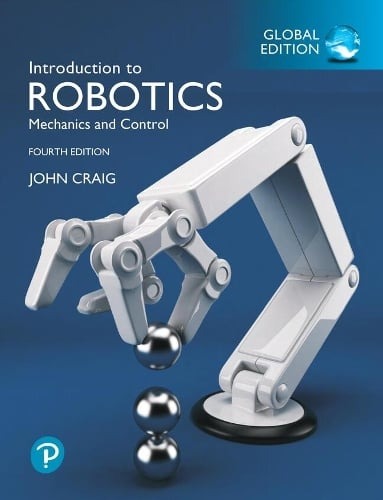
Introduction to robotics : Analysis, control, applications
Offers a guide to the fundamentals of robotics, robot components and subsystems and applications. The author—a noted expert on the topic—covers the mechanics and kinematics of serial and parallel robots, both with the Denavit-Hartenberg approach as well as screw-based mechanics. In addition, the text contains information on microprocessor applications, control systems, vision systems, sensors, and actuators.
Introduction to Reliable Distributed Programming
Guerraoui and Rodrigues present an introductory description of fundamental reliable distributed programming abstractions as well as algorithms to implement these abstractions. The authors follow an incremental approach by first introducing basic abstractions in simple distributed environments, before moving to more sophisticated abstractions and more challenging environments. Each core chapter is devoted to one specific class of abstractions, covering reliable delivery, shared memory, consensus and various forms of agreement. This textbook comes with a companion set of running examples implemented in Java. These can be used by students to get a better understanding of how reliable distributed programming abstractions can be implemented and used in practice. Combined, the chapters deliver a full course on reliable distributed programming. The book can also be used as a complete reference on the basic elements required to build reliable distributed applications.
