



Page 36
Page 36

Drug target selection and validation
Focuses on the computational aspects of early drug discovery, drug target identification, and validation. It revises current classical paradigms in target and phenotypic-based drug design with still ingrained approximations and concepts and discusses the research in the new network approach concept that include kinetic selectivity and metabolic analysis. Many often-overlooked approximations and concepts in drug discovery are fully covered. Drug Target Selection and Validation includes both introductory sections and research-based sections to be of use to both students and research scientists in drug discovery, design, kinetics and metabolic analysis. Pharmaceutical scientists, pharmaceutics, drug developers, pharmacologists, biomedical researchers in computer science, medicinal chemists, and precision medicine developers benefit from the information provided. The book concludes with a chapter on chemical and structural databases.

Drug design : A conceptual overview
The newer research areas in pharmaceutical sciences, particularly molecular modeling and simulations, prompted a more efficient drug discovery process. Informatics integrated with pharmaceutical sciences (cheminformatics and bioinformatics) became an essential component of drug research. Drug informatics such as genomics and proteomics assists in the Rational Drug Design (RDD). This emerging discipline is known as “Computer-Aided Drug Design" (CADD), which has profound application in RDD. The advanced and adequate practice in drug design informatics is essential for pharmacy graduates. Hence, a companion for acquiring knowledge on these concepts is vital. The students of B. Pharmacy, M. Pharmacy (Pharmaceutical Chemistry, Pharmacology, and Pharmaceutics), biotechnology, biomedical engineering and other interdisciplinary fields may find this book as a reference guide.

Domain Decomposition Methods in Science and Engineering XVII
This volume contains a selection of papers presented at the 17th International Conference on Domain Decomposition Methods in Science and Engineering held at St. Wolfgang / Strobl, Austria, July 3 - 7, 2006. Domain decomposition is an active, interdisciplinary research area concerned with the development, analysis, and implementation of coupling and decoupling strategies in mathematical and computational models. Domain decomposition techniques provide efficient tools for treating problems in all Computational Sciences. The reader will become familiar with the newest domain decomposition technologies and their use for modeling and simulating of complex problems from different fields of applications.
DNA Computing ; 7th International Workshop on DNA-Based Computers, DNA7, Tampa, FL, USA, June 10-13, 2001, Revised Papers
Constitutes the post-proceedings of the 7th International Workshop on DNA-Based Computers, held in Florida in 2001. The 26 papers cover experimental tools, theoretical tools, probabilistic computational models, computer simulation and sequence design, algorithms, experimental solutions and more.
Distributed computing in sensor systems ; 4th IEEE International Conference, DCOSS 2008 Santorini Island, Greece, June 11-14, 2008 Proceedings
The book constitutes the refereed proceedings of the 4th International Conference on Distributed Computing in Sensor Systems, DCOSS 2008, held on Santorini Island, Greece, in June 2008.

Distributed and parallel computing ; 6th International conference on algorithms and architectures for parallel processing, ICA3PP, Melbourne, Australia, October 2-3, 2005, Proceedings
There are many applications that require parallel and distributed processing to allow complicated engineering, business and research problems to be solved in a reasonable time. Parallel and distributed processing is able to improve company profit, lower costs of design, production, and deployment of new technologies, and create better business environments. The major lesson learned by car and aircraft engineers, drug manufacturers, genome researchers and other specialist is that a computer system is a very powerful tool that is able to help them solving even more complicated problems. That has led computing specialists to new computer system architecture and exploiting parallel computers, clusters of clusters, and distributed systems in the form of grids.

Discrete-Time High Order Neural Control : Trained with Kaiman Filtering
The objective of this work is to present recent advances in the theory of neural control for discrete-time nonlinear systems with multiple inputs and multiple outputs. The book presents solutions for the output trajectory tracking problem of unknown nonlinear systems based on four schemes.

Discrete Geometry for Computer Imagery ; 14th IAPR International Conference, DGCI 2008, Lyon, France, April 16-18, 2008. Proceedings
This book constitutes the refereed proceedings of the 14th IAPR TC-18 International Conference on Discrete Geometry for Computer Imagery, DGCI 2008, held in Lyon, France, in April 2008.

Direct and Large-Eddy Simulation VI ; Proceedings of the Sixth International ERCOFTAC Workshop on Direct and Large-Eddy Simulation, held at the University of Poitiers, September 12-14, 2005
this workshop addressed numerous theoretical and physical aspects of transitional and turbulent flows. At an applied level it contributed to the solution of problems related to energy production, transportation and the environment. Since the prediction and analysis of fluid turbulence and transition continues to challenge engineers, mathematicians and physicists, DLES-6 covered a large range of topics, from the more technical ones like numerical methods, initial and inflow conditions, the coupling of RANS and LES zones, subgrid and wall modelling to topics with a stronger focus on flow physics such as aero-acoustics, compressible and geophysical flows, flow control, multiphase flow and turbulent combustion, to quote only a few.

Dimension Reduction of Large-Scale Systems ; Proceedings of a Workshop held in Oberwolfach, Germany, October 19-25, 2003
In the past decades, model reduction has become an ubiquitous tool in analysis and simulation of dynamical systems, control design, circuit simulation, structural dynamics, CFD, and many other disciplines dealing with complex physical models. The aim of this book is to survey some of the most successful model reduction methods in tutorial style articles and to present benchmark problems from several application areas for testing and comparing existing and new algorithms. As the discussed methods have often been developed in parallel in disconnected application areas.
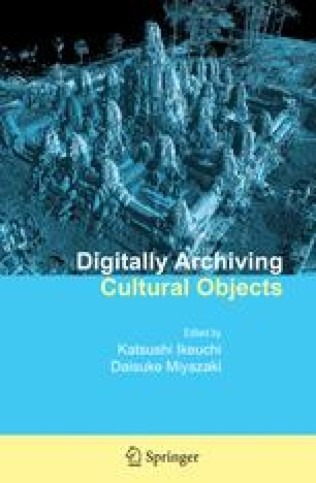
Digitally Archiving Cultural Objects
Digitally Archiving Cultural Objects describes thorough research and methods for preserving cultural heritage objects through the use of 3D digital data. These methods were developed through using computer vision and computer graphics technologies.

Digital VLSI Design with Verilog : A Textbook from Silicon Valley Technical Institute
Digital VLSI Design With Verilog is all an engineer needs for in-depth understanding of the verilog language: Syntax, synthesis semantics, simulation, and test. For a reader with access to appropriate electronic design tools, all solutions can be developed, simulated, and synthesized as described in the book.

Digital twin technology : fundamentals and applications
Provides an in-depth examination of digital twin technology to take you on an enthralling trip across the intersection of the virtual and real worlds. It explores the transformational impact of digital twins, from their roots in engineering to their widespread applications in manufacturing, health care, and other areas. Real-world case studies highlight the practical benefits, while potential hazards are addressed wisely. This book is your guide to comprehending the present and visualizing a future where digital twins transform innovation, efficiency, and connectedness in our increasingly complicated world. Begin this illuminating trip and embrace the possibilities that exist at the intersection of the physical and digital worlds.

Digital transformation in semiconductor manufacturing ; Proceedings of the 1st and 2nd European advances in digital transformation Conference, EADTC 2018, Zittau, Germany and EADTC 2019, Milan, Italy
This book reports on cutting-edge electrical engineering and microelectronics solutions to foster and support digitalization in the semiconductor industry.

Digital Simulation in Electrochemistry
The book shows how to numerically solve the parabolic partial differential equations (pdes) encountered in electroanalytical chemistry. It does this in a didactic manner, by first introducing the basic equations to be solved and some model systems as text cases, for which solutions exist. Then it treats basic numerical approximation for derivatives and techniques for the numerical solution of ordinary differential equations, from which the more complicated methods for pdes can be derived. The major implicit methods are described in detail, and the handling of homogeneous chemical reactions, including coupled and nonlinear cases, is detailed. More advanced techniques are presented briefly, as well as some commercially available program packages.
Digital Human Modeling : Trends in Human Algorithms
The emerging information technologies have given rise to new human patterns in terms of both physiological and psychological interactions. Human Algorithms aim to model human forms, interactions, and dynamics in this new context.

Digital Government : E-Government Research, Case Studies, and Implementation
New information technologies are being applied swiftly to all levels of government service: local, county, regional and even national and international. Information technology (IT) is being used to improve data management and data sharing, planning and decision support, service delivery, and more. Application areas affected by government mandates to improve e-government service include healthcare and safety; law enforcement, security, and justice; education; land use; and many others. Information technology is being used to increase public access to information, to provide more convenient and timely transaction services, and to increase citizen participation in the establishment of government regulations and other processes. DIGITAL GOVERNMENT: E-Government Research, Case Studies, and Implementation provides the field with a definitive, interdisciplinary, and understandable review of recent IT and related research of particular importance to digital government. The book also includes explorations of current and future policy implications, and case studies of successful applications in a variety of government settings.
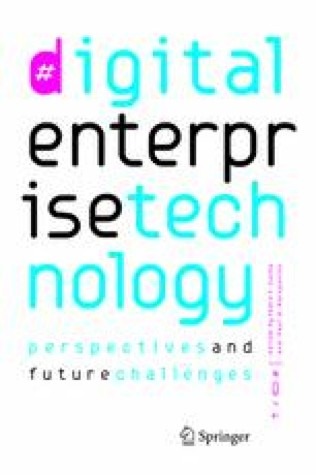
Digital Enterprise Technology : Perspectives and Future Challenges
Digital engineering methods and systems are vitally important for performing key technical and business functions of global enterprises in a distributed and collaborative manner. The product design and engineering systems are gradually being developed to include a variety of tools for DfX, as well as incorporate aspects of digital manufacturing.The chapters presented in this book are contributed by world class leaders in the field. This volume includes relevant examples of current state-of-art in the development and use of systems and methods for the digital modelling of global development and realization processes in the context of life cycle management.

Digital Design of Nature : Computer Generated Plants and Organics
The reproduction of nature via computer has fascinated scientists in computer graphics and artists ever since synthetic imaging was thought possible. This book illustrates and exemplifies methods for the creation of artificial plant models, and the application of these methods within areas such as simulation, virtual reality, botany, landscaping, and architecture.The models are combined to create gardens, parks, and even entire landscapes.The range of creating representational forms reaches from deceptively authentic looking pictures to abstract presentations. In addition, with similar methods organic objects can be produced, changed, and animated.

Digital Design and Implementation with Field Programmable Devices
The focus of this book is on a practical knowledge of digital system design for programmable devices. The book covers all necessary topics under one cover, and covers each topic just enough that is actually used by an advanced digital designer. In the three parts of the book, we cover digital system design concepts, use of tools, and systematic design of digital systems
