



Page 35
Page 35
Children and the Dark Side of Human Experience : Confronting Global Realities and Rethinking Child Development
Synthesizing insights from psychology and philosophy with his own wide-ranging, first-hand experiences around the world, Dr. James Garbarino takes readers on a personalized journey into the dark side of human experience as it is lived by children. In these highly readable pages, Dr. Garbarino intertwines a discussion of children’s material and spiritual needs with a detailed examination of the clinical knowledge and experiential wisdom required to understand and meet complex developmental needs. Fusing anecdotal observations, empirical evidence, and an ecological perspective, he reveals a path to ensuring the fundamental human rights of all children: the right to safety, to equality, to economic parity, and to a meaningful life.
Chemokine biology : Basic research and clinical application ; Vol.1 : Immunobiology of chemokines
The discovery of interleukin-8 close to 20 years ago initiated a new field of research touching on many aspects of immunology and inflammation. Interleukin-8 is just one member of a large class of structurally related chemoattractant proteins, known as chemokines. Chemokines are involved in the traffic control of leukocytes, which bear the corresponding chemokine receptors on their surfaces. Today, it is clear that chemokines affect all aspects of immunology and even many unrelated fields, such as tissue development and tumor cell metastasis. Their fundamental contributions to chronic inflammatory diseases make them a principal target for the development of novel, anti-inflammatory therapeutics.

Chemistry of selected natural products and heterocyclic compounds
Covers the fundamental classification, nomenclature, occurrence, isolation, extraction, occurrence, detection, biosynthesis, medicinal/industrial significance, conversion and inter-conversions, etc.

Chemistry for pharmacy students : General, organic and natural product chemistry ; 2nd ed.
Opens with an overview of the general aspects of chemistry and their importance to modern life, with emphasis on medicinal applications. The text then moves on to discuss the concepts of atomic structure and bonding and the fundamentals of stereochemistry and their significance to pharmacy in relation to drug action and toxicity. Various aspects of organic functional groups, organic reactions, heterocyclic chemistry, nucleic acids and their pharmaceutical importance are then covered in subsequent chapters, with the final chapter dealing with drug discovery and development, and natural product chemistry. Provides a student-friendly introduction to the main areas of chemistry required by pharmacy degree courses. Written at a level suitable for non-chemistry students in pharmacy, but also relevant to those in life sciences, food science, and the health sciences Includes learning objectives at the beginning of each chapter Focuses on the physical properties and actions of drug molecules
Chemical Reactor Modeling : Multiphase Reactive Flows
Chemical Reactor Modeling closes the gap between Chemical Reaction Engineering and Fluid Mechanics. It presents the fundamentals of the single-fluid and multi-fluid models for the analysis of single- and multiphase reactive flows in chemical reactors with a chemical reactor engineering rather than mathematical bias.

Characterization of Corrosion Products on Steel Surfaces
It is well known that corrosion products, i.e. rust, on iron and steel surfaces cannot be assigned a typical crystallographic structure with long-range order. In fact, the structure of rust is considered to be very complicated, and some forms of rust are assigned to the amorphous state for this reason. Accurate information about the atomic-scale structure of rust is important to shed light on corrosion mechanisms of metallic materials. And, since life of steel structures is often dominated by environmental degradation or corrosion of the surface, the structure of the rust formed on iron and steel surfaces during prolonged exposure to air is of great interest. This book describes the fundamental aspects of materials characterization for the ferric oxyhydroxides formed on steel surfaces.
Chaotic Worlds : from Order to Disorder in Gravitational N-Body Dynamical Systems
Based on the recent NATO Advanced Study Institute "Chaotic Worlds: From Order to Disorder in Gravitational N-Body Dynamical Systems", this state of the art textbook, written by internationally renowned experts, provides an invaluable reference volume for all students and researchers in gravitational n-body systems. The contributions are especially designed to give a systematic development from the fundamental mathematics which underpin modern studies of ordered and chaotic behaviour in n-body dynamics to their application to real motion in planetary systems. This volume presents an up-to-date synoptic view of the subject.
Cell-Cell Channels
The biological sciences are dominated by the idea that cells are the functionally autonomous, physically separated, discrete units of life. This concept was propounded in the 19th century by discoveries of the cellular structuring of both plants and animals. Moreover, the ap parent autonomy of unicellular eukaryotes, as well as the cellular basis of the mammalian brain (an organ whose anatomy for a long while defied attempts to validate the idea of the cellular nature of its neurons), seemed to provide the final conclusive evidence for the completeness of *cell theory', a theory which has persisted in an almost dogmatic form up to the present day. However, it is very obvious that there are numerous observations which indicate that it is not the cells which serve as the basic units of biological life but that this property falls to some other, subcellular assemblage. To deal with this intricate problem concerning the fundamental unit of living matter, we proposed the so-called Cell Body concept which, in fact, devel ops an exceedingly original idea proposed by Julius Sachs at the end of the 19th century. In the case of eukaryotic cells, DNA-enriched nuclei are intimately associated with a microtubular cytoskeleton. In this configuration—as a Cell Body—these two items comprise the fundamental functional and struc tural unit of eukaryotic living matter. The Cell Body seems to be inherent to all cells in all organisms.

Cell Separation : Fundamentals, Analytical and Preparative Methods
This special volume on cell separations discusses fundamental and applied aspects of the analytical and preparative cell-separation technologies. The aim is to enlighten the reader with the new developments in cell-separation technologies and at the same time provide sufficient knowledge with other existing and more commonly used techniques. The volume is comprised of contributions from subject experts from both academia and industry, focuses on the research and commercial aspects of cell-separation technology, and provides readers with broader choice. Unlike protein separation, the major challenge in cell separation has been the recovery of the cells in viable form after they are bound to the separation matrix, as cells bind more strongly through multipoint attachment. This is an important focus of the present work and one we believe will provide new insight to researchers in this field
Cell Motility
Cell motility is a fascinating example of cell behavior which is fundamentally important to a number of biological and pathological processes. It is based on a complex self-organized mechano-chemical machine consisting of cytoskeletal filaments and molecular motors. In general, the cytoskeleton is responsible for the movement of the entire cell and for movements within the cell. The main challenge in the field of cell motility is to develop a complete physical description on how and why cells move. For this purpose new ways of modeling the properties of biological cells have to be found. This long term goal can only be achieved if new experimental techniques are developed to extract physical information from these living systems and if theoretical models are found which bridge the gap between molecular and mesoscopic length scales. Cell Motility gives an authoritative overview of the fundamental biological facts, theoretical models, and current experimental developments in this fascinating area.
Casting : An Analytical Approach
For a long time, the die cast industry has used trial and error as a leading development method, resulting in tremendous growth in the utilisation of available CFD (computational fluid dynamics) software. This software allows the development of better products that maximise the advantages the die cast process has to offer. Casting: An Analytical Approach will refresh knowledge of the governing laws of the fluid dynamics that have an effect on die cast die and die cast process design. MATLAB® (MathWorks, Inc.) and Visual Basic® (Microsoft) code are listed in Casting: An Analytical Approach for every stage of product, die and die cast process design; providing better understanding of die and process design and simplifying calculations of the die cast die as well as the die cast process. Gas ventilation system calculations and fundamentals of compressible gas flow are also included.

Case-Based Approximate Reasoning
Case-based reasoning (CBR) has received a great deal of attention in recent years and has established itself as a core methodology in the field of artificial intelligence. The key idea of CBR is to tackle new problems by referring to similar problems that have already been solved in the past. More precisely, CBR proceeds from individual experiences in the form of cases. The generalization beyond these experiences typically relies on a kind of regularity assumption demanding that 'similar problems have similar solutions'. Making use of different frameworks of approximate reasoning and reasoning under uncertainty, notably probabilistic and fuzzy set-based techniques, this book develops formal models of the above inference principle, which is fundamental to CBR. The case-based approximate reasoning methods thus obtained especially emphasize the heuristic nature of case-based inference and aspects of uncertainty in CBR. This way, the book contributes to a solid foundation of CBR which is grounded on formal concepts and techniques from the aforementioned fields. Besides, it establishes interesting relationships between CBR and approximate reasoning, which not only cast new light on existing methods but also enhance the development of novel approaches and hybrid systems.
Carotenoids ; Vol.4 : Natural Functions
The Carotenoids book series provides detailed accounts of the fundamental chemistry of carotenoids and the basic methods used in carotenoid research, and critical discussions of the biochemistry, functions and applications of these important compounds. Volume 4 and its companion, Volume 5, deal with the functions of carotenoids in all kinds of living organisms and the actions of carotenoids in human nutrition and health. The material presented in the earlier Volumes is all relevant to studies of biological functions and actions. In particular, biological studies must be supported by a rigorous analytical base. The various analytical procedures described in Volumes 1A and 1B, supplemented by the data for individual compounds given in the Carotenoids Handbook, must be understood and applied correctly, whether they are being used for quantitative analysis, identification or in complex studies of carotenoids in situ.
Cardiac reconstructions with allograft tissues
Cryopreserved allograft tissues are now standard materials for the reconstructive cardiac surgeon. Since publication of the first edition ("Cardiac Reconstructions with Allograft Valves") in 1989, the field has progressed dramatically with increased clinical use of cardiovascular allograft tissues, with the development of new surgical techniques, and with advances in the understanding of the fundamentals of valve transplantation biology and cryopreservation. As a result, over two-thirds of the present volume represents new material. Fifty-six authors bring their expertise to thirteen comprehensive, lavishly illustrated sections which discuss the principles of the use of homograft valves, major clinical series of homograft valves for both left and right ventricular outflow tracts, cryopreserved allograft tissue for cardiac reconstruction, cell biology of heart valve leaflets, cryobiology of heart valve preservation, morphological, biochemical, and explant pathology studies of allograft heart valves, allograft valve banking, as well as detailed explanation of surgical techniques for valve and root methods for left and right ventricular outflow tract reconstructions, the Ross operation and variants, and complex reconstructions. A final section presents potential future directions for the field. Over 400 illustrations, created expressly for this book, depict the surgical techniques from the perspective of the surgeon standing at the operating table.
Cardiac PET and PET/CT Imaging
Cardiac PET and hybrid PET/CT have revolutionized the field of cardiovascular imaging and offer new options for diagnosis and management of patients with cardiac conditions. Cardiologists, radiologists, and nuclear medicine specialists must have an up-to-date reference in this rapidly changing field in order to most effectively utilize new technology in practice. Cardiac PET and PET/CT Imaging takes a step-by-step approach to PET and PET/CT instrumentation, imaging, and protocols. Beginning with imaging fundamentals and progressing through advanced discussion of specific applications, this book is a comprehensive source of cardiac PET and PET/CT information.
Carbon Nanotubes : Advanced Topics in the Synthesis, Structure, Properties and Applications
The carbon nanotubes field has evolved substantially since the publication of the bestseller "Carbon Nanotubes: Synthesis, Structure, Properties and Applications". The present volume builds on the generic aspects of the aforementioned book, which emphasizes the fundamentals, with the new volume emphasizing areas that have grown rapidly since the first volume, guiding future directions where research is needed and highlighting applications. The volume also includes an emphasis on areas like graphene, other carbon-like and other tube-like materials because these fields are likely to affect and influence developments in nanotubes in the next 5 years.
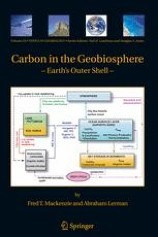
Carbon in the Geobiosphere : Earth's outer shell
Carbon and carbon dioxide always played an important role in the geobiosphere that is part of the Earth’s outer shell and surface environment. The book’s eleven chapters cover the fundamentals of the biogeochemical behavior of carbon near the Earth’s surface, in the atmosphere, minerals, waters, air-sea exchange, and inorganic and biological processes fractionating the carbon isotopes, and its role in the evolution of inorganic and biogenic sediments, ocean water, the coupling to nutrient nitrogen and phosphorus cycles, and the future of the carbon cycle in the Anthropocene. This book is mainly a reference text for Earth and environmental scientists; it presents an overview of the origins and behavior of the carbon cycle and atmospheric carbon dioxide, and the human effects on them. The book can also be used for a one-semester course at an intermediate to advanced level addressing the behavior of the carbon and related cycles.
Carbon : The future material for advanced technology applications
Carbon-based materials and their applications constitute a burgeoning topic of scientific research among scientists and engineers attracted from diverse areas such as applied physics, materials science, biology, mechanics, electronics and engineering. Further development of current materials, advances in their applications, and discovery of new forms of carbon are the themes addressed by the frontier research in these fields. This book covers all the fundamental topics concerned with amorphous and crystalline C-based materials, such as diamond, diamond-like carbon, carbon alloys, carbon nanotubes. The goal is, by coherently progressing from growth - and characterisation techniques to technological applications for each class of material, to fashion the first comprehensive state-of-the-art review of this fast evolving field of research in carbon materials.
Capital, Systems, and Objects : The Foundation and Future of Organizations
Provides a set of integrated frameworks—capital, systems, and objects—that transcend managerial or technology hype by focusing on the long-term fundamentals that sustain organizational success. Many organizations are currently addressing two important transformational issues: ecological sustainability and digitization. Sustainability is a goal, an end, and digitization is a process, a means to achieve a goal. This book introduces a flexible model that can be applied to current and future organizational challenges, including sustainability and digitization, because the fundamentals are constant.

Capital Punishment and the Criminal Corpse in Scotland, 1740–1834
This book provides the most in-depth study of capital punishment in Scotland between the mid-eighteenth and early nineteenth century to date. Based upon an extensive gathering and analysis of previously untapped resources, it takes the reader on a journey from the courtrooms of Scotland to the theatre of the gallows. It introduces them to several of the malefactors who faced the hangman’s noose and explores the traditional hallmarks of the spectacle of the scaffold. It demonstrates that the period between 1740 and 1834 was one of discussion, debate and fundamental change in the use of the death sentence and how it was staged in practice. In addition, the study provides an innovative investigation of the post-mortem punishment of the criminal corpse. It offers the reader an insight into the scene at the foot of the gibbets from which criminal bodies were displayed, and around the dissection tables of Scotland’s main universities where criminal bodies were used as cadavers for anatomical demonstration. In doing so it reveals an intermediate stage in the long-term disappearance of public bodily punishment.
