



Page 34
Page 34
Computable Models of the Law : Languages, Dialogues, Games, Ontologies
This book originate from a workshop held at the European University Institute of Florence, Italy, in December 2006. The workshop was devoted to the discussion of the different ways of understanding and explaining contemporary law, for the purpose of building computable models of it -- especially models enabling the development of computer applications for the legal domain.
Comprehensive mathematics for computer scientists 2 : Calculus and ODEs, splines, probability, fourier and wavelet theory, fractals and neural networks, categories and lambda calculus
This second volume of a comprehensive tour through mathematical core subjects for computer scientists completes the first volume in two - gards: Part III first adds topology, di?erential, and integral calculus to the t- ics of sets, graphs, algebra, formal logic, machines, and linear geometry, of volume 1. With this spectrum of fundamentals in mathematical e- cation, young professionals should be able to successfully attack more involved subjects, which may be relevant to the computational sciences. In a second regard, the end of part III and part IV add a selection of more advanced topics. In view of the overwhelming variety of mathematical approaches in the computational sciences, any selection, even the most empirical, requires a methodological justi?cation. Our primary criterion has been the search for harmonization and optimization of thematic - versity and logical coherence. This is why we have, for instance, bundled such seemingly distant subjects as recursive constructions, ordinary d- ferential equations, and fractals under the unifying perspective of c- traction theory.

Comprehensive biochemistry for dentistry : Textbook for dental students
Combines fundamental concepts of biochemistry and the dental sciences to provide an authentic, coherent and comprehensive text for dental students. It describes in simple language the intricate pathophysiology of biomolecules in health and in diseases of dental and oral tissues. This book also describes the evolution of biochemistry in a chronological order, provides information about the fundamental chemical structure, classification and biological significance of biomolecules, vitamins and hormones, enriched with flow charts and diagrams for easy understanding and quick reference. It includes chapters on nucleic acids, nutrition and serum enzymes and organ function tests, and offers an innovative approach to familiarize dental students with the biochemical composition of enamel, dentine, cementum and saliva, explaining the biochemical basis of dental caries, periodontal diseases, role of fluorides in caries prophylaxis, fluoride toxicity, and the role of amino acids as anti-hypersensitive agents
Compendium of Theoretical Physics
Mechanics, Electrodynamics, Quantum Mechanics, and Statistical Mechanics and Thermodynamics comprise the canonical undergraduate curriculum of theoretical physics. In Compendium of Theoretical Physics, Armin Wachter and Henning Hoeber offer a concise, rigorous and structured overview that will be invaluable for students preparing for their qualifying examinations, readers needing a supplement to standard textbooks, and research or industrial physicists seeking a bridge between extensive textbooks and formula books. The authors take an axiomatic-deductive approach to each topic, starting the discussion of each theory with its fundamental equations. By subsequently deriving the various physical relationships and laws in logical rather than chronological order, and by using a consistent presentation and notation throughout, they emphasize the connections between the individual theories. The reader’s understanding is then reinforced with exercises, solutions and topic summaries.
Compatible Spatial Discretizations
Compatible spatial discretizations are those that inherit or mimic fundamental properties of the PDE such as topology, conservation, symmetries, and positivity structures and maximum principles. It offer a snapshot of the current trends and developments in compatible spatial discretizations. The reader will find valuable insights on spatial compatibility from several different perspectives and important examples of applications compatible discretizations in computational electromagnetics, geosciences, linear elasticity, eigenvalue approximations and MHD. The contributions collected in this volume will help to elucidate relations between different methods and concepts and to generally advance our understanding of compatible spatial discretizations for PDEs.
Communicative figurations : Transforming communications in times of deep mediatization
This open access volume is about how to research the influence of our changing media environment. Today, there is not one single medium that is the driving force of change. With the spreading of various technical communication media such as mobile phone and internet platforms, we are confronted with a media manifold of deep mediatization. But how can we investigate its transformative capability? This book answers this question by taking a non-media-centric perspective, researching the various figurations of collectivities and organizations humans are involved in. The first part of the book outlines a fundamental understanding of the changing media environment of deep mediatization and its transformative capacity. The second part focuses on collectivities and movements: communities in the city, critical social movements, maker, online gaming groups and networked groups of young people. The third part moves institutions and organizations into the foreground, discussing the transformation of journalism, religion, politics, and education, whilst the fourth and final part is dedicated to methodologies and perspectives.

Communication research into the digital society : Fundamental insights from the Amsterdam School of Communication Research
Media and communication have become ubiquitous in today’s societies andaffect all aspects of life. On an individual level, they impact how we learnabout the world, how we entertain ourselves, and how we interact withothers. On an organisational level, the interactions between media andorganisations, such as political parties, NGOs, businesses and brands, shapeorganisations’ reputation, legitimacy, trust and (financial) performance, aswell as individuals’ consumer, political, social and health behaviours. Atthe societal level, media and communication are crucial for shaping publicopinion on current issues such as climate change, sustainability, diversity,and well-being.
Communicating, Networking : Interacting : The International Year of Global Understanding - IYGU
illustrates the benefits to be gained from digitally networked communication for health, education and transitioning economies in developing nations (Sierra Leone and Papua New Guinea) and developed nations. Growing powers of e-citizenship can help build sustainable futures. This small volume provides a collection of examples and ideas from which the authors hope will help build a wider resource. Understanding how to link everyday lives with global networks in the digital world in ways that add benefit for the world’s people, and the health of the planet, is an ongoing project. IYGU recognises the integral roles of networking and communication systems, as well as interactions between people, near and far, as fundamental for building better futures. The global penetration of digital devices means everyday life, present and future, is inextricably linked with information technologies

Clinical Hematology and Fundamentals of Hemostasis ; 6th ed.
A full-color text, lab manual, & atlas--all in one!. Here are all the tools medical laboratory science students need to master the principles of hematology and the fundamentals of hemostasis. Author Denise M. Harmening has curated contributions from a team of expert educators and clinicians. With support from her Associate Editor LeAnne Hutson, she brings you comprehensive, yet focused coverage that prepares you for the real world in which you will practice

Clinical guide to principles of fiber-reinforced composites in dentistry
Fiber-reinforced composites (FRCs) are a novel group of dental materials characterized by fibrous fillers that are being increasingly used in place of traditional prosthodontic materials. They allow fabrication of minimally invasive, lightweight, durable and biocompatible restorations. This book will provide clinicians and students with theoretical and clinical guidelines to use the FRCs for dental applications. The book begins with an introduction to the fundamentals of FRCs in dentistry. Further chapters cover the treatment possibilities, fabrication and application procedures of FRCs, followed by information on care and maintenance.

Clinical endodontics : A textbook
Retains the successful format and practical scope of previous editions. It is a valuable resource for students that will enable them to fully grasp the fundamental concepts of clinical endodontics and will also serve as a refresher for clinicians
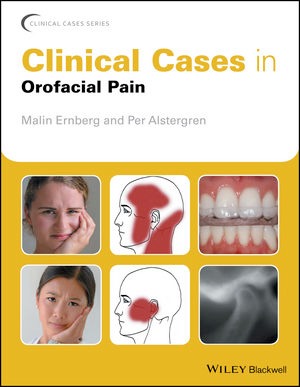
Clinical Cases in Orofacial Pain
Individual cases cover temporomandibular joint disorders, masticatory muscle disorders, headache, neuropathic pain, dental pain, tooth wear, and dystonia. Following the popular Clinical Cases series style, cases are presented with associated academic commentary, including background information, diagnostic criteria and fundamental points that might influence the diagnosis, treatment planning or management of the case.

Clinical biochemistry and drug development : From fundamentals to output
Focuses on clinical biochemistry fundamentals, cell culture techniques, and drug discovery and development concepts. It deals with three different fields of clinical research: cell culture, clinical biochemistry, and drug discovery and development.

Classical Nucleation Theory in Multicomponent Systems
Nucleation is the initial step of every first-order phase transition, and most phase transitions encountered both in everyday life and industrial processes are of the first-order. Using an elegant classical theory based on thermodynamics and kinetics, this book provides a fully detailed picture of multi-component nucleation. As many of the issues concerning multi-component nucleation theory have been solved during the last 10-15 years, it also thoroughly integrates both fundamental theory with recent advances presented in the literature. It covered are: the basic relevant thermodynamics and statistical physics; modelling a molecular cluster as a spherical liquid droplet; predicting the size and composition of the nucleating critical clusters; kinetic models for cluster growth and decay; calculating nucleation rates; and a full derivation and application of nucleation theorems that can be used to extract microscopic cluster properties from nucleation rate measurements.

Classes of Finite Groups
Many group theorists all over the world have been trying in the last twenty-five years to extend and adapt the magnificent methods of the Theory of Finite Soluble Groups to the more ambitious universe of all finite groups. This is a natural progression after the classification of finite simple groups but the achievements in this area are scattered in various papers.Our objectives in this book were to gather, order and examine all this material, including the latest advances made, give a new approach to some classic topics, shed light on some fundamental facts that still remain unpublished and present some new subjects of research in the theory of classes of finite, not necessarily solvable, groups.

Clashes of Knowledge : Orthodoxies and Heterodoxies in Science and Religion
"Clashes of Knowledge" is the first volume of a series called "Knowledge and Space" dealing with spatial disparities of knowledge and the impact of the spatial context on the production and application of knowledge. The contributions in this book explore the conflicts between various types of knowledge, especially between orthodox and heterodox knowledge systems, which range from religious fundamentalism to heresies within the scientific community itself.
Civil Engineering Materials for Transportation Infrastructure
Includes the fundamental mechanical and physical properties of materials; properties, tests, and gradation designs of aggregates; production, composition, hydration, properties, and tests of lime and cement; composition, tests, and design of cement concrete; mechanisms, properties, and design of inorganic binder stabilized material; properties, tests, and grading of asphalt; composition, properties, tests, and designs of asphalt mixture; and properties, treatments, tests, and selections of steel.

Civil engineering materials : From theory to practice ; 1st ed.
Presents the state-of-the-art in civil engineering materials, including the fundamental theory of materials needed for civil engineering projects and unique insights from decades of large-scale construction in China. The title includes the latest advances in new materials and techniques for civil engineering, showing the relationship between composition, structure and properties, and covering ultra-high-performance concrete and self-compacting concrete developed in China. This book provides comprehensive coverage of the most commonly used, most advanced materials for use in civil engineering. This volume consists of eight chapters covering the fundamentals of materials, inorganic cementing materials, Portland cement concrete, bricks, blocks and building mortar, metal, wood, asphalt and polymers.

Circuiti : Fondamenti di Circuiti per l’Ingegneria = Circuits: Fundamentals of Circuits for Engineering
This book is an introductory text to the circuits for the courses of the Faculty of Engineering, at the first level. The text aims to tackle the circuit model in a rigorous and at the same time modern way.

Chinese Computational Linguistics ; 19th China National Conference, CCL 2020, Hainan, China, October 30 – November 1, 2020, Proceedings
This book constitutes the proceedings of the 19th China National Conference on Computational Linguistics, CCL 2020, held in Hainan, China, in October/November 2020. The 32 full and 2 short papers presented in this volume were carefully reviewed and selected from 99 submissions. They were organized in topical sections named: fundamental theory and methods of computational linguistics; information retrieval, dialogue and question answering; text generation and summarization; knowledge graph and information extraction; machine translation and multilingual information processing; minority language information processing; language resource and evaluation; social computing and sentiment analysis; and NLP applications.
