



Page 335
Page 335

A Geometry of Approximation : Rough Set Theory: Logic, Algebra and Topology of Conceptual Patterns
A Geometry of Approximation' addresses Rough Set Theory, a field of interdisciplinary research first proposed by Zdzislaw Pawlak in 1982, and focuses mainly on its logic-algebraic interpretation. The theory is embedded in a broader perspective that includes logical and mathematical methodologies pertaining to the theory, as well as related epistemological issues. Any mathematical technique that is introduced in the book is preceded by logical and epistemological explanations. Intuitive justifications are also provided, insofar as possible, so that the general perspective is not lost.

A Geometric Approach to Differential Forms
The modern subject of differential forms subsumes classical vector calculus. This text presents differential forms from a geometric perspective accessible at the undergraduate level. The book begins with basic concepts such as partial differentiation and multiple integration and gently develops the entire machinery of differential forms. Each new concept is presented with a natural picture that students can easily grasp. Algebraic properties then follow. This facilitates the development of differential forms without assuming a background in linear algebra. Throughout the text, emphasis is placed on applications in 3 dimensions, but all definitions are given so as to be easily generalized to higher dimensions. A centerpiece of the text is the generalized Stokes' theorem. Although this theorem implies all of the classical integral theorems of vector calculus, it is far easier for students to both comprehend and remember.
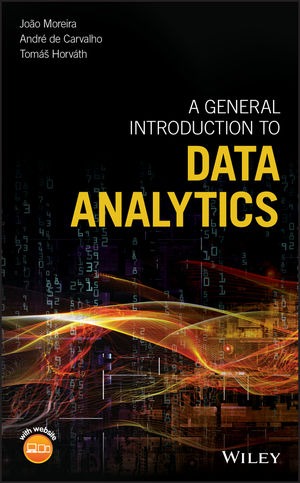
A General introduction to data analytics
A guide to the principles and methods of data analysis that does not require knowledge of statistics or programming. A guide to the reasoning behind data mining techniques. A unique illustrative example that extends throughout all the chapters. Exercises at the end of each chapter and larger projects at the end of each of the text’s two main parts
A First Course in Statistical Inference
Offers a modern and accessible introduction to Statistical Inference, the science of inferring key information from data. Aimed at beginning undergraduate students in mathematics, it presents the concepts underpinning frequentist statistical theory. Written in a conversational and informal style, this concise text concentrates on ideas and concepts, with key theorems stated and proved. Detailed worked examples are included and each chapter ends with a set of exercises, with full solutions given at the back of the book. Examples using R are provided throughout the book, with a brief guide to the software included. Topics covered in the book include: sampling distributions, properties of estimators, confidence intervals, hypothesis testing, ANOVA, and fitting a straight line to paired data.

A First Course in Modular Forms
This book introduces the theory of modular forms with an eye toward the Modularity Theorem: All rational elliptic curves arise from modular forms. The topics covered include: • elliptic curves as complex tori and as algebraic curves, • modular curves as Riemann surfaces and as algebraic curves, • Hecke operators and Atkin–Lehner theory, • Hecke eigenforms and their arithmetic properties, • the Jacobians of modular curves and the Abelian varieties associated to Hecke eigenforms, • elliptic and modular curves modulo p and the Eichler–Shimura Relation, • the Galois representations associated to elliptic curves and to Hecke eigenforms. As it presents these ideas, the book states the Modularity Theorem in various forms, relating them to each other and touching on their applications to number theory.

A First Course in Harmonic Analysis
This book is a primer in harmonic analysis using an elementary approach. Its first aim is to provide an introduction to Fourier analysis, leading up to the Poisson Summation Formula. Secondly, it makes the reader aware of the fact that both, the Fourier series and the Fourier transform, are special cases of a more general theory arising in the context of locally compact abelian groups. The third goal of this book is to introduce the reader to the techniques used in harmonic analysis of noncommutative groups. There are two new chapters in this new edition. One on distributions will complete the set of real variable methods introduced in the first part. The other on the Heisenberg Group provides an example of a group that is neither compact nor abelian, yet is simple enough to easily deduce the Plancherel Theorem.

A First Course in Differential Equations
This text is designed for the standard post-calculus course in elementary differential equations. It is a brief, one-semester treatment of the basic ideas, models, and solution methods. The book, which serves as an alternative to existing texts for instructors who want more concise coverage, emphasizes graphical, analytical, and numerical approaches, and is written with clear language in a user-friendly format. It provides students with the tools to continue on to the next level in applying differential equations to problems in engineering, science, and applied mathematics.

A Field Guide to Algebra
Focuses on the structure of fields and is intended for a second course in abstract algebra. Besides providing proofs of the transcendance of pi and e, the book includes material on differential Galois groups and a proof of Hilbert's irreducibility theorem. The reader will hear about equations, both polynomial and differential, and about the algebraic structure of their solutions. In explaining these concepts, the author also provides comments on their historical development and leads the reader along many interesting paths. In addition, there are theorems from analysis: as stated before, the transcendence of the numbers pi and e, the fact that the complex numbers form an algebraically closed field, and also Puiseux's theorem that shows how one can parametrize the roots of polynomial equations, the coefficients of which are allowed to vary. There are exercises at the end of each chapter, varying in degree from easy to difficult. To make the book more lively, the author has incorporated pictures from the history of mathematics, including scans of mathematical stamps and pictures of mathematicians.

A Dressing Method in Mathematical Physics
The monograph is devoted to the systematic presentation of the so called "dressing method" for solving differential equations (both linear and nonlinear) of mathematical physics. The essence of the dressing method consists in a generation of new non-trivial solutions of a given equation from (maybe trivial) solution of the same or related equation.

A Course in Enumeration
Leads the reader in a leisurely way from the basic notions to a variety of topics, ranging from algebra to statistical physics. Its aim is to introduce the student to a fascinating field, and to be a source of information for the professional mathematician who wants to learn more about the subject.

A Course in Derivative Securities : Introduction to Theory and Computation
Aims at a middle ground between the introductory books on derivative securities and those that provide advanced mathematical treatments. It is written for mathematically capable students who have not necessarily had prior exposure to probability theory, stochastic calculus, or computer programming. It provides derivations of pricing and hedging formulas (using the probabilistic change of numeraire technique) for standard options, exchange options, options on forwards and futures, quanto options, exotic options, caps, floors and swaptions, as well as VBA code implementing the formulas. It also contains an introduction to Monte Carlo, binomial models, and finite-difference methods.

A Course in Credibility Theory and its Applications
It covers the subject of Credibility Theory extensively and includes most aspects of this topic from the simplest case to the most general dynamic model. The first four chapters contain plenty of material The book therefore treats explicitly the tasks which the actuary encounters in his daily work such as estimation of loss ratios, claim frequencies and claim sizes. The models are worked out in detail (including the estimation of structural parameters) so that they can immediately be applied in practice. Most exercises are based on real insurance data and real situations from practice and many of them have the characteristics of a case study. The extension to practical problems arising from the general area of finance is often quite straightforward. This book deserves a place on the bookshelf of every actuary and mathematician who works, teaches or does research in the area of insurance and finance.for a first course on Credibility.

A Course in Calculus and Real Analysis
Provides a self-contained and rigorous introduction to calculus of functions of one variable. The presentation and sequencing of topics emphasizes the structural development of calculus. At the same time, due importance is given to computational techniques and applications. The authors have strived to make a distinction between the intrinsic definition of a geometric notion and its analytic characterization. It highlight the fact that calculus provides a firm foundation to several concepts and results that are generally encountered in high school and accepted on faith. For example, one can find here a proof of the classical result that the ratio of the circumference of a circle to its diameter is the same for all circles. Also, this book helps get a clear understanding of the concept of an angle and the definitions of the logarithmic, exponential and trigonometric functions together with a proof of the fact that these are not algebraic functions. A number of topics that may have been inadequately covered in calculus courses and glossed over in real analysis courses are treated here in considerable detail. As such, this book provides a unified exposition of calculus and real analysis.

A cost based approach to project management : Planning and controlling construction project costs
Illustrates the principles of project management and the essentials of cost planning and control with easy-to-understand examples from the construction industry. Includes step-by-step details of project planning, cost estimating, and management processes. Offers clear, cost-based methods for defining scope, preparing bids, and planning for contingencies, as well as monitoring progress and determining when to take remedial action. Contains a user-friendly guide to project management acronyms and terminology. Provides sample construction schedules, budgets, and progress report forms
A Concise Introduction to Data Compression
Compressing data is an option naturally selected when faced with problems of high costs or restricted space. Written by a renowned expert in the field, this book offers readers a succinct, reader-friendly foundation to the chief approaches, methods and techniques currently employed in the field of data compression.

A concise guide to market research : The process, data, and methods using IBM SPSS Statistics, 3rd
Offers an easily accessible and comprehensive guide to the entire market research process, from asking market research questions to collecting and analyzing data by means of quantitative methods. It is intended for all readers who wish to know more about the market research process, data management, and the most commonly used methods in market research. The book helps readers perform analyses, interpret the results, and make sound statistical decisions using IBM SPSS Statistics. Hypothesis tests, ANOVA, regression analysis, principal component analysis, factor analysis, and cluster analysis, as well as essential descriptive statistics, are covered in detail.
A Computational Differential Geometry Approach to Grid Generation
This monograph gives a detailed treatment of applications of geometric methods to advanced grid technology. It focuses on and describes a comprehensive approach based on the numerical solution of inverted Beltramian and diffusion equations with respect to monitor metrics for generating both structured and unstructured grids in domains and on surfaces.

A compendium of principles and practice of laser biophotonics in oral medicine
The application of photonics technologies and principles to medicine and life sciences is known as biophotonics. Laser is one of the most important inventions of the twentieth century in biophotonic technology. This book a concise but comprehensive body of information, written in a simple tone, attempting to cruise the readers' vision through every perspective, to seek objective information on all aspects of the instrument and its uses, fostering a preliminary step towards efficient laser diagnosis and therapy.

A Comparison of the Dynamical Evolution of Planetary Systems ; Proceedings of the Sixth Alexander von Humboldt Colloquium on Celestial Mechanics Bad Hofgastein (Austria), 21-27 March 2004
The papers in this volume cover a wide range of subjects covering the most recent developments in Celestial Mechanics from the theoretical point of nonlinear dynamical systems to the application to real problems. We emphasize the papers on the formation of planetary systems, their stability and also the problem of habitable zones in extrasolar planetary systems. A special topic is the stability of Trojans in our planetary system, where more and more realistic dynamical models are used to explain their complex motions: besides the important contribution from the theoretical point of view, the results of several numerical experiments unraveled the structure of the stable zone around the librations points. This volume will be of interest to astronomers and mathematicians interested in Hamiltonian mechanics and in the dynamics of planetary systems.

A Closer Look at Antibiotic Resistance
Bacterial infections have become more difficult, and sometimes impossible, to treat due to antibiotic resistance, which occurs when bacteria develop the ability to defeat the available drugs designed to kill them. According to the Centers for Disease Control and Prevention, each year, 2 million Americans become sick with antibiotic-resistant infections, and of that, about 23,000 die. This book examines the challenges related to antibiotic resistance, the development and use of diagnostic testing to identify antibiotic resistance, the development of treatments for resistant infections, and appropriate antibiotic use.
