



Page 329
Page 329
Autonomous intelligent systems : Agents and data mining ; International workshop, AIS-ADM 2005
This book constitutes the refereed proceedings of the International Workshop on Autonomous Intelligent Systems: Agents and Data Mining, AIS-ADM 2005, held in St. Petersburg, Russia in June 2005. The 17 revised full papers presented together with 5 invited papers and the abstract of an invited talk were carefully reviewed and selected from 29 submissions. The papers are organized in topical sections on agent-based data mining issues, ontologies and Web mining, and applications and case studies.
Autonomous control for a reliable internet of services : Methods, models, approaches, techniques, algorithms, and tools
This open access book was prepared as a Final Publication of the COST Action IC1304 “Autonomous Control for a Reliable Internet of Services (ACROSS)”. The book contains 14 chapters and constitutes a show-case of the main outcome of the Action in line with its scientific goals. It will serve as a valuable reference for undergraduate and post-graduate students, educators, faculty members, researchers, engineers, and research strategists working in this field. The objective of this book is, by applying a systematic approach, to assess the state-of-the-art and consolidate the main research results achieved in this area.
Autonomic principles of IP operations and management ; 6th IEEE International Workshop on IP Operations and Management, IPOM 2006, Dublin, Ireland, October 23-25, 2006, Proceedings
th This volume presents the proceedings of the 6 IEEE International Workshop on IP Operations and Management (IPOM 2006), which was held as part of Manweek 2006 rd th in Dublin, Ireland from October 23 to 25 , 2006. In line with its reputation as one ofthe pre-eminent venues for the discussion and debate of advances of management of IP networks and services, the 2006 iteration of IPOM brought together an international audience of researchers and practitioners from both industry and academia. The overall theme of Manweek 2006 was “Autonomic Component and System Management”,with IPOM taking this to be the application of autonomic principles to the IP operations, administration, maintenance and provisioning.

Autonomic networking ; 1st International IFIP TC6 Conference, AN 2006, Paris, France, September 27-29, 2006, Proceedings
The autonomic communication paradigm has been defined mainly through the Autonomic Communications Forum (ACF) and particularly as follows: Autonomic communication is centered on selfware – an innovative approach to perform known and emerging tasks of a network control plane, both end-to-end and middle box communication-based. Selfware assures the capacity to evolve; however, it requires generic network instrumentation. Selfware principles and technologies borrow largely from well-established research on distributed systems, fault tolerance among others, from emerging research on non-conventional networking (multihop ad hoc, sensor, peer-to-peer, group communication, etc.
Autonomic management of mobile multimedia services ; 9th IFIP/IEEE International conference on management of multimedia and mobile networks and services, MMNS 2006, Dublin, Ireland, October 25-27, 2006, Proceedings
th This volume presents the proceedings of the 9 IFIP/IEEE International Conference on Management of Multimedia and Mobile Networks and Services (MMNS 2006), th th which was held from October 25 to 27 as part of Manweek 2006 in Dublin,Ireland. In line with its reputation as one of the pre-eminent fora for the discussion anddebate of advances in management of multimedia networks and services, the 2006 iteration of MMNS brought together an international audience of researchers and practitioners from both industry and academia.

Autonomic communication ; Vol. 3854 : 2nd International IFIP Workshop, WAC 2005, Athens, Greece, October 2-5, 2005, Revised Selected Papers
The Second IFIP Workshop on Autonomic Communication (WAC 2005) took place on October 2–5, 2005, IFIP TC6 provided scientific sponsorship through Working Groups IFIP WG6. 6 (Management of Networks and Distributed Systems) and IFIP WG6. 3 (Performance of Communication Systems). The workshop was organized at a time when the – yet to be well defined – field of autonomic communication (AC) is attracting the interest of both the scientific community and the research funding organizations. The latter is manifested, on one hand, by the numerous recent relevant research exploratory forums, workshop panels, preliminary forward-looking position papers, research outlooks and frameworks and, on the other hand, by the commitment of the FET program of the European Commission in Europe to funding long-term research in this area for the next four years.

Autonomic and Trusted Computing ; 4th International Conference, ATC 2007, Hong Kong, China, July 11-13, 2007, Proceedings
To cope with the growing and ubiquitous complexity, autonomic computing (AC) focuses on se- manageable computing and communication systems that exhibit self-awareness, self-configuration, self-optimization, self-healing, self-protection and other self-x operations to the maximum extenteven without human interventionor guidance. Organiccomputing(OC)additionally emphasizes natural-analogueconceptslike self-organization and controlled emergence. Any autonomic ororganic system must be trus tworthy to avoid the risk of l- ing control and to retain confidence that the system will not fail. Trust and/or distrust relationships on the Internet and in pervasive infrastructures are key factors to enable dynamic interaction and cooperation of various users, systems and services. Trusted/trustworthy computing (TC) aims at making computing and communication systems as well as services available, predictable, traceable, controllable, assessable, sustainable, dependable, persist-able, security/privacy protect-able, etc.

Automotive software - connected services in mobile networks ; 1st Automotive software workshop, ASWSD 2004, San Diego, CA, USA, January 10-12, 2004, Revised Selected Papers
Software development for the automotive domain is currently subject to a silent revolution. On the one hand, software has become the enabling technology for almost all safety-critical and comfort functions o?ered to the customer. A total of 90 % of all innovations in automotive systems are directly or indirectly - abled by software. the following list highlights three of the corresponding challenges: First, the dependencies between safety-critical and comfort functions are rapidly increasing;a simple example is the interplay of airbag controland power seat control in the case of an accident. Careful analysis and design of these dependencies are necessary to yield correct software solutions. Second, advances in wired and wireless networking infrastructures enable - terconnection between cars and backend service providers .
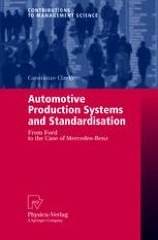
Automotive production systems and standardisation : From Ford to the case of Mercedes-Benz
The introduction of the Mercedes-Benz Production System (MPS) is exemplary of a trend within the automotive industry: the creation and introduction of company-specific standardised production systems. This book contributes to the debate about production systems by examining the social and economic implications of the role of standardisation in production systems. In this context it addresses three core issues: First, the driving forces behind the changing forms and functions of standardisation and the role of institutions therein. Second, the impact of standardisation on the evolution of automotive production systems. Third, based on the author's own empirical research conducted over a three year period at the Mercedes-Benz plant Stuttgart-Untertürkheim/Germany, the book examines the influence of standardisation on the work of actors on the shop floor in terms of organisational learning processes and the regulation of work.
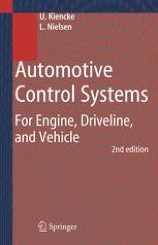
Automotive Control Systems : For Engine, Driveline, and Vehicle
Reflecting the trend to optimization through integrative approaches for engine, driveline and vehicle control, this book enables control engineers to understand engine and vehicle models necessary for controller design and also introduces mechanical engineers to vehicle-specific signal processing and automatic control. The emphasis on measurement, comparisons between performance and modelling, and realistic examples derive from the authors’ industrial experience at Bosch and interactions within IFAC and SAE. The second edition offers new or expanded topics such as diesel-engine modelling, diagnosis and anti-jerking control, and vehicle modelling and parameter estimation. The book addresses professional engineers as well as students.

Automorphic Forms and Lie Superalgebras
Most known examples of Lie superalgebras with a related automorphic form such as the Fake Monster Lie algebra whose reflection group is given by the Leech lattice arise from (super)string theory and can be derived from lattice vertex algebras. The No-Ghost Theorem from dual resonance theory and a conjecture of Berger-Li-Sarnak on the eigenvalues of the hyperbolic Laplacian provide strong evidence that they are of rank at most 26.The aim of this book is to give the reader the tools to understand the ongoing classification and construction project of this class of Lie superalgebras and is ideal for a graduate course.
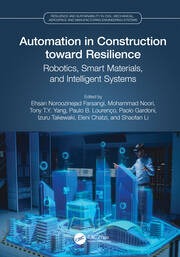
Automation in construction toward resilience : Robotics, smart materials and intelligent systems
Presents all aspects of automation in construction pertaining to the use of information technologies in design, engineering, construction technologies, and maintenance and management of constructed facilities. The broad scope encompasses all stages of the construction life cycle from initial planning and design, through the construction of the facility, its operation, and maintenance, to the eventual dismantling and recycling of buildings and engineering structures
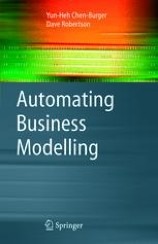
Automating business modelling : A guide to using logic to represent Informal methods and support reasoning
Enterprise Modelling (EM) methods are frequently used by entrepreneurs as an analysis tool for describing and redesigning their businesses. The resulting product, an enterprise model, is commonly used as a blueprint for reconstructing organizations and such effort is often a part of business process re-engineering and improvement initiatives. Automating Business Modelling describes different techniques of providing automated support for enterprise modelling methods and introduces universally used approaches. A running example of a business modelling method is included; providing a framework and detailed explanation as to how to construct automated support for modelling, allowing readers to follow the method to create similar support. Suitable for senior undergraduates and postgraduates of Business Studies, Computer Science and Artificial Intelligence, practitioners in the fields of Knowledge Management, Enterprise Modelling and Software Engineering, this book offers insight and know-how to both student and professional.
Automatic speech recognition on mobile devices and over communication networks
This book brings together leading academic researchers and industrial practitioners to address the issues in this emerging realm and presents the reader with a comprehensive introduction to the subject of speech recognition in devices and networks.

Automatic program development : A tribute to Robert Paige
This work, a tribute to renowned researcher Robert Paige, is a collection of revised papers published in his honor in the Higher-Order and Symbolic Computation Journal in 2003 and 2005. The book also includes some papers by members of the IFIP Working Group 2.1 of which Bob was an active member.
Automatic Differentiation : Applications, Theory, and Implementations
This collection covers the state of the art in automatic differentiation theory and practice. Practitioners and students will learn about advances in automatic differentiation techniques and strategies for the implementation of robust and powerful tools. Computational scientists and engineers will benefit from the discussion of applications, which provide insight into effective strategies for using automatic differentiation for design optimization, sensitivity analysis, and uncertainty quantification.
Automated technology for verification and analysis ; 5th International Symposium, ATVA 2007 Tokyo, Japan, October 22-25, 2007 Proceedings
This book presented theoretical methods to achieve correct software or hardware systems, including both functional and non functional aspects
Automated technology for verification and analysis ; 4th International Symposium, ATVA 2006, Beijing, China, October 23-26, 2006, Proceedings
The Automated Technology for Veri?cation and Analysis (ATVA) international symposium series was initiated in 2003, The main topics of the symposium include th- ries useful for providing designers with automated support for obtaining correct software or hardware systems, as well as the implementation of such theories in tools or their application. In the end, 35 papers were selected for inclusion in the program. ATVA 2006 had three keynote speeches given respectively by Thomas Ball, Jin Yang, and Mihalis Yannakakis. The main symposium was preceded by a tutorial day, consisting of three two-hourlectures given by the keynotespeakers.
Automated technology for verification and analysis ; 3rd International Symposium, ATVA 2005, Taipei, Taiwan, October 4-7, 2005, Proceedings
The Automated Technology for Veri?cation and Analysis (ATVA) international symposium series was initiated in 2003, responding to a growing interest in formal veri?cation spurred by the booming IT industry, particularly hardware design and manufacturing in East Asia. Its purpose is to promote research on automated veri?cation and analysis in the region by providing a forum for int- action between the regional and the international research/industrial commu- ties of the ?eld. ATVA 2005, the third of the ATVA series, was held in Taipei, Taiwan, 2005. The main theme of the symposium encompasses - sign, complexities, tools, and applications of automated methods for veri?cation and analysis. This book constitutes the refereed proceedings of the symposium .
Automated Reasoning with Analytic Tableaux and Related Methods ; 16th International Conference, TABLEAUX 2007, Aix en Provence, France, July 3-6, 2007, Proceedings
It covers the wide range of logics, from intuitionistic and substructural logics to modal logics (including temporal and dynamic logics), from many-valued logics to nonmonotonic logics, and from classical first-order logic to description logics.
