


Refine Results
Sort By
From
To


this book offers a comprehensive and state of the art analysis of aerodynamic and flight mechanic entry topics. In addition, it provides a large set of application exercises and solutions. It is addressed to university and engineering school students, as well as engineers in aerospace companies and government agencies, or simply curious readers.
Atmospheric ice takes a wide range of fascinating forms, all beautiful in their own ways but many posing severe risk to the security of overhead networks for electric power, communications and other systems. This book documents the fundamentals of atmospheric icing and surveys the state of the art in eight chapters, each written by a team of experienced and internationally renowned experts.
This collection of peer reviewed papers represents a concise, up-to-date summary of our current knowledge of planetary boundary layer (PBL) physics and parameterization. As such, it makes a major contribution to the interchange of knowledge and ideas between physicists, meteorologists and environmental modellers and sets out the course to be followed in subsequent research to improve PBL parameterizations in climate, numerical weather prediction, air quality, and emergency preparedness models. Major themes covered are: Nature and theory of turbulent boundary layers, Boundary layer flows - modelling and applications to environmental security, Nature, theory and modelling of boundary-layer flows, and Air flows within and above urban and other complex canopies - air-sea-ice interactions.
"Astrophysics Updates" is intended to serve the information needs of professional astronomers and postgraduate students about areas of astronomy, astrophysics and cosmology that are rich and active research spheres. Observational methods and the latest results of astronomical research are presented as well as their theoretical foundations and interrelations. The contributed commissioned articles are written by leading exponents in a format that will appeal to professional astronomers and astrophysicists who are interested in topics outside their own specific areas of research. This collection of timely reviews may also attract the interest of advanced amateur astronomers seeking scientifically rigorous coverage.
For a quantitative understanding of the physics of the universe - from the solar system through the milky way to clusters of galaxies all the way to cosmology - these edited lecture notes are perhaps among the most concise and also among the most critical ones: Astrophysics has not yet stood the redundancy test of laboratory physics, hence should be wary of early interpretations. Special chapters are devoted to magnetic and radiation processes, supernovae, disks, black-hole candidacy, bipolar flows, cosmic rays, gamma-ray bursts, image distortions, and special sources. At the same time, planet earth is viewed as the arena for life, with plants and animals having evolved to homo sapiens during cosmic time. -- This text is unique in covering the basic qualitative and quantitative tools, formulae as well as numbers, needed for the precise interpretation of frontline phenomena in astrophysical research. The author compares mainstream interpretations with new and even controversial ones he wishes to emphasize.
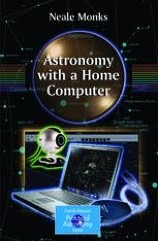
Here is a one-volume guide to just about everything computer-related for amateur astronomers!Today’s amateur astronomy is inextricably linked to personal computers. Computer-controlled "go-to" telescopes are inexpensive. CCD and webcam imaging make intensive use of the technology for capturing and processing images. Planetarium software provides information and an easy interface for telescopes. The Internet offers links to other astronomers, information, and software. The list goes on and on.
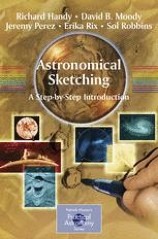
At some time we have all gazed through the telescope eyepiece at the magnificent rings and banded globe of Saturn, or seen long shadows reaching across crater floors at the Moon’s terminator – and wondered at the sheer beauty of the sight. It seems almost anachronistic to think of sketching when CCD imaging is available, but astronomical sketching provides an entirely different and deeply personal experience. It means spending time at the eyepiece to really look at what you can see, training your eye to perceive ever greater detail to take the fullest advantage of your telescope's light grasp and resolution.

Astrobiology, a new exciting interdisciplinary research field, seeks to unravel the origin and evolution of life wherever it might exist in the Universe. The current view of the origin of life on Earth is that it is strongly connected to the origin and evolution of our planet and, indeed, of the Universe as a whole. We are fortunate to be living in an era where centuries of speculation about the two ancient and fundamental problems: the origin of life and its prevalence in the Universe are being replaced by experimental science. The subject of Astrobiology can be approached from many different perspectives. This book is focused on abiogenic organic matter from the viewpoint of astronomy and planetary science and considers its potential relevance to the origins of life on Earth and elsewhere. Guided by the review papers in this book, the concluding chapter aims to identify key questions to motivate future research and stimulate astrobiological applications of current and future research facilities and space missions. Today’s rich array of new spacecraft, telescopes and dedicated scientists promises a steady flow of discoveries and insights that will ultimately lead us to the answers we seek.

This book collects the evaluation and accreditation experiences gathered by higher education institutions in Finland, France, Germany, Italy, the Netherlands, Portugal, the United Kingdom and Sweden.

Efficient assembly line design is a problem of considerable industrial importance. Assembly Line Design will be bought by technical personnel working in design, planning and production departments in industry as well as managers in industry who want to learn more about concurrent engineering.
The construction of mathematical models is an essential scientific activity. Mathematics has long been associated with developments in the exact sciences and engineering, but more recently mathematical modelling has been used to investigate complex systems that arise in many other fields. The contributors to this book demonstrate the application of mathematics to modern research topics in ecology and environmental science, health and medicine, phylogenetics and neural networks, theoretical chemistry, economics and management. The reader will find some review papers outlining current research directions in hot topics such as pattern formation and applications to medicine, and more targeted research papers on current developments in the various disciplines included.

This book It collects contributions of authors from a multidisciplinary area who focus on the topic of automatic text analysis from several (i.e. linguistic, mathematical, and information theoretical) perspectives. It describes methodological as well as methodical foundations and collects approaches in the field of text and corpus linguistics. In this sense, it contributes to the computational linguistic and information theoretical grounding of automatic text analysis.

Artificial sight is a frontier area of modern ophthalmology combining the multidisciplinary skills of surgical ophthalmology, biomedical engineering, biological physics, and psychophysical testing. Many scientific, engineering, and surgical challenges must be surmounted before widespread practical applications can be realized. The goal of Artificial Sight is to summarize the state-of-the-art research in this exciting area, and to describe some of the current approaches and initiatives that may help patients in a clinical setting.
Artificial neural networks (ANNs), which are parallel computational models, comprising of interconnected adaptive processing units (neurons) have the capability to predict accurately the dispersive behavior of vehicular pollutants under complex environmental conditions. This book aims at describing step-by-step procedure for formulation and development of ANN based VP models considering meteorological and traffic parameters. The model predictions are compared with existing line source deterministic/statistical based models to establish the efficacy of the ANN technique in explaining frequent dispersion complexities in urban areas. The book is very useful for hardcore professionals and researchers working in problems associated with urban air pollution management and control.
In this book, a wide spectrum of fault diagnosis techniques have been developed. A major category of fault diagnosis techniques is the model based one, where an analytical model of the plant to be monitored is assumed to be available.

This book is written from an engineer's perspective of the mind. "Artificial Mind System" exposes the reader to a broad spectrum of interesting areas in general brain science and mind-oriented studies. In this research monograph a picture of the holistic model of an artificial mind system and its behaviour is drawn, as concretely as possible, within a unified context, which could eventually lead to practical realisation in terms of hardware or software. With a view that "the mind is a system always evolving", ideas inspired by many branches of studies related to brain science are integrated within the text, i.e. artificial intelligence, cognitive science / psychology, connectionism, consciousness studies, general neuroscience, linguistics, pattern recognition / data clustering, robotics, and signal processing.
This volume contains both invited and selected extended papers from the last 3IA Conference (3IA’2008), together with an introduction presenting the area of Intelligent Computer Graphics and various Computer Graphics areas where introduction of intelligent techniques permitted to resolve important problems.

This book presents innovative techniques in Recognition and Classification of Astrophysical and Medical Images. The contents include: Introduction to pattern recognition and classification in astrophysical and medical images. Image standardization and enhancement. Region-based methods for pattern recognition in medical and astrophysical images. Advanced information processing using statistical methods. Feature recognition and classification using spectral method
This volume presents the proceedings of the 9th Online World Conference on Soft Computing in Industrial Applications (WSC9), September 20th - October 08th, 2004, held on the World Wide Web. It contains plenary lectures, original papers and tutorials presented during the conference. The book brings together outstanding research and developments in the field of soft computing (evolutionary computation, fuzzy logic, neural networks, and their fusion) and its applications in science and technology.

The sc- ning probes emerged as a new - strument for imaging with a p- cision suf?cient to delineate single atoms. At first there were two – the Scanning Tunneling Microscope, or STM, and the Atomic Force Mic- scope, or AFM. The STM relies on electrons tunneling between tip and sample whereas the AFM depends on the force acting on the tip when it was placed near the sample. These were quickly followed by the M- netic Force Microscope, MFM, and the Electrostatic Force Microscope, EFM. The MFM will image a single magnetic bit with features as small as 10nm. With the EFM one can monitor the charge of a single electron.

Daraa Highway - Ghabagheb - Syria
+963-15 2050 - 15 860 380 /1/2/3 - 11 662 3900