



Page 32
Page 32
ASP.NET 1.1 Solutions Toolkit
This collection of reusable ASP.NET components serves two purposes. First, the components are ready to use, so you may add exciting features to your own ASP.NET websites. Second, each component's design and implementation is discussed, and you'll discover tips and tricks applicable for developing your own controls. Controls can be cut and pasted or used as templates for you to build your own controls. And the 15 included controls (programs) cover a broad range of situations, providing you both working coded solutions to your problem and the rationalization behind those solutions. Overall, this highly anticipated book provides immediate solutions to range of common problems.
Artificial neural networks : Formal Models and Their Applications – ICANN 2005 ; 15th International Conference, Warsaw, Poland, September 11-15, 2005, Proceedings, Part II
The second volume contains 162 contributions related to Formal Models and their Applications and deals with new neural network models, supervised learning algorithms, ensemble-based learning, unsupervised learning, recurent neural networks, reinforcement learning, bayesian approaches to learning, learning theory, artificial neural networks for system modeling, decision making, optimalization and control, knowledge extraction from neural networks, temporal data analysis, prediction and forecasting, support vector machines and kernel-based methods, soft computing methods for data representation, analysis and processing, data fusion for industrial, medical and environmental applications, non-linear predictive models for speech processing, intelligent multimedia and semantics, applications to natural language processing, various applications, computational intelligence in games, and issues in hardware implementation.
Artificial intelligence-based Internet of things systems
Discusses the evolution of future generation technologies through Internet of Things (IoT) in the scope of Artificial Intelligence (AI). The main focus of this volume is to bring all the related technologies in a single platform, so that undergraduate and postgraduate students, researchers, academicians, and industry people can easily understand the AI algorithms, machine learning algorithms, and learning analytics in IoT-enabled technologies. This book uses data and network engineering and intelligent decision support system-by-design principles to design a reliable AI-enabled IoT ecosystem and to implement cyber-physical pervasive infrastructure solutions. This book brings together some of the top IoT-enabled AI experts throughout the world who contribute their knowledge regarding different IoT-based technology aspects. Addresses the complete functional framework workflow in AI-enabled IoT ecosystem; Presents intelligent object identification and object discovery through the IoT ecosystem and its implications to the real world ;Explores security and privacy issues and trustworthy machine learning related to data-intensive technologies in AI-based IoT ecosystems.
Artificial Intelligence with Python
Introduces readers to various topics and examples of programming in Python, as well as key concepts in artificial intelligence. Python programming skills will be imparted as we go along. Concepts and code snippets will be covered in a step-by-step manner, to guide and instill confidence in beginners. Complex subjects in deep learning and machine learning will be broken down into easy-to-digest content and examples. Artificial intelligence implementations will also be shared, allowing beginners to generate their own artificial intelligence algorithms for reinforcement learning, style transfer, chatbots, speech, and natural language processing.
Artificial intelligence in mechatronics and civil engineering : Bridging the gap
Recent studies highlight the application of artificial intelligence, machine learning, and simulation techniques in engineering. This book covers the successful implementation of different intelligent techniques in various areas of engineering focusing on common areas between mechatronics and civil engineering. The power of artificial intelligence and machine learning techniques in solving some examples of real-life problems in engineering is highlighted in this book. The implementation process to design the optimum intelligent models is discussed in this book.
Artificial Intelligence for Cloud and Edge Computing
Discusses the future possibilities of AI with cloud computing and edge computing. Aims to conduct analyses, implementation and discussion of many tools (of artificial intelligence, machine learning and deep learning and cloud computing, fog computing, and edge computing including concepts of cyber security) for understanding integration of these technologies. Readers can quickly get an overview of these emerging topics and get many ideas of the future of AI with cloud, edge, and in many other areas. Topics include machine and deep learning techniques for Internet of Things based cloud systems; security, privacy and trust issues in AI based cloud and IoT based cloud systems; AI for smart data storage in cloud-based IoT; blockchain based solutions for AI based cloud and IoT based cloud systems.This book is relevent to researchers, academics, students, and professionals. Presents fusion of cloud computing services and AI technology for bringing a significant change in the technology industry; Includes self-assessment problems for increasing knowledge of real world problems, i.e., how AI and cloud/edge computing can change business for the better; Provides innovative results of integrations of AI in other applications such as healthcare, finance, manufacturing, transportation, agriculture, etc.
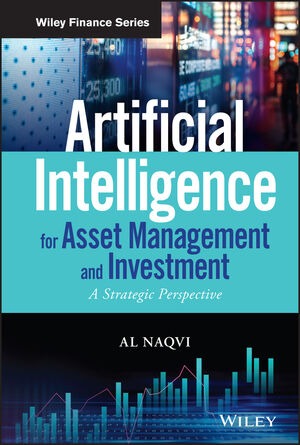
Artificial intelligence for asset management and investment : A strategic perspective
The rise of artificial intelligence is nothing short of a technological revolution. AI is poised to completely transform asset management and investment banking, yet its current application within the financial sector is limited and fragmented. Existing AI implementations tend to solve very narrow business issues, rather than serving as a powerful tech framework for next-generation finance. Artificial Intelligence for Asset Management and Investment provides a strategic viewpoint on how AI can be comprehensively integrated within investment finance, leading to evolved performance in compliance, management, customer service, and beyond.

Artificial intelligence and symbolic computation ; 8th International Conference, AISC 2006, Beijing, China, September 20-22, 2006, Proceedings
This book constitutes the refereed proceedings of the 8th International Conference on Artificial Intelligence and Symbolic Computation, AISC 2006, held in Beijing, China in September 2006. The 18 revised full papers presented together with 4 invited papers were carefully reviewed and selected from 39 submissions. Based on heuristics and mathematical algorithmics, artificial intelligence and symbolic computation are two views and approaches for automating (mathematical) problem solving. The papers address all current aspects in the area of symbolic computing and AI: mathematical foundations, implementations, and applications in industry and academia. The papers are organized in topical sections on artificial intelligence and theorem proving, symbolic computation, constraint satisfaction/solving, and mathematical knowledge management.
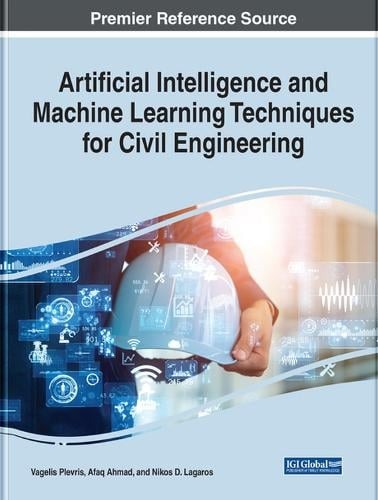
Artificial intelligence and machine learning techniques for civil engineering
Offers state-of-the-art contributions in the area of AI and its applications in the field of civil engineering presenting methods and implementation of AI and machine learning in multiple facets of civil engineering

Artificial intelligence and innovations 2007 : from theory to applications ; Proceedings of the 4th IFIP International Conference on Artificial Intelligence Applications and Innovations (AIAI2007)
This book brings together leading research from engineers and practitioners interested in the technical advances, business and industrial applications of intelligent systems.It is focused on providing insights on how AI can be implemented in real world applications. Intelligent Internet Systems: Emerging Technologies and Applications
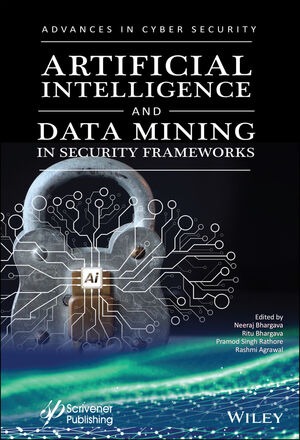
Artificial intelligence and data mining approaches in security frameworks
Offers solutions to the problems of security, outlining the concepts behind allowing computers to learn from experience and understand the world in terms of a hierarchy of concepts, with each concept defined through its relation to simpler concepts. provides state of the art approaches of artificial intelligence and data mining in these areas. It includes areas of detection, prediction, as well as future framework identification, development, building service systems and analytical aspects. In all these topics, applications of AI and data mining, such as artificial neural networks, fuzzy logic, genetic algorithm and hybrid mechanisms, are explained and explored. This book is aimed at the modeling and performance prediction of efficient security framework systems, bringing to light a new dimension in the theory and practice. This groundbreaking new volume presents these topics and trends, bridging the research gap on AI and data mining to enable wide-scale implementation. Whether for the veteran engineer or the student, this is a must-have for any library. This groundbreaking new volume: Clarifies the understanding of certain key mechanisms of technology helpful in the use of artificial intelligence and data mining in security frameworks ; Covers practical approaches to the problems engineers face in working in this field, focusing on the applications used every day ; Contains numerous examples, offering critical solutions to engineers and scientists ; Presents these new applications of AI and data mining that are of prime importance to human civilization as a whole
Artificial Intelligence and Cybersecurity : Advances and Innovations
Provides advanced system implementation for Smart Cities using artificial intelligence. It addresses the complete functional framework workflow and explores basic and high-level concepts. The book is based on the latest technologies covering major challenges, issues and advances, and discusses intelligent data management and automated systems.

Artery guidebook : Artery - transforming riversides for the future
"Artery" is an initiative on a European scale, funded by the INTERREG IIIB NWE programme, which puts riverside restoration and regeneration at the heart of regional strategies, helping communities across Europe ‘turn back to face the water’. In this book the implemented strategies will be discussed, including public-private-partnership, public participation, awareness programs and regional development strategies. The book functions as a guide to facilitate similar future projects in other regions. The valuable experience and methods of trans-national cooperation should be made available to other developers, regional planners, project managers and politicians.

Arithmetic of finite fields ; 1st International Workshop, WAIFI 2007, Madrid, Spain, June 21-22, 2007, Proceedings
This book presented structures in finite fields, efficient implementation and architectures, efficient finite field arithmetic, classification and construction of mappings over finite fields, curve algebra, cryptography, codes, and discrete structures.
ARIS design platform : Advanced process modelling and administration
ARIS is ranked as the leading Business Process Modelling tool in the Gartner Quadrant for Business Process Analysis and Optimization. The ARIS Design Platform is being used as a business process management (BPM) tool for projects in BPM, quality management, business analysis and design, software development, implementation of service-oriented architectures and so forth. Following on from Rob Davis’ successful introductory text, ARIS Design Platform: Getting Started with BPM, this new book covers in detail some of the more advanced concepts of using ARIS Business Architect in the new ARIS 7 Design Platform. Written in a reader-friendly style, it contains detailed explanations of key concepts combined with numerous examples, hints and tips gained from many years of practical experience of using ARIS.
Argumentation in multi-agent systems ; Third International Workshop, ArgMAS 2006, Hakodate, Japan, May 8, 2006, revised selected and invited papers
Argumentation provides tools for designing, implementing and analyzing sophisticated forms of interaction among rational agents. It has made a solid contribution to the practice of multiagent dialogues. Application domains include: legal disputes, business negotiation, labor disputes, team formation, scientific inquiry, deliberative democracy, ontology reconciliation, risk analysis, scheduling, and logistics.
Argumentation in multi-agent systems ; 4th International Workshop, ArgMAS 2007, Honolulu, HI, USA, May 15, 2007, revised selected and invited papers
This volume presents the latest developments in the growing area of research at the interface of argumentation theory and multiagent systems. Argumentation provides tools for designing, implementing and analyzing sophisticated forms of interaction among rational agents.

Area-wide control of insect pests : From research to field implementation
This new textbook on area-wide control of insect pests collates a series of selected papers that attempts to address various funda- mental components of AW-IPM, e.g. the importance of relevant problem-solving research, the need for essential baseline data, thesignificanceofadequatetoolsforappropri-atecontrolstrategies,andthevalueofpilottri- als, etc.
Architecture of computing systems - ARCS 2008 ; 21st International Conference, Dresden, Germany, February 25-28, 2008. Proceedings
This book constitutes the refereed proceedings of the 21st International Conference on Architecture of Computing Systems, ARCS 2008, held in Dresden, Germany, in February 2008.
Applied Quantitative Finance
Applied Quantitative Finance (2nd edition) provides a comprehensive and state-of-the-art treatment of cutting-edge topics and methods. It provides solutions to and presents theoretical developments in many practical problems such as risk management, pricing of credit derivatives, quantification of volatility and copula modelling. The synthesis of theory and practice supported by computational tools is reflected in the selection of topics as well as in a finely tuned balance of scientific contributions on practical implementation and theoretical concepts. This linkage between theory and practice offers theoreticians insights into considerations of applicability and, vice versa, provides practitioners comfortable access to new techniques in quantitative finance.
