



Page 32
Page 32

Image Analysis and Recognition ; Vol. 3656 ; 2ond International Conference, ICIAR 2005, Toronto, Canada, September 28-30, 2005, Proceedings
ICIAR 2005, the International Conference on Image Analysis and Recognition, was the second ICIAR conference, and was held in Toronto, Canada. ICIAR is organized annually, and alternates between Europe and North America. ICIAR 2004 was held in Porto, Portugal. The idea of o?ering these conferences came as a result of discussion between researchers in Portugal and Canada to encourage collaboration and exchange, mainly between these two countries, but also with the open participation of other countries, addressing recent advances in theory, methodology and applications. TheresponsetothecallforpapersforICIAR2005wasencouraging.From295 full papers submitted, 153 were ?nally accepted (80 oral presentations, and 73 posters). The review process was carried out by the Program Committee m- bers and other reviewers ; all are experts in various image analysis and recognition areas. Each paper was reviewed by at least two reviewers, and also checked by the conference co-chairs. The high quality of the papers in these proceedings is attributed ?rst to the authors,and second to the quality of the reviews provided by the experts. We would like to thank the authors for responding to our call, andwewholeheartedlythankthe reviewersfor theirexcellentwork,andfortheir timely response. It is this collective e?ort that resulted in the strong conference program and high-quality proceedings in your hands.

Image Analysis and Recognition ; 5th International Conference, ICIAR 2008, Póvoa de Varzim, Portugal, June 25-27, 2008. Proceedings
The 110 revised full papers presented together with 2 invited papers were carefully reviewed and selected from 226 submissions. The papers are organized in topical sections on image restoration and enhancement, image and video segmentation, non-linear image processing, image and video coding and encryption, indexing and retrieval, computer vision, feature extraction and classification, shape representation and matching, object recognition, character recognition, texture and motion analysis, tracking, biomedical image analysis, biometrics, face recognition, and a special session on recent advances in multimodal biometric systems and applications.

Image Analysis and Recognition ; 4th International Conference, ICIAR 2007, Montreal, Canada, August 22-24, 2007, Proceedings
These papers cover image restoration and enhancement, image and video processing and analysis, image segmentation, computer vision, pattern recognition for image analysis, shape and matching, motion analysis, tracking, and more.

Image Analysis and Processing – ICIAP 2005 ; 13th International Conference, Cagliari, Italy, September 6-8, 2005, Proceedings
This volume contains the Proceedings of the 13th International Conference on Image Analysis and Processing (ICIAP 2005), held in Cagliari, Italy, at the conference centre “Centro della Cultura e dei Congressi”, on September 6–8, 2005. ICIAP 2005 was the thirteenth edition of a series of conferences organized every two years by the Italian group of researchersa?liated to the International Association for Pattern Recognition (GIRPR) with the aim to bring together researchers in image processing and pattern recognition from around the world. As for the previous editions, conference topics concerned the theory of image analysis and processing and its classical and Internet-driven applications. The central theme of ICIAP 2005 was “Pattern Recognition in the Internet and Mobile Communications Era”. The interest for such a theme was con?rmed by the large number of papers dealing with it, the special session devoted to pattern recognition for computer network security, and the emphasis of two invited talks on Internet and mobile communication issues. ICIAP 2005 received 217 paper submissions. Fifteen papers were collected into the two special sessions dealing with Pattern Recognition for Computer Network Security and Computer Vision for Augmented Reality and Augmented Environments.

Image Analysis ; 15th Scandinavian Conference, SCIA 2007, Aalborg, Denmark, June 10-24, 2007, Proceedings
The present volume contains the proceedings of the Scandinavian Conference on Image Analysis, SCIA 2007, held at Hotel Hvide Hus, Aalborg, Denmark, June 10–14, 2007. Initiated in 1979 by Torleiv Orhaug in Sweden, SCIA 2007 represented the 15th in the biennial series of conferences.

Image Analysis ; 14th Scandinavian Conference, SCIA 2005, Joensuu, Finland, June 19-22, 2005, Proceedings
This proceedings volume collects the scienti?c presentations of the Scandinavian Conference on Image Analysis, SCIA 2005, which was held at the University of Joensuu, Finland, June 19–22, 2005. The conference was the fourteenth in the series of biennial conferences started in 1980. The name of the series re?ects the fact that the conferences are organized in the Nordic (Scandinavian) countries, following the cycle Sweden, Finland, Denmark, and Norway. The event itself has always been international in its participants and presentations. Today there are many conferences in the ?elds related to SCIA. In this s- uation our goal is to keep up the reputation for the high quality and friendly environment of SCIA. We hope that participants feel that it’s worth attending the conference. Therefore, both the scienti?c and social program were designed to support the best features of a scienti?c meeting: to get new ideas for research and to have the possibility to exchange thoughts with fellow scientists.

Illustrated C# 2008
The unique, visual format of Illustrated C# 2008 has been specially created by author and teacher of development methods, Daniel Solis. The concise text, use of tables to clarify language features, frequent figures and diagrams, as well as focused code samples all combine to create a unique approach that will help you understand and get to work with C# fast. It was while teaching numerous seminars on various programming languages that the author realized the immense power that diagrams have in explaining programming language concepts. Most people learn quicker and retain information better when the material is presented in a clean, simple, visual format. To achieve this result in his book, Solis uses concise text and bulleted lists, tables to clarify and summarize language features, as well as his renowned and ubiquitous figures and diagrams.
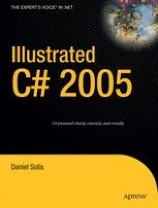
Illustrated C# 2005
Illustrated C# 2005 presents the C# programming language in a unique visual manner. The book uses three techniques to achieve this: concise text, tables that clarify and summarize language features, and frequent figures and diagrams. Each feature is also illustrated with concise, focused code samples.

Il solito Albert e la piccola Dolly : La scienza dei bambini e dei ragazzi = The usual Albert and little Dolly : The science of children and young people
After hundreds of years, science has come out of the ivory tower and entered society. Today science is not done with laboratory research alone but by involving different social actors. There are scientists, but also politicians, administrators, entrepreneurs and ordinary people, young and old. Their fears, real or perceived, can put a stop to its development. Their trust and their hopes nourish it and create a climate of expectations that are not always met. In the great narrative of science, the first actors, the scientists, are from time to time destroyers and benefactors, saints or monsters, fathers of the Golem with feet of clay or of Frankestein who turns and destroys. Not infrequently then there are many Sisyphus who continually restart their business - and it is not excluded that in the eyes of some they share with Penelope the habit of undoing at night what they do during the day.

Il cancro e la ricerca del senso perduto = Cancer and the search for lost meaning
Cancer disease can be approached with the aim of killing diseased cells or with that of making them go backwards on the road that leads from a state of natural equilibrium to the disease. This book tells an original research by the author inspired by this biological vision of cancer, research that led to the production and use of anticancer products. Inevitably, the history of research slips into a vision of the world and of life that presents the features of a documented critique of the values and priorities that characterize the world in which we live. A profound and human book, which makes you think, which makes you hope.

Hypoxia and Exercise
The 14th volume in the series will focus on cutting edge research at the interface of hypoxia and exercise. The work will cover the range from molecular mechanisms of muscle fatigue and muscle wasting to whole body exercise on the world’s highest mountains. State of the art papers on training at high altitude for low altitude athletic performance will also be featured.

Hydrology and Water Resources of India
Divided into four sections the book provides a comprehensive overview of water resources of India. Beginning with a general description of the country, major hydrologic features, such as climate (precipitation, temperature, radiation, etc.), streamflow, groundwater, soil, etc. are discussed. A detailed treatment of all major river basins is provided, which includes description of catchments, tributaries, surface water and ground water, and important water resources projects. This is followed by a discussion on major uses of water in India, major projects, water related problems including environment and water quality, provisions of the constitution of India, interlinking of India rivers, and institutions dealing with water resources. Finally, the last chapter discusses some views on water management policy for India.

Hydrogen bonded polymers
Control of polymeric structure is among the most important endeavours of modern macromolecular science. In particular, tailoring the positioning and strength of intermolecular forces within macromolecules by synthetic me- odsandthusgaining structuralcontrolover the'nalpolymeric materials has become feasible, resulting in the ?eld of supramolecular polymer science. - sides other intermolecular forces, hydrogen bonds are unique intermolecular forces enabling the tuning of material properties via self-assembly processes, The important contribution of hydrogen bondstotheareaofsupramole- lar polymer chemistry is de'nitely outstanding, most of all since the potency of hydrogen-bonding systems has been found to be unique in relation to other supramolecular interactions.
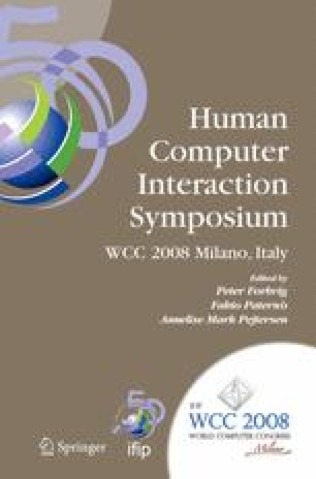
Human-computer interaction Symposium ; IFIP 20th World Computer Congress, Proceedings of the 1st TC 13 Human-Computer Interaction Symposium (HCIS 2008), September 7-10, 2008, Milano, Italy
The IFIP series publishes state-of-the-art results in the sciences and technologies of information and communication. The scope of the series includes: foundations of computer science; software theory and practice; education; computer applications in technology; communication systems; systems modeling and optimization; information systems; computers and society; computer systems technology; security and protection in information processing systems; artificial intelligence; and human-computer interaction. Proceedings and post-proceedings of refereed international conferences in computer science and interdisciplinary fields are featured.

Human-centered visualization environments : GI-Dagstuhl Research Seminar, Dagstuhl Castle, Germany, March 5-8, 2006, Revised Papers
This tutorial book features an augmented selection of the material presented at the GI-Dagstuhl Research Seminar on Human-Centered Visualization Environments, HCVE 2006, held in Dagstuhl Castle, Germany in March 2006. It presents eight tutorial lectures that are the thoroughly cross-reviewed and revised versions of the summaries and findings presented and discussed at the seminar.

Human work interaction design : Designing for human work ; The 1st IFIP TC 13.6 WG Conference: Designing for Human Work, February 13-15, 2006, Madeira, Portugal
International Federation for Information Processing The IFIP series publishes state-of-the-art results in the sciences and technologies of information and communication. The scope of the series includes: foundations of computer science; software theory and practice; education; computer applications in technology; communication systems; systems modeling and optimization; information systems; computers and society; computer systems technology; security and protection in information processing systems; artificial intelligence; and human-computer interaction. Proceedings and post-proceedings of referred international conferences in computer science and interdisciplinary fields are featured. These results often precede journal publication and represent the most current research. The principal aim of the IFIP series is to encourage education and the dissemination and exchange of information about all aspects of computing.

How to Manage Projects : Essential Project Management Skills to Deliver On-time, On-budget Results
Provides a complete, jargon-free introduction to the principles and practices of project management, along with practical tools and checklists to use in real life / Is part of the bestselling Creating Success series, which has sold over 1.5 million copies and contains practical advice on essential and value-adding work skills to help you develop your career / Features practical, exercises, templates tools and checklists to use in real life

How to Build a Modern Tontine : Algorithms, Scripts and Tips
This book introduces the modern tontine and its applications in retirement and decumulation. Personal financial management in the later stages of life presents unique challenges, and renowned retirement planning expert Dr. Milevsky proposes the modern tontine as a solution. With the goal of guiding professionals and retirees in more efficient decumulation, the book demonstrates how to build a modern tontine. It is technically oriented, employing a cookbook format, featuring R code, and examining retirement planning through a statistical lens.

How the immune system recognizes self and nonself : Immunoreceptors and their signaling
This brain function must have been particularly important for most animals to protect their lives from enemies and for species to survive through evolution. Similarly, higher organisms have also acquired their immune system through evolution that discriminates nonself pathogens and self-body to protect their lives from pathogens such as bacteria or viruses. The brain system may distinguish integrated images of self and nonself created from many inputs, such as vision, sound, smell, and others. The immune system recognizes and distinguishes a variety of structural features of self and nonself components. The latter actually include almost everything but self.

Home-oriented informatics and telematics ; Proceedings of the IFIP WG 9.3 HOIT2005 Conference
The IFIP series publishes state-of-the-art results in the sciences and technologies of information and communication. The scope of the series includes: foundations of computer science; software theory and practice; education; computer applications in technology; communication systems; systems modeling and optimization; information systems; computers and society; computer systems technology; security and protection in information processing systems; artificial intelligence; and human-computer interaction. Proceedings and post-proceedings of referred international conferences in computer science and interdisciplinary fields are featured. These results often precede journal publication and represent the most current research. The principal aim of the IFIP series is to encourage education and the dissemination and exchange of information about all aspects of computing.
