



Page 32
Page 32
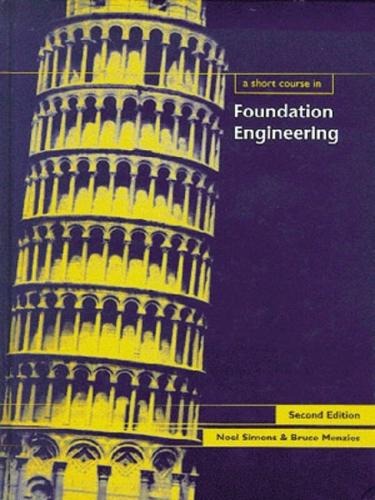
A Short Course in Foundation Engineering
Although there are now a large number of computer programmes for solving all sorts of foundation design problems, the need to check these outputs by 'hand-calculation' has become vitally important. This book concentrates on getting the fundamentals right and then using them in practical applications. The book is illustrated with numerous worked examples and with quick-reference tables and charts.
A Posteriori Error Analysis Via Duality Theory : With Applications in Modeling and Numerical Approximations
This volume provides a posteriori error analysis for mathematical idealizations in modeling boundary value problems, especially those arising in mechanical applications, and for numerical approximations of numerous nonlinear variational problems. The author avoids giving the results in the most general, abstract form so that it is easier for the reader to understand more clearly the essential ideas involved. Many examples are included to show the usefulness of the derived error estimates.
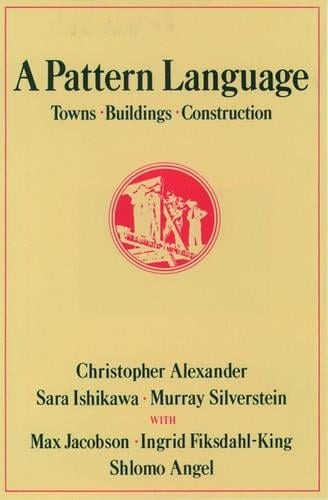
A Pattern Language : Towns, Buildings, Construction
In this volume, 253 archetypal patterns consisting of problem statements, discussions, illustrations, and solutions provide lay persons with a framework for engaging in architectural design.

A new deal for an effective European research policy : The design and impacts of the 7th Framework programme
It underlines an important truth: that science has always advanced most rapidly when it is a collective endeavour, with a strong circulation of knowledge.This book will show how the new Framework Programme was put together and explain why it took the shape it did. It will also set out its potential impacts and the conditions necessary for it to be a success.
A Modular Calculus for the Average Cost of Data Structuring
This volume, with forewords by Greg Bollella and Dana Scott, presents novel programs based on the new advances in this area, including the first randomness-preserving version of Heapsort. Programs are provided, along with derivations of their average-case time, to illustrate the radically different approach to average-case timing. The automated static timing tool applies the Modular Calculus to extract the average-case running time of programs directly from their MOQA code.
A Modern Perspective on Type Theory : From its Origins until Today
The first part of the book is historical, yet at the same time, places historical systems (like Russell's RTT) in the modern setting. The second part deals with modern type theory as it developed since the 1940s, and with the role of propositions as types (or proofs as terms), but at the same time, places another historical system (the proof checker Automath) in the modern setting. The third part uses this bridging in the first two parts between historical and modern systems to propose new systems that bring more advantages together. This book has much to offer to mathematicians, logicians and to computer scientists in general. It will have considerable influence for many years to come.' - Henk Barendregt
A Modern Introduction to Probability and Statistics : Understanding Why and How
A Modern Introduction to Probability and Statistics has numerous quick exercises to give direct feedback to the students. In addition the book contains over 350 exercises, half of which have answers, of which half have full solutions. A website at www.springeronline.com/1-85233-896-2 gives access to the data files used in the text, and, for instructors, the remaining solutions. The only pre-requisite for the book is a first course in calculus; the text covers standard statistics and probability material, and develops beyond traditional parametric models to the Poisson process, and on to useful modern methods such as the bootstrap.

A Modern Course in Aeroelasticity
In this new edition, the fundamental material on classical linear aeroelasticity has been revised. Also new material has been added describing recent results on the research frontiers dealing with nonlinear aeroelasticity as well as major advances in the modelling of unsteady aerodynamic flows using the methods of computational fluid dynamics and reduced order modeling techniques.
A guide to business mathematics
A guide to using metrics to manage and measure performance, and business economics. Foundations on algebra, number theory, sequences and series, matrix theory and calculus are included as is a complete chapter on using software.

A Geometric Approach to Differential Forms
The modern subject of differential forms subsumes classical vector calculus. This text presents differential forms from a geometric perspective accessible at the undergraduate level. The book begins with basic concepts such as partial differentiation and multiple integration and gently develops the entire machinery of differential forms. Each new concept is presented with a natural picture that students can easily grasp. Algebraic properties then follow. This facilitates the development of differential forms without assuming a background in linear algebra. Throughout the text, emphasis is placed on applications in 3 dimensions, but all definitions are given so as to be easily generalized to higher dimensions. A centerpiece of the text is the generalized Stokes' theorem. Although this theorem implies all of the classical integral theorems of vector calculus, it is far easier for students to both comprehend and remember.

A First Course in Statistics for Signal Analysis
This essentially self-contained, deliberately compact, and user-friendly textbook is designed for a first, one-semester course in statistical signal analysis for a broad audience of students in engineering and the physical sciences. The emphasis throughout is on fundamental concepts and relationships in the statistical theory of stationary random signals, explained in a concise, yet fairly rigorous presentation.

A First Course in Differential Equations
This text is designed for the standard post-calculus course in elementary differential equations. It is a brief, one-semester treatment of the basic ideas, models, and solution methods. The book, which serves as an alternative to existing texts for instructors who want more concise coverage, emphasizes graphical, analytical, and numerical approaches, and is written with clear language in a user-friendly format. It provides students with the tools to continue on to the next level in applying differential equations to problems in engineering, science, and applied mathematics.

A Course in Derivative Securities : Introduction to Theory and Computation
Aims at a middle ground between the introductory books on derivative securities and those that provide advanced mathematical treatments. It is written for mathematically capable students who have not necessarily had prior exposure to probability theory, stochastic calculus, or computer programming. It provides derivations of pricing and hedging formulas (using the probabilistic change of numeraire technique) for standard options, exchange options, options on forwards and futures, quanto options, exotic options, caps, floors and swaptions, as well as VBA code implementing the formulas. It also contains an introduction to Monte Carlo, binomial models, and finite-difference methods.

A Course in Calculus and Real Analysis
Provides a self-contained and rigorous introduction to calculus of functions of one variable. The presentation and sequencing of topics emphasizes the structural development of calculus. At the same time, due importance is given to computational techniques and applications. The authors have strived to make a distinction between the intrinsic definition of a geometric notion and its analytic characterization. It highlight the fact that calculus provides a firm foundation to several concepts and results that are generally encountered in high school and accepted on faith. For example, one can find here a proof of the classical result that the ratio of the circumference of a circle to its diameter is the same for all circles. Also, this book helps get a clear understanding of the concept of an angle and the definitions of the logarithmic, exponential and trigonometric functions together with a proof of the fact that these are not algebraic functions. A number of topics that may have been inadequately covered in calculus courses and glossed over in real analysis courses are treated here in considerable detail. As such, this book provides a unified exposition of calculus and real analysis.

A concise introduction to traffic engineering : theoretical fundamentals and case studies
Covers a selection of fundamental topics of traffic engineering useful for highways facilities design and control. The treatment is concise but it does not neglect to examine the most recent and crucial theoretical aspects which are at the root of numerous highway engineering applications, like, for instance, the essential aspects of highways traffic stream reliability calculation and automated highway systems control.
A Classical Introduction to Cryptography Exercise Book
A Classical Introduction to Cryptography Exercise Book for A Classical Introduction to Cryptography: Applications for Communications Security covers a majority of the subjects that make up today's cryptology, such as symmetric or public-key cryptography, cryptographic protocols, design, cryptanalysis, and implementation of cryptosystems. Exercises do not require a large background in mathematics, since the most important notions are introduced and discussed in many of the exercises.
A Benchmark Approach to Quantitative Finance
The general framework is used to provide an understanding of the nature of stochastic volatility. The book is intended for a wide audience that includes quantitative analysts, postgraduate students and practitioners in finance, economics and insurance. It aims to be a self-contained, accessible but mathematically rigorous introduction to quantitative finance for readers that have a reasonable mathematical or quantitative background. Finally, the book should stimulate interest in the benchmark approach by describing some of its power and wide applicability.
3-D Structural Geology : A Practical Guide to Quantitative Surface and Subsurface Map Interpretation
This book provides an overview of techniques for constructing structural interpretations in 2-D, 2½-D and 3-D environments; for interpolating - tween and extrapolating beyond the control points; and for validating the final int- pretation. The underlying philosophy is that structures are three-dimensional solid bodies and that data from throughout the structure, whether in 2-D or 3-D format, should be integrated into an internally consistent 3-D interpretation. It is assumed that most users of this book will do their work on a computer. C- sequently, the book provides quantitative structural methods and techniques that are designed for use with spreadsheets, mapping software, and three-dimensional c- puter-graphics programs. The book is also intended to provide the background for understanding what interpretive software, for example, a computer contouring p- gram, does automatically. Most techniques are presented in both a traditional format appropriate for paper, pencil, and a pocket calculator, and in quantitative format for use with spreadsheets and computer-graphics or computer-aided-design programs.
