



Page 3
Page 3

Representation learning for natural language processing
Provides an overview of the recent advances in representation learning theory, algorithms, and applications for natural language processing (NLP), ranging from word embeddings to pre-trained language models. It is divided into four parts. Part I presents the representation learning techniques for multiple language entries, including words, sentences and documents, as well as pre-training techniques. Part II then introduces the related representation techniques to NLP, including graphs, cross-modal entries, and robustness. Part III then introduces the representation techniques for the knowledge that are closely related to NLP, including entity-based world knowledge, sememe-based linguistic knowledge, legal domain knowledge and biomedical domain knowledge. Lastly, Part IV discusses the remaining challenges and future research directions..

Representation Learning for Natural Language Processing
This book provides an overview of the recent advances in representation learning theory, algorithms and applications for natural language processing (NLP). It is divided into three parts.

Programming Persistent Memory : A Comprehensive Guide for Developers
Beginning and experienced programmers will use this comprehensive guide to persistent memory programming. You will understand how persistent memory brings together several new software/hardware requirements, and offers great promise for better performance and faster application startup times—a huge leap forward in byte-addressable capacity compared with current DRAM offerings.

Proceedings of the International Conference on Social Modeling and Simulation, plus Econophysics Colloquium 2014
Cutting edge scientific researches on various social phenomena are reviewed. New methods for analysis of big data such as financial markets, automobile traffics, epidemic spreading, world-trades and social media communications are provided to clarify complex interaction and distributions underlying in these social phenomena. Robustness and fragility of social systems are discussed based on agent models and complex network models. Techniques about high performance computers are introduced for simulation of complicated social phenomena.

Proceedings of International Conference on Communication, Circuits, and Systems ; IC3S 2020
The book proposes new technologies and discusses innovative solutions to various problems in the field of communication, circuits, and systems, as reflected in high-quality papers presented at International Conference on Communication, Circuits, and Systems (IC3S 2020) held at KIIT, Bhubaneswar, India from 16 – 18 October 2020. It brings together new works from academicians, scientists, industry professionals, scholars, and students together to exchange research outcomes and open up new horizons in the areas of signal processing, communications, and devices.

Principles of managerial statistics and data science
Through a statistical perspective, this book introduces readers to the topic of data science, including Big Data, data analytics, and data wrangling.
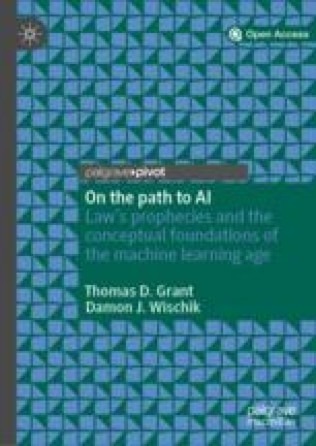
On the path to AI : Law’s prophecies and the conceptual foundations of the machine learning age
This book explores machine learning and its impact on how we make sense of the world. It does so by bringing together two ‘revolutions’ in a surprising analogy: the revolution of machine learning, which has placed computing on the path to artificial intelligence, and the revolution in thinking about the law that was spurred by Oliver Wendell Holmes Jr in the last two decades of the 19th century.

Objective information theory
Objective Information Theory (OIT) is proposed to represent and compute the information in a large-scale complex information system with big data in this monograph. To formally analyze, design, develop, and evaluate the information, OIT interprets the information from essential nature, measures the information from mathematical properties, and models the information from concept, logic, and physic. As the exemplified applications, Air Traffic Control System (ATCS) and Smart Court SoSs (System of Systems) are introduced for practical OITs.

Numerical Methods Using Java : For Data Science, Analysis, and Engineering
Covers a wide range of topics, including chapters on linear algebra, root finding, curve fitting, differentiation and integration, solving differential equations, random numbers and simulation, a whole suite of unconstrained and constrained optimization algorithms, statistics, regression and time series analysis. The mathematical concepts behind the algorithms are clearly explained, with plenty of code examples and illustrations to help even beginners get started. You will: Program in Java using a high-performance numerical library / Learn the mathematics for a wide range of numerical computing algorithms / Convert ideas and equations into code / Put together algorithms/ and classes to build your own engineering solution / Build solvers for industrial optimization problems / Do data analysis using basic and advanced statistics

New perspectives in critical data studies: the ambivalences of data power
Examines the ambivalences of data power. Firstly, the ambivalences between global infrastructures and local invisibilities challenge the grand narrative of the ephemeral nature of a global data infrastructure. They make visible local working and living conditions, and the resources and arrangements required to operate and run them. Secondly, the book examines ambivalences between the state and data justice. It considers data justice in relation to state surveillance and data capitalism, and reflects on the ambivalences between an “entrepreneurial state” and a “welfare state”. Thirdly, the authors discuss ambivalences of everyday practices and collective action, in which civil society groups, communities, and movements try to position the interests of people against the “big players” in the tech industry.

New horizons for a data-driven economy : A roadmap for usage and exploitation of big data in Europe
The book is structured in four parts: Part I “The Big Data Opportunity” explores the value potential of big data with a particular focus on the European context. It also describes the legal, business and social dimensions that need to be addressed, and briefly introduces the European Commission’s BIG project. Part II “The Big Data Value Chain” details the complete big data lifecycle from a technical point of view, ranging from data acquisition, analysis, curation and storage, to data usage and exploitation. Next, Part III “Usage and Exploitation of Big Data” illustrates the value creation possibilities of big data applications in various sectors, including industry, healthcare, finance, energy, media and public services. Finally, Part IV “A Roadmap for Big Data Research” identifies and prioritizes the cross-sectorial requirements for big data research, and outlines the most urgent and challenging technological, economic, political and societal issues for big data in Europe.

Nanoinformatics
Brings out the state of the art on how informatics-based tools are used and expected to be used in nanomaterials research. There has been great progress in the area in which “big-data” generated by experiments or computations are fully utilized to accelerate discovery of new materials, key factors, and design rules. Data-intensive approaches play indispensable roles in advanced materials characterization. "Materials informatics" is the central paradigm in the new trend. "Nanoinformatics" is its essential subset, which focuses on nanostructures of materials such as surfaces, interfaces, dopants, and point defects, playing a critical role in determining materials properties. There have been significant advances in experimental and computational techniques to characterize individual atoms in nanostructures and to gain quantitative information. The collaboration of researchers in materials science and information science is growing actively and is creating a new trend in materials science and engineering.

Multimedia big data computing for IoT applications : Concepts, paradigms and solutions
This book considers all aspects of managing the complexity of Multimedia Big Data Computing (MMBD) for IoT applications and develops a comprehensive taxonomy. It also discusses a process model that addresses a number of research challenges associated with MMBD, such as scalability, accessibility, reliability, heterogeneity, and Quality of Service (QoS) requirements, presenting case studies to demonstrate its application. Further, the book examines the layered architecture of MMBD computing and compares the life cycle of both big data and MMBD. Written by leading experts, it also includes numerous solved examples, technical descriptions, scenarios, procedures, and algorithms.
Modern parallel programming with C++ and assembly language : X86 SIMD development using AVX, AVX2, and AVX-512
Understand the essential details about x86 SIMD architectures and instruction sets including AVX, AVX2, and AVX-512. / Master x86 SIMD data types, arithmetic instructions, and data management operations using both integer and floating-point operands. / Code performance-enhancing functions and algorithms that fully exploit the SIMD capabilities of a modern x86 processor. Employ C++ intrinsic functions and x86-64 assembly language code to carry out arithmetic calculations using common programming constructs including arrays, matrices, and user-defined data structures. Harness the x86 SIMD instruction sets to significantly accelerate the performance of computationally intense algorithms in applications such as machine learning, image processing, computer graphics, statistics, and matrix arithmetic. / Apply leading-edge coding strategies and techniques to optimally exploit the x86 SIMD instruction sets for maximum possible performance.
Modeling and Management of Fuzzy Semantic RDF Data
Presents the latest research findings in fuzzy RDF data modeling and management. Fuzziness widely exist in many data and knowledge intensive applications. With the increasing amount of metadata available, efficient and scalable management of massive semantic data with uncertainty is of crucial importance. This book goes to great depth concerning the fast-growing topic of technologies and approaches of modeling and managing fuzzy metadata with Resource Description Framework (RDF) format. Its major topics include representation of fuzzy RDF data, fuzzy RDF graph matching, query of fuzzy RDF data, and persistence of fuzzy RDF data in diverse databases. The objective of the book is to provide the state-of-the-art information to researchers, practitioners, and postgraduates students who work on the area of big data intelligence and at the same time serve as the uncertain data and knowledge engineering professional as a valuable real-world reference.
Model-Driven Development and Operation of Multi-Cloud Applications : The MODAClouds Approach
In this book readers will find technological discussions on the existing and emerging technologies across the different stages of the big data value chain. They will learn about legal aspects of big data, the social impact, and about education needs and requirements. And they will discover the business perspective and how big data technology can be exploited to deliver value within different sectors of the economy. The book is structured in four parts: Part I "The Big Data Opportunity" explores the value potential of big data with a particular focus on the European context. It also describes the legal, business and social dimensions that need to be addressed, and briefly introduces the European Commission's BIG project.

Mobile Wireless Middleware, Operating Systems and Applications ; 9th EAI International Conference, MOBILWARE 2020, Hohhot, China, July 11, 2020, Proceedings
This book constitutes the refereed conference proceedings of the 9th International Conference on Mobile Wireless Middleware, Operating Systems and Applications, MOBILWARE 2020, held in Hohhot, China, in July 2020. Due to COVID-19 pandemic the conference was held virtually. The 21 revised full papers were reviewed and selected from 69 submissions and are organized in tracks on MobilWare; Big data, data mining and artificial intelligence workshop; Blockchain and internet of things workshop.

Measuring the Business Value of Cloud Computing
The importance of demonstrating the value achieved from IT investments is long established in the Computer Science (CS) and Information Systems (IS) literature. However, emerging technologies such as the ever-changing complex area of cloud computing present new challenges and opportunities for demonstrating how IT investments lead to business value.

IoT and AI Technologies for Sustainable Living : A Practical Handbook
Brings together all the latest methodologies, tools and techniques related to the Internet of Things and Artificial Intelligence in a single volume to build insight into their use in sustainable living. The areas of application include agriculture, smart farming, healthcare, bioinformatics, self-diagnosis systems, body sensor networks, multimedia mining, and multimedia in forensics and security. Provides a comprehensive discussion of modeling and implementation in water resource optimization, recognizing pest patterns, traffic scheduling, web mining, cyber security and cyber forensics. It will help develop an understanding of the need for AI and IoT to have a sustainable era of human living. The tools covered include genetic algorithms, cloud computing, water resource management, web mining, machine learning, block chaining, learning algorithms, sentimental analysis and Natural Language Processing (NLP).
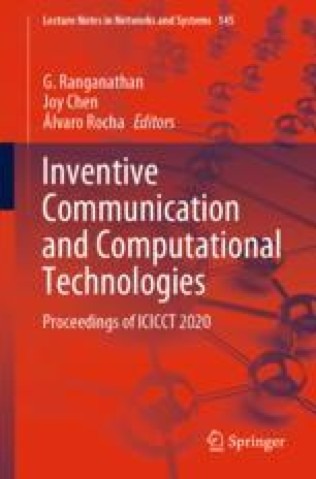
Inventive communication and computational technologies ; Proceedings of ICICCT 2020
This book gathers selected papers presented at the 4th International Conference on Inventive Communication and Computational Technologies (ICICCT 2020), held on 28–29 May 2020 at Gnanamani College of Technology, Tamil Nadu, India. The respective contributions highlight recent research efforts and advances in a new paradigm called ISMAC (IoT in Social, Mobile, Analytics and Cloud contexts). The topics covered include the Internet of Things, Social Networks, Mobile Communications, Big Data Analytics, Bio-inspired Computing and Cloud Computing. Given its scope, the book is chiefly intended for academics and practitioners working to resolve practical issues in this area.
