



Page 3
Page 3

Bauhaus effects in art, architecture, and design
Bringing together an international team of scholars, this book offers new perspectives on the impact that the Bauhaus and its teaching had on a wide range of artistic practices.

Aurora = أورورا
يتحدث المشروع عن مركز للتنمية الإبداعية والتعبيرية بعنوان (أورورا) ويهدف لمساعدة الأشخاص الغير قادرين على التعبير بالكلام بالتعبير بطرق أخرى كالرقص والموسيقا.

Architectures of festival in early modern Europe : Fashioning and re-fashioning urban and courtly space
Draws on up-to-date research by a Europe-wide group of academic scholars and museum and gallery curators to provide a unique, intellectually-stimulating and beautifully-illustrated account of temporary architecture created for festivals of the sixteenth and seventeenth centuries, together with permanent architecture pressed into service for festival occasions across major European locations including Italian, French, Austrian, Scottish and German.

Arabic AI-generated adverts = إعلانات عربية مولدة بالذكاء الاصطناعي
In the ever-evolving landscape of digital marketing, our groundbreaking platform emerges, harnessing the power of artificial intelligence to revolutionize the creation of marketing campaigns. This innovative solution seamlessly combines neural networks, natural language generation, and multimedia processing capabilities to generate comprehensive and personalized marketing assets from a single product image. At its core, the platform leverages deep learning models that analyze the visual characteristics of the uploaded product image and identifies key features and attributes to define the product category, this enables the generation of compelling and persuasive marketing content tailored to the specific product. The platform's multi-faceted approach encompasses three distinct components: text generation, poster creation, and video advertisement production. Utilizing advanced natural language generation techniques, it crafts engaging marketing text that captures the essence and unique selling points of the product. Simultaneously, its image processing capabilities produce visually stunning promotional posters that blend the product image with eye-catching graphics and typography. along with creating captivating video advertisements optimized for social media and online advertising campaigns.

An Illustrated Guide to Furniture History
Provides upper-level students and instructors with an alternative visual analytical approach to learning about furniture history from Antiquity to Postmodernism. Following an immersive teaching model, it presents a Nine-Step Methodology to help students strengthen their visual literacy and quickly acquire subject area knowledge. Moving chronologically through key periods in furniture history and interior design, such as the Renaissance, the Arts and Crafts Movement, and Modernism, it traverses Europe to America to present a comprehensive foundational guide to the history of furniture design.

Advances in visual computing ; Vol. 4292 ; 2nd International symposium, ISVC 2006, Lake Tahoe, NV, USA, November 6-8, 2006, Proceedings, Part II
This year, the program consisted of 13 oral sessions, one poster session, ten special tracks, and six keynote presentations. The response to the call for - pers was very strong. We received more than twice the papers received last year. Specifcally, we received over 280 submissions for the main symposium from which we accepted 65 papers for oral presentation (23% acceptance) and 56 papers for poster presentation (20% acceptance). Special track papers were solicited separately through the Organizing and Program Committees of each track. A total of 57 papers were accepted for presentation in the special tracks. All papers were reviewed with an emphasis on potential to contribute to the state of the art in the ?eld. Selection criteria included accuracy and originality of ideas, clarity and signi?cance of results, and presentation quality. The review process was quite rigorous, involving two to three independent blind reviews followed by several days of discussion.

Advances in Visual Computing ; Vol. 4291 ; 2nd International Symposium, ISVC 2006, Lake Tahoe, NV, USA, November 6-8, 2006, Proceedings, Part I
This year, the program consisted of 13 oral sessions, one poster session, ten special tracks, and six keynote presentations. The response to the call for - pers was very strong. We received more than twice the papers received last year. Specifcally, we received over 280 submissions for the main symposium from which we accepted 65 papers for oral presentation (23% acceptance) and 56 papers for poster presentation (20% acceptance). Special track papers were solicited separately through the Organizing and Program Committees of each track. A total of 57 papers were accepted for presentation in the special tracks. All papers were reviewed with an emphasis on potential to contribute to the state of the art in the ?eld. Selection criteria included accuracy and originality of ideas, clarity and signi?cance of results, and presentation quality. The review process was quite rigorous, involving two to three independent blind reviews followed by several days of discussion. During the discussion period we tried to correct anomalies and errors that might have existed in the initial reviews.

Advances in visual computing ; Vol. 3804 ; 1st International symposium, ISVC 2005, Lake Tahoe, NV, USA, December 5-7, 2005, Proceedings
Constitutes the refereed proceedings of the introduce the papers of the proceedings of the for the 2005 Int- national Symposium on Visual Computing (ISVC). ISVC provides a common umbrella for the four main areas of visual computing: vision, graphics, visu- ization, and virtual reality.

Advances in visual computing ; 4th International symposium, ISVC 2008, Las Vegas, NV, USA, December 1-3, 2008. Proceedings, Part II
The two volume set LNCS 5358 and LNCS 5359 constitutes the refereed proceedings of the 4th International Symposium on Visual Computing, ISVC 2008, held in Las Vegas, NV, USA, in December 2008.

Advances in visual computing ; 4th International Symposium, ISVC 2008, Las Vegas, NV, USA, December 1-3, 2008. Proceedings, Part I
The two volume set LNCS 5358 and LNCS 5359 constitutes the refereed proceedings of the 4th International Symposium on Visual Computing, ISVC 2008, held in Las Vegas, NV, USA, in December 2008.
Advances in Visual Computing ; 3rd International Symposium, ISVC 2007, Lake Tahoe, NV, USA, November 26-28, 2007, Proceedings, Part II
It main of visual computing including vision,graphics,visualization,andvirtualreality.Its goal is to provide a forum for researchers, scientists, engineers and practitioners throughout the world to present their latest research findings, ideas, devel- ments, and applications in the broader area of visual computing.
Advances in Visual Computing ; 3rd International Symposium, ISVC 2007, Lake Tahoe, NV, USA, November 26-28, 2007, Proceedings, Part I
It main of visual computing including vision,graphics,visualization,andvirtualreality.Its goal is to provide a forum for researchers, scientists, engineers and practitioners throughout the world to present their latest research findings, ideas, devel- ments, and applications in the broader area of visual computing.

Advances in multimedia modeling ; 14th International multimedia modeling conference, MMM 2008, Kyoto, Japan, January 9-11, 2008. Proceedings
The papers are organized in topical sections that include material on media understanding, creative media, visual content representation, and video codecs, as well as media retrieval, audio and music.

Advances in cognitive neurodynamics ICCN 2007; Proceedings of the International conference on cognitive neurodynamics - 2007
Contains the Proceedings of the 1st International Conference on Cognitive Neurodynamics held in Shanghai, November 17-21, 2007. The participants were treated to an exciting and stimulating conference that left everyone with an enthusiastic vision for the future of the field. The latest important progress was covered by 13 mini-symposia including: Models of Mental Disorders; Cognitive Machines; Dynamics in learning and memory; Central nervous system synchronization; Neuroinformatics; Cognitive Computational Modeling of Human Language Processing; Cognitive Neurodynamics of Attention; Bottom-Up and Top-Down; Brain Networks; From Anatomy to Dynamics; Translational Cognitive Neuroimaging; K-sets; Theory and Applications; Advanced Signal Processing Techniques for Brain Data Analysis; Visual cortex: information processing and dynamics; Dynamics of Firing Patterns and Synchronization in Neuronal Systems.
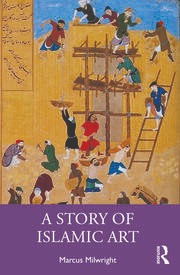
A Story of Islamic Art
The book also provides a detailed introduction, maps, timeline, glossary, and guides for further reading. This book offers accessible answers to key questions in the scholarship on Islamic art and architecture from its earliest times to the present. The issues dealt with in each of the stories include iconography, attitudes towards representation, the role of script, the elaboration of geometric decoration, the creation of sacred and secular spaces in architecture, and the socio-cultural context of art production and consumption.
A Language of Contemporary Architecture : An Index of Topology and Typology
Provides an index of ideas, theories, projects, and definitions that string into a methodology for evaluating the contemporary language of architecture described as “contemporism” through a review of topology (form) and typology (system and elements). Trying to answer the postmodern question of how to move beyond modernism through a thread of architectural styles that tried to respond to deficiencies from the modern promise and contextual changes. Yet, the question remains, should this ongoing struggle to move beyond modernism be a stylistic battle? Has the present architectural practice ever left the modernist tendencies, and is there a structure for a contemporary language in architecture?. Presents a collection of highly illustrated projects that have worked under these parameters to break away from modernism in order to present a holistic integration of topology and typology as a language for “contemporism.” The index is illustrated with individual spreads, which can be read sequentially or independently, and encourages the reader to make their own connections. It also includes interviews and contributions from Toyo Ito, Anthony Vidler, Ben van Berkel, Christian Kerez, and Greg Lynn.
