



Page 3
Page 3

Image Analysis and Recognition ; 5th International Conference, ICIAR 2008, Póvoa de Varzim, Portugal, June 25-27, 2008. Proceedings
The 110 revised full papers presented together with 2 invited papers were carefully reviewed and selected from 226 submissions. The papers are organized in topical sections on image restoration and enhancement, image and video segmentation, non-linear image processing, image and video coding and encryption, indexing and retrieval, computer vision, feature extraction and classification, shape representation and matching, object recognition, character recognition, texture and motion analysis, tracking, biomedical image analysis, biometrics, face recognition, and a special session on recent advances in multimodal biometric systems and applications.

Image Analysis and Recognition ; 4th International Conference, ICIAR 2007, Montreal, Canada, August 22-24, 2007, Proceedings
These papers cover image restoration and enhancement, image and video processing and analysis, image segmentation, computer vision, pattern recognition for image analysis, shape and matching, motion analysis, tracking, and more.

How does the Galaxy Work? : A Galactic Tertulia with Don Cox and Ron Reynolds
Presents a multi-disciplinary approach to the physical mechanisms which structure the shape, evolution and fate of the Galaxy. It contains 4 panel sessions (the recording transcripts of the galactic 'tertulias'), an introductory historical overview on the Galaxy research, 17 reviews, and the proceedings of more than 50 oral and poster contributions. This book is not a new edition of a previous volume but it is in some way related to the book "The Formation of the Milky Way" (1995; Cambridge University Press), which contains the proceedings of the first IAA-IAC-University of Pisa meeting, held in Granada ten years ago, on the formation of the Milky Way, (see Shore's introduction). Where many other books focus their attention on singular galactic components or specific driving forces, this title provides a wide overview on the gaseous and stellar components and on the physical mechanisms which maintain the dynamical equilibrium of such a complex system as the Galaxy. The book, intended for graduate students and researchers, provides a valuable overview on the different physical mechanisms which drive the galactic gas-stars feedback.

Heterogeneous Objects Modelling and Applications : Collection of Papers on Foundations and Practice
Heterogeneous object modelling is a new and quickly developing research area. This book is one of the first attempts to systematically cover the most relevant themes and problems of this new and challenging subject area. It is a collection of invited papers and papers co-authored by the editors. Each chapter presents either new research results or a survey on the following topics:Formal models and abstractions of heterogeneous objects including geometric, topological, discrete and continuous models, operations forming special algebras and conversions between different model types.

Hartree-Fock-Slater Method for Materials Science: The DV-X Alpha Method for Design and Characterization of Materials
Molecular-orbital calculations for materials design such as alloys, ceramics, and coordination compounds are now possible for experimentalists. Molecuar-orbital calculations for the interpretation of chemical effect of spectra are also possible for experimentalists. The most suitable molecular-orbital calculation method for these purpose is the DV-Xa method, which is robust in such a way that the calculation converges to a result even if the structure of the molecule or solid is impossible in the pressure and temperature ranges on earth. This book specially addresses the methods to design novel materials and to predict the spectrallline shape of unknown materials using the DV-Xa molecular-orbital method, but is also useful for those who want to calculate electronic structures of materials using any kind of method.

Handbook of vascular biometrics
This handbook provides the first comprehensive overview of biometrics exploiting the shape of human blood vessels for biometric recognition, i.e. vascular biometrics, including finger vein recognition, hand/palm vein recognition, retina recognition, and sclera recognition.

Handbook of Mathematical Models in Computer Vision
In this edited volume we present the most prominent mathematical models that are considered in computational vision. To this end, tasks of increasing complexity are considered and we present the state-of-the-art methods to cope with such tasks. The volume consists of six thematic areas that provide answers to the most dominant questions of computational vision: Image reconstruction, Segmentation and object extraction, Shape modeling and registration, Motion analysis and tracking, 3D from images, geometry and reconstruction Applications in medical image analysis

Handbook of contact mechanics : Exact solutions of axisymmetric contact problems
This book contains a structured collection of complete solutions of all significant axially symmetric contact problems. It provides solutions for classical profiles such as the sphere, cone or flat cylindrical punch as well as a multitude of other technically relevant shapes, e.g. the truncated cone, the worn sphere, rough profiles, hollow cylinders, etc. Normal, tangential and torsional contacts with and without adhesion are examined. Elastically isotropic, transversally isotropic, viscoelastic and functionally graded media are addressed. The solutions of the contact problems cover the relationships between the macroscopic quantities of force and displacement, the contact configuration as well as the stress and displacement fields at the surface and in some cases within the half-space medium. The solutions are obtained by the simplest available method – usually involving the method of dimensionality reduction or approaches of reduction to the non-adhesive normal contact problem.

Handbook of biomedical image analysis ; Vol.2 : Segmentation models ; Part B
Handbook of Biomedical Image Analysis: Segmentation Models (Volume II) is dedicated to the segmentation of complex shapes from the field of imaging sciences using different mathematicaltechniques. This volume is aimed at researchers and educators in imaging sciences, radiological imaging, clinical and diagnostic imaging, physicists covering different medical imaging modalities, as well as researchers in biomedical engineering, applied mathematics, algorithmic development, computer vision, signal processing, computer graphics and multimedia in general, both in academia and industry.

Handbook of biomedical image analysis : Vol.1 : Segmentation bodels ; Part A
Handbook of Biomedical Image Analysis: Segmentation Models (Volume I) is dedicated to the segmentation of complex shapes from the field of imaging sciences using different mathematical techniques. This volume is aimed at researchers and educators in imaging sciences, radiological imaging, clinical and diagnostic imaging, physicists covering different medical imaging modalities, as well as researchers in biomedical engineering, applied mathematics, algorithmic development, computer vision, signal processing, computer graphics and multimedia in general, both in academia and industry .

Gut orchestra : Micro-symphony turned onco-cacophony
The role of microbiota in colorectal cancer has been studied since alterations in its composition were observed. Ever since, there are more and more pieces of evidence that microbiota could be implicated in colorectal cancer progression. Thus, the components of the microbiota could be biomarkers for the diagnosis and prognosis of colorectal cancer. It is truly important to address how the microbiota interacts with the host and how the host shapes the microbiota, in order to understand the biological pathways and mechanisms involved in their relationship and the consequences of their interactions in colorectal cancer.
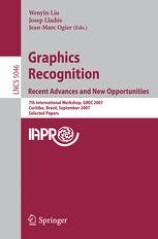
Graphics Recognition. Recent Advances and New Opportunities ; 7th International Workshop, GREC 2007, Curitiba, Brazil, September 20-21, 2007. Selected Papers
This book constitutes the thoroughly refereed post-proceedings of the 7th International Workshop on Graphics Recognition, GREC 2007, held in Curitiba, Brazil in September 2007.The 30 revised full papers presented together with a panel discussion report were carefully selected and improved during two rounds of reviewing and revision. The papers are organized in topical sections on technical documents, maps and diagrams understanding; symbol and shape description and recognition; information retrieval, indexing and spotting; sketching interfaces and on-line processing; feature and primitive analysis and segmentation; performance evaluation and ground truthing.

Granite genesis : in-situ melting and crustal evolution
In this book we suggest an alternative model for the origin of granite in terms of in-situ meltingintracrustal convection that physically determines the process from partial melting of mid-upper crustal rocks to formation of a convecting magma layer. We illustrate the model using the geological, geochemical and geophysical studies from Australia, North and South America, Europe and China, and conclude that heat convection within a crustal partial melting layer is essential for formation of granite magma and that without convection, partial melting of rocks produces migmatites rather than granites. Granite is layer-like within the crust, and shape and size of granite bodies reflect the geometric relationship between an irregular upper surface of the crystallised magma layer and erosion surface. Repeated melting of the crust generates downward-younging granite sequences. Chemical and isotopic compositions of granites indicate differentiation within the magma rather than different deep sources.

Global Smoothness and Shape Preserving Interpolation by Classical Operators
This monograph examines and develops the Global Smoothness Preservation Property (GSPP) and the Shape Preservation Property (SPP) in the field of interpolation of functions. The study is developed for the univariate and bivariate cases using well-known classical interpolation operators of Lagrange, Grünwald, Hermite-Fejér and Shepard type. One of the first books on the subject, it presents interesting new results alongwith an excellent survey of past research.

Geometry for Computer Graphics : Formulae, Examples and Proofs
Geometry is the cornerstone of computer graphics and computer animation, and provides the framework and tools for solving problems in two and three dimensions. This may be in the form of describing simple shapes such as a circle, ellipse, or parabola, or complex problems such as rotating 3D objects about an arbitrary axis. Geometry for Computer Graphics draws together a wide variety of geometric information that will provide a sourcebook of facts, examples, and proofs for students, academics, researchers, and professional practitioners.

Geometric Modeling and Processing - GMP 2006 ; 4th International Conference, GMP 2006, Pittsburgh, PA, USA, July 26-28, 2006, Proceedings
This book constitutes the refereed proceedings of the 4th International Conference on Geometric Modeling and Processing, GMP 2006, held in Pittsburgh, PA, USA in July 2006. The 36 revised full papers and 21 revised short papers presented were carefully reviewed and selected from a total of 84 submissions. All current issues in the area of geometric modeling and processing are addressed and the impact in such areas as computer graphics, computer vision, machining, robotics, and scientific visualization is shown. The papers are organized in topical sections on shape reconstruction, curves and surfaces, geometric processing, shape deformation, shape description, shape recognition, geometric modeling, subdivision surfaces, and engineering applications.

Geometric Modeling and Algebraic Geometry
The two ?elds of Geometric Modeling and Algebraic Geometry, though closely - lated, are traditionally represented by two almost disjoint scienti?c communities. Both ?elds deal with objects de?ned by algebraic equations, but the objects are studied in different ways. While algebraic geometry has developed impressive - sults for understanding the theoretical nature of these objects, geometric modeling focuses on practical applications of virtual shapes de?ned by algebraic equations. Recently, however, interaction between the two ?elds has stimulated new research. For instance, algorithms for solving intersection problems have bene?ted from c- tributions from the algebraic side.

Geographies of Asylum in Europe and the Role of European Localities
This book describes how the numerous arrivals of asylum seekers since 2015 shaped reception and integration processes in Europe. It addresses the structuration of asylum and reception systems, and spaces and places of reception on European, national, regional and local level.

Geographic Information Science ; 5th International Conference, GIScience 2008, Park City, UT, USA, September 23-26, 2008. Proceedings
This book constitutes the refereed proceedings of the 5th International Conference on Geographic Information Secience, GIScience 2008, held in Park City, UT, USA, in September 2008.The 24 revised full papers presented were carefully reviewed and selected from 77 submissions. Among the traditional topics addressed are spatial relations, geographic dynamics, and spatial data types. A significant number of papers deal with navigation networks, location-based services, and spatial information query and retrieval. Geo-sensors, mobile computing, and Web mapping rank among the important new directions.

Geodetic Deformation Monitoring : From Geophysical to Engineering Roles ; IAG Symposium Jaén, Spain, March 7-19,2005
Geodesy is the science dealing with the determination of the position of points in space, the shape and gravity field of the Earth and with their time variations. A consequence is that geodesists feel as a permanent subject of research, the detection, analysis and interpretation of spatial deformation as well as gravity field variation. This book collects 36 selected papers from the International Symposium on Geodetic Deformation Monitoring held in Jaén (Spain) from 17th to 19th March 2005. The main topics covered in the symposium were: mathematical and statistical models for crustal deformation analysis, deformation monitoring from GPS and InSAR data: analysis and geophysical interpretation, geodetic monitoring of movements in civil engineering, integration of spatial and terrestrial techniques in deformation studies, geodynamical applications of gravimetric observations and present-day geodetic instrumentation for deformation monitoring. This volume is a good overview of theoretical matters, models and results.
