



Page 3
Page 3

Formal Methods and Testing : An Outcome of the FORTEST Network, Revised Selected Papers
This book constitutes the thoroughly refereed and peer-reviewed outcome of the Formal Methods and Testing (FORTEST) network - formed as a network established under UK EPSRC funding that investigated the relationships between formal (and semi-formal) methods and software testing - now being a subject group of two BCS Special Interest Groups: Formal Aspects of Computing Science (BCS FACS) and Special Interest Group in Software Testing (BCS SIGIST).

Formal approaches to software testing ; Vol. 3395 ; 4th International workshop, FATES 2004, Linz, Austria, September 21, 2004, Revised Selected Papers
Testing often accounts for more than 50% of the required e?ort during system development.Thechallengeforresearchistoreducethesecostsbyprovidingnew methods for the speci?cation and generation of high-quality tests. Experience has shown that the use of formal methods in testing represents a very important means for improving the testing process. Formal methods allow for the analysis andinterpretationofmodelsinarigorousandprecisemathematicalmanner.The use of formal methods is not restricted to system models only. Test models may alsobeexamined.Analyzingsystemmodelsprovidesthepossibilityofgenerating complete test suites in a systematic and possibly automated manner whereas examining test models allows for the detection of design errors in test suites and their optimization with respect to readability or compilation and execution time. Due to the numerous possibilities for their application, formal methods have become more and more popular in recent years. The Formal Approaches in Software Testing (FATES) workshop series also bene?ts from the growing popularity of formal methods. After the workshops in Aalborg (Denmark, 2001), Brno (Czech Republic, 2002) and Montr´ eal (Canada, 2003), FATES 2004 in Linz (Austria) was the fourth workshop of this series. Similar to the workshop in 2003, FATES 2004 was organized in a?liation with the IEEE/ACM Conference on Automated Software Engineering (ASE 2004). FATES 2004 received 41 submissions. Each submission was reviewed by at least three independent reviewers from the Program Committee with the help of some additional reviewers. Based on their evaluations, 14 full papers and one wo- in-progress paper from 11 di?erent countries were selected for presentation.

Flow and microreactor technology in medicinal chemistry
The ultimate dream for medicinal chemists is the ability to synthesize new drug-like compounds with the push of a button. The key to synthesizing chemical compounds more quickly and accurately lies in computer-controlled technologies that can be optimized by machine learning. Recent developments in computer-controlled automated syntheses that rely on miniature flow reactors—with integrated analysis of the resulting products—provide a workable technology for synthesizing new chemical substances very quickly and with minimal effort.

Feasibility and Infeasibility in Optimization : Algorithms and Computational Methods
Feasibility and Infeasibility in Optimization is a timely expository book that summarizes the state of the art in both classical and recent algorithms related to feasibility and infeasibility in optimization, with a focus on practical methods. All model forms are covered, including linear, nonlinear, and mixed-integer programs. Connections to related work in constraint programming are shown. Part I of the book addresses algorithms for seeking feasibility quickly, including new methods for the difficult cases of nonlinear and mixed-integer programs. Part II provides algorithms for analyzing infeasibility by isolating minimal infeasible (or maximum feasible) subsets of constraints, or by finding the best repair for the infeasibility. Infeasibility analysis algorithms have arisen primarily over the last two decades, and the book covers these in depth and detail. Part III describes applications in numerous areas outside of direct infeasibility analysis such as finding decision trees for data classification, analyzing protein folding, radiation treatment planning, automated test assembly, etc.

Experimental vibration analysis for civil structures : Testing, sensing, monitoring, and control
Covers a wide range of topics in the areas of vibration testing, instrumentation, and analysis of civil engineering and critical infrastructure. It explains how recent research, development, and applications in experimental vibration analysis of civil engineering structures have progressed significantly due to advancements in the fields of sensor and testing technologies, instrumentation, data acquisition systems, computer technology, computational modeling and simulation of large and complex civil infrastructure systems. The book also examines how cutting-edge artificial intelligence and data analytics can be applied to infrastructure systems.
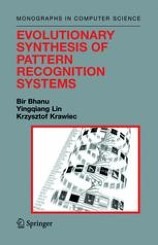
Evolutionary Synthesis of Pattern Recognition Systems
Evolutionary Synthesis of Pattern Recognition Systems presents novel effective approaches based on evolutionary computational techniques, such as genetic programming (GP), linear genetic programming (LGP), coevolutionary genetic programming (CGP) and genetic algorithms (GA) to automate the synthesis and analysis of object detection and recognition systems. The book’s concepts, principles, and methodologies will enable readers to automatically build robust and flexible systems—in a systematic manner—that can provide human-competitive performance and reduce the cost of designing and maintaining these systems. Its content covers all key aspects of object recognition: object detection, feature selection, feature discovery, object recognition, domain knowledge. Basic knowledge of programming and data structures, and some calculus, is presupposed.ing the book’s novel ideas

Energy-efficient and semi-automated truck platooning : Research and evaluation
This book presents research and evaluation results of the Austrian flagship project “Connecting Austria,” illustrating the wide range of research needs and questions that arise when semi-automated truck platooning is deployed in Austria. The work presented is introduced in the context of work in similar research areas around the world. This interdisciplinary research effort considers aspects of engineering, road-vehicle and infrastructure technologies, traffic management and optimization, traffic safety, and psychology, as well as potential economic effects.

Enabling things to talk : Designing IoT solutions with the IoT architectural reference model
The Internet of Things (IoT) is an emerging network superstructure that will connect physical resources and actual users. It will support an ecosystem of smart applications and services bringing hyper-connectivity to our society by using augmented and rich interfaces. Whereas in the beginning IoT referred to the advent of barcodes and Radio Frequency Identification (RFID), which helped to automate inventory, tracking and basic identification, today IoT is characterized by a dynamic trend toward connecting smart sensors, objects, devices, data and applications. The next step will be “cognitive IoT,” facilitating object and data re-use across application domains and leveraging hyper-connectivity, interoperability solutions and semantically enriched information distribution.
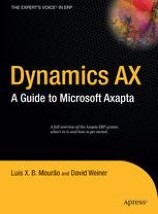
Dynamics AX : A guide to microsoft axapta
The world’s leading Axapta 3.0 experts will take you from Axapta novice to pro in this book. This authoritative and comprehensive guide walks you gently through the bulk of what you need to know to productively apply the system in the real worldwith real data, sizing guidelines, deployment architectures, and code. By the book’s end, you will have acquired practical hands-on experience. You’ll be able to get Axapta 3.0 up and running, and identify gaps between the out-of-the-box product and your actual business needs. You’ll also know how to automate real-world business functions.

Dynamic pricing and automated resource allocation for complex information services : Reinforcement learning and combinatorial auctions
This book develops allocation mechanisms that aim to ensure an efficient resource allocation in modern IT-services. The author presents two methods, both of which using the users’ willingness-to-pay to control the allocation process. The author generates a method to calculate dynamic resource prices.

Drug Metabolism, Pharmacokinetics and Bioanalysis
Drug metabolism/pharmacokinetics and drug interaction studies have been extensively carried out in order to secure the druggability and safety of new chemical entities throughout the development of new drugs. Recently, drug metabolism and transport by phase II drug metabolizing enzymes and drug transporters, respectively, as well as phase I drug metabolizing enzymes, have been studied. A combination of biochemical advances in the function and regulation of drug metabolizing enzymes and automated analytical technologies are revolutionizing drug metabolism research. There are also potential drug-drug interactions with co-administered drugs due to inhibition and/or induction of drug metabolic enzymes and drug transporters.

Drive Solutions : Mechatronics for Production and Logistics
Highly automated production and logistics facilities require mechatronic drive solutions. This book describes in which way the industrial production and logistics work and shows the structure of the drive solutions required for this purpose.
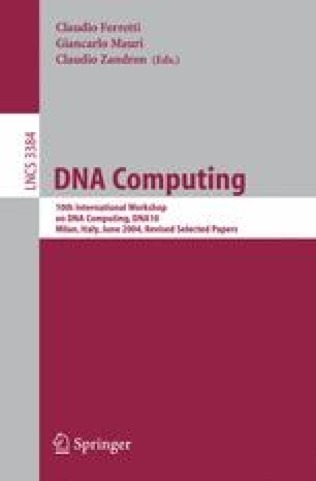
DNA computing ; Vol. 3384 10th International workshop on DNA computing, DNA10, Milan, Italy, June 7-10, 2004, Revised Selected Papers
This book constitutes the thoroughly refereed postproceedings of the 10th International Workshop on DNA Based Computers, DNA10, held in Milano, Italy in June 2004. The 39 revised full papers presented were carefully selected during two rounds of reviewing and improvement from an initial total of 94 submissions. The papers address all current issues in DNA based computing and biomolecular computing ranging from theoretical and methodological issues to implementations and experimental aspects.

Digital transformation in semiconductor manufacturing ; Proceedings of the 1st and 2nd European advances in digital transformation Conference, EADTC 2018, Zittau, Germany and EADTC 2019, Milan, Italy
This book reports on cutting-edge electrical engineering and microelectronics solutions to foster and support digitalization in the semiconductor industry.

Digital Finance : Security Tokens and Unlocking the Real Potential of Blockchain
In Digital Finance: Security Tokens and Unlocking the Real Potential Blockchain, readers will realize why security tokens are creating huge excitement in the financial industry. By combining the latest in technology and the potential for automated world-class investor protections, regulatory compliance and customer service, security tokens offer a plethora of benefits that will drive cost reductions, enhance flexibility and open up opportunities for new business models and revenue streams. Digital Finance thoroughly examines how this powerful technology can overhaul our current financial infrastructure in a way that will increase efficiency, transparency, and security.

Development and evaluation of setup strategies in printed circuit board assembly
The last decade has seen a rapid extension of electronic control devices for various types of technical products. In modern electronics manufacturing, highly automated assembly systems are used to mount the electronic components onto the printed circuit boards (PCBs). Maintaining high production flexibility in order to meet the desired product variety and, at the same time, achieving high utilization rates of the capital-intensive production equipment can only be achieved by applying highly sophisticated planning and control strategies for the operation of modern placement machines. Ihsan Onur Yilmaz develops a novel group setup strategy which integrates multiple problems of the PCB assembly, especially in a medium-variety production environment. At the core of his principle approach are the identification of similarities between different types of PCBs and the generation of PCB clusters upon which group setup strategies are based. The developed setup strategies are also innovative in the sense that they integrate the optimization of detailed machine operations. This integration has not been achieved in the classical approaches which primarily rely on statistical clustering techniques.

Deploying .NET Applications : Learning MSBuild and ClickOnce
Whether building a console application, a web service, or a smart client, you eventually need to distribute your finished work. Deploying .NET Applications is a complete guide to delivering applications built with .NET. Packed with hands-on guidance, practical examples, and war stories from the authors many experiences with deployment scenarios, this book provides everything you need to know. The book begins by introducing the deployment problem, then examines why deployment is an engineering problem for organizations. Subsequent chapters provide detail about deploying each type of application, then discuss automated deployments.
Deep neural networks and data for automated driving : robustness, uncertainty quantification, and insights towards safety
Environment perception for highly automated driving heavily employs deep neural networks, facing many challenges. How much data do we need for training and testing? How to use synthetic data to save labeling costs for training? How do we increase robustness and decrease memory usage? For inevitably poor conditions: How do we know that the network is uncertain about its decisions? Can we understand a bit more about what actually happens inside neural networks? This leads to a very practical problem particularly for DNNs employed in automated driving: What are useful validation techniques and how about safety? This book unites the views from both academia and industry, where computer vision and machine learning meet environment perception for highly automated driving. Naturally, aspects of data, robustness, uncertainty quantification, and, last but not least, safety are at the core of it. This book is unique: In its first part, an extended survey of all the relevant aspects is provided. The second part contains the detailed technical elaboration of the various questions mentioned above.

Declarative programming for knowledge management ; 16th International conference on applications of declarative programming and knowledge management, INAP 2005, Fukuoka, Japan, October 22-24, 2005. Revised Selected Papers
Presents a selection of papers presented at the 16th Inter- tional Conference on Applications of Declarative Programming and Knowledge Management, INAP 2005,held in October 2005 at Waseda University, Fukuoka, Japan. These papers re?ect a snapshot of ongoing research and current app- cations in knowledge management and declarative programming.

Decision Procedures : An Algorithmic Point of View
Concentrates on decision procedures for first-order theories that are commonly used in automated verification and reasoning, theorem-proving, compiler optimization and operations research.
