



Page 29
Page 29

Control of Biofilm Infections by Signal Manipulation
Describes the molecular mechanisms of cell-to-cell communication among bacterial cells in a biofilm, the development of antibiofilm inhibitors, like quorum-sensing inhibitors, and the use of biofilm inhibitors to prevent and treat bacterial infections in humans and other animals.

Continental Philosophy of Technoscience
This text draws upon continental authors such as Hegel, Engels, Heidegger, Bachelard and Lacan (and their fields of dialectics, phenomenology and psychoanalysis) in developing a coherent message around the technicity of science or rather, “technoscience”. Within technoscience, the focus will be on recent developments in life sciences research, such as genomics, post-genomics, synthetic biology and global ecology. This book uniquely presents continental perspectives that tend to be underrepresented in mainstream philosophy of science, yet entail crucial insights for coming to terms with technoscience as it is evolving on a global scale today.

Contemporary Bioethics : Islamic Perspective
This book discusses the common principles of morality and ethics derived from divinely endowed intuitive reason through the creation of al-fitr' a (nature) and human intellect (al-‘aql). Biomedical topics are presented and ethical issues related to topics such as genetic testing, assisted reproduction and organ transplantation are discussed. Whereas these natural sources are God’s special gifts to human beings, God’s revelation as given to the prophets is the supernatural source of divine guidance through which human communities have been guided at all times through history. The second part of the book concentrates on the objectives of Islamic religious practice – the maqa' sid – which include: Preservation of Faith, Preservation of Life, Preservation of Mind (intellect and reason), Preservation of Progeny (al-nasl) and Preservation of Property. Lastly, the third part of the book discusses selected topical issues, including abortion, assisted reproduction devices, genetics, organ transplantation, brain death and end-of-life aspects.
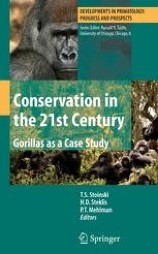
Conservation in the 21st century : Gorillas as a case study
this book is essential reading for primatologists, biologists, and conservationists searching for both a current assessment of the gorilla’s conservation status and, importantly, for ideas and tools that show promise of halting or reversing population declines and putting us on a path to achieving a stable, long-term co-existence of human and wildlife populations.

Conservation Biology : Foundations, Concepts, Applications
Fred Van Dyke’s new textbook, Conservation Biology: Foundations, Concepts, Applications, 2nd Edition represents a major new text for anyone interested in conservation. Drawing on his experience as a conservation biologist, college teacher, and successful textbook author, Van Dyke’s organizational clarity and readable style make this book an invaluable resource for students in conservation around the globe.Presenting key information and well-selected examples, this student-friendly volume carefully integrates the science of conservation biology with its implications for ethics, law, policy and economics. In addition to rigorous examination of the scientific theory supporting conservation biology and its applications, this unique book includes a number of features which set it apart from others. These include its chapters on aquatic conservation, landscape ecology, and ecosystem management, and its direct explanation and invitation to students on how to enter the work of conservation as a professional and personal vocation.

Consciousness : A Mathematical Treatment of the Global Neuronal Workspace Model
This book brings together the fundamental ideas of information theory and the statistical mechanics of phase transitions within the context of the neurosciences, culture, immunology and socio-psychological studies. Outlined is a program pertaining to a dynamic and semantic extension of current models for the global neuronal workspace as were previously introduced by Baars, Dretske and others.

Conditional Mutagenesis : An Approach to Disease Models
Leading experts provide timely and comprehensive information on methods for conditional mutagenesis in the mouse (part 1) and their application to model human physiology and pathophysiology (part 2). It illustrates how sophisticated genetic manipulations of the mouse genome are employed to model human diseases and to identify underlying molecular mechanisms. Finally the book considers the development of new drugs to treat them.

Conceptual Ecology and Invasion Biology : Reciprocal Approaches to Nature
In this edited volume, global experts in ecology and evolutionary biology explore how theories in ecology elucidate the invasion processes while also examining how specific invasions informs ecological theory. This reciprocal benefit is highlighted in a number of scales of organization: population, community and biogeographic, while employing example invaders in all major groups of organisms and from a number of regions around the globe. The chapters in this volume utilize many of the cutting edge observational, experimental, analytical and computational methods used in modern ecology. Through merging conceptual ecology and invasion biology we can obtain a better understanding of the invasion process while also developing a better understanding of how ecological systems function.

Computer Applications in Sustainable Forest Management : Including Perspectives on Collaboration and Integration
Computer Applications in Sustainable Forest Management presents state-of-the-art computer applications in a variety of specialty areas of forestry, including inventory, remote sensing, information management, modelling and visualization, biometrics, forest and harvest planning, bioeconomics and marketing, and decision science for management. This book emphasizes integration, or collaborative use, of computer technologies across different disciplines through interdisciplinary research and development in North America, China, and Europe. It also offers important new insights on how to continue advancing computational technologies in forest management to better achieve the basic goal of sustainable forest management. Case studies demonstrate integration of, or collaboration among, multiple computer applications for sustainable forest management.
Computational methods in systems biology ; 6th International Conference CMSB 2008, Rostock, Germany, October 12-15, 2008. Proceedings
This book constitutes the refereed proceedings of the 6th International Conference on Computational Methods in Systems Biology, CMSB 2008, held in Rostock, Germany, in September 2008.
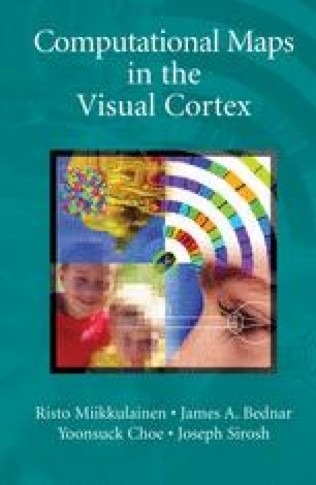
Computational Maps in the Visual Cortex
For more than 30 years, the visual cortex has been the source of new theories and ideas about how the brain processes information. Understanding the computations in the visual cortex is therefore an important step toward a general theory of computational brain theory

Computational Life Sciences ; Vol. 4216 ; 2nd International Symposium, CompLife 2006, Cambridge, UK, September 27-29, 2006, Proceedings
This book constitutes the refereed proceedings of the Second International Symposium on Computational Life Sciences, CompLife 2006. The papers are organized in topical sections on genomics, data mining, molecular simulation, molecular informatics, systems biology, biological networks/metabolism, and computational neuroscience.

Computational Life Sciences ; Vol. 3695 ; 1st International Symposium, CompLife 2005, Konstanz, Germany, September 25-27, 2005, Proceedings
This book constitutes the refereed proceedings of the First International Symposium on Computational Life Sciences, CompLife 2005, held in Konstanz, Germany in September 2005. The integration of knowledge in the life sciences is continuing apace with ev- increasingimportancebeing placedoncomputer-basedmethodsofdata capture, analysis, and knowledge representation. Today, our many di?erent sciences are providing us with a sea of information: it is the handling of this in?ux that is becoming a key discovery and regulatory question. The solutions to these problems will result in advancements to all of the involved sciences and will be highly in?uential both in the selection of the areas scientists seek to investigate and also on their success. For this to happen, it is crucial to establish an open and lively exchange between computer scientists, biologists, and chemists. To encourage precisely this type of exchange, crossing the borders of the sciences, we organized the 1st Symposium on Computational Life Science in Konstanz, Germany(September 25 27,2005).

Computational intelligence in biomedicine and bioinformatics : Current trends and applications
The purpose of this book is to provide an overview of powerful state-of-the-art methodologies that are currently utilized for biomedicine and/ or bioinformatics-oriented applications, so that researchers working in those fields could learn of new methods to help them tackle their problems.

Computational genetics and genomics : Tools for understanding disease
The authors introduce a new computational approach that makes it possible to identify the genetic basis for differences in physiological or pathological responses among inbred mouse strains, thus facilitating more rapid genetic discovery

Computational Discovery of Scientific Knowledge : Introduction, Techniques, and Applications in Environmental and Life Sciences
Advances in technology have enabled the collection of data from scientific observations, simulations, and experiments at an ever-increasing pace. For the scientist and engineer to benefit from these enhanced data collecting capabilities, it is becoming clear that semi-automated data analysis techniques must be applied to find the useful information in the data. Computational scientific discovery methods can be used to this end: they focus on applying computational methods to automate scientific activities, such as finding laws from observational data. In contrast to mining scientific data, which focuses on building highly predictive models, computational scientific discovery puts a strong emphasis on discovering knowledge represented in formalisms used by scientists and engineers, such as numeric equations and reaction pathways. This state-of-the-art survey provides an introduction to computational approaches to the discovery of scientific knowledge and gives an overview of recent advances in this area, including techniques and applications in environmental and life sciences.
Combinatorial pattern matching ; 19th Annual Symposium, CPM 2008, Pisa, Italy, June 18-20, 2008 Proceedings
This book constitutes the refereed proceedings of the 19th Annual Symposium on Combinatorial Pattern Matching, CPM 2008, held in Pisa, Italy, in June 2008.

Cognitive Development in Chimpanzees
From an evolutionary perspective, understanding chimpanzees offers a way of understanding the basis of human nature. This book on cognitive development in chimpanzees is the first of its kind to focus on infants reared by their own mothers within a natural setting, illustrating various aspects of chimpanzee cognition and the developmental changes that accompany them. The subjects of this book are chimpanzees of three generations inhabiting an enriched environment as well as a wild community in West Africa; and phenomena such as face recognition, concept formation, object manipulation, tool manufacture and use, decision making, learning, communication, self-awareness, intentionality, understanding others’ minds, cooperation, deception, altruism, and reciprocity observed within these groups are reported herein. Unique approaches both in the field and in the laboratory go hand in hand to illustrate the cognitive world of our closest living evolutionary relatives.

Coastal dunes : Ecology and conservation
Brings together coastal dune specialists from tropical and temperate latitudes, which together cover a wide set of topics, including: geomorphology, community dynamics, ecophysiology, biotic interactions and environmental problems and conservation. A major product of this book is a set of recommendations for future research, identifying relevant topics where detailed knowledge is still lacking. It also identifies management tools that will promote and maintain the rich diversity of the dune environments in the context of continuing coastal development.

Clusia : A woody neotropical genus of remarkable plasticity and diversity
Clusia is the only dicotyledonous tree genus with crassulacean acid metabolism (CAM), and in some cases all variants of CAM can be expressed in one given species. These unique features as well as Clusia's extreme flexibility have put it in the limelight of international research. The studies presented in this volume embrace anatomy, morphology and plant architecture, phytogeographical distribution and community ecology, phylogeny and genetic diversity, physiology and metabolism, physiological ecology and functional diversity, circadian rhythmicity and biological timing. Covering all aspects of tree biology, this richly illustrated volume is an invaluable source of information for any plant scientist.
