



Page 29
Page 29

Intercultural Dialogue in the European Education Policies : A Conceptual Approach
This book analyses intercultural dialogue as a concept, policy and ideal in European education policy documentation. The core European transnational organizatons – the Council of Europe and the European Union – have actively promoted policies to engender inclusive societies and respond to challenges that diversification may entail.

Intercultural approaches to education : From theory to practice
This book provides an analysis of contemporary societies and schools shaped by cultural diversity, globalization and migration. This diversity is necessarily reflected in education systems and requires the promotion of intercultural approaches able to improve learning processes and the quality of education.

Interactions : Mathematics, Physics and Philosophy, 1860-1930
This is an outstanding collection of original essays. All of them concern the history and philosophy of mathematics and physics in the years from 1870 to 1930. More specifically, they are intellectual histories of the interactions between the three disciplines, philosophy, mathematics and physics, they too often overlook the wealth of philosophical perplexities that can arise in detailed examples and case studies, both contemporary and historical. This volume refocuses our attention by addressing a number of topics connected to applied mathematics, any one of which is worthy of every philosopher’s attention.

Intentional acts and institutional facts : Essays on John Searle’s social ontology
This book includes ten original essays that critically examine central themes of John Searle’s ontology of society, as well as a new essay by Searle that summarizes and further develops his work in that area. The critical essays are grouped into three parts. Part I (Aspects of Collective Intentionality) . Part II (From Intentions to Institutions: Development and Evolution) . Part III (Aspects of Institutional Reality).

Intelligent system algorithms and applications in science and technology
Explores the application of intelligent techniques in various fields of engineering and technology. It addresses diverse topics in such areas as machine learning-based intelligent systems for healthcare, applications of artificial intelligence and the Internet of Things, intelligent data analytics techniques, intelligent network systems and applications, and inequalities and process control systems. The authors explore the full breadth of the field, which encompasses data analysis, image processing, speech processing and recognition, medical science and healthcare monitoring, smart irrigation systems, insurance and banking, robotics and process control, and more.
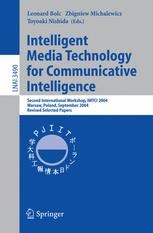
Intelligent Media Technology for Communicative Intelligence ; 2nd International Workshop, IMTCI 2004, Warsaw, Poland, September 13-14, 2004. Revised Selected Papers
The 2nd Workshop on Intelligent Media Technology for Communicative Intelligence commemorating the 10th anniversary of the Polish-Japanese Institute of Information Technology in Warsaw aimed to explore the current research topics in the ?eld of int- ligent media technologies for communicative intelligence. Communicative intelligence represents a new challenge towards building a sup- intelligence on the ubiquitous global network by accumulating a huge amount of - man andknowledgeresources.The term "communicativeintelligence"re?ects the view that communication is at the very core of intelligence and its creation. Communication permits novel ideas to emerge from intimate interactions by multiple agents, ranging from collaboration to competition. The recent advance of information and commu- cation technologies has established an information infrastructure that allows humans and artifacts to communicate with each other beyond space and time. It enables us to advance a step further to realize a communicative intelligence with many fruitful applications. Intelligentmediatechnologiesattempttocaptureandaugmentpeople’scommuni- tive activities by embedding computers into the environment to enhance interactions in an unobtrusive manner. The introduction of embodied conversational agents that might mediate conversations among people in a social context is the next step in the p- cess. The scope of intelligent media technologies includes design and development of intelligent supports for content production, distribution, and utilization, since rich c- tent is crucial for communication in many applications. The promising applications of intelligence media technologies include e-learning, knowledge management systems, e-democracy, and other communication-intensivesubject domains.

Intelligent Life in the Universe : Principles and Requirements Behind Its Emergence
This book addresses the possible origins, development and fate of intelligent life in the universe. The author presents a wide-ranging analysis of the type of knowldege that can be inferred about extraterrestial intelligent societies from our own biological, cultural and scientific evolution, and from the likely future of mankind. Providing extensive background information from astronomy, geology, chemistry and biology, the book will appeal to both the scientist and the general reader.

Intelligent Leadership : Constructs for Thinking Education Leaders
This book pulls together the thinking of 16 educators with diverse backgrounds and experiences, all of whom hold keen interests in harnessing the forces that can improve educational opportunity for students. Becoming an effective education leader requires more than a passing knowledge of leadership theory; it also requires knowledge of what works in education and an on-going commitment to thinking about how leadership dynamics and pedagogical theory intersect within contextual realities. Intelligent Leadership: Constructs for Thinking Education Leaders is intended to stimulate the thinking of every educator who aspires to influence decision-making and to provide direction to their school, district or institution.

Intelligent drugs : How AI is transforming healthcare
The progress of biotechnologies and artificial intelligence allowed the development of vaccines in less than a year, thus saving millions of human lives and preserving the global economy. The emergence of intelligent drugs is highlighted, with the promise of ultra-targeted, more effective, and safer treatments against a wide range of diseases. Personalized medicine then becomes realistic, with computer-designed drugs, perfectly adapted to each individual, tested on virtual patients before their real use. In the near future, thanks to AI, new drugs will improve physical performance, stimulate cognitive abilities, prevent diseases, and slow down aging.
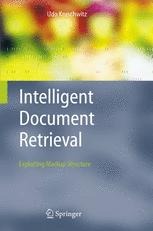
Intelligent Document Retrieval : Exploiting Markup Structure
Collections of digital documents can nowadays be found everywhere in institutions, universities or companies. Examples are Web sites or intranets. But searching them for information can still be painful. Searches often return either large numbers of matches or no suitable matches at all. Such document collections can vary a lot in size and how much structure they carry. What they have in common is that they typically do have some structure and that they cover a limited range of topics. The second point is significantly different from the Web in general. The type of search system that we propose in this book can suggest ways of refining or relaxing the query to assist a user in the search process. In order to suggest sensible query modifications we would need to know what the documents are about. Explicit knowledge about the document collection encoded in some electronic form is what we need. However, typically such knowledge is not available. So we construct it automatically.
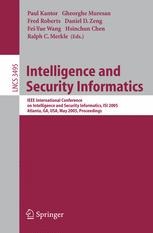
Intelligence and security informatics ; Vol. 3495 : IEEE International Conference on Intelligence and Security Informatics, ISI 2005, Atlanta, GA, USA, May 19-20, 2005, Proceedings
Intelligence and security informatics (ISI) can be broadly defined as the study of the development and use of advanced information technologies and systems for national and international security-related applications, through an integrated technological, organizational, and policy-based approach. In the past few years, ISI research has experienced tremendous growth and attracted substantial interest from academic researchers in related fields as well as practitioners from both government agencies and industry. The first two meetings (ISI 2003 and ISI 2004) in the ISI symposium and conference series were held in Tucson, Arizona, in 2003 and 2004, respectively. They provided a stimulating intellectual forum for discussion among previously disparate communities: academic researchers in information technologies, computer science, public policy, and social studies; local, state, and federal law enforcement and intelligence experts; and information technology industry consultants and practitioners.

Intellectual Property in the Global Trading System : EU-China Perspective
Having explored multifaceted issues of IPR enforcement, this book argues that IPR enforcement problem is not an actual outcome of Confucian philosophy and "to steal a book" is not an "elegant offence." This book demonstrates that counterfeiting and piracy are common inevitable consequences of inadequate economic development and a by-product of a unique set of socioeconomic crises deriving from the development of a dysfunctional institutional regime. By examining areas of compatibilities between European and Chinese cultures and analysing painful lessons from the US-China negotiations over IPR protection.

Integration, Growth, and Cohesion in an Enlarged European Union
This book’s thirteen contributions bring together the results of recent research on determinants of regional specialization, growth, and convergence in the context of European integration. They offer fresh theoretical and empirical evidence on patterns of regional production structures, specialization, regional disparities, convergence and divergence processes, and evaluation of cohesion policies on both current and future European Union (EU) member states in the context of increased integration. These subjects are addressed in both individual and cross-country analysis using innovative methodologies. They examine structural changes and economic performance differentials across regions and countries in an enlarged EU as well as on evaluating existing policies aimed at reducing economic imbalances.
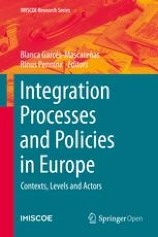
Integration Processes and Policies in Europe : Contexts, Levels and Actors
Experts on integration processes, integration policies, transnationalism, and the migration and development framework provide an academic assessment of the 2011 European Agenda for the Integration of Third-Country Nationals, which calls for integration policies in the EU to involve not only immigrants and their society of settlement, but also actors in their country of origin. Moreover, a heuristic model is developed for the non-normative, analytical study of integration processes and policies based on conceptual, demographic, and historical accounts.

Integration of Information for Environmental Security : Environmental Security - Information Security - Disaster Forecast and Prevention - Water Resources Management
Currently the necessary information exists in a multitude of forms and formats geographically and physically scattered over different countries, institutes and organisations, and are subject to widely different data policies and management schemes. Moreover, there is no complete and updated overview of the existing information, e.g. in the form of a metadata catalogue. As a result, integration of this information in case of emergencies has proven to be extremely difficult, if not impossible. Although in some cases, interesting and impressive "demonstrations" have been shown of the possibilities of the integration of information, for a number of reasons these have reached the "operational" stage.

Integration in Asia and Europe : Historical Dynamics, Political Issues, and Economic Perspectives
This book critically analyses the economic and institutional changes in both Europe and Asia. There is considerable potential for instability, but one also finds regional growth opportunities. Comparative policy analysis and evaluation of various cooperation strategies are presented. Emphasis is on banking, financial market dynamics, ICT, and macroeconomic policies as well as trade, energy, and environmental issues.

Intégration : Chapitres 1 à 4 = Integration : Chapters 1 to 4
Nicolas BOURBAKI's Elements of Mathematics aim to provide a rigorous, systematic presentation without prerequisites of mathematics from their foundations. it includes the chapters: Inequalities of convexity, Riesz spaces, Measures on locally compact spaces.

Integrating Science and Politics for Public Health
This volume is a welcome and timely contribution to our understanding of public health policy making as an essentially political endeavour. A sophisticated mix of theoretical, conceptual and empirical analysis serves as a guide to the challenges inherent in making public policy that accounts for and improves population health.

Integrating lifestyle medicine for prediabetes, type 2 diabetes, and cardiometabolic disease
Provides clinical evidence for and a mechanistic understanding of the six pillars of lifestyle medicine. It guides the reader to identify opportunities for early intervention rather than focus on the diagnosis and treatment of the established disease. Interventions at earlier points have the potential to mitigate progression, prevent complications, reduce costs, and improve a patient’s overall health at all points in their lifetime.
Integrated Water Resources Management and Security in the Middle East
Integrated Water Resources Management and Security in the Middle East brings together diverse voices relating to the critical issue of water management in one of the world’s most politically volatile areas: the Middle East. The book brings together Palestinian, Israeli, Jordanian and international expert opinions on creating a holistic and comprehensive view of water management challenges and strategies in an area of conflict and resource scarcity.The book takes security studies to the next level beyond military preparedness to address the security implications of the most fundamental of resources, that of water. Indeed, the book delves deeply into the underlying ideological underpinnings of various water regimes and possible opportunities for new decision-making models and regional cooperation.This book serves an important place in the scholarly literature on this topic for its breadth of participants and perspectives and its concrete steps forward. It moves the academic discourse beyond pointing fingers and toward constructive solutions and dialogue.
